Weekend links 253

mackey.jpg

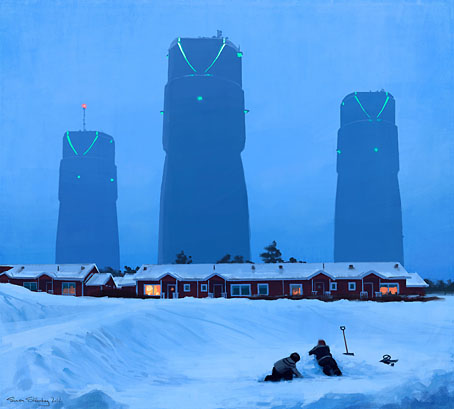
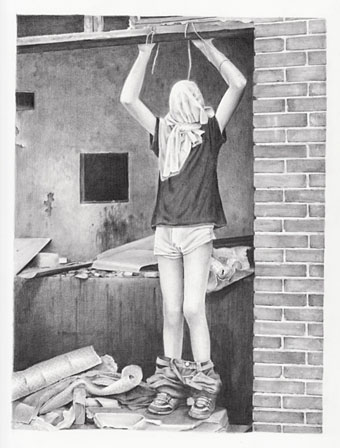
A painting by Stephen Mackey.

• “Creativity is visual, not informed thought. Creativity is not polite. It barges in uninvited, unannounced—confusing, chaotic, demanding, deaf to reason or to common sense—and leaves the intellect to clear up the mess. Above all else, creativity is risk; heedful risk, but risk entire. Without risk we have the ability only to keep things ticking over the way they are.” Revelations from a life of storytelling by Alan Garner. Related: Tygertale on Garner’s Elidor (1965), “the anti-Tolkien”. The BBC’s 1995 adaptation of Elidor remains unavailable on DVD but may be watched on YouTube.

• “One of my revelations was to reverse everything I’d been taught. Making lettering as illegible as possible falls into that way of thinking.” Psychedelic artist and underground cartoonist Victor Moscoso talks to Nicole Rudick about a life in art and design. Related: “I’ve gotten a lot of bad write-ups in newspapers over the years and they like to refer to my stuff as ‘kitsch’…Well, my stuff is way fuckin’ kitsch. It’s kitsch to an abstract level, you understand. It’s fuckin’ meretricious.” I love it when Robert Williams kicks the art world.

• “…a cerebral, challenging, visually stunning piece of 1970s American science fiction that enweirds the human perspective by challenging it with a nonhuman one.” Adam Mills on the inhuman geometries of Saul Bass’s Phase IV.

• “[Delia Derbyshire] taught me everything I knew about electronic music.” David Vorhaus talks to David Stubbs about White Noise and why he prefers the latest technology to old synthesizers.

• Costumes from Alla Nazimova’s film of Salomé (1923) have been discovered in a trunk in Columbus, Georgia.

• Mix of the week: The Ivy-Strangled Path Vol. I, “music for a residual haunting” by David Colohan.

• At Dangerous Minds: Queer, boho or just plain gorgeous: photographs by Poem Baker.

Grimm City, a speculative architectural project by Flea Folly Architects.

Mad Max: “Punk’s Sistine Chapel” – A Ballardian Primer.

In Search of Sleep: photographs by Emma Powell.

Drains of Manchester

Road Warrior (1985) by The Dave Howard Singers | Warriors Of The Wasteland (Original 12″ mix, 1986) by Frankie Goes To Hollywood | Drive It Mad Max (Super Flu Remix, 2009) by Marcus Meinhardt

Chumlum, a film by Ron Rice

chumlum.jpg

25 minutes of superimpositions, hammock swinging, fabric waving and costume play with Jack Smith as master of ceremonies. The music by Angus MacLise (under the direction of Tony Conrad, whatever that means) gives the proceedings a suitably dreamy and hallucinatory air, like an attic restaging of Kenneth Anger’s Inauguration of the Pleasure Dome. Yesterday’s Doctor Benway operation featured Warhol Superstar Jackie Curtis as the nurse, and there are two more Superstars among the participants here: Mario Montez and Gerard Malanga; Montez had appeared in Jack Smith’s Flaming Creatures a year before. (Tony Conrad was the sound recordist on that occasion.) Ron Rice’s film was made in 1964, and is another of those products of the mid-60s that anticipates the later excesses of the decade. Watch it here.

Previously on { feuilleton }
The Invasion of Thunderbolt Pagoda, a film by Ira Cohen

Weekend links 252

brizzi.jpg

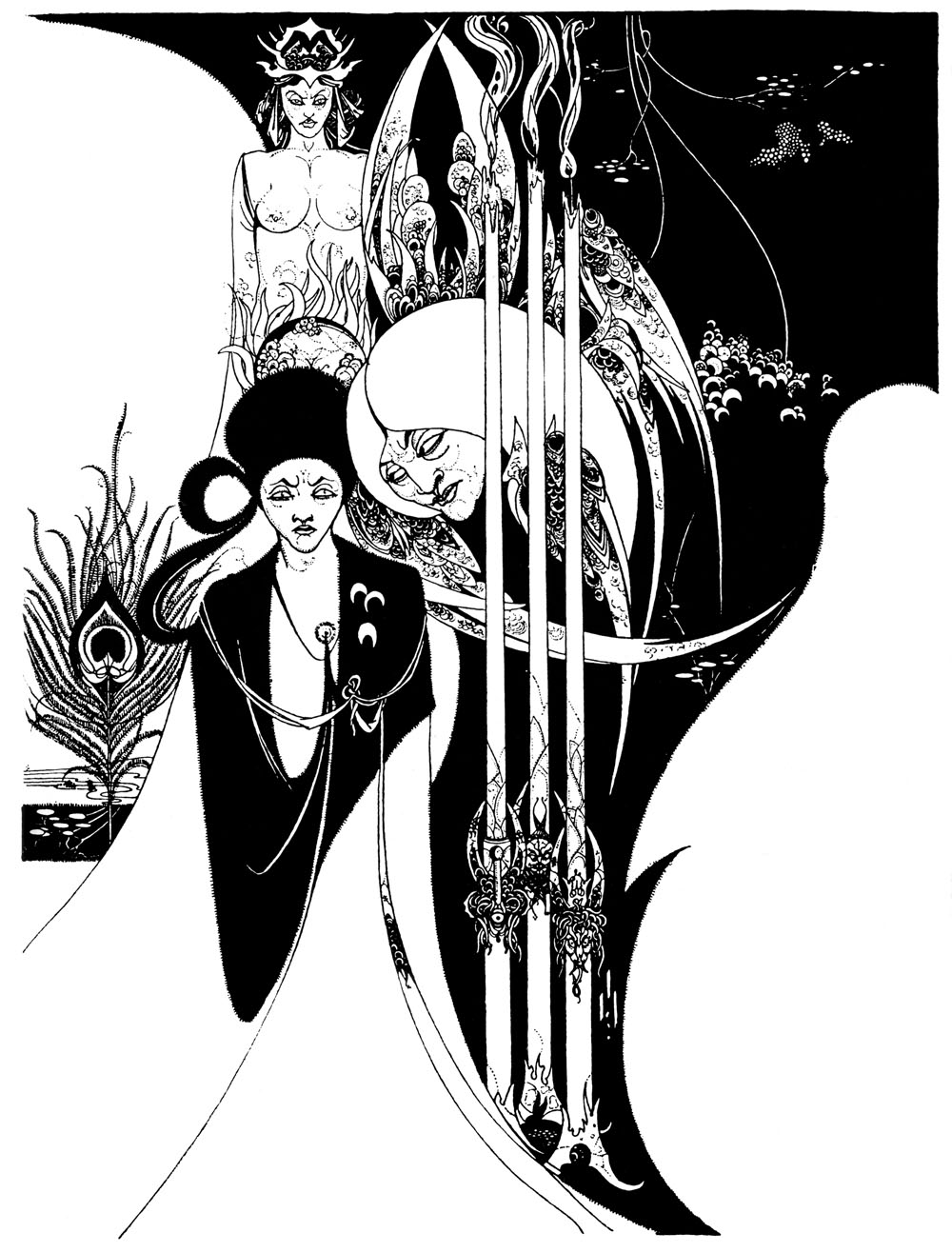
Waiting by Liz Brizzi.

• “Music, politics, sex, and art were also widely represented by Evergreen. Gerald Ford famously maligned the magazine on the floor of Congress for printing the likeness of Richard Nixon next to a nude photo.” Jonathon Sturgeon on the return of an avant-garde institution.

• “The hallucinogenic properties of language are widely recognized by all repressive societies…which treat words like other tightly controlled substances.” Askold Melnyczuk reviews Where the Bird Sings Best, a novel by Alejandro Jodorowsky.

• Mixes of the week: A Mix For Thomas Carnacki by Jon Brooks whose Music for Thomas Carnacki has been reissued on vinyl; Solid Steel Radio Show 27/3/2015 by DJ Food.

One of the few vice-friendly cities left in the US, New Orleans remains his spiritual home, or whatever the atheist equivalent is. Waters’ supposed favourite bar in the world is here in the historic French Quarter. The Corner Pocket is a gay dive bar with tattooed strippers—filthy in exactly the way Waters likes.

“Trash and camp just don’t cut it any more,” he told a rapt audience at his interview panel on Friday. “Filth still has a punch to it. The right kind of people understand it and it frightens away the timid.”

John Waters growing older disgracefully

Songs of a Dead Dreamer and Grimscribe by Thomas Ligotti are being republished in a single edition by Penguin. Jeff VanderMeer wrote the foreword.

• “The film is brimming with Bacchanalian revelry, arcane mystery and mortal dread.” Robert Bright on The Saragossa Manuscript by Wojciech Has.

Alistair Livingston has posted page scans from When Darkness Dawns, volume two of his zine from the early 80s, The Encyclopedia of Ecstasy.

• “Without first understanding the flâneur we cannot understand the development of arcades,” says Aaron Coté.

• At A Journey Round My Skull: Jo Daemen cover designs; at 50 Watts: the art of Manuel Bujados.

• Vast spacecraft and megastructures: Jeff Love on the science-fiction art of Chris Foss.

• At Dangerous Minds: RE/Search’s Vale on JG Ballard and William Burroughs.

• RIP John Renbourn

Pentangling (1968) by Pentangle | Lyke-Wake Dirge (1969) by Pentangle | Lord Franklin (1970) by Pentangle

New Life for the Decadents by Philippe Jullian

jullian1.jpg

This essay by cult writer Philippe Jullian appeared in an edition of the Observer colour supplement in 1971, shortly after Jullian’s chef d’oeuvre, Dreamers of Decadence, had been published in Britain. Esthètes et Magiciens (1969), as Jullian’s study was titled in France, was instrumental in raising the profile of the many Symbolist artists whose work had been either disparaged or ignored since the First World War. A year after the Observer piece, the Hayward Gallery in London staged a major exhibition of Symbolist art with an emphasis on the paintings of Gustave Moreau; Jullian alludes to the exhibition in his article, and also wrote the foreword to the catalogue. His Observer article is necessarily shorter and less detailed than his introductory essay, emphasising the reader-friendly “Decadence” over the more evasive “Symbolist”. But as a primer to a mysterious and neglected area of art the piece would have served its purpose for a general reader.

Many thanks to Nick for the recommendation, and to Alistair who went to the trouble of providing high-res scans that I could run through the OCR. The translators of the article, Francis King and John Haylock, had previously translated Jullian’s biography of Robert de Montesquiou.

*

New Life for the Decadents

The end of the nineteenth century was the Age of Decadence in the arts. The painters of that time (who have since influenced Pop art) and poets (echoed in pop songs) are back in favour: Philippe Jullian, chronicler of the Decadent period, explains why.

AS THE nineteenth century drew to a close, a number of the finer spirits of the time wondered if progress, increasing mechanisation and democratic aspirations were fulfilling their promises. Horrified by the direction in which Western civilisation was moving, they called themselves “The Decadents” in protest against a society that was too organised, an art that was too academic and a literature that was too realistic.

The Decadents produced some delightful symbolist poets, particularly Belgian and Austrian; at least one musician of genius, Debussy; and a number of painters who, having been despised for many years, are now at last beginning to be admired by a generation surfeited with Impressionists in museums and abstract paintings in galleries.

The genius of these Decadent painters, like that of the Decadent poets, only came to full bloom in the 1890s, when they themselves were in their twenties. Never were painting, music and poetry so close to one another. The gods of the Decadents were primarily Wagner and Baudelaire, then Swinburne and Poe. The Decadent movement, so active all over Europe, turned towards two great sources of inspiration: the Pre-Raphaelites, and a French painter whose glory was for a while eclipsed by the Impressionists but who is now once again accorded his place among the great—Gustave Moreau.

The women whom the Decadents loved and of whom they dreamt resembled the women created 30 years previously by Rossetti, Burne-Jones and Moreau.

Nothing could be more naturalistic than the artistic style elaborated by the Pre-Raphaelites in the middle of the nineteenth century. Dante Gabriel Rossetti’s model, inspiration, mistress and finally wife was the sweet and sad Elizabeth Siddal, on whom so many fin-de-siècle ladies had to model themselves on the Continent as did all the aesthetic ladies of England in the 1880s. She posed for Rossetti as Beatrix and as the Belle Dame sans Merci.

She was a rare spirit, about whom everything was nebulous and evanescent: the thick, wild hair; the tunic of a simplicity to challenge the elaboration of the crinolines then in vogue; the frail hands burdened with lilies; the gaze turned towards eternity. She also posed, fully dressed and lying in a bath, her hair outspread around her bloodless face, as Ophelia for another Pre-Raphaelite, Millais. Elizabeth died of pulmonary tuberculosis in 1862.

A macabre episode, which might have been imagined by Poe, was the exhumation of a sheaf of Rossetti’s poems that had been buried in Elizabeth Siddal’s coffin. When this symbol of the New Woman died, the grief-stricken poet had insisted on placing the poems inspired by her under her long hair before the coffin was sealed.

jullian4.jpg

Beata Beatrix (1864–1870) by Dante Gabriel Rossetti.

Continue reading “New Life for the Decadents by Philippe Jullian”

Weekend links 246

ngai.jpg

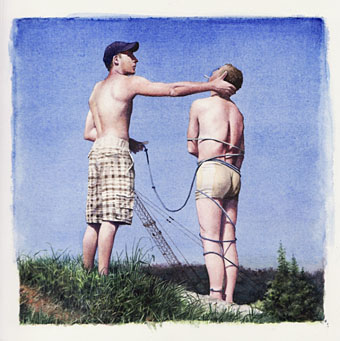
Love Hunter by Victo Ngai.

• “The strangeness of the lyric style, the misuse of words and awkward phraseology that have been criticized even by Poe’s fervent admirers, are here taken as virtues, heightening as they do, a given poem’s conscious and calculated formalism.” Marjorie Perloff reviews The Poet Edgar Allan Poe: Alien Angel by Jerome McGann.

• Mix of the week: Secret Thirteen Mix by Jeremy Kolosine. Starting with Michael Rother is apt when I’ve spent the past week in a Cluster/Harmonia/Kraftwerk/La Düsseldorf/Neu!/Rother loop.

• Court records “suggest that the supposedly prudish Victorians had a far more relaxed attitude to sex between men than their 1960s counterparts”. Historian Jeff Evans has the data.

• “Part of HP Lovecraft’s acknowledged debt to Machen also lies in hearing without seeing.” London Sound Survey on Arthur Machen’s “sounds from beyond the veil”.

• “…pity the designer who has to enact the stage direction that instructs rats to carry away a character’s feet.” Andrew Dickson on the extreme theatre of Sarah Kane.

• Psychedelic collage artist Wilfried Sätty receives a mention in Carey Dunne‘s piece about how LSD helped shape California’s ecstatic design legacy.

• More psychedelia: The Psychedelic Sex Book by Eric Gotland & Paul Krassner, edited by Dian Hanson.

• At Dangerous Minds: Robert Fripp demonstrates Frippertronics on The Midnight Special, 1979.

• Dreams from a Glass House: artist Josiah McElheny on the glass architecture of Paul Scheerbart.

• Director Peter Strickland on six films that fed into The Duke of Burgundy.

Vintage trade card designs

The Zero Of The Signified (1980) by Robert Fripp | Heptaparaparshinokh (1981) by Robert Fripp & The League of Gentlemen | 1984 (1981) by Robert Fripp