Design as virus 19: Akira variations

akira0.jpg

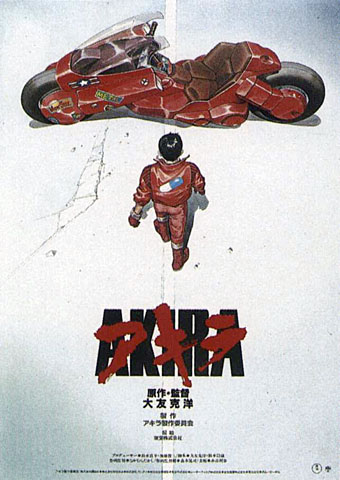
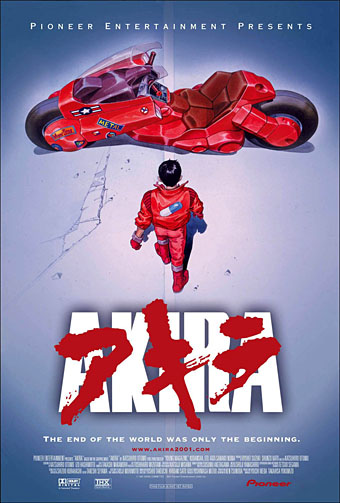
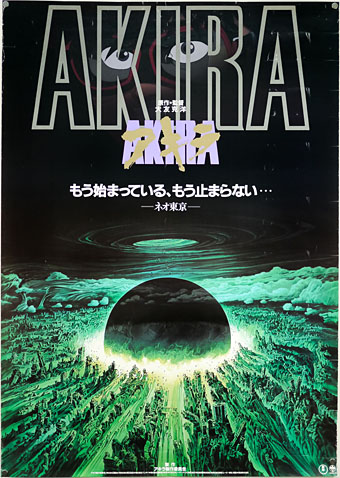
Continuing an occasional series. Looking for Akira posters at the weekend reminded me of the way this poster in particular has birthed a long (and growing) series of copyists. The film of Akira went through a few poster designs, with the Japanese ones emphasising the futuristic setting and its apocalyptic scenario. The first poster for US audiences somewhat predictably (and tiresomely) simplified one of the Japanese designs showing Kaneda holding a big gun. The motorcycle design was later reworked for the US in a form which has provided the basis for many subsequent copies, and is very effective even if it communicates next to nothing of the complex storyline. Thirty years after the film’s release, Kaneda’s motorcycle is now familiar enough to be recognisable even to people who haven’t yet seen the film, hence the variations. One consequence of the popularity of this design is that it seems to have shunted the big-gun design into the background.

akira1.jpg

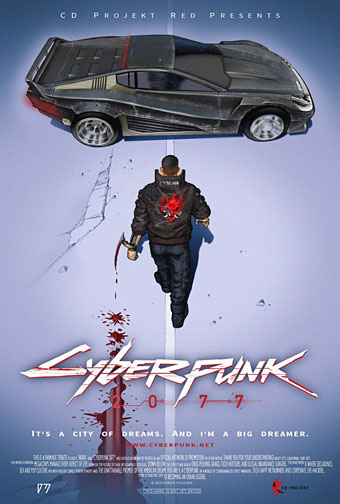
The rules for the variants is to present a familiar character striding towards a similar form of transport, inanimate or otherwise, with a suitable title below the figure (and, where possible, an overlaid title in Japanese). This trend hasn’t been active for very long but the amount of amateur (or professional) artists with time on their hands means there are too many examples to easily feature here. Most of the examples on the pages here and here are characters from computer games or popular films but the Red Bull ad below shows that the poster design is now familiar enough to function as an advert. As for the Kaneda and his bike, they’re subjected to the inevitable Lego treatment here.

akira3.jpg

Japanese Grand Prix ad by Red Bull

akira2.jpg

Art by Dominik Figlhuber

Previously on { feuilleton }
Design as virus 18: Sound Effects
Design as virus 17: Boris and Roger Dean
Design as virus 16: Prisms
Design as virus 15: David Pelham’s Clockwork Orange
Design as virus 14: Curse of the Dead
Design as virus 13: Tsunehisa Kimura
Design as virus 12: Barney’s faces
Design as virus 11: Burne Hogarth
Design as virus 10: Victor Moscoso
Design as virus 9: Mondrian fashions
Design as virus 8: Keep Calm and Carry On
Design as virus 7: eyes and triangles
Design as virus 6: Cassandre
Design as virus 5: Gideon Glaser
Design as virus 4: Metamorphoses
Design as virus 3: the sincerest form of flattery
Design as virus 2: album covers
Design as virus 1: Victorian borders

Weekend links 459

akira.jpg

• “Their graves were covered with cement tiles to block the radiation emanating from their corpses.” Sophie Pinkham reviews three books about the Chernobyl nuclear disaster.

• At Dangerous Minds: Julius Eastman: The resurrection of the visionary minimalist composer continues; at The Quietus: The Strange World of Julius Eastman.

• Mixes of the week: a Dune-inspired Secret Thirteen Mix 286 by Coeden, and ’94–95 Mirrorverse by The Ephemeral Man.

Nabokov had meanwhile acquired a literary agent in New York. She made no headway placing translations of his Russian novels. His latest, she informed him, was “dazzlingly brilliant” and hence wholly without promise for the American market. She suggested something more topical, an idea that left her client hyperventilating. “Nothing,” he would roar later, “bores me more than political novels and the literature of social unrest.” He was, he enlightened his representative, neither Sinclair Lewis nor Upton Sinclair. (Ultimately he tossed the two over the cliff together, as “Upton Lewis.”) Weeks later, in the bathroom of a Paris studio apartment, he began — “a champion figure skater switching to roller skates,” as he complained, speaking for whole cadres of displaced professionals — to write in English.

Stacy Schiff on Vladimir Nabokov, literary refugee

Iain Sinclair on Ghosts of a Ghost: William Burroughs, time surgery and the death of the image.

ST Joshi remembers Lovecraftian writer Wilum Pugmire (RIP).

The Conspirators: A Borgean Tribute to Jorge Luis Borges.

Jasper Sharp on where to begin with Japanese cyberpunk.

Greg Anderson on the new Sunn O))) album, Life Metal.

Drew Daniel of Matmos picks his Bandcamp favourites.

• The Kraken surfaces for Clive Hicks-Jenkins.

• An interview with Brian Eno by Suite (212).

Apocalypse Now: Final Cut

The Book of Weirdo

Conspiracy Of Silence (1994) by Cypher 7 | The Vodun Conspiracy (1996) by The Sidewinder | Machine Conspiracy (2010) by Conforce

Blood And Rockets by The Claypool Lennon Delirium

blood1.jpg

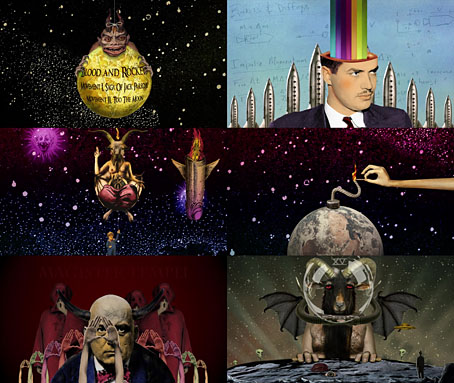
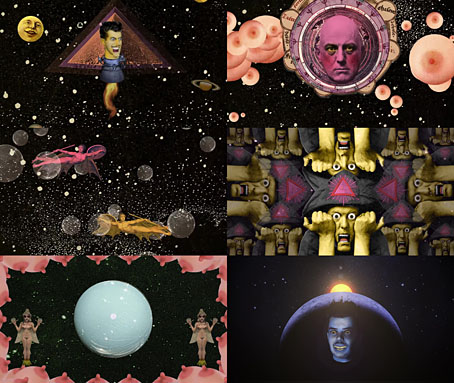
In an overburdened media landscape the words “Terry Gilliam-like animation” could easily mean some hastily-compiled film with a few nods to the collage style that Gilliam popularised in his interludes for the Monty Python TV series. Rich Ragsdale’s music video for The Claypool Lennon Delirium (Les Claypool and Sean Lennon) is much more than this, being a witty and inventive pastiche of the complete Gilliam style, replete with an abundance of sight gags, and familiar touches such as fizzing bombs, clutching hands and chattering heads.

blood2.jpg

The subject of the song is Jack Parsons, the ill-fated Californian rocket engineer whose wild life and entanglement with the West Coast chapter of Aleister Crowley’s Ordo Templi Orientis led to scandal and an untimely death. Parsons’ story is one of the more curious episodes in 20th-century occultism—a pre-Scientology L. Ron Hubbard was also involved in the Crowley shenanigans—but this must be the first time the history has been recounted in the form of a psychedelic ballad. Ragsdale is no slouch with the occult symbolism either, adding a number of Thelemic touches to the inevitable Satanic iconography. As befits the sex-obsessed Parsons the video also contains a fair amount of phallic imagery and boob constellations that somehow evaded the attentions of the YouTube Penis Police. Watch it here. (Thanks to Erik Davis!)

Previously on { feuilleton }
Aleister Crowley: Wandering The Waste revisited
Occult gestures
Konx om Pax
Aleister Crowley: Wandering The Waste
Brush of Baphomet by Kenneth Anger
Rex Ingram’s The Magician
The Mysteries of Myra
Gilliam’s shaver and Bovril by electrocution
Aleister Crowley on vinyl

Punch and Judy, Michel de Ghelderode, and the Brothers Quay

punch1.jpg

The Quay Brothers’ first animated film, Nocturna Artificialia, was released in 1979. Prior to this there had been some short experiments but since these are always described as “lost” it’s doubtful that we’ll ever see them. The artistic success of Nocturna Artificialia prompted the Quays and producer-colleague Keith Griffiths to consider fresh outlets for their talents, and resulted in funding from Britain’s Arts Council for two arts documentaries combining live-action film with animated interludes. Nocturna Artificialia has long been available for home viewing on the various Quays DVDs but the two early arts films, Punch and Judy: Tragical Comedy or Comical Tragedy (1980) and The Eternal Day of Michel de Ghelderode, 1898–1962 (1981), are omitted from the reissue canon for reasons that have never been very clear. Both films have been impossible to see unless you’re an academic or film programmer, at least until now. Once again, YouTube has provided an outlet for exceptional rarities.

punch2.jpg

Punch and Judy: Tragical Comedy or Comical Tragedy

Now that finally I’ve watched these films it’s understandable why they don’t fit so easily with the Quays’ more personal output. Punch and Judy has obvious superficial parallels with Jan Švankmajer’s Punch and Judy (1966) but Švankmajer’s film is his own idiosyncratic interpretation of the murderous puppet. The Quays film is much more straightforward, devoting most of its running time to a history of Mr Punch and the other puppet characters. The story of Punch himself (narrated by Joe Melia) is intercut with a contemporary performance of the play by a genuine Punch and Judy man, Percy Press. Animated sequences are limited to small inserts between the documentary material before a lengthier section at the end that illustrates Harrison Birtwhistle’s Punch and Judy opera. This last section shows how much the Quays had developed their animation techniques since their first film, and is reminiscent of the opera sequences in their later film about Leoš Janáček. Animation aside, there’s little else that’s recognisably Quay until the credits which are lettered by the brothers. (For this film and the following one they credit themselves as the “Brothers Quaij”.) Punch and Judy: Tragical Comedy or Comical Tragedy was of sufficient quality to be screened by the BBC in 1981 as part of the Omnibus arts strand.

punch3.jpg

The Eternal Day of Michel de Ghelderode, 1898–1962

ghelderode1.jpg

Michel de Ghelderode was a Belgian playwright whose grotesque and macabre works, many of which feature masks and puppets, are favourites of the Quays. This is a shorter film than the previous one (30 minutes rather than 45) but the territory is closer to the Quays’ own concerns. The animated sequences are fewer but they’re marvellous pieces, especially the longer central sequence which animates Ghelderode’s Fastes d’enfer (Chronicles of Hell). The figures in the latter piece may depict Ghelderode’s characters but the decor is 100% Quay, with a nocturnal cityscape and shadows from one of the trams that drift through their early films. A bonus for me was the music by Dome (Bruce Gilbert and Graham Lewis), a duo for whom the Quays later designed a record sleeve.

ghelderode2.jpg

The rest of the film consists of archive footage of Ghelderode wandering Belgian streets, and live performance of other scenes from his plays. All of this is strange and fascinating, only spoiled a little by the picture being very dark in places. (The screen shots here have been brightened.) Keith Griffiths says that this was a result of the film not being properly exposed, a consequence of the company still learning film-making as they went along. This may also explain why the film is missing from the official canon. If so, it’s a shame since it’s closer to the Quays’ own interests than some of their later commissions.

ghelderode3.jpg

Now that these films have surfaced there’s one more short from the early years that’s still unavailable. Ein Brudermord (1981) is based on a Franz Kafka short story, and runs for a mere 6 minutes. Meanwhile, I’m also hoping that someone may eventually post better copies of the Stravinsky and Janáček films, both of which have been prevented from DVD reissue by the copyrights on the music.

Elsewhere on { feuilleton }
The Quay Brothers archive

Weekend links 442

buzzcocks.jpg

Orgasm Addict (1977). Design by Malcolm Garrett; collage by Linder.

• RIP Pete Shelley, Buzzcock and Homosapien. Shelley is celebrated for being in the vanguard of Britain’s punk movement, of course. (Buzzcocks’ Spiral Scratch was the UK’s first independent single.) But he also loved Can, recorded an album of electronic drones (Sky Yen), and in 1983 successfully blended home-computer graphics with his own brand of superior electronic pop music. Related: Malcolm Garrett’s Buzzcocks band logo at Fonts In Use; B’dum, B’dum: Tony Wilson in 1978 talking to Pete Shelley and Howard Devoto about Buzzcocks and Magazine.

• Winter demands ghost stories so Adam Scovell suggests 10 great winter ghost films. Related: Alexandra Heller-Nicholas presents an A–Z of Women’s Horror Filmmaking.

Carey Dunne on the rise of underground LSD guides for psychotherapy. Related: “Psychedelics change the perception of time,” says Shayla Love.

• Ex-Neu! guitarist Michael Rother receives the box-set treatment early next year when the Groenland label reissues his early solo albums.

Jodorowsky, an exhibition devoted to the writer and director, will be staged at El Museo del Barrio, New York, from February next year.

• “From Georges Méliès to Bill and Ted, movie hells remain seriously in hock to the Judeo-Christian playbook,” says Anne Billson.

The Owl’s Legacy, Chris Marker’s 13-part documentary series on Greek culture, receives its debut DVD release.

Topic II (1989), a short film by Pascal Baes of pixilated dancers in the night streets of Prague.

• Mix of the week: Secret Thirteen Mix 274 by Koray Kantarcioglu.

• We are the first humans to hear the winds of the planet Mars.

• Patrick Magee reads The Third Policeman by Flann O’Brien.

• At Dennis Cooper’s: Jean-Louis Trintignant Day.

• Mongolian biker rock: Wolf Totem by The HU.

The Quietus albums of the year.

Hell (2001) by Techno Animal ft. Dälek | Hell’s Winter (2011) by Earth | Hell A (2017) by The Bug vs. Earth