Alice’s Adventures in the Horse Hospital

alice_poster.jpg

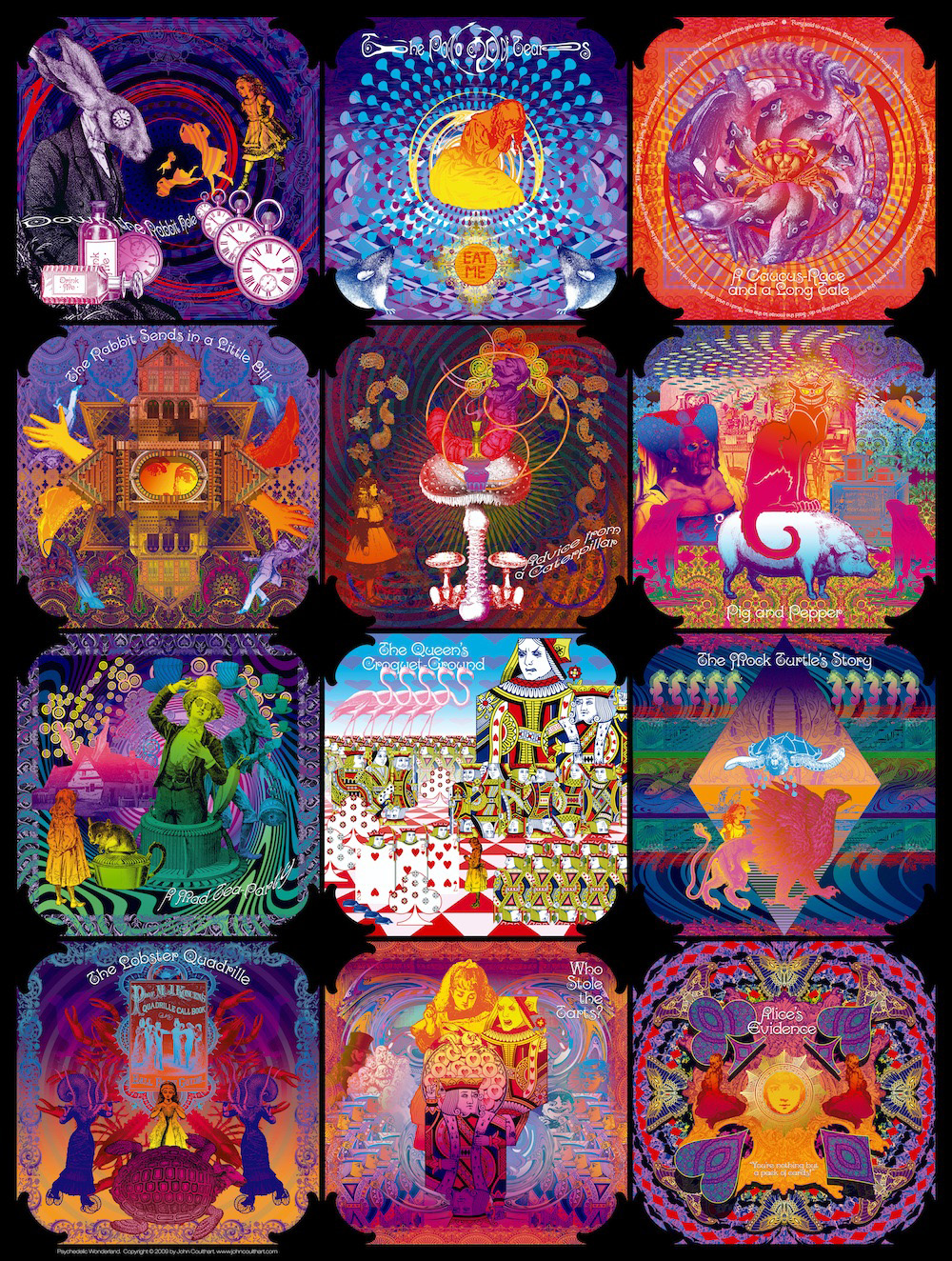
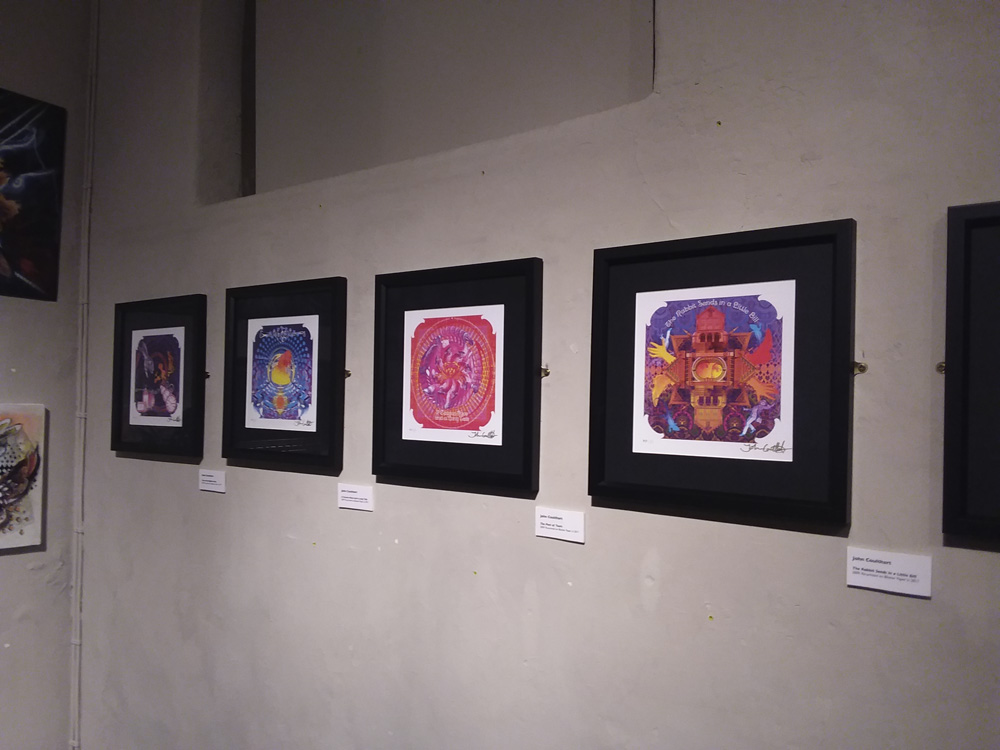
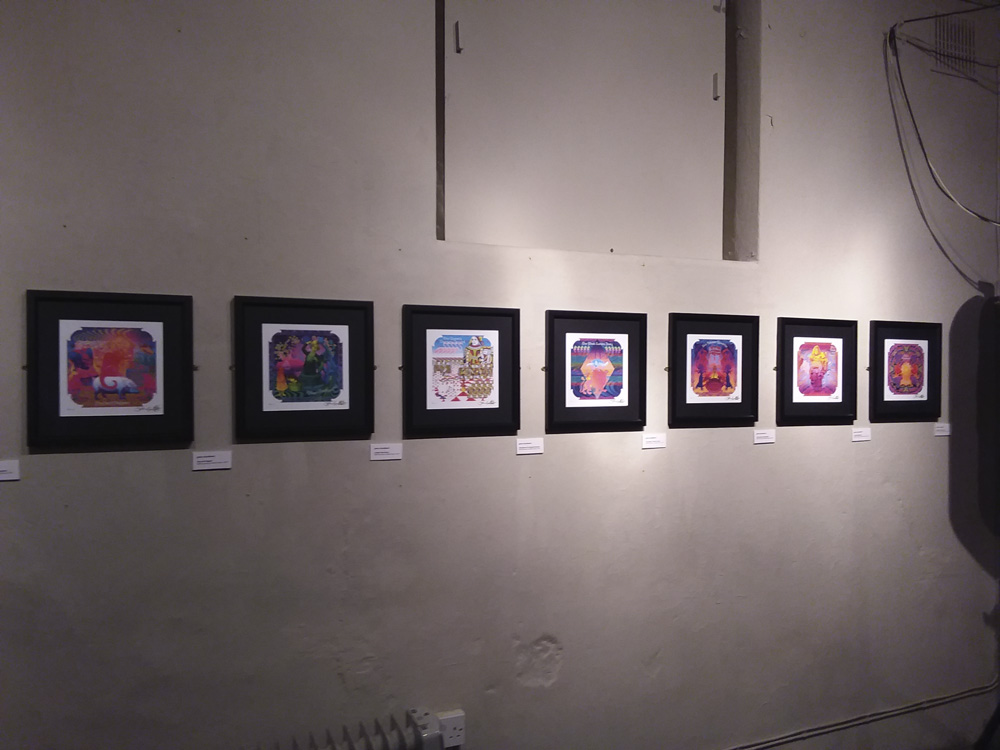
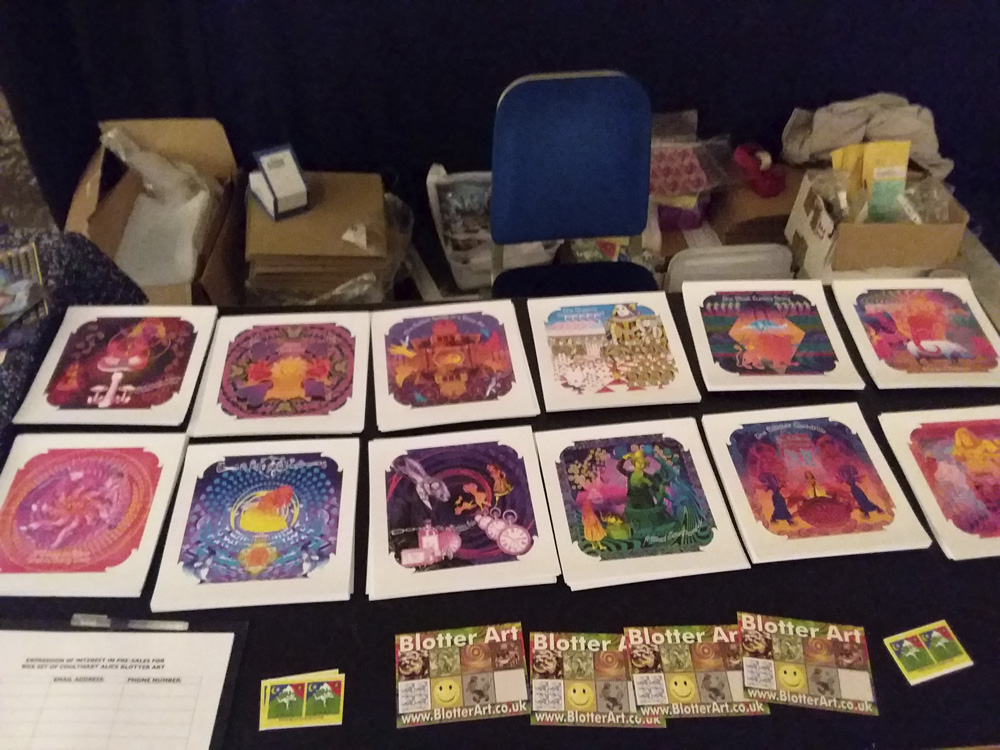
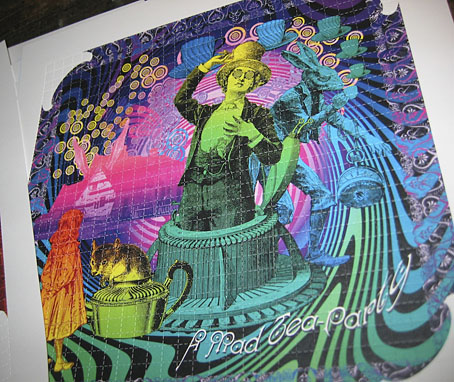
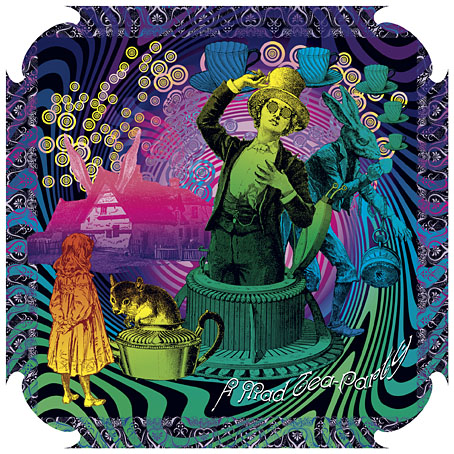
A few snapshots of the exhibits from Wednesday’s sold-out event at the Horse Hospital, Bloomsbury, London. As noted here before, the impetus for the event was Paul Guest’s printing of my series of psychedelic Alice pictures (above) as blotter prints, sheets of blotting paper having been a common medium for the delivery of LSD doses in the late 60s and 1970s. Since my pictures are relatively small and only filled out one of the walls the rest of the exhibition space was filled with Alice art of a similar tone. The opposite wall also featured a variety of fascinating period artefacts from The Psychedelic Museum, including a few original (and rare) blotter sheets. My time was taken up preparing for the discussion so I wasn’t as diligent as I usually try to be in documenting all the artists involved.

alice04.jpg

The discussion itself went really well. The audience was receptive and small enough to be easily communicable, while the talk never strayed too far from the subject at hand. My thanks to my fellow participants—Nikki Wyrd, Jake Fior, Sophia Satchell-Baeza and Andy Roberts—and huge thanks to Vyvy and John and the rest of the Horse Hospital staff for making the event run so smoothly.

alice05.jpg

The exhibition continues through to Saturday (Feb. 4th), noon to 6pm; entry is free. My blotter prints will remain on sale at the exhibition, and they can also be ordered from Paul at Blotterart.biz, either as single prints or a collected set of 12. For serious collectors the set of 12 will be available as a boxed edition of signed and numbered prints (limited to 100 sets) with a lid design adapted from my 2010 Alice calendar. I should note that the print quality is excellent, and web reproduction doesn’t do justice to the colour or the detail.

alice14.jpg

alice1.jpg

Continue reading “Alice’s Adventures in the Horse Hospital”

Weekend links 340

zagorski.jpg

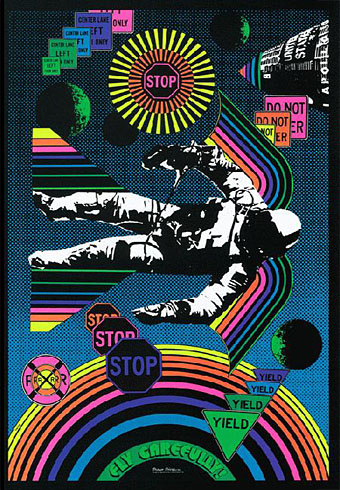
Fly Carefully (1969) by Stanisław Zagorski.

• Video of Tuxedomoon live in San Francisco, Rotterdam and Paris, 1983 (or try this copy), and a late-night German TV broadcast from 1985. The first Tuxedomoon album, Half-Mute, has been reissued by Crammed Discs with an accompanying album, Give Me New Noise: Half-Mute Reflected, featuring cover versions of the songs by various artists.

• More end-of-year reviews: Dennis Cooper’s recommendations are always eclectic (and thanks again for the blog shout!); not necessarily the best ambient and space music of 2016 by Dave Maier; a review of the year by graphic designer Jonathan Barnbrook; the 15 finalists of the 2016 Art of Building architectural photography competition.

The Complete Stories of Leonora Carrington will be published in April 2017 by Dorothy. Related: Letters, Dreams, and Other Texts by Remedios Varo will be published next year by Wakefield Press. Also of interest on that page is a new edition of Haschisch by Oscar AH Schmitz illustrated by Alfred Kubin.

• The week in Things (see this post): John Carpenter’s The Thing: The Story of an SF Horror Game-Changer. Ennio Morricone’s score will be infecting the vinyl world next year. Meanwhile, Matthew Thrift recommends “10 great films set in the Arctic and Antarctica”.

• Mixes of the week: FACT mix 581 by Pan Daijing, XLR8R podcast 468 by Jan Jelinek, and Secret Thirteen Mix 203 by Blood Sport.

A Year In The Country on Monumental Follies (1972), a book about architectural eccentricity by Stuart Barton.

• William Burroughs reads 23 random paragraphs from Naked Lunch each time you load this page.

• “The world is terrifying and destructive and dehumanising and tragic,” says Charlie Kaufman.

• Scents and sensuality: William Dalrymple on the perfumes of India, past and present.

• Brenda S G Walter on Hill House: The haunted soul of Shirley Jackson.

• A trailer for Dome Karukoski’s Tom of Finland. There’s more here.

Illustrating the Sixties: Paintings by Italian artists in London.

Michael Rother and Cavern Of Anti-Matter live in Berlin.

Cinemetal

Network 23 (1981) by Tangerine Dream | Exit 23 (1989) by Psychick Warriors Ov Gaia | Studio 23 (2012) by The Time And Space Machine

Alice’s Adventures in the Underground: Feed Your Head

alice.jpg

My work will appear in two exhibitions in the new year. The first hasn’t been announced yet so this post concerns the second event which will take place in London on 1st February:

“Feed your head…” An evening discourse on all things Wonderland, with John Coulthart, Andy Roberts, Nikki Wyrd and Jake Fior (facilitator).

This event marks the opening of a three day exhibition hosted by the Horse Hospital, featuring John Coulthart’s psychedelia-themed ‘Alice’ artwork, printed for the first time as (drug-free) blotter art. John’s depictions of the twelve chapters of ‘Alice’s Adventures in Wonderland’ view the 1860s through the iridescent lens of the 1960s; Victoriana refracted through a psychedelic prism. Come along for a discussion of the links between psychedelic art and music, and the persistent fascination of Lewis Carroll’s books. There will be talk of many things, not only cabbages and kings, but far more than you can possibly imagine before breakfast.

Signed blotter prints will be on sale.

Psychedelic artists – particularly in the 60s – and many other outsider creative types (before and since that influential decade), have drawn their inspiration from the well of imagery found within the ‘Alice’ books. As well as John’s artwork, there will be Alice themed creations by other artists on show. In addition, the Psychedelic Museum will be holding its second pop-up museum display, with particular focus on the 60s counterculture.

The event was suggested by Paul at Blotterart, a specialist in quality printing on the perforated blotting-paper sheets that used to be (and possibly still are) the commonest carrier for doses of LSD. My psychedelic take on the Lewis Carroll books was a reaction to the way in which psychedelic culture had adopted Alice and co. as part of the larger collision of childhood and Victoriana that was so prevalent at the end of the 1960s. So in that respect blotting sheets are a much more fitting medium for these pictures than the calendar pages they filled originally. As noted above, I’ll be talking about the artwork and related matters, and will also be on hand to sign things. I’ve been involved with a number of exhibitions recently but they’re not all as close to home as this one.

The Horse Hospital website has the ticket details. Those who can’t make it but are interested in the prints should know that they’ll be for sale online at some point. Further details will be posted here.

Previously on { feuilleton }
Psychedelia and Other Colours by Rob Chapman
LSD-25 by The Gamblers
More trip texts
Listen to the Colour of Your Dreams: Part Six
Listen to the Colour of Your Dreams: Part Five
Listen to the Colour of Your Dreams: Part Four
Listen to the Colour of Your Dreams: Part Three
Listen to the Colour of Your Dreams: Part Two
Listen to the Colour of Your Dreams: Part One
Trip texts
Acid albums
Acid covers
Lyrical Substance Deliberated
The Art of Tripping, a documentary by Storm Thorgerson
What Is A Happening?
My White Bicycle
Ogdens’ Nut Gone Flake
Tomorrow Never Knows
Enter the Void
In the Land of Retinal Delights
Smashing Time
The Dukes declare it’s 25 O’Clock!
A splendid time is guaranteed for all
The art of LSD
Hep cats

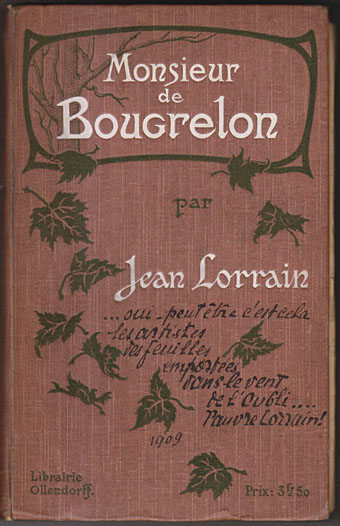
Monsieur de Bougrelon by Jean Lorrain

mdb1.jpg

A reprint edition from 1909.

In 1881 there arrived from Normandy a good-looking young man with an unfortunate habit of painting his face: Jean Lorrain. He spent five years of his life in Montmartre, five years that were also the most dazzling ones for the hill whose chronicler he became. A brilliant journalist with an eye that missed no blemish, no absurdity, but could fill with tears on seeing beauty in a picture, a profile, a gown. From his first poems, Modernités, this fin-de-siècle Petronius evoked the whole life of Montmartre: transvestites, lesbians, go-betweens, outrageous bluestockings, failed poets declining into pimps, wrestlers, part-time gigolos for either sex.

Philippe Jullian in Montmartre (1977)

Among the books that Philippe Jullian wrote about notable fin-de-siècle personalities is a biography of Jean Lorrain (1855–1906), a volume which—to my continual frustration—has yet to be translated into English. If Lorrain is a neglected figure in contemporary France, he’s hardly known at all in the Anglophone world which is why the news last month of the first English translation of Monsieur de Bougrelon was so welcome.
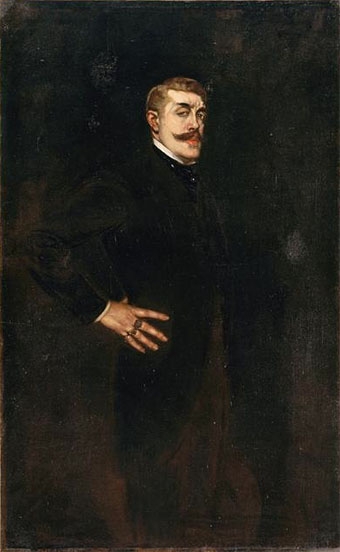
lorrain.jpg

Jean Lorrain (1898) by Antonio de la Gandara.

I say that Lorrain is unknown but only to the general reader; to anyone familiar with fin-de-siècle Paris he’s an unavoidable presence, a chronicler of the city’s excesses and also one of the great characters of the period. Portraits and cartoons show the dandy but fail to communicate the reek of ether—he was an addict throughout his later years—which attended his presence. His drug-taking helped contribute to an early death at the age of 55 but, like Rainer Werner Fassbinder, Lorrain managed to combine several years of indulgent pleasure-seeking with serious industry, producing over 40 literary works. Like Fassbinder he was also open about his homosexuality. The Paris of the 1890s wasn’t exactly enthusiastic about this but the Code Napoléon had never made homosexual acts a crime which is one of many reasons that Paris (and France in general) was a haven for the beleaguered British. In his sexual proclivities, his dandyism, and his aesthetic connoisseurship Lorrain is a good contender for a French equivalent of Oscar Wilde, another of Philippe Jullian’s biographical subjects. Lorrain wrote novels, plays and poetry, while his columns of journalism combined gossip and satire with tips for the aesthetically minded. His taste in people was (again) Fassbinderesque:

I have a great fondness for hoodlums, fairground wrestlers, butcher-boys and assorted pimps, both ordinary and extraordinary, who, along with some absolutely exquisite women and some men of talent, such as yourself, are the only company that I keep in Paris.

This life, and some of the author’s character, is reflected in Monsieur de Bougrelon, a short novel published in 1897. The story is narrated from the point of view of a pair of unnamed French visitors to Amsterdam who encounter their extraordinary compatriot when he makes a dramatic entrance into a cheap bordello. Monsieur de Bougrelon is an aged roué and purported aristocrat whose startling antique dress sense is dandyism gone to seed: swathed in old furs, bedizened with fake jewellery, and with dripping face-paint that prefigures another tragic figure in a city of canals, Thomas Mann’s Von Aschenbach. The French tourists have been made despondent by the dreariness of Amsterdam in winter so they welcome Monsieur de Bougrelon’s offer to lead them around the city, taking in museums, the city’s docks and the less reputable areas. While Monsieur de Bougrelon is present he maintains a running commentary, offering his opinions on the sights—Dutch art is amusingly dismissed as “bourgeois”—the people (“ugly”) and his own splendid life and lost loves. His tales about himself are tall and eventually verge on the improbable, but his presence engages the Parisians with its parade of lively invention, “imaginary pleasures” and phantom presences. Chief among the latter is Monsieur de Mortimer, de Bougrelon’s life-long friend, now dead and possibly the love of de Bougrelon’s life.
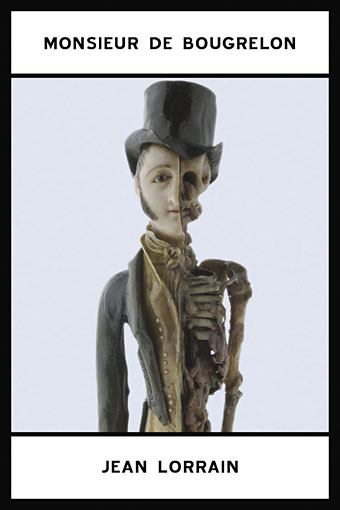
mdb2.jpg

This last matter is explored in an afterword by Eva Richter, the translator. While Monsieur de Bougrelon claims to be interested in women he has always been devoted to Monsieur de Mortimer, and the pair survive various affairs and obsessions to remain in each other’s company. Lorrain alludes to the true nature of the relationship when de Bougrelon compares himself and de Mortimer to Achilles and Patroclus. The surnames also offer clues with Mortimer signalling death while Bougrelon is a combination of the French name Bouglon and the word “bougre” whose equivalent in English is “bugger”. The French may have been more accepting of certain behaviours than the British but there were still limits, and Lorrain’s dallying with obscenity and homosexuality is decades in advance of Proust, Gide and Genet. But this isn’t the full substance of the novel. Monsieur de Bougrelon may be short but it contains some marvellous flights of fancy and torrents of description; it’s also blackly humorous in parts, although the dominant tone is of melancholy and a nostalgic regret for vanished days and lives. Melancholy and the omnipresence of death is a common theme in Decadent literature; Lorrain alludes in passing to another short melancholy story set in a city of canals, George Rodenbach’s Bruges-la-Morte (1892).

Spurl Editions are to be commended for resurrecting this neglected novel which is diligently translated and annotated. Monsieur de Bougrelon will be published on November 1st when it will join Monsieur de Phocas and Nightmares of an Ether-Drinker (aka The Soul-Drinker and Other Decadent Fantasies) in being one of the few works available in English from an exotic bloom of the French fin de siècle.

Previously on { feuilleton }
New Life for the Decadents by Philippe Jullian
Philippe Jullian, connoisseur of the exotic
Ma Petite Ville

Weekend links 321

miyabi.jpg

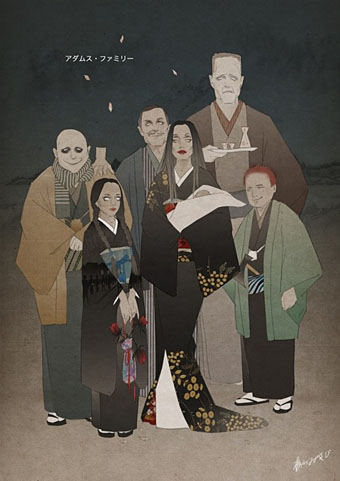
The Addams Family In Kimonos by Matsuyama Miyabi. Via S. Elizabeth.

• “They’re not the men you’ll walk down the street and lock eyes with, or that you’ll spot at a bar casually. They’re a fantasy.” Michael Valinsky reviewing Tom House: Tom Of Finland In Los Angeles edited by Michael Reynolds. Related (and almost a polar opposite): Nick Campbell on The Life to Come and Other Stories by EM Forster.

Randall Dunn, musician (Master Musicians of Bukkake), producer (Sunn O))), Earth, etc), engineer, discusses making and recording music.

John Waters brings back Multiple Maniacs: “Of course I went a little too far.” he says. Waters also talked about the film at Gawker.

Q: Most cherished book on your shelves? Why?

A: Depends on the day. Today it’s Blood Meridian by Cormac McCarthy. Blood Meridian is an indictment of Manifest Destiny, the Westward Expansion, of Hollywood and its portrayal of the west; it’s confrontational and bellicose. The sheer brutality of it affected me like I’d swallowed poison or taken a shot to the liver that I didn’t remember. Blood Meridian is a reminder that literature isn’t always tame. It can bite you.

Laird Barron talking to Smash Dragons about favourite writers and his own fiction

• In East Tower Dreaming Howlround, aka Robin the Fog, processes the sounds of a former BBC office building.

• At The Headless Hashasheen: Magic Mirrors and Specters: Paschal Beverly Randolph, Hashish, & Scrying.

• At Dangerous Minds: The astonishingly beautiful three-colour photography of Bernard Eilers.

Samm Deighan on Gothic Film in the ’40s: Doomed Romance and Murderous Melodrama.

• On a scale from 1–100, Milton Glaser rates every single Olympic logo design in history.

• The overwhelming A/V experience of Paul Jebanasam and Tarik Barri.

Patrick Feaster describes how to “play back” a picture of a sound wave.

• Mix of the week: Secret Thirteen Mix 192 by Shadows.

COLLAGE—The London Picture Archive

Madrigal Meridian (1978) by Tangerine Dream | Meridian Moorland (1979) by Peter Baumann | Meridian (2009) by Espers