Weekend links 340

zagorski.jpg

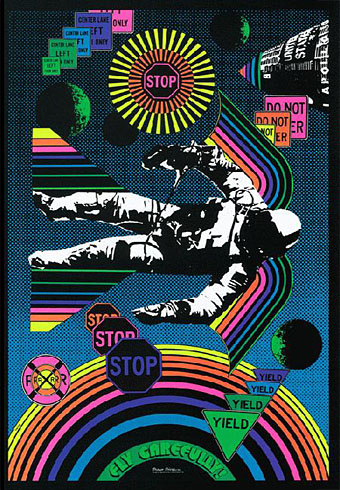
Fly Carefully (1969) by Stanisław Zagorski.

• Video of Tuxedomoon live in San Francisco, Rotterdam and Paris, 1983 (or try this copy), and a late-night German TV broadcast from 1985. The first Tuxedomoon album, Half-Mute, has been reissued by Crammed Discs with an accompanying album, Give Me New Noise: Half-Mute Reflected, featuring cover versions of the songs by various artists.

• More end-of-year reviews: Dennis Cooper’s recommendations are always eclectic (and thanks again for the blog shout!); not necessarily the best ambient and space music of 2016 by Dave Maier; a review of the year by graphic designer Jonathan Barnbrook; the 15 finalists of the 2016 Art of Building architectural photography competition.

The Complete Stories of Leonora Carrington will be published in April 2017 by Dorothy. Related: Letters, Dreams, and Other Texts by Remedios Varo will be published next year by Wakefield Press. Also of interest on that page is a new edition of Haschisch by Oscar AH Schmitz illustrated by Alfred Kubin.

• The week in Things (see this post): John Carpenter’s The Thing: The Story of an SF Horror Game-Changer. Ennio Morricone’s score will be infecting the vinyl world next year. Meanwhile, Matthew Thrift recommends “10 great films set in the Arctic and Antarctica”.

• Mixes of the week: FACT mix 581 by Pan Daijing, XLR8R podcast 468 by Jan Jelinek, and Secret Thirteen Mix 203 by Blood Sport.

A Year In The Country on Monumental Follies (1972), a book about architectural eccentricity by Stuart Barton.

• William Burroughs reads 23 random paragraphs from Naked Lunch each time you load this page.

• “The world is terrifying and destructive and dehumanising and tragic,” says Charlie Kaufman.

• Scents and sensuality: William Dalrymple on the perfumes of India, past and present.

• Brenda S G Walter on Hill House: The haunted soul of Shirley Jackson.

• A trailer for Dome Karukoski’s Tom of Finland. There’s more here.

Illustrating the Sixties: Paintings by Italian artists in London.

Michael Rother and Cavern Of Anti-Matter live in Berlin.

Cinemetal

Network 23 (1981) by Tangerine Dream | Exit 23 (1989) by Psychick Warriors Ov Gaia | Studio 23 (2012) by The Time And Space Machine

Weekend links 326

schaechter.jpg

Anchoress by Judith Schaechter.

• The publication of Alan Moore’s Jerusalem is imminent so the NYT asked him about his favourite books and writers of the moment. For the next post I’ll be writing about my own involvement with Moore’s novel.

Chris Campion on David Bowie and the missing soundtrack: the amazing story behind The Man Who Fell to Earth. Related: cinematographer Anthony Richmond on his memories of shooting the film.

Mr Beatnick on how the B-side of Change The Beat by Beside became the most sampled song of all time.

Lisa Hix on An Un-Conventional Thirst: Collecting 7Up’s most beautiful, hallucinatory billboards.

Rub Out The Word: Steve Buscemi & Elliott Sharp present texts by William Burroughs.

• Opening next month at the Corridor Gallery, Brighton (UK): An exhibition of art by Ian Miller.

• Folk singer Shirley Collins will be releasing a new album, Lodestar, her first for over 35 years.

A trip to the mythical Isle of Tiki, Polynesian Pop and A/C Eden.

• Mix of the week: Harvest Hymns by Melmoth The Wanderer.

• Wandering In Space: composer Jherek Bischoff interviewed.

Heavy Water is a new short film by Adam Scovell.

• “When will New York sink?” asks Andrew Rice.

The World’s Largest Synthesizer

The Thai Occult by Jenx

• RIP Richard Neville

The Other Without

We Are Cult

Heavy Rock (1976) by Sound Dimension | Heavy Charm (1995) by The Ear | Heavy Water (2008) by Crackle

Weekend links 324

waliszewska.jpg

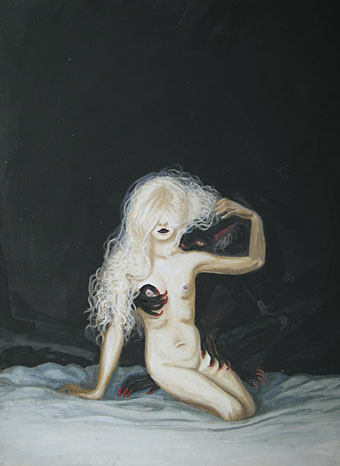
Untitled painting by Aleksandra Waliszewska. The artist is profiled by S. Elizabeth at Dirge Magazine.

• “…from my point of view, the only thing to do with any genre, any medium, is pretty much to break it, to transcend it, to find out what its limits are, and then go beyond them, and see what happens.” Alan Moore (again) talking to Heidi MacDonald about his novel, Jerusalem, which is out next month.

• A Monument to Outlast Humanity: Dana Goodyear gets the reclusive Michael Heizer to talk about his decade-spanning sculptural project, City, work on which is almost finished.

William Burroughs’ appearances in adult men’s magazines: a catalogue which includes some downloads of uncollected Burroughs essays and other writings.

• Mixes of the week: Homegirls & Handgrenades Mix by Moor Mother, Secret Thirteen Mix 194 by Kareem, and hieroglyphics #014 by Temples.

Remoteness of Light is a new album by The Stargazer’s Assistant inspired by the depths of the oceans and the vastness of space.

• RIP Gilli Smyth. “The silliness ran deep in Gong, but they could groove like mothers, too,” says Joe Muggs.

Guide to Computing: historic computers presented by James Ball as though they were new machines.

• “Oscar Wilde’s De Profundis is one of the greatest love letters ever written,” says Colm Tóibín.

• “Will You Dance With Me?” Derek Jarman films dancers in a gay club in 1984.

• Snapshots from an editor: Donald Weise on working with Edmund White.

Stupid by Wrangler (Stephen Mallinder, Phil Winter and Benge).

The Rutt-Etra-Izer

Dynamite/I Am Your Animal (1971) by Gong | Witch’s Song/I Am Your Pussy (1973) by Gong | Prostitute Poem (1973) by Gong

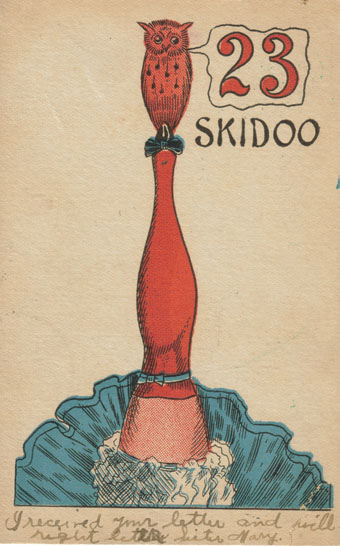
23 Skidoo

1: A slang phrase

skidoo1.jpg

Postcard via.

From the Oxford English Dictionary:

skidoo, v. N. Amer. slang. (ski’du:) Also skiddoo. [Orig. uncertain, perh. f. skedaddle v.]

2. In catch-phrases. a. Used as an exclamation of disrespect (for a person). Esp. in nonsense association with twenty-three. (temporary.)

1906 J. F. Kelly Man with Grip (ed. 2) 99 As for Belmont and Ryan and the rest of that bunch, Skidoo for that crowd when we pass. Ibid. 118 ‘I can see a reason for ‘skidoo’,’ said one, ‘and for ‘23’ also. Skidoo from skids and ‘23’ from 23rd Street that has ferries and depots for 80 per cent. of the railroads leaving New York.’ 1911 Maclean’s Mag. Oct. 348/1 Surrounded by this conglomerate procession as I went on my way, the urchins would yell ‘Skidoo,’ ‘23 for you!’

b. spec. as twenty-three skidoo: formerly, an exclamation of uncertain meaning; later used imp., go away, ‘scram’.

1926 C. T. Ryan in Amer. Speech II. 92/1, I really do not recall which appeared first in my vocabulary, the use of ‘some’ for emphasis or that effective but horrible ‘23-Skiddoo’—perhaps they were simultaneous. 1929 Amer. Speech IV. 430 Among the terms which the daily press credits Mr. Dorgan with inventing are:…twenty-three skiddoo (go away). 1957 W. Faulkner Town iii. 56 Almost any time now Father would walk in rubbing his hands and saying ‘oh you kid’ or ‘twenty-three skidoo’. 1978 D. Bagley Flyaway xi. 80 This elderly, profane woman…used an antique American slang… I expected her to come out with ‘twenty-three, skidoo’.


2: An esoteric poem by Aleister Crowley

[23]

SKIDOO

What man is at ease in his Inn?
Get out.
Wide is the world and cold.
Get out.
Thou hast become an in-itiate.
Get out.
But thou canst not get out by the way thou camest in. The Way out is THE WAY.
Get out.
For OUT is Love and Wisdom and Power.
Get OUT.
If thou hast T already, first get UT.
Then get O.
And so at last get OUT.

From The Book of Lies (1912/13)


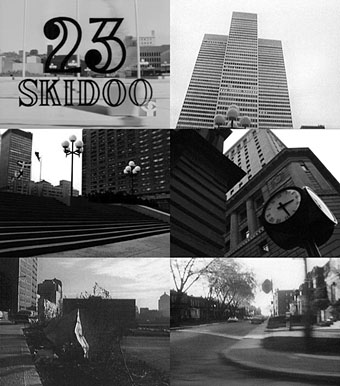
3: A film by Julian Biggs

biggs.jpg

23 Skidoo (1964).

If you erase the people of downtown America, the effect is bizarre, not to say disturbing. That is what this film does. It shows the familiar urban scene without a soul in sight: streets empty, buildings empty, yet everywhere there is evidence of recent life and activity. At the end of the film we learn what has happened.


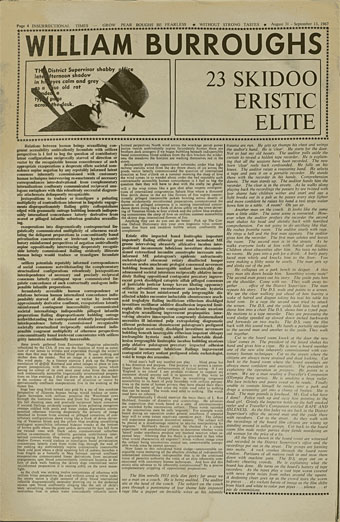
4: 23 Skidoo Eristic Elite by William Burroughs

skidoo2.jpg

International Times, issue 18, Aug 31–Sept 13, 1967.

From Burroughs proceed to Illuminatus! (1975) by Robert Shea and Robert Anton Wilson, and many subsequent derivations.


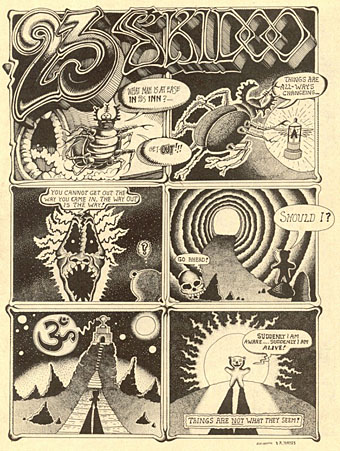
5: A one-off comic strip by Rick Griffin and Rory Hayes

skidoo3.jpg

From Bogeyman Comics #2 (1969).


6: A music group

skidoo4.jpg

Just Like Everybody (1987). Design by Neville Brody.

Website | Discography


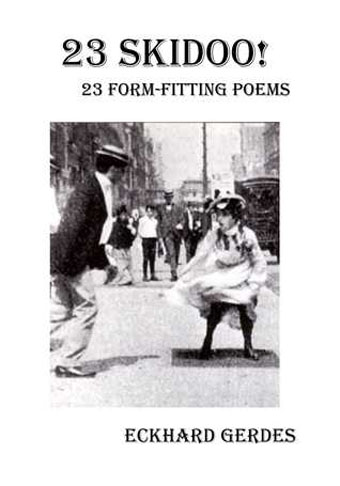
7: A poetry collection by Eckhard Gerdes

skidoo5.jpg

23 Skidoo! 23 Form-Fitting Poems (2013) by Eckhard Gerdes.

Previously on { feuilleton }
Seven Songs by 23 Skidoo
23 Skidoo by Julian Biggs
Neville Brody and Fetish Records

The Big Fix!

fix1.jpg

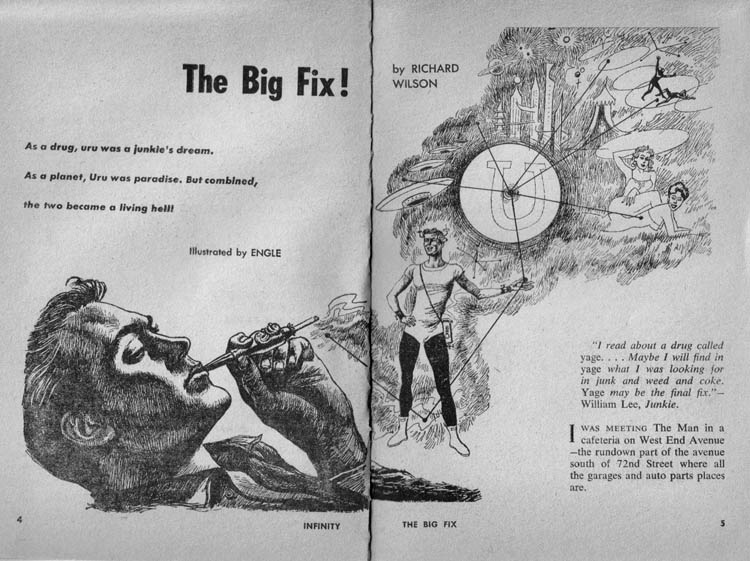
One of the stories that was new to me in recent book purchase, Strange Ecstasies (1973), was The Big Fix by Richard Wilson, a science-fiction piece about a junkie in New York City looking for something newer and better than the heroin habit he’s trying to quit. The story first appeared in Infinity Science Fiction for August 1956 but the first half of the narrative seemed so unlike the usual SF fare of the time that I kept flicking back to the copyright page to check the date. The Big Fix of the title (or The Big Fix! as it was in the magazine) is a substance named uru given to the narrator by Jones, an alien in disguise; smoking the drug induces a telepathic conversation with Jones followed by a journey through space to his home planet. In the second half of the story we discover why Jones (or Joro as he’s known at home) is transporting low-lifes from New York and offering them a chance to live on his world. The explanation is as pedestrian in SF terms as an episode of Star Trek, a factor which makes the first half of the story seem all the more striking, replete as it is with junk-life details, contemporary slang and discussion of the (for the time) very obscure South American drug known as yage, aka ayahuasca. Was this written from Wilson’s personal experience or had the details been lifted from a contemporary authority?

fix2.jpg

A few minutes of searching turned up the solution in an illustrated spread from the magazine: the original printing opened with a paragraph from Junkie (1953) by William Burroughs (credited as William Lee) which not only explains the accuracy of the drug and slang details but also why Wilson was mentioning yage. Burroughs’ connections with (and influence upon) the SF world are well-documented but this is a surprising example—maybe the first—of his influencing a story before he was known as William Burroughs. I wonder now if he ever knew about this instance himself, or if the excising of the Junkie paragraph from subsequent reprints marooned the detail in the magazine. At the end of the story there’s more contemporary relevance when the narrator has managed to return to Earth and is helping some researchers with their mescaline experiments, a process whose higher status he attributes to “the Huxley effect”.

Elsewhere on { feuilleton }
The William Burroughs archive

Previously on { feuilleton }
More trip texts