Weekend links 129

proffer.jpg

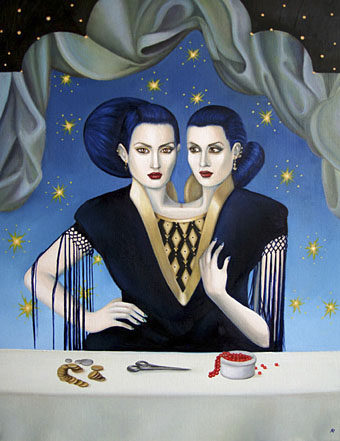
Daughters of Maternal Impression by Arabella Proffer.

A genre’s landscape should be littered with used tropes half-visible through their own smoke & surrounded by salvage artists with welding sets, otherwise it isn’t a genre at all.

M. John Harrison, incisive as ever, on what he memorably labels “Pink Slime Fiction”. Elsewhere (and at much greater length) Cowardice, Laziness and Irony: How Science Fiction Lost the Future by Jonathan McCalmont, and a two-part Paul Kincaid interview here and here.

• “Once upon a time, in almost every city, many rivers flowed. Why did they disappear? How? And could we see them again? This documentary tries to find answers by meeting visionary urban thinkers, activists and artists from around the world.” A trailer for Lost Rivers, written and directed by Caroline Bâcle. Related (and mentioned here before), London’s Lost Rivers: A Walker’s Guide by Tom Bolton.

Ghosts in the Machine: “Curated by Massimiliano Gioni and Gary Carrion-Murayari, a recent exhibition was imagined as a Wunderkammer simultaneously tracing and questioning the relationship between people and technology.” And in Istanbul a Wunderkammer of a different kind: Rick Poynor looks at Orhan Pamuk’s Museum of Innocence.

• “There’s a vast territory still to be explored…” Bristol duo Emptyset (James Ginzburg & Paul Purgas), many of whose releases I’ve designed, talk about their music. Tracks from their new EP on the Raster-Noton label can be heard here. You’re going to need bigger speakers.

• “I liked doing it one time but I don’t want to become the gay porn soundtrack guy.” Ben Chasny of Six Organs of Admittance talking to Sir Richard Bishop about one of his more unusual commissions.
durham.jpg

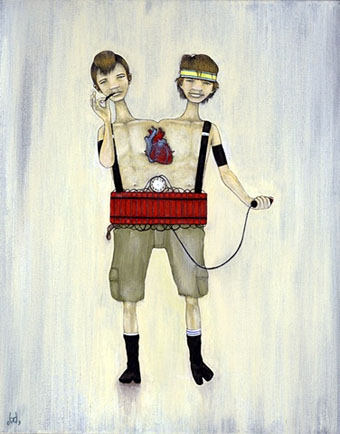
Double Vision (2009) by Bonnie Durham.

FACT mix 349: Silent Servant puts together a great selection of music old and new with the emphasis on the grit of the early Industrial era.

• Read Joyce’s Ulysses line by line, for the next 22 years, with Frank Delaney’s podcast.

Borges and the Plain Sense of Things, an article from 2006 by Gabriel Josipovici.

Clive Hicks-Jenkins on Equus and seeing your inspirations come full circle.

• At Pinterest: A few nice paintings of men

Spunk [arts] magazine

Derelict London

• Ritualistic Bug Use (2009) by Pink Skull | Demiurge Variations (2012) by Emptyset | Utopian Disaster (End) (2012) by Silent Servant.


Books Borges never wrote

borges2.jpg

Design by Hector Haralambous.

The composition of vast books is a laborious and impoverishing extravagance. To go on for five hundred pages developing an idea whose perfect oral exposition is possible in a few minutes! A better course of procedure is to pretend that these books already exist, and then to offer a resume, a commentary… More reasonable, more inept, more indolent, I have preferred to write notes upon imaginary books.

Jorge Luis Borges

Borges was true to his intention in scattering invented volumes throughout his work, a number of the ficciones either have invented books as their subjects or use them to propel the narrative. Tlön, Uqbar, Orbis Tertius is perhaps the most elaborate example, the story in which Borges invents an encyclopedia which is itself being invented to prove a philosophical point. My favourite Borges site at The Modern Word has a page detailing some of the imaginary volumes. Invented books naturally suggest invented book covers. Several years ago another Borges site took up the challenge for the latter which is where the examples above and below originate. The site is now defunct but its pages can be seen mostly intact thanks to the Internet Archive. The book covers are here and here. The designs for the most part could have been better, although they don’t look any worse than some of the poorly-designed covers for genuine books now flooding the web thanks to print-on-demand and electronic publishing.

borges3.jpg

Design by George Kranitis.

ttl7.jpg

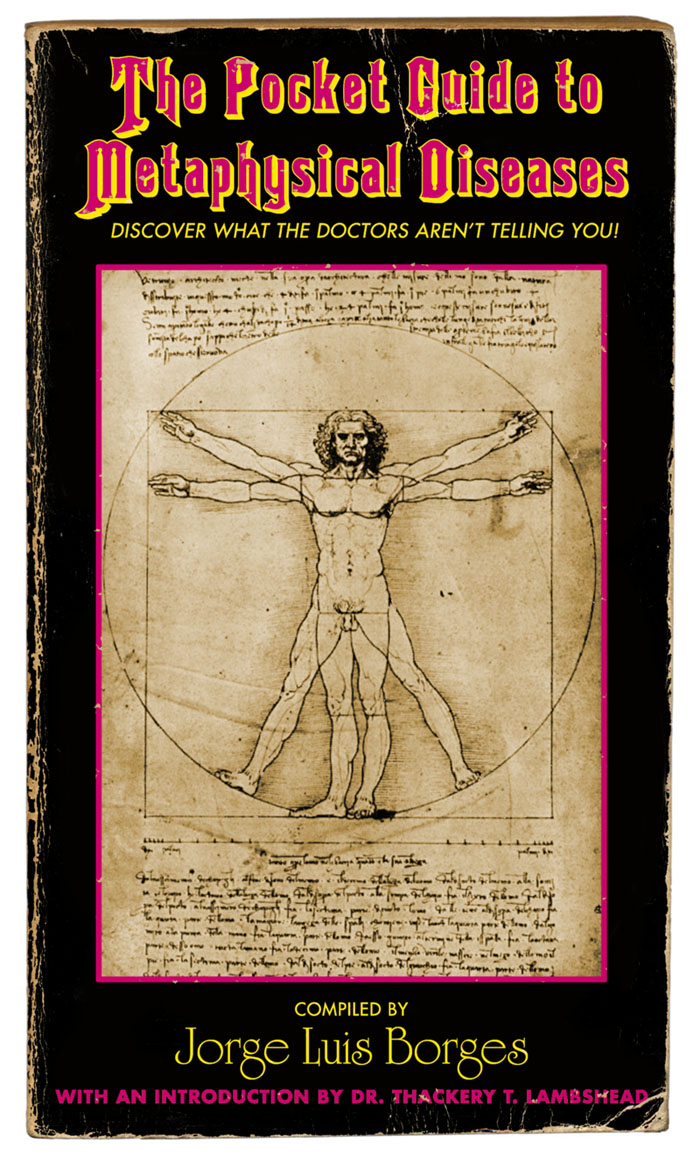
The Spanish language edition of the Thackery T Lambshead Pocket Guide to Invented and Discredited Diseases (1977).

All of which reminded me of my own fake Borges covers from 2003, supposedly Borges’ own compilations of The Thackery T Lambshead Pocket Guide to Invented and Discredited Diseases, the fake disease guide edited by Jeff VanderMeer and Mark Roberts. These were created in colour but printed in black-and-white. Since they’ve appeared here before I’ve included links this time to larger copies. In a detail that Borges might have appreciated the idea for the disease guide came about after Modern Word editor Allen B. Ruch, who often manifests as The Great Quail, remarked to Jeff VanderMeer that “I think I have contracted Mad Quail Disease”. You have to be cautious with casual quips to writers, you never know where they might lead.

ttl8.jpg

An English paperback reprint of the Borges edition (1979).

Update: While we’re on the subject… Remember the Fake Books from The Royal Tenenbaums? Here They Are!

Elsewhere on { feuilleton }
The book covers archive

Previously on { feuilleton }
Borges and I
Recovering Viriconium
Forbidden volumes
Pasticheur’s Addiction

Borges and I

borges.jpg

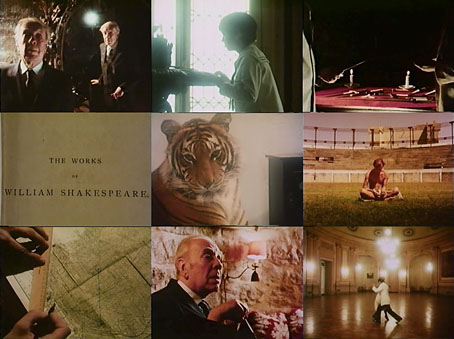
Another piece of revenant television to tick off the “When will I see this?” list. I mentioned David Wheatley’s film Borges and I back in January in a post about the director’s dramatisation of the life and work of René Magritte. Wheatley’s student film secured for him a job as a BBC director at a time when the Arena arts series was one of the best things being produced by the corporation. Borges and I was filmed in 1982 and broadcast a year later, an event I managed to miss to my considerable regret. Once again Ubuweb has turned up the goods with a copy from an American video tape. It’s not ideal—all the Spanish sequences would have been subtitled in the original broadcast—but I’m not going to complain. This 80-minute film is not only the best Anglophone documentary I’ve seen on Borges, it was produced in collaboration with the author who for much of the running time discusses his life and work in English. The tape copy also frustratingly lacks credits but the unseen American interviewer and narrator would appear to be translator and collaborator Norman Thomas di Giovanni, a writer who later found himself and his work marginalised by the Borges estate. Between the interviews and readings there are dramatised sequences from The Meeting, Funes, the Memorious, The South, The Circular Ruins, Death and the Compass, and The Sartorial Revolution, one of the collaborations with Adolfo Bioy Casares. Plus, of course, the expected complement of mirrors, tigers and a duel with knives. The budget must have been generous: scenes were shot in Argentina and Uruguay, and we also see Borges at his favourite lodging in Paris: L’Hôtel in the Rue des Beaux-Arts, a building which now bears plaques celebrating the visits of Borges and another famous literary resident, Oscar Wilde.

Previously on { feuilleton }
René Magritte by David Wheatley
L’Hôtel, Paris
Borges documentary
Borges in Performance

Weekend links 93

favre.jpg

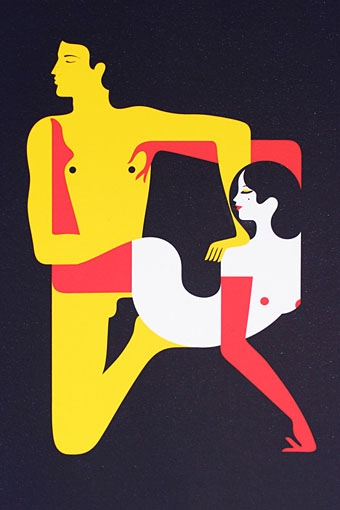
One of a series of tremendous designs by Malika Favre for a new Penguin edition of the Kama Sutra.

• New interviews: “…Americans — mired in individualism — prefer to think in terms of identity than in terms of roles and masks. An American would never have called a novel Confessions of a Mask.” Nicholas Currie, better known via his Momus mask. | “The horror in music comes from the silence,” says John Carpenter. | “It’s dangerous to be an artist. That’s what we talk about in Naked Lunch — and it’s dangerous on many different levels. Politically it can be dangerous, but psychologically it can be quite dangerous too. You make yourself very vulnerable. You put yourself out there and of course you open yourself up to criticism and attack.” David Cronenberg at the Los Angeles Review of Books.

• New books: Dotter of Her Father’s Eyes, a Joycean memoir by Mary M Talbot and Bryan Talbot. | A stack of new works from Strange Attractor including a collection of Savage Pencil‘s Trip or Squeek comic strips. | Robert Irwin’s Visions of the Jinn: Illustrators of the Arabian Nights. A shame about the high price on the latter but I’m sure it looks wonderful.

• The Blu-ray release of Wings (1927), William A. Wellman’s silent drama about air aces during the First World War, has prompted renewed attention for the passionate relationship between its two male leads, especially this deathbed scene which is tagged as the first same-sex kiss in cinema. That’s arguable, of course, but it’s certainly a touching moment.

• From 2009: Searching the Library of Babel, a list of all the stories in all 33 volumes of The Library of Babel, a 1979 Spanish language anthology of fantastic literature edited by Jorge Luis Borges.

• Lots of newpaper attention in the past week for the not-so-fresh news that magic mushrooms could help fight depression. Nature went into the detail of the latest studies.

French group Air have written the score for a rare colour print of Le voyage dans la lune (1902) by Georges Méliès. Air’s YouTube channel has extracts.

• From 1989: The Merchant of Shadows by Angela Carter.

Will Hunt on the Ghost River of Manhattan.

Selected Letters of William S. Burroughs

Sexy Boy (1998) by Air | Surfing On A Rocket (2003) by Air | Mer Du Japon (2007) by Air.

William Burroughs interviews

bunker.jpg

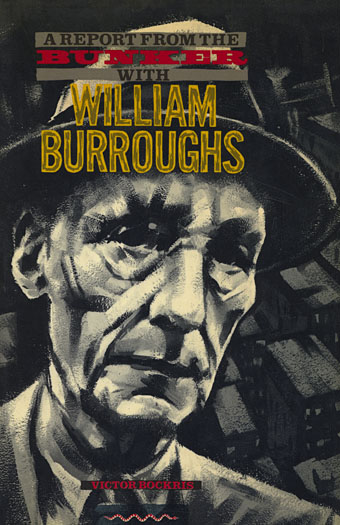
With William Burroughs: A Report from the Bunker (1982) by Victor Bockris. Design by Neville Brody.

If it’s interviews you want, some of the most entertaining are in Victor Bockris’s collection of conversations between El Hombre Invisible and the various New York notables ferried round to sit at Burroughs’ table in his Bowery Bunker. The British edition published by Vermilion was always preferrable for its Neville Brody cover design beside which the US original looks very dull indeed. The encyclopedic Burroughs site Reality Studio has copious lists of earlier Burroughs interviews. They also note the occasions when he put on his journalist hat and went out to interview someone equally famous, usually at the behest of a music magazine. A couple of those pieces are online thanks to the diligence of various fans.

diamond_dogs.jpg

Diamond Dogs (1974), a blend of Lou Reed, George Orwell and William Burroughs.

One such is the 1974 interview with David Bowie for Rolling Stone in which Bowie discusses Burroughs as an influence while Burroughs informs the singer that the heroes of his latest novel, The Wild Boys, favour the Bowie knife as a weapon:

Bowie: Nova Express really reminded me of Ziggy Stardust, which I am going to be putting into a theatrical performance. Forty scenes are in it and it would be nice if the characters and actors learned the scenes and we all shuffled them around in a hat the afternoon of the performance and just performed it as the scenes come out. I got this all from you Bill… so it would change every night.

burroughspage.jpg

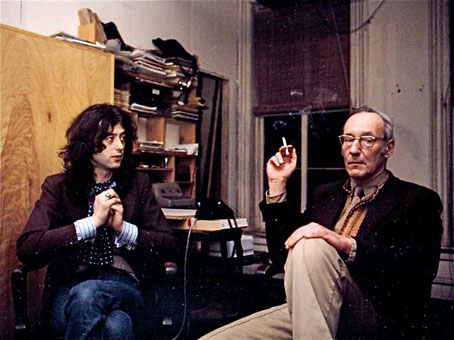
A year later Burroughs got together with Jimmy Page for Crawdaddy magazine where the discussion circles around some of the same subjects, notably the writer’s obsession with sound as a weapon. There’s also this comment from Burroughs which is the kind of thing that always gets my neurons firing:

Antony Balch and I collaborated on a film called Cut-Ups, in which the film was cut into segments and rearranged at random. Nicolas Roeg and Donald Cammell saw a screening of the film not long before they made Performance.

Roeg later directed Bowie, of course, and is one of the dinner guests in With William Burroughs, while Jimmy Page and Donald Cammell both appear in Kenneth Anger’s Lucifer Rising. The connections go round and round… Read the whole piece in a post I made a few years ago at the late, lamented Arthur magazine site.

Elsewhere on { feuilleton }
The William Burroughs archive