Weekend links 11

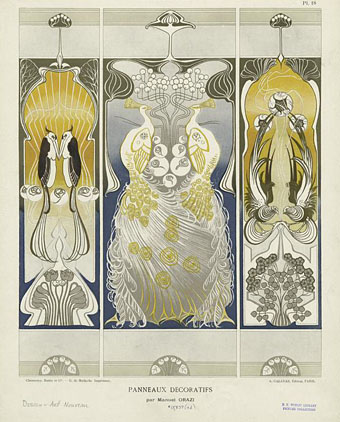
orazi4.jpg

Panneaux decoratifs (1900) by Manuel Orazi at NYPL.

Ghostsigns: “a collaborative national effort to photograph, research and archive the remaining examples of hand painted wall advertising in the UK and Ireland.”

• Golden Age Comic Book Stories posts some Alphonse Mucha.

Voyage Fantastique – An illustrated guide to the body and mind at A Journey Round My Skull.

The gallery of the International Exhibition of Calligraphy.

Trevor Wayne Pin-Up Show, a new photo collection of the tattooed Mr Wayne which includes photos and a foreword by Clive Barker.

Phallophonies, a gallery exploring the penis in religious art. Related: “Churchgoers are outraged over a crucifix in a Catholic church that they say shows an image of genitalia on Jesus.”

Hollingsville: “Expect live and unscripted wanderings around voodoo science parks, examinations of cities as battle suits and thoughts on pods, capsules and world expos.”

Phantom Circuit #33 is a Ghost Box special featuring an interview with Jim Jupp (Belbury Poly) and Julian House (The Focus Group). Related: Ghost Box films at YouTube.

Eldritchtronica and Wyrd Bliss, a mixtape by Simon Reynolds.

• Avant garde music and cinema meet at The Sound of Eye.

• Make your own newspaper with Newspaper Club.

Drawdio: A pencil that lets you draw music.

Yoko Ono collects rare books.

KittehRoulette.

• Song of the week: The Four Horsemen (1972) by Aphrodite’s Child.

Hector Guimard sketches

guimard1.jpg

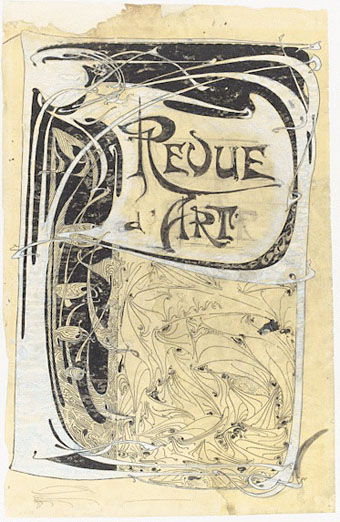
Projet pour la couverture Revue d’art (1899).

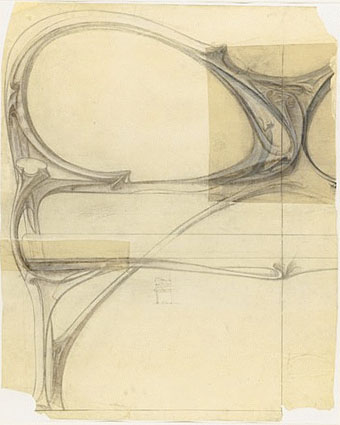
French architect and designer Hector Guimard (1867–1942) is most renowned today for his entrances to the Paris Metro but his work extended from architecture to interior and graphic design, much of it a superior application of the Art Nouveau style. Le cercle Guimard is a site devoted to the designer’s work (French-only for now) while these sketches are from a substantial collection at the Musée d’Orsay, Paris.

guimard2.jpg

Projet de demi-canapé pour Mme Legrand (1900).

Previously on { feuilleton }
Temples for Future Religions by François Garas
Elizabetes Iela 10b, Riga
Atelier Elvira
Louis Bonnier’s exposition dreams
The Maison Lavirotte
The House with Chimaeras

The panoramic towers of Prague

prague1.jpg

The Tower at Charles Bridge, Old Town.

More panoramas of Prague from 360 Cities by Jeffrey Martin, a photographer who’s made a speciality of capturing the city in 360º views. Among his collection are a number of photos taken from Prague’s many towers and steeples including a few where he’s managed to remove the supporting building, as in the view from the Charles Bridge above. This gives the effect of floating in weightless suspension above the city and may well induce alarm in vertigo sufferers. Needless to say, all these are best viewed on the full screen setting.

prague2.jpg

The Powder Tower (Prasna Brana).

prague3.jpg

Mikulas Tower.

prague4.jpg

Prague TV Tower Babies 1; one of David Cerný’s crawling baby sculptures looks over the city. See also the 18 gigapixel view from the tower.

Elsewhere on { feuilleton }
The panoramas archive

Previously on { feuilleton }
Karel Plicka’s views of Prague

Albrecht Dürer’s Triumphal Arch

durer.jpg

Albrecht Dürer’s Triumphal Arch (1515), a wall-sized print produced by 192 separate print blocks. I had a good look at this the last time I was the British Museum. The Museum’s site has some sample details of the work but the size of them isn’t so good, unfortunately. This is one of those pictures you either have to see in situ or find a huge digital copy to scrutinise in order to fully appreciate its incredible detail.

The Triumphal Arch is one of the largest prints ever produced. It was commissioned by the Holy Roman Emperor Maximilian I (1459-1519). The programme was devised by the court historian and mathematician, Johann Stabius, who explains underneath that it was constructed after the model of ‘the ancient triumphal arches of the Roman Emperors’. (More.)

The Triumphal Arch at The American Institute for Conservation | An overview of the prints and some good views of the full scale of the work.
The Triumphal Arch at Backtoclassics.com | A large view and some details.

Elsewhere on { feuilleton }
The etching and engraving archive

The art of Melchior Lechter, 1865–1937

lechter1.jpg

The first issue of yesterday’s arts and crafts magazine Deutsche Kunst und Dekoration includes an article about Melchior Lechter, a German artist and designer whose illustration work I knew from books by gay poet Stefan George but who seems unjustly neglected by fin de siècle art histories. The reminder prompted me to search a bit more actively and doing so turned up another Internet Archive document, Melchior Lechter, a monograph from 1904 by Maximilian Rapsilber. These are Google scans and the quality is very good for once, with a collection of impressive graphic works in Lechter’s religious Art Nouveau style, as well as photos of his furniture and stained glass window designs. I can’t say much more about artist since all the available documentation is in German but the visuals in Rapsilber’s book make me wish we could see more of his work.

(Note: if you want to download the full PDF, do so here.)

lechter2.jpg

lechter3.jpg

lechter4.jpg

lechter5.jpg

lechter6.jpg

lechter7.jpg

lechter8.jpg

Elsewhere on { feuilleton }
The illustrators archive

Previously on { feuilleton }
Deutsche Kunst und Dekoration