Hodgson versus Houdini

whhhh.jpg

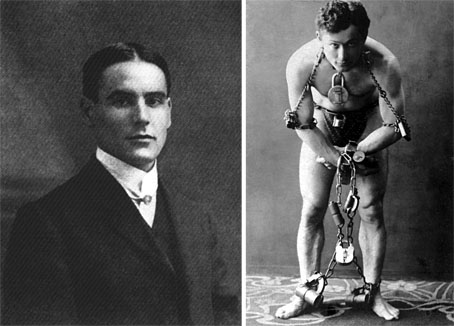
William Hope Hodgson and Harry Houdini.

Work this week has had me scouring the Internet Archive’s scanned books more than usual for source material. You’ll see the fruits of this in due course, but the search turned up a small book from 1922, The Adventurous Life of a Versatile Artist: Houdini, an anonymous account of the escapologist’s career padded out with many newspaper reports of his exploits in various cities. One of these is the notorious meeting between Houdini and writer William Hope Hodgson on the stage of the Palace Theatre, Blackburn, Lancashire, in 1902. Hodgson was still running his School of Physical Culture in the town at this time, and was otherwise unknown. He only began writing the weird fantasy for which he’s celebrated when the school failed and he needed to earn a living some other way.

The following account has been reprinted often enough in collections of Hodgson ephemera but this is the first time I’ve seen it in a Houdini book. Houdini was a hero of mine when I was 12 or 13, not so much for his escapology but for his magic tricks. I had an obsession with stage magic for a while, and had read and re-read JC Cannell’s The Secrets of Houdini (1932), a book which exposed for the first time the workings of Houdini’s tricks and many of his escape acts. It was a surprise after discovering Hodgson’s work to read about the Houdini encounter. Strangest of all is that Hodgson’s books were later championed by HP Lovecraft who ghost-wrote Under the Pyramids (aka Entombed with the Pharaohs or Imprisoned with the Pharaohs) for Houdini, a story published in Weird Tales in 1924. I’ve wondered for years whether Houdini or Lovecraft were aware of this connection. Probably not. Hodgson in 1902 was unknown, and Houdini’s career and fame were such he would have been far too busy to dwell on the matter or care what happened to the diminutive bodybuilder who treated him so badly that evening.

*

AN EPISODE IN HOUDINI’S LIFE.

Star, Blackburn, England, Saturday, Oct. 25, 1902.

MANACLED BY A STRONG MAN.
TRUSSED TILL MIDNIGHT.
Unparalleled Scenes at the Palace Theatre.

Never in the history of Blackburn or music hall life has there been witnessed so remarkable a scene as occurred last night. Houdini, the Handcuff King, and Mr. Hodgson, principal of the School of Physical Culture, provided a big sensation for the patrons of the Palace Theatre, Blackburn.

Houdini, who has been appearing at the Palace during the week, claims to be able to release himself from any of the regulation shackles or irons used by the police of Europe or America, and offered nightly to forfeit £25 if he failed to prove his claim. Mr. Hodgson, of the Physical Culture School, Blackburn,took up the challenge, stipulating that he was to use his own irons and fix them himself. Houdini consented, and deposit the £25 with the editor of the Daily Star.

The trial of skill and strength was fixed to take place last night, and the crowd which came together to witness it crammed the theatre literally from floor to ceiling — even standing room being ultimately unobtainable.

Shortly after ten o’clock the parties to the challenge faced each other, and excitement at once became intense.

Mr. Hodgson produced 6 pairs of heavy irons, furnished with clanking chains and swinging padlocks. These were carefully examined by Houdini, who raised some disappointment and much sympathetic cheering by stating that his claim was that he could escape from “regulation” irons. The “cuffs ” brought by Mr. Hodgson, he said, had been tampered with — the iron being wrapped round with string, the locks altered, and various other expedients adopted to render escape more difficult.

Mr. Hodgson’s answer, given dramatically from the stage,was that he stipulated that he should bring his own irons.

Houdini again protested that Mr. Hodgson was going beyond the challenge, but added that he was quite willing to go on, if only the audience would give him a little time in which to deal with the extra difficulties.

This announcement was greeted with great cheering, and the work of pinioning proceeded.

First, Mr. Hodgson, with the aid of a companion, fixed a pair of irons over Houdini’s upper arm, passing the chain behind his back and pulling it tight, and fixing the elbows close to the sides.

To make assurance doubly sure, he fixed another pair in the same way, and padlocked both behind.

Then, starting with the wrists, he fixed a pair of chained “cuffs” so that the arms, already pulled stiffly behind, were now pulled forward. The pulling and tugging at this stage was so severe — the strong man exercising his strength to some purpose — that Houdini protested that it was no part of the challenge that his arms should be broken.

He also reminded Mr. Hodgson that he was to fix the irons himself.

This led to Mr. Hodgson’s assistant retiring.

Proceeding, Mr. Hodgson fixed a second pair of “cuffs” on the wrists and padlocked both securely, Houdini’s arms being then trussed to his side so securely that escape seemed absolutely impossible.

Still Mr. Hodgson was not finished with him.

Getting Houdini to kneel down, he passed the chain of a pair of heavy leg irons through the chains which bound the arms together at the back. These were fixed to the ankles,and after a second pair had been added, both were locked,and Houdini now seemed absolutely helpless.

A canopy being placed over Houdini in the middle of the stage, the waiting began, and excitement grew visibly every minute.

Meanwhile Mr. Hodgson and others kept strict watch on the movements of Houdini’s wife and brother (Hardeen), who were both on the stage.

At the end of about 15 minutes the canopy was lifted and Houdini was revealed lying on his side, still securely bound.It was at first thought he had fainted, but he soon made it known that all he wished was to be lifted up. This Mr. Hodgson refused to do, at which the now madly excited audience hissed and ” booed ” him for his unfair treatment, and Hardeen lifted his brother to his knees. The curtain of the cabinet was again closed.

Another 20 minutes passed, and again the curtain was lifted. This time Houdini said his arms were bloodless and numb owing to the pressure of the irons, and asked to have them unlocked for a minute so that the circulation could be restored.

Mr. Hodgson’s reply, given amidst howls, was: “This is a contest, not a love match. If you are beaten, give in.”

Great shouting and excited calling followed, which was renewed when Dr. Bradley, after examining Houdini, said his arms were blue, and it was cruelty to keep him chained up as he was any longer.

Still Mr. Hodgson was obdurate, and the struggle proceeded, Houdini again appealing for time.

Fifteen minutes more: Houdini appeared and announced that one hand was free.

This was the signal for terrific cheering, which was continued after the canopy was dropped.

At intervals Houdini now appeared, and announced further progress in his escape; and when, shortly after midnight, he came out with torn clothing and bleeding arms, and threw the last of the shackles on the stage, the vast audience stood up and cheered and cheered, and yelled themselves hoarse to give vent to their overwrought feelings. Men and women hugged each other in mad excitement. Hats, coats, and umbrellas were thrown up into the air, and pandemonium reigned supreme for 15 minutes.

Houdini, when quietness had been restored, said he had been doing the handcuff trick now for 14 years, but never had he been subjected to such brutality as that to which his bleeding arms and wrists gave witness.

When Houdini again obtained a hearing, it was to state that, not only had the irons been altered, but the locks had been plugged.

It was well after midnight when the huge audience left the theatre, and broke up into excited, gesticulating groups.


Previously on { feuilleton }
Weekend links: Hodgson edition
Druillet meets Hodgson

Design as virus 14: Curse of the Dead

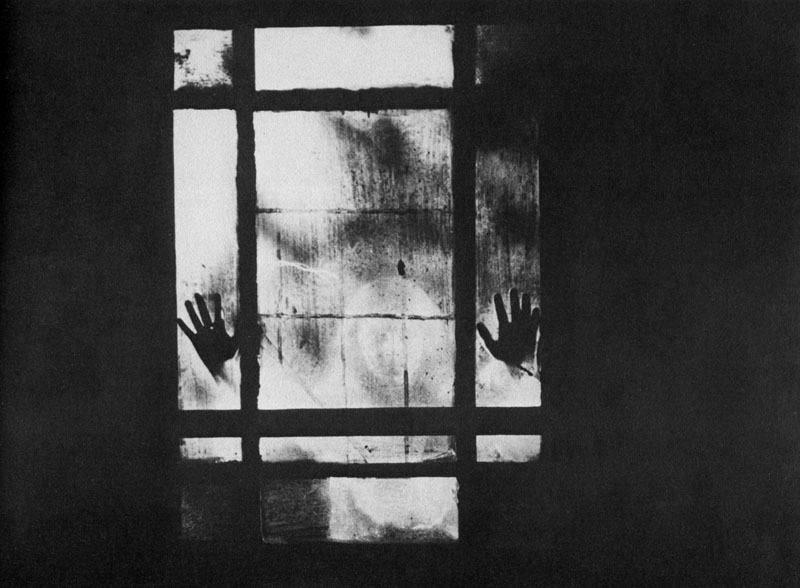
curse.jpg

Curse of the Dead (1966).

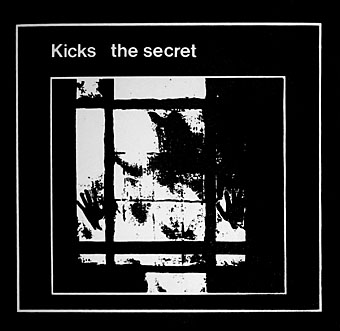
Continuing an occasional series. This photograph, reproduced in Denis Gifford’s A Pictorial History of Horror Movies (1973), intrigued me for years. Gifford’s book is a very good collection of stills from horror films of all kinds, ranging from the earliest days of cinema to the 1970s. The pictures are mostly black-and-white, and are often far more stimulating than the films they would have been promoting. The text generally refers to the films depicted but in the case of this picture there’s only a single credit, Curse of the Dead (1966), a film I’d never heard of. These kinds of mysteries have been banished for good now we have resources like IMDB where you can learn immediately that Curse of the Dead is a Mario Bava film whose original Italian title was Operazione Paura. (It’s also known, with the usual hyperbole, as Kill, Baby…Kill!) “An 18th century European village is haunted by the ghost of a murderous little girl” says the summary. Bava’s films were always visually impressive so it’s really no surprise to find it was one of his.

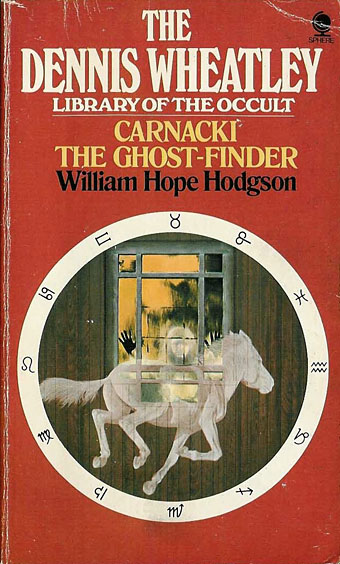
carnacki.jpg

The first repeat usage I know of is this cover from the Dennis Wheatley Library of the Occult series published by Sphere books from 1974–77. Sphere used Wheatley’s name to sell a lot of reprints but the series was substantial and featured a number of titles that would have been appearing in paperback for the first time. Unfortunately the best thing about the covers was the uniform design of the horoscope circle against a coloured background. The quality of the illustrations was very uneven so it’s probably for the best that the artists and photographers went uncredited.

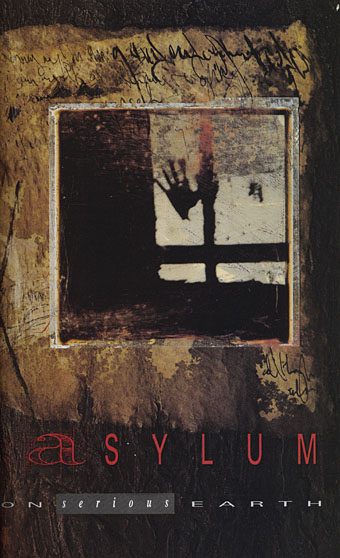
arkham.jpg

Then there’s one of Dave McKean’s title pages for Arkham Asylum (1989), the heavily symbolic Batman book he created with Grant Morrison. There’s only a portion of the picture but I’d say it’s a good guess he used the Gifford book since at least one of the panels in his earlier Violent Cases was based on another of the Gifford photos.

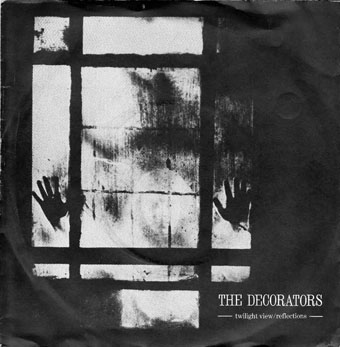
This isn’t all, I’m sure I’ve seen the Gifford picture used on a record sleeve but there’s little way of discovering which one unless somebody recognises the photo. If anyone knows, please leave a comment. And despite all of this I still haven’t seen Bava’s film even though I’m told it had a strong influence on Twin Peaks. This account at The Horror Digest is slightly disappointing when a colour equivalent of the Gifford still lacks the particulated creepiness of the black-and-white version. More surprising is finding yet another film featuring the arms-out-of-the-walls motif. This obviously requires further investigation.

Update: Thanks to Irv in the comments for finding the following singles so quickly. The Decorators sleeve was the one I remembered. (See it larger here.) Kicks were an Australian band. Odd that these were both released in the same year.

decorators.jpg

Twilight View (1980) by The Decorators. Design by Malcolm Garrett.

kicks.jpg

The Secret (1980) by Kicks.

Previously on { feuilleton }
Design as virus 13: Tsunehisa Kimura
Design as virus 12: Barney’s faces
Design as virus 11: Burne Hogarth
Design as virus 10: Victor Moscoso
Design as virus 9: Mondrian fashions
Design as virus 8: Keep Calm and Carry On
Design as virus 7: eyes and triangles
Design as virus 6: Cassandre
Design as virus 5: Gideon Glaser
Design as virus 4: Metamorphoses
Design as virus 3: the sincerest form of flattery
Design as virus 2: album covers
Design as virus 1: Victorian borders

A Reverbstorm jukebox

lordhorror.jpg

Another in a series of posts that supplement the forthcoming Reverbstorm book. Music, especially the rock’n’roll of the mid-50s to the mid-60s, was an important motor in Reverbstorm‘s creation: the title comes from the lyrics to Paul Temple’s song, and the song itself was included as a CD-single with the first issue. Each issue opened with a playlist of ten pieces of music offered as a complement to the narrative. We alternated the choices: David Britton chose the first ten, I chose ten for the second issue and so on. Dave’s choices were mainly the rock’n’roll he’s been listening to all his life while I tried to balance this with a more eclectic selection. But in Reverbstorm itself it’s the rock’n’roll that’s referenced the most, and it was this era of music we were both listening to a great deal during the composition of the series.

What follows is a guide to some of the songs and instrumentals referred to in the book, together with some of my favourite tracks from a compilation tape I used to play repeatedly while I was drawing. A few of these tracks are very obscure one-off singles so this list serves an additional function in saving people the trouble of hunting around.

bo.jpg

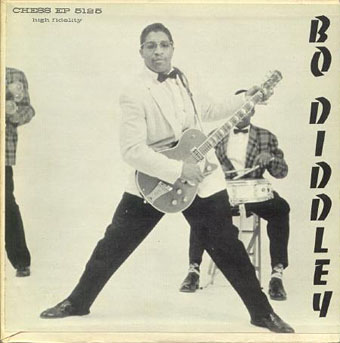
Bo Diddley (1955) by Bo Diddley
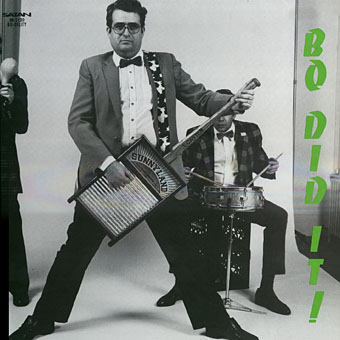
Part 3 of Reverbstorm, “The Big Beat of Apes”, is subtitled “Bo Diddley meets William Hope Hodgson”, and it’s to the Bo Diddley Beat that we’re referring. Diddley recycled his highly influential riff/rhythm many times, and inspired many cover versions, pastiches or outright thefts. A heady mix of these may be heard on one of the key albums for the creation of the series, a 1989 vinyl-only compilation entitled Bo Did It! which gathered seventeen obscure Diddley Beat singles. A couple of these are listed in Lord Horror’s radio playlist seen in part two, while others are present in this list. But this Bo Diddley song is where it all begins.

Bottle To The Baby (1956) by Charlie Feathers
Classic hiccoughing rockabilly and a favourite of Savoy cult band The Cramps who covered Feathers’ I Can’t Hardly Stand It. Bottle To The Baby gets a mention in part 3 while Charlie himself is quoted in part 8.

The Monkey (Speaks His Mind) (1957) by Dave Bartholomew
A moral tale from Mr Bartholomew, also quoted in part 3.

Esquerita And The Voola (1958) by Esquerita
Often cited as the guy that Little Richard stole all everything from, the very flamboyant Eskew Reeder Jr had an erratic career which yielded this berserk highlight, the B-side of his Rockin’ The Joint single. I first heard this when Dave played it in Savoy’s Peter Street shop one day and couldn’t believe how crazy it sounded. It’s also hard to believe it was on a major label. Play loud.

Hootchy-Koo (1958) by Larry Williams
Larry Williams was the prince of big bawdy numbers like this, and a favourite of The Beatles who covered three of his songs. The version I used to listen to was a slightly different demo recording (not on YT, unfortunately). Lucy Swan liked Hootchy-Koo so much she mentions it in her Lord Horror-related novel The Adventures of Little Lou.

Rumble (1958) by Link Wray
The ultimate swaggering riff and the moment where the guitar takes over from the saxophone as the locus of menace in popular music. Most people have probably heard this in the background of the Jack Rabbit Slim’s scene in Pulp Fiction but you’ll find it elsewhere, notably a Ry Cooder cover version in Streets of Fire, the highlight of an otherwise lacklustre film.

Alligator Wine (1958) by Screamin’ Jay Hawkins
The witches’ recipe from Macbeth gets reworked by Leiber & Stoller as a swampland love potion for Screamin’ Jay.

Storm Warning (1959) by Mac Rebennack
Before a bullet ruined one of his fingers, Dr John was guitarist Mac Rebennack whose early career produced some impressive singles such as this Diddley Beat instrumental. That title is now impossible to disassociate from the devastation wrought by Hurricane Katrina in 2005.

Tall Cool One (1959) by The Wailers
The Wailers, a Seattle group, are often listed now as The Fabulous Wailers to distinguish them from Bob Marley’s group. They had a knack for catchy instrumentals; in addition to this there was also Mau Mau.

Wang Dang Doodle (1960) by Howlin’ Wolf
Given a choice between this version of Willy Dixon’s song and the later Koko Taylor recording (which includes Dixon on vocals) I’d probably choose Koko’s but the Wolf came first, and this was the one Dave listed in the first issue of the series.

I Want Some of That (1961) by Kai Ray
One from the Lord’s playlist in part 2.

Let There Be Drums (1961) by Sandy Nelson
Sandy Nelson made a career out of recording drum instrumentals. This thundering opus is his finest moment.

bodidit.jpg

Bo Did It! (1989)

Boom Stix (1962) by Curley and The Jades
Who the hell were Curley and The Jades? Don’t ask me but this obscure single from the Bo Did It! collection manages to weld a Sandy Nelson drum break to the Diddley Beat.

Papa-Oom-Mow-Mow (1962) by The Rivingtons
One of the great nonsense hits, and endlessly imitated afterwards, the title gets a mention in part 2. Kim Fowley had something to do with the release so it’s fitting that he’s wound up with Savoy as well, having written the insert notes to the recent Fenella Fielding album.

Surfin’ Bird (1963) by The Trashmen
Of all the copyists and imitators that chased The Rivingtons’ success none can approach these two minutes and twenty seconds of demented genius.

The Fourth Dimension (1964) by The Ventures
I find a little of The Ventures’ twanging instrumentals usually goes a long way, like many of these groups they work best on compilations. But I do like The Ventures in Space which is where this spooky David Lynch-style number originates.

Strychnine (1965) by The Sonics
Psycho would have been the obvious choice here but I tried to avoid being predictable. Everything The Sonics recorded sounds cranked to the point of distortion, and this is no exception. Garage punk at its wildest.

Bop Diddlie In The Jungle (1966) by Tommy King and The Starlites
Another track from Lord Horror’s playlist found on the Bo Did It! collection, this is Bo’s Diddley Daddy relocated to a jungle setting.

Electricity (1967) by Captain Beefheart and his Magic Band
The whole of Reverbstorm is dedicated to Trout Mask Replica but this was a track from one of my playlists. A compelling argument for why there should be more theremins in pop music.

I Wanna Be Your Dog (1969) by The Stooges
Lust For Life was the album I was playing a lot whilst drawing but this song was another of Dave’s choices. One of the Savoy “Lord Horror” singles in the 1980s was a cover of Raw Power.

Garbageman (1980) by The Cramps
And another of the Savoy “Lord Horror” singles was a cover of this unstoppable beast from The Cramps. “Do you want the real thing, or are you just talkin’?”

Previously on { feuilleton }
Reverbstorm: Bauhaus Horror
Reverbstorm: an introduction and preview

The art of Robert Lawson, 1892–1957

lawson1.jpg

Sargasso Sea (no date).

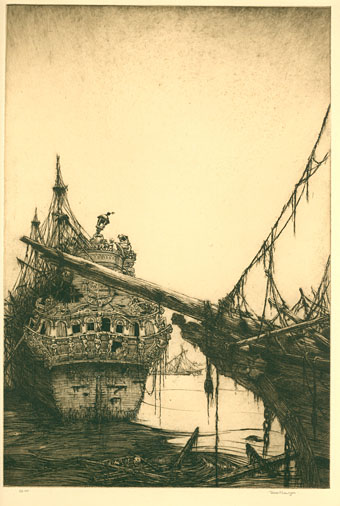
Did I say Sargasso Sea? Blame William Hope Hodgson some of whose sea stories I was re-reading over the weekend. An idle search for Sargasso images turned up this tremendous etching by American author and illustrator Robert Lawson, part of a collection of equally fine work at the Florida State University. There’s little information about this picture, unfortunately, it’s a numbered print so it’s most likely a one-off piece but it would make an ideal cover illustration for a Hodgson collection. It hadn’t occurred to me before but the rambling third film in the Pirates of the Caribbean series might have been improved if they’d made use of the old Sargasso-as-oceanic-graveyard legend, it’s just the place you’d expect to find Davy Jones and his piscine crew.

Bud Plant has more about Robert Lawson’s career and examples of his book illustrations.

lawson2.jpg

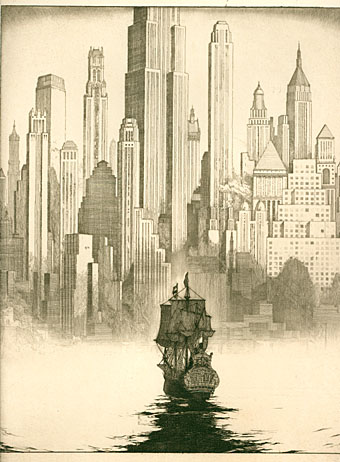
Untitled (CityShip) – Manhattan (no date).

Elsewhere on { feuilleton }
The etching and engraving archive
The illustrators archive

Previously on { feuilleton }
Coming soon: Sea Monsters and Cannibals!
Druillet meets Hodgson
Davy Jones

Weekend links 45

sa4.jpg

That essential journal of esoteric culture, Strange Attractor, announced a fourth number this week sporting a psychedelic cover which may be the work of Julian House (no credit is given on the SA site). As to the contents:

From Haiti and Hong Kong to the fourth dimension and beyond: discover the secrets of madness in animals; voodoo soul and dub music; ancient peacock deities; Chinese poisoning cults; the history of spider silk weaving; heathen mugwort magic; sentient lightning; Jesuit conspiracy theories; junkie explorers; Dali’s Atlantis; the resurgence of Pan (in London’s Crouch End); anarchist pirates on Madagascar; an ancient Greek Rip Van Winkle; French anatomical waxworks; Arthur Machen’s forgotten tales and Alan Moore’s unpublished John Dee opera.

Further details and the means to order a copy can be found here.

• Resonance FM’s Weird Tales For Winter has returned beginning with a presentation of The Gateway of the Monster, one of the better Carnaki tales by William Hope Hodgson. The story is read by Moon Wiring Club‘s Ian Hodgson (no relation) and the musical atmospheres are provided by The Advisory Circle. I ought to have posted this news yesterday since you’ll have missed the broadcasting of the first half but the second half will go out at midnight (UK time) on Monday. Details here, and the next release on the Café Kaput label in February will be the soundtrack, Music for Thomas Carnaki (Radiophonic Themes & Abstracts).

keepcalmcthulhu2.jpg

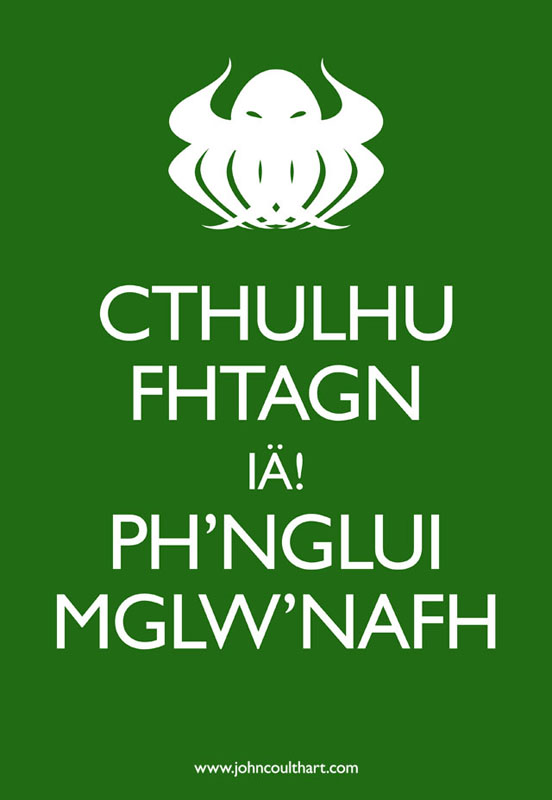
• The Keep Calm and Carry On Image Generator lets you work your own variations on the ubiquitous poster. It wouldn’t work for me, however, so I rolled up my sleeves and made my own. This may be good as a CafePress design, yes?

Interplay is an album by John Foxx and The Maths due to be released on March 21st. As with last year’s collection of Foxx instrumental pieces, DNA, the package design is by Jonathan Barnbrook. John Foxx first came to prominence as the lead singer in Ultravox (do I need to say “of course”? Okay…“of course”) and Ultravox’s debut album was part-produced by Brian Eno. It’s been painfully obvious recently (and it pains me to say it) that Foxx’s DNA was a far more accomplished and engaging work than Eno’s recent collection of over-hyped instrumentals. Related: Barnbrook Design’s albums of 2010.

Word Horde 2.0, “a substantial archive of manuscript material, correspondence, and books and printed matter, mostly signed” from the William Burroughs archives can be yours for $260,000. Related: William Burroughs’ Wild Boys photos. Also: Rudy Rucker on David Cronenberg’s Naked Lunch.

• “Nabokov described how ‘a modern taxonomist straddling a Wellsian time machine with the purpose of exploring the Cenozoic era’ would encounter the following series of events in the evolution of these butterflies…” The Royal Society confirms that a contentious theory of Vladimir Nabokov’s concerning the descent of butterfly populations was accurate.

• The work of Gérald Bertot aka Thomas Owen, a Belgian author of weird fiction, is explored at A Journey Round My Skull.

The Other Side of the Wind, Orson Welles’ unfinished film from 1972, may finally be given a release.

• Jon Savage celebrates Roy Harper and his extraordinary Stormcock album.

Philip Pullman wants the Tory philistines to leave our libraries alone.

• Rick Poynor takes a dérive through the arcades of Paris.

Space music new and old.

Young Savage (1977) by Ultravox | Clicktrack (2010) by John Foxx & Jonathan Barnbrook.