William E. Jones on Fred Halsted

halsted1.jpg

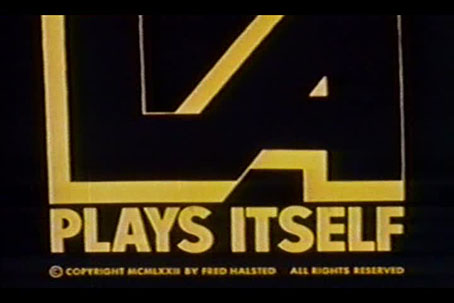
Presenting an interview by John Wisniewski with William E. Jones, author of Halsted Plays Himself (2011). The subject is gay filmmaker and performer Fred Halsted (1941–1989) whose 1972 film LA Plays Itself was a pioneering piece of low-budget cinema which combined a fragmented view of Los Angeles with explicit liaisons between several men, one of them portrayed by Halsted himself. Halsted took advantage of the period between 1970 and 1975 when porn in the US was no longer illegal but hadn’t yet been industrialised. As with Genet’s Un Chant d’Amour, what you get on the screen isn’t a product, it’s the representation of an obsession. It’s this that makes LA Plays Itself a still surprising and provocative piece of work.

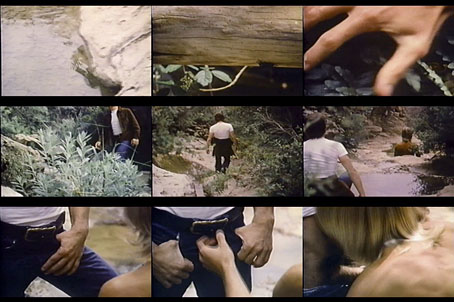
I arrived at this film and Halsted somewhat belatedly, in fact I don’t think I’d read anything about him at all until William E. Jones was interviewed when his book was published. (Matters haven’t been helped in this country by the way hardcore porn of any kind was still illegal into the 1990s.) LA Plays Itself fascinates for the view it gives of the LA cruising scene which John Rechy described in considerable detail in The Sexual Outlaw. It’s a curiously hybrid film, neither straightforward porn—many of the sex scenes are fragmented—nor is it narrative fiction or outright documentary. Together with the recently reissued films of Peter de Rome, it’s the kind of thing that few people would be likely to make today, despite the easier access to film technology and the relaxing of censorship. And like all porn films of this era, it now has a unique look simply because it’s been shot on film.
halsted2.jpg

None of Halsted’s films appear to be on DVD at the moment, and as William Jones notes below, Sextool (1975), the film Halsted regarded as his major work, may only exist as a single fading print.

Here’s John and William.

* * *

John Wisniewski: Why did you choose to write your book on filmmaker Fred Halsted?

William E. Jones: For several years I made money in the adult video industry, producing budget DVD compilations (4 hours for $10) sold in adult video stores. Before technological innovation rendered my job redundant, I watched over 700 hours of gay adult film and video produced between 1969 and 1999. In such vast quantities, the material, especially from the second half of the period, began to seem nightmarish in its ugliness. I would relish the opportunity to see any earlier title, produced before 1985, directed more or less like a movie, shot on location, and sometimes even acted fairly well. I can say without hesitation that Fred Halsted’s films were my favorites of all the videos I saw during those years in the porn industry.

Fred Halsted’s films have many fans but few advocates, and I thought my book could intervene in a decisive way before his legacy – the films and the memories of those who knew him personally – disappears completely. I also chose him as my subject because of his connection to Los Angeles. He lived and worked in neighborhoods I pass through nearly every day. But there was something else that drew me to his films, the uncanny power of work by a novice, and a self-taught one at that. His films are crude, idiosyncratic, and at their best have the force of a revelation.

Continue reading “William E. Jones on Fred Halsted”

The Library of Babel by Érik Desmazières

library1.jpg

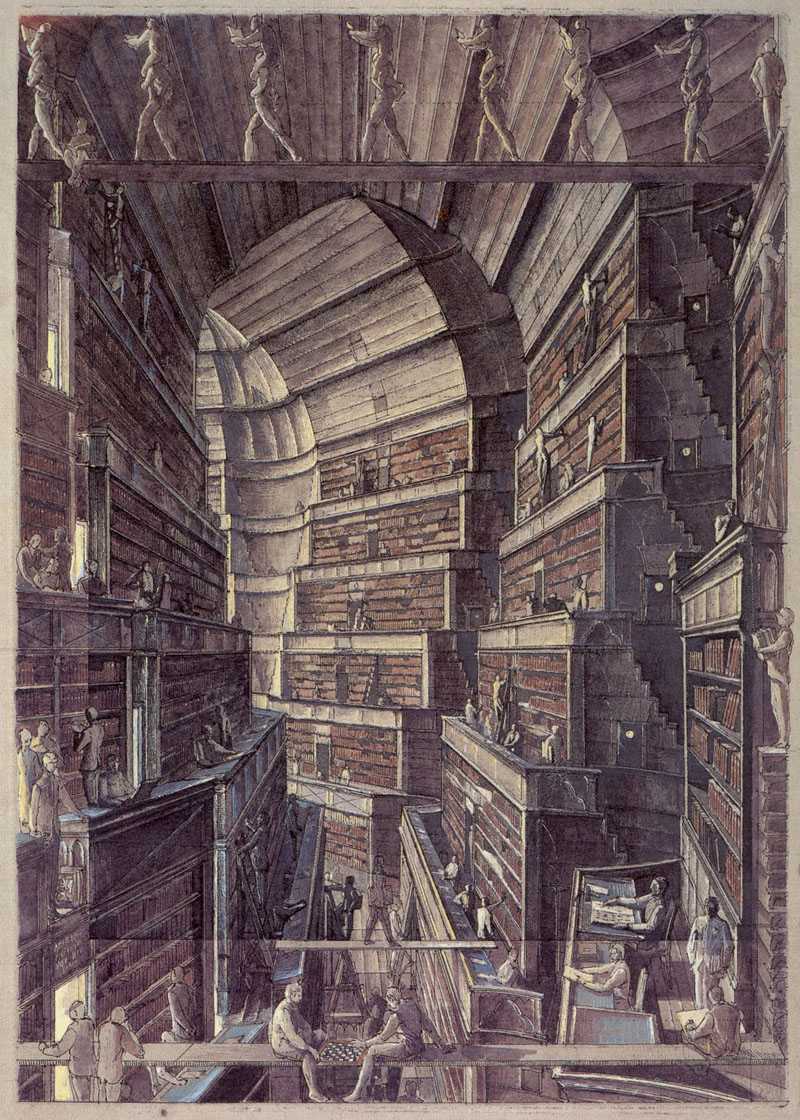
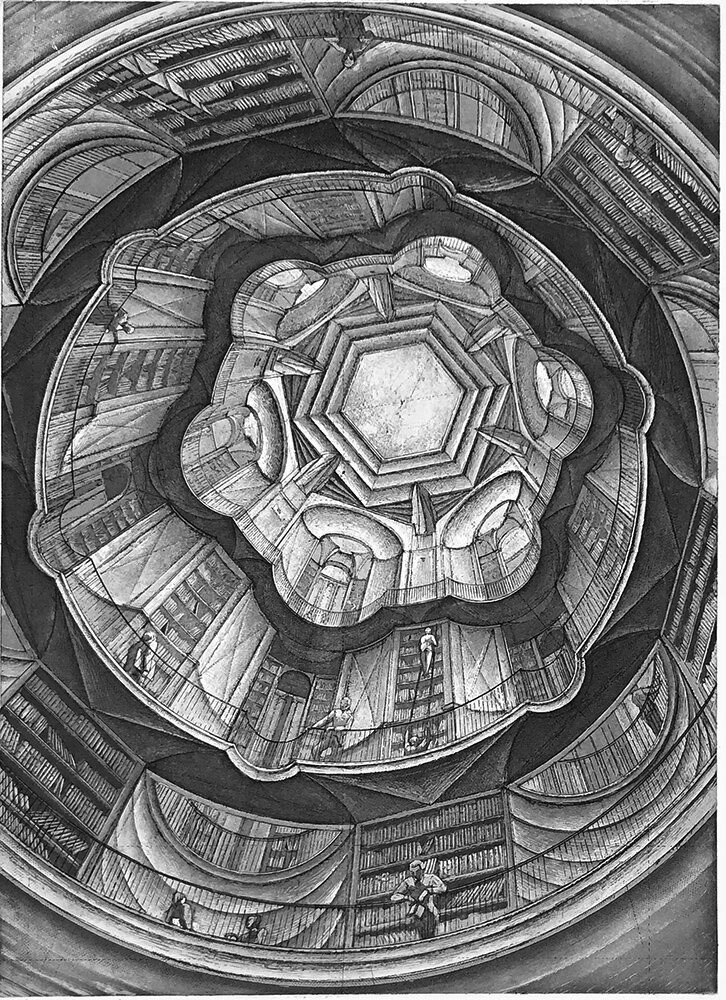
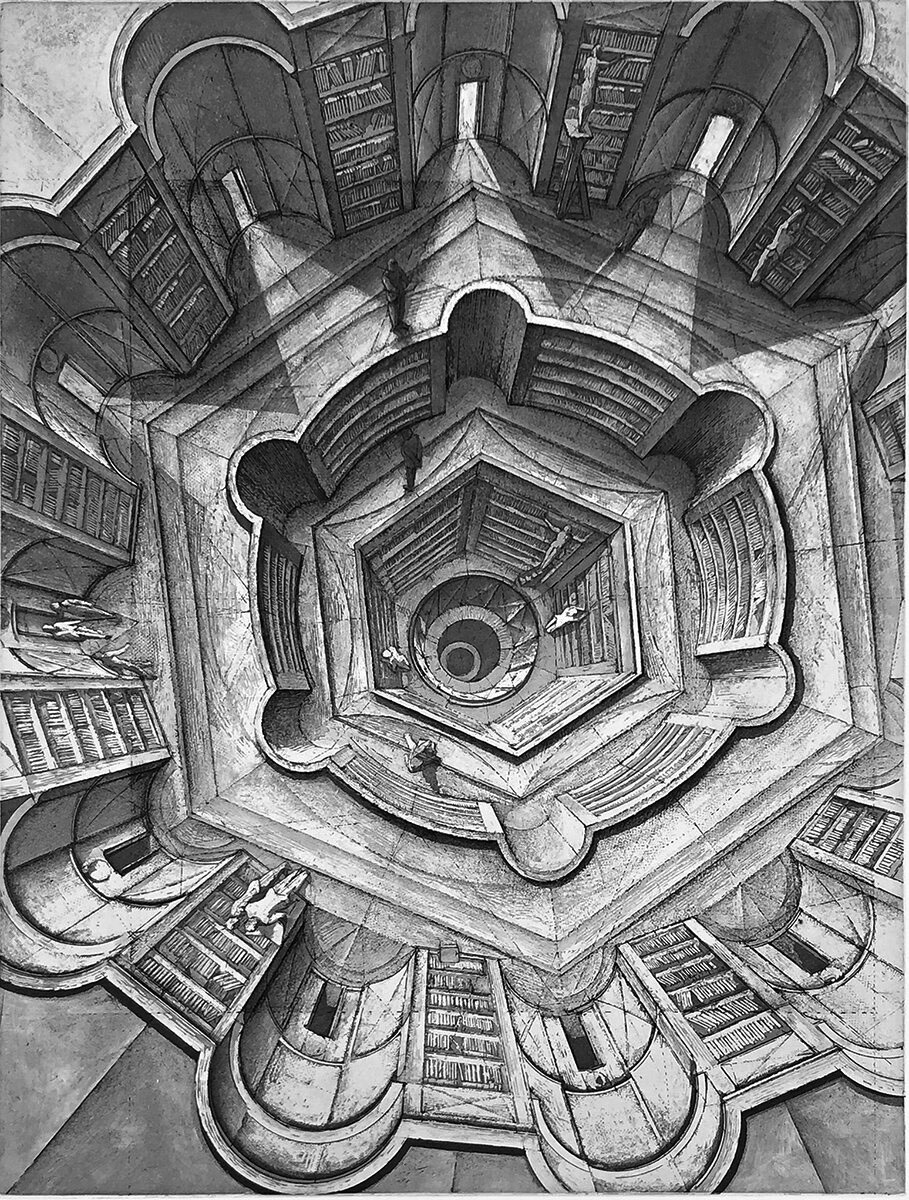
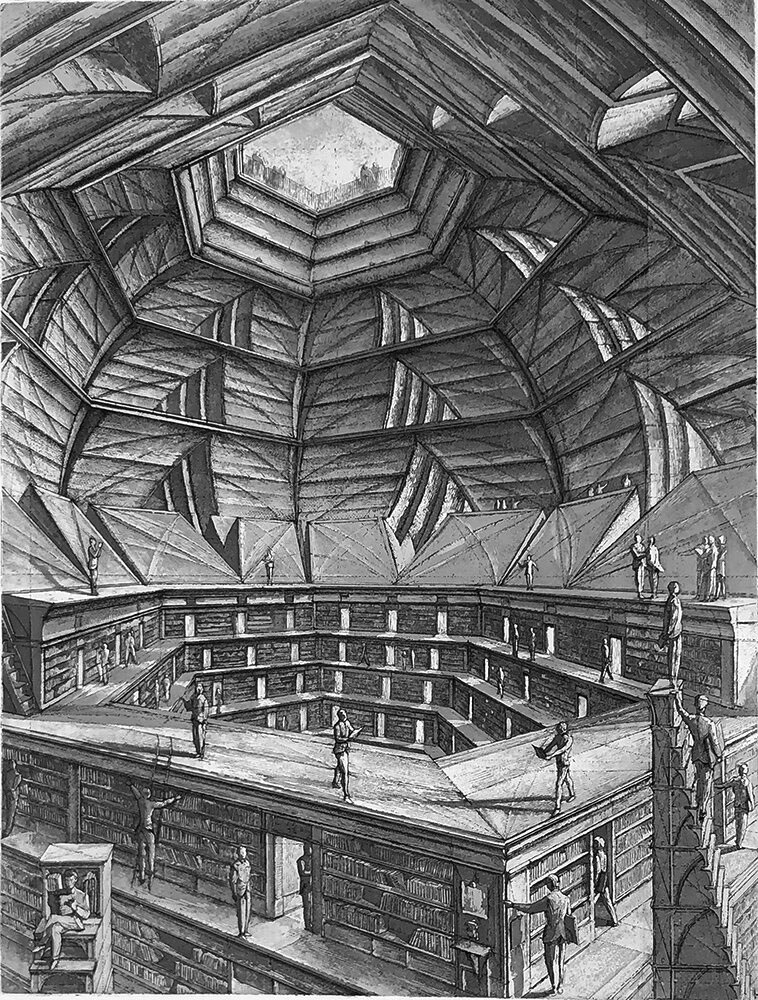
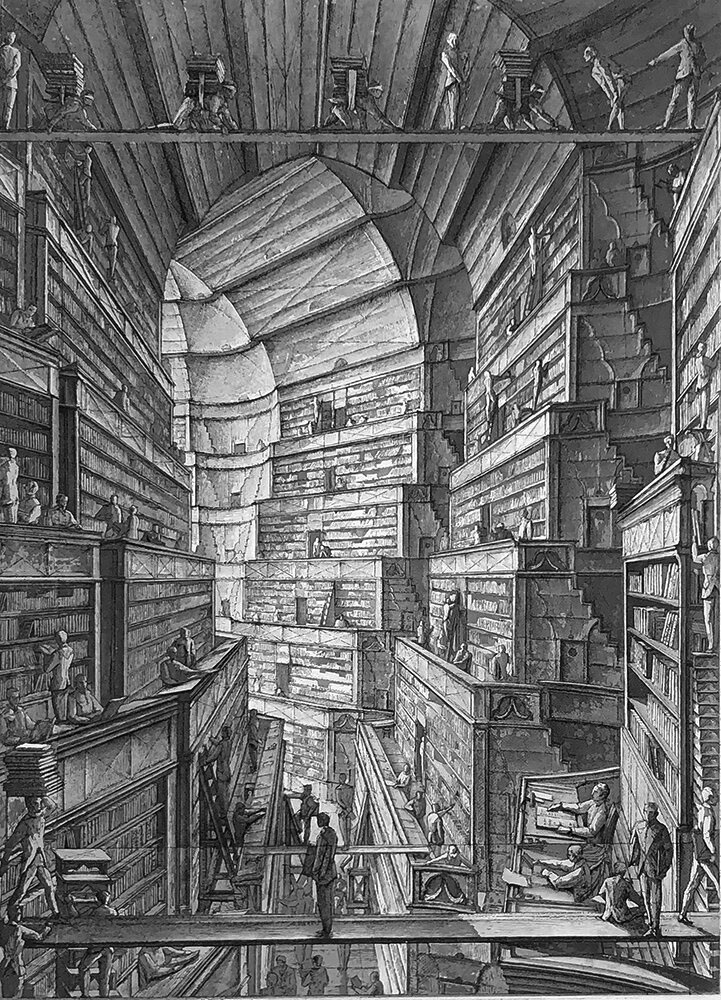
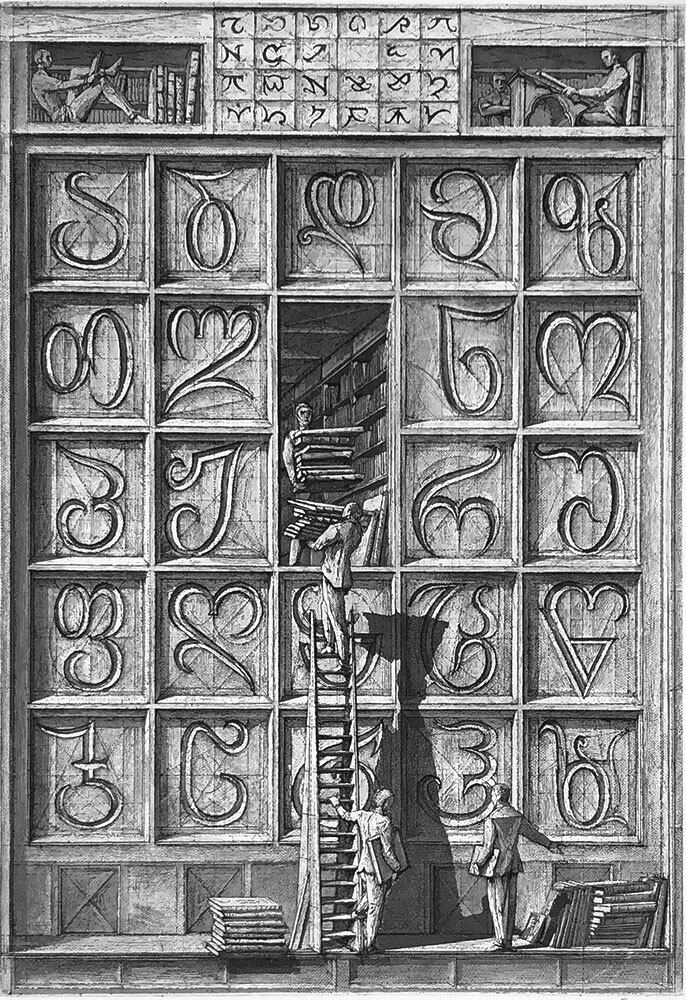
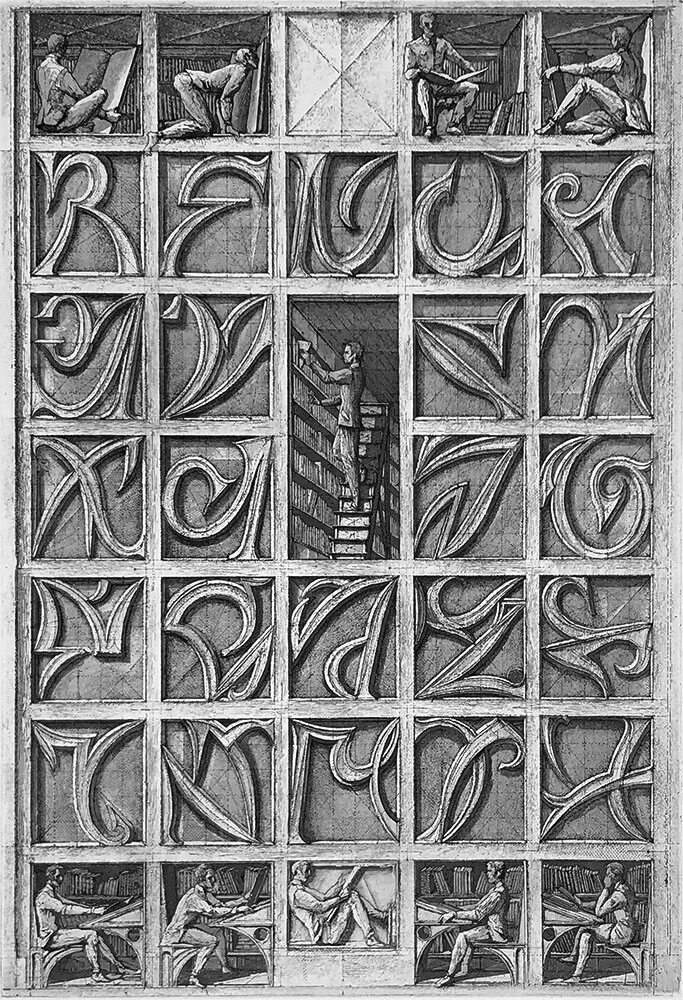
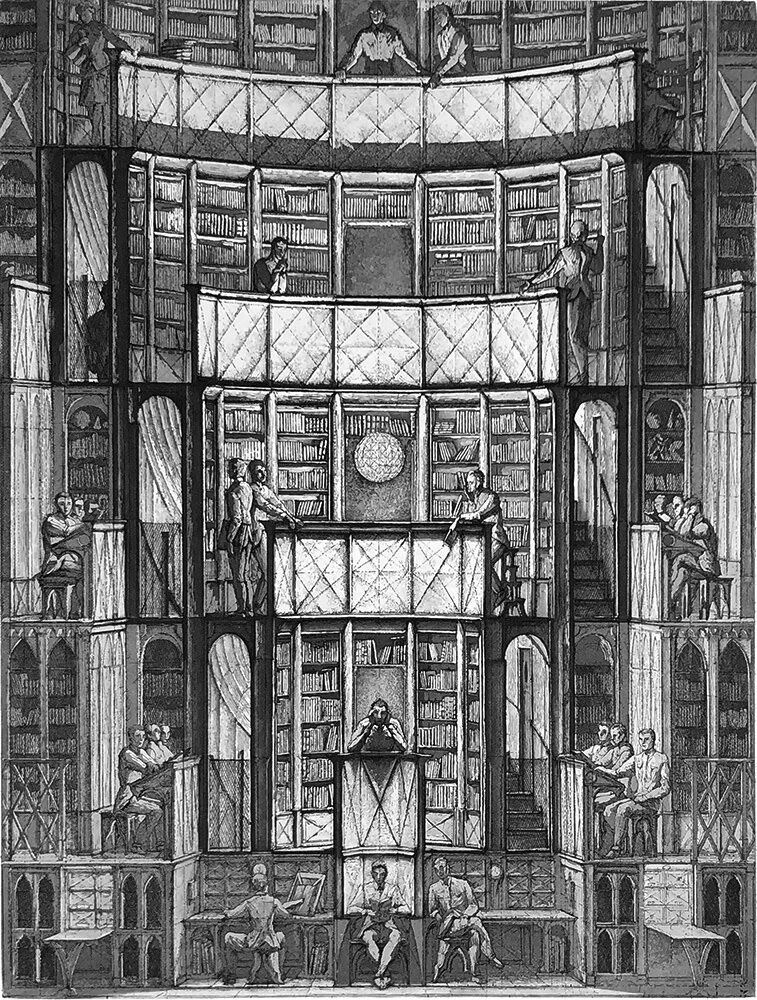
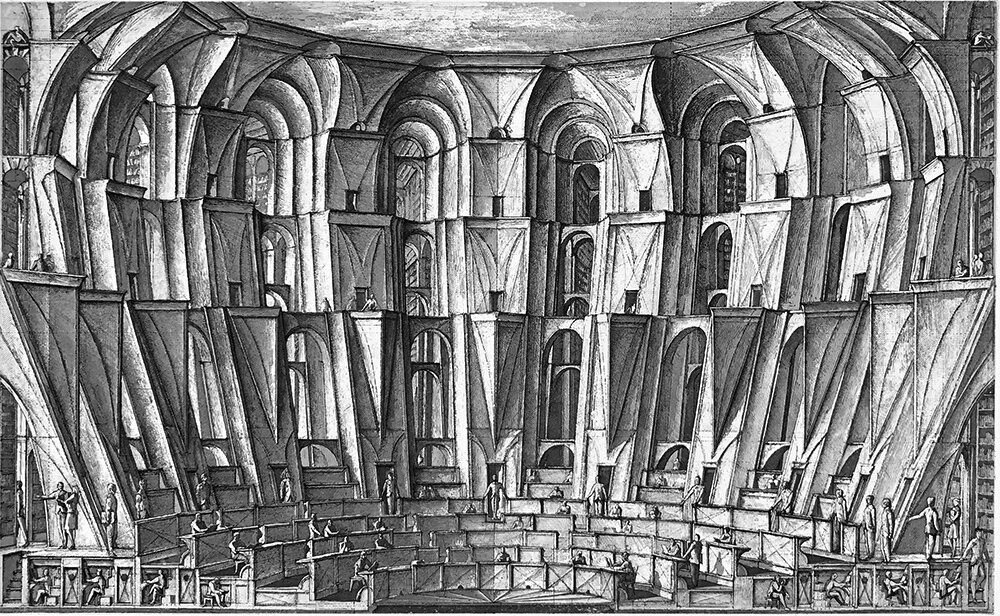
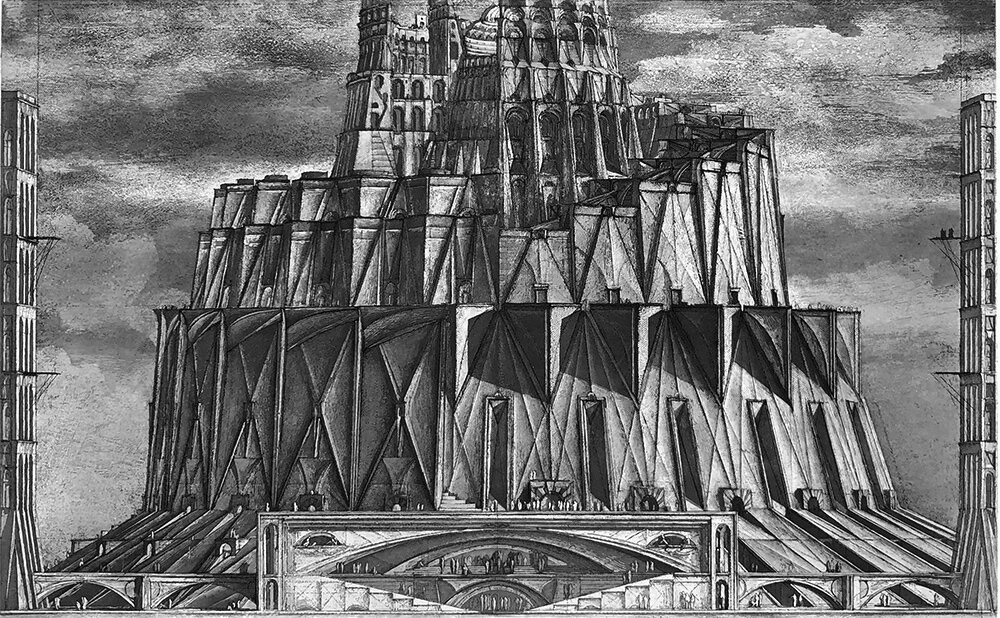
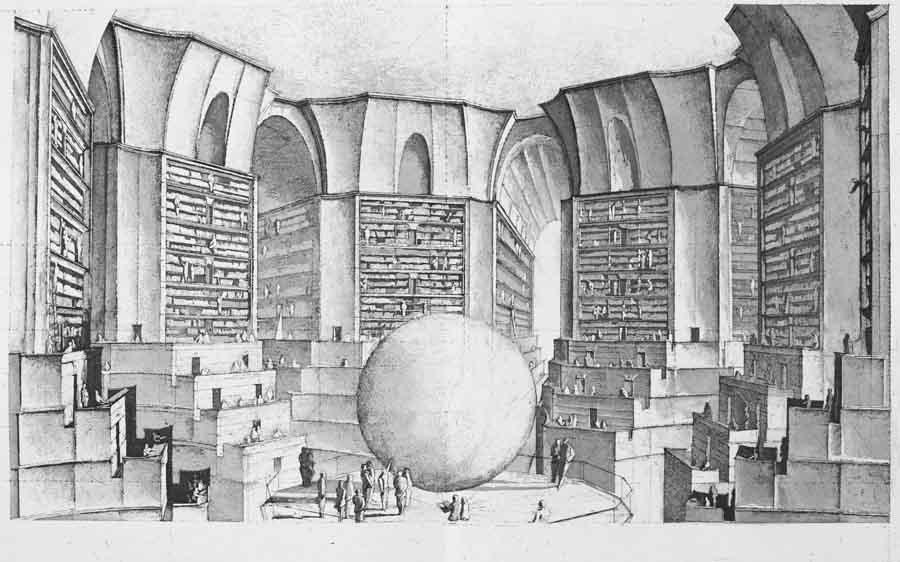
The print work of French artist Érik Desmazières has featured here on several occasions, and I’ve also had reason to mention more than once his aquatints and etchings which illustrate Jorge Luis Borges’ celebrated short story The Library of Babel (1941). The prints were produced in 1997, with a small book edition being published in 2000. Copies of the volume now sell for upwards of $100, and at a mere 36 pages this somewhat exceeds my acquisitiveness threshold; hence this post which gathers some of the better online reproductions, one or two of which have only come to light in the past couple of years.

library2.jpg

Borges’ description of the architecture of the Universe-size Library is sketchy so Desmazières opens out some of the spaces to give a Piranesian sense of space to what would otherwise be little more than views of the same small rooms and corridors, endlessly repeating. MC Escher could have made something of those infinite perspectives—the hexagonal chambers are the closest to the story descriptions—but the larger rooms convey without words an impression of colossal spaces filled with nothing but people and an infinitude of books. The volumes that Borges describes contain few illustrations but one of them at least would describe this very book. Another would describe this book with a minor variation in one of the plates; another would describe MC Escher’s depictions of the Library, and Piranesi’s, and Salvador Dalí’s, and yours, and mine, and on and on…

library3.jpg

library4.jpg

library5.jpg

library6.jpg

library7.jpg

library8.jpg

library9.jpg

library10.jpg

library11.jpg

library12.jpg

Elsewhere on { feuilleton }
The etching and engraving archive

Previously on { feuilleton }
Les lieux imaginaires d’Érik Desmazières
The art of Érik Desmazières

Decapitations

heads03.jpg

Judith with the Head of Holofernes (1520–1540) by Lucas Cranach the Elder.

It doesn’t take much effort to refute the jeremiads of those who complain that popular culture is exclusively violent, all that’s usually required is to direct attention to Titus Andronicus or The Revenger’s Tragedy. Compared to the stage, the art world seems at first to be more circumspect, especially in the 19th century when the battles scenes of history painters sprawled across acres of canvas, all of them devoid of the physical trauma of warfare.

salome6.jpg

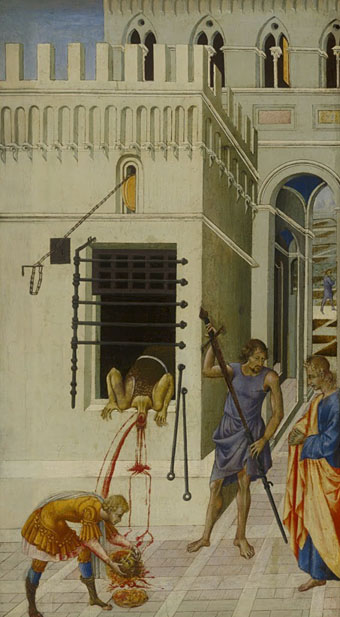
The Beheading of Saint John the Baptist (1455–60) by Giovanni di Paolo.

There are exceptions, however, and the nearer you move to Shakespeare’s time the more examples you’ll find. Paintings produced in an age when violent street executions were still a common sight would have seemed less surprising to their intended audience than they do to our eyes. Several of the paintings here provide a useful contrast with the many sanitised depictions of John the Baptist’s severed head in the Salomé archive.

heads01.jpg

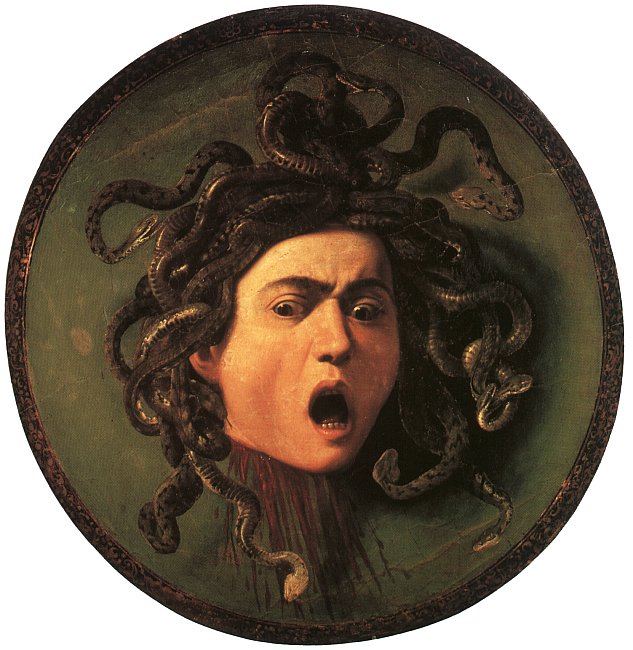
Medusa (c. 1590) by Caravaggio.

Of all the paintings of Medusa’s head the one by Caravaggio is the sole example with a gout of spurting blood. It’s also unusual for being painted on a convex panel intended to resemble the reflecting shield of the Gorgon’s killer, Perseus. Given the violent life of the artist the gore isn’t so surprising although the jet of red in his painting of Judith beheading Holofernes still seems shocking if you’ve never seen it before.

heads04.jpg

Judith Beheading Holofernes (1598–99) by Caravaggio.

The Biblical story of Judith and Holofernes may be the poor cousin to the more popular story of Salomé but depictions of the crucial event make an impression by being consistently gruesome. I suspect the reason is less to do with the story itself than with the success of Caravaggio’s paintings among cultured Europeans. The copying or imitation of celebrated works became a thriving industry in the days of the Grand Tour with the result that 17th- and 18th-century art is overburdened with variations on earlier paintings.

Continue reading “Decapitations”

Weekend links 140

cards.jpg

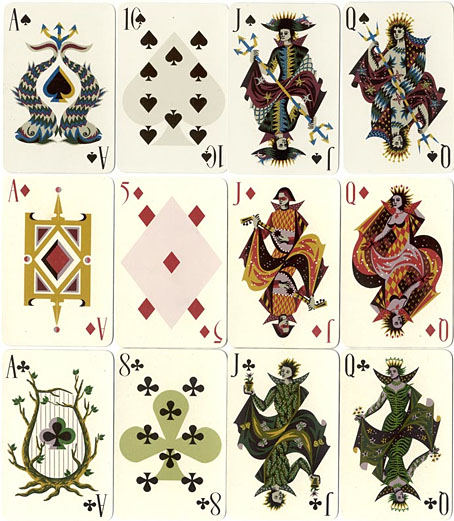
Thanks to Callum for pointing the way to a beautiful set of playing cards designed by Picart le Doux.

Of cigars and pedants by Houman Barekat, in which Vladimir Nabokov has a problem with Henry James. Tangentially related: Post-Punk’s Nabokov: Howard Devoto and Magazine, live from Berlin, 1980. (Given A Song From Under The Floorboards, and lines like “I could have been Raskolnikov / But mother nature ripped me off”, I’d say it’s more accurate to describe Devoto as Post-Punk’s Dostoyevsky.)

• “I was introduced to Kneale’s work like most kids: by a fifty-foot hologram of a psychic locust and a British colonel deliquesced by five million years of bad Martian energy.” In Keep Me in the Loop, You Dead Mechanism Dave Tompkins looks back at Nigel Kneale’s TV play The Stone Tape. I reported my own impressions at the end of October.

• At The Quietus this week, Carol Huston on Lord Horror: A History Of Savoy Publishing. Michael Butterworth is interviewed, and the piece includes some quotes from earlier interviews by yours truly.

As the Massachusetts minister Increase Mather explained in 1687, Christmas was observed on Dec. 25 not because “Christ was born in that Month, but because the Heathens Saturnalia was at that time kept in Rome, and they were willing to have those Pagan Holidays metamorphosed into Christian” ones. So naturally, official suppression of Christmas was foundational to the godly colonies in New England.

Rachel N. Schnepper on the Puritan War on Christmas.

• Maxine Peake and the Eccentronic Research Council have a seasonal song for you. Take the title, Black ChristMass, as a warning. The group recently played live on The Culture Show.

• Clive Hicks-Jenkins’ Artlog is currently hosting Alphabet Soup, an online exhibition by different artists each depicting the letters of the alphabet. Start here and click forward.

Ornate Typography from the 19th Century featuring samples from the King George Tumblr. Related: Sheaff ephemera.

saturn.jpg

Saturn at Saturnalia. A Cassini image of the planet’s nightside.

Kenneth Anger interviewed by P. Adams Sitney. A 53-minute tape recording from 1972.

• At The Outer Church: James Ginzburg of Emptyset posts a winter music mix.

When Candy Darling met Salvador Dalí.

The psychedelic secrets of Santa Claus.

• At Pinterest: Camp as…

Saturn (1956) by Sun Ra | Permafrost (live, 1980) by Magazine | Uptown Apocalypse (1981) by B.E.F.

Weekend links 137

jacobsen.jpg

Self-portrait by Jon Jacobsen from his Home series.

Steven Arnold: Cabinet of Curiosities is “a retrospective exhibition of this groundbreaking yet under-recognized queer artist at the ONE Archives Gallery & Museum in West Hollywood. The exhibition celebrates Arnold’s radical imagination, presenting many of his tableaux vivant photographs alongside never before exhibited drawings, sketchbooks, paintings and original poster art. In conjunction with the exhibition, ONE will screen Arnold’s four films, including Luminous Procuress (1970), which featured The Cockettes and was lauded by Salvador Dalí.” The exhibition runs to  January 12, 2013.

• “The boundary-pushing techno/sound design duo Emptyset will transform London’s cavernous industrial space Ambika P3 into an immersive sound installation for one night only—and here’s how they’re going to do it”.

• “At one time he was a well-known figure in Montparnasse, where he had a reputation as a master of the occult sciences.” Aleister Crowley is interviewed about his expulsion from France in 1929.

Our normal waking consciousness, rational consciousness as we call it, is but one special type of consciousness, whilst all about it, parted from it by the filmiest of screens, there lie potential forms of consciousness entirely different. We may go through life without suspecting their existence; but apply the requisite stimulus, and at a touch they are there in all their completeness… No account of the universe in its totality can be final which leaves these other forms of consciousness quite disregarded… [T]hey forbid our premature closing of accounts with reality.

William James (1842–1910) quoted in What Should We Do With Our Visions of Heaven—and Hell? by John Horgan at Scientific American.

Screws is an album of piano music by Nils Frahm that’s currently available as a free download (inc. aiffs).

• At Pinterest: Art Visonnaire. Related: Ain’t We Got Fun: The magical surrealism of Jen Ray.

Rowan Somerville “challenges the purpose and legitimacy” of the Bad Sex Awards.

Jimmy’s End: the website for the film by Alan Moore & Mitch Jenkins.

Douglas Rushkoff in conversation with Genesis Breyer P-Orridge.

• Linda Rodriguez McRobbie explores The History of Boredom.

• Recreating the sounds of the BBC Radiophonic Workshop.

Alchemical Emblems, Occult Diagrams, and Memory Arts.

Rocaille: A Blog about Decadence, Kitsch and Godliness.

• A new video for Goddess Eyes II by Julia Holter.

• The complete audio recordings of Jean Cocteau.

The Rumpus interview with Russ Kick.

Forgotten Bookmarks

• RIP Spain Rodriguez

Astradyne (1980) by Ultravox (produced by Conny Plank) | Biomutanten (1981) by Les Vampyrettes (Conny Plank & Holger Czukay) | Never Gonna Cry Again (1981) by Eurythmics (feat. Holger Czukay, produced by Conny Plank).