Zeuhl Ẁortz!

magma-single.jpg

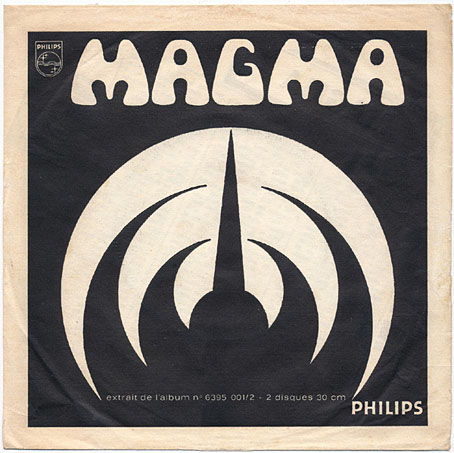
Kobaïa / Müh (1970), a single by Magma.

1: Zeuhl definitions

Zeuhl is an adjective in Kobaïan, the language written by Christian Vander, drummer and founder of the French band Magma.

Pronunciation: zEU(h)l, while the EU are like a French E with a slight U, and the (h) is a semi-silent letter which is an integrated part of the EU, totalling in a “syllable and a half”. (Prog Archives)

Zeuhl (pronounced [zœl]; lit. ’celestial’) is a music genre that is a hybrid of jazz fusion, symphonic rock and neoclassical music, established in 1969 by the French band Magma. The term comes from Kobaïan, the fictional language created by Magma’s Christian Vander and Klaus Blasquiz for Magma, in which Zeuhl Ẁortz means approximately ‘celestial force’.
[…]
Zeuhl is determined by several characteristic elements. Especially important are dominant rhythm fractions, usually in the form of a pumping bass guitar and sometimes sluggish or flexibly playing drum kits. Slow repetitive structures that serve to build a hypnotic atmosphere are just as prominent as solo passages of high technical finesse. Vocals are often widely present and can consist of polyphonic choral movements, such as Carl Orff’s Carmina Burana, or soloistically performed passages with shrill intonation. Zeuhl bands also often have solo guitarists or pianists that usually have a more than accompanying function, especially to emphasize the repetitive patterns. (Wikipedia)


2: The Birth of the Zeuhl

“1967,” he says. “The year John Coltrane died. It seemed to me that afterwards, it was as though music had to try to start all over again. Someone had to pick up the pieces, go on searching in the way that he had. Nobody could match him, but people could pick up the flame. It was almost impossible for anyone to do anything new after Coltrane, but you had to try, try to find other new directions. So that’s what I tried to do with Magma. I was a bit young at the time, but…”

Christian Vander describing the birth of Magma to Paul Stump, The Wire, July 1995


3: Zeuhl lists
weidorje.jpg

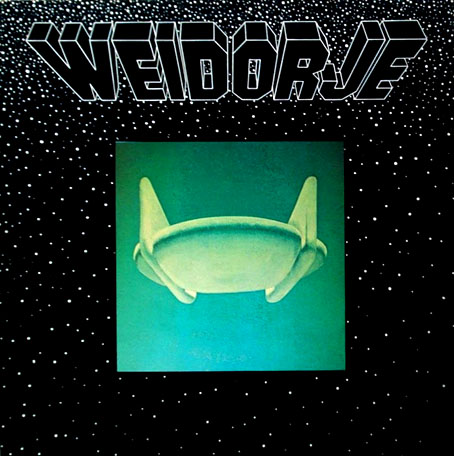
Weidorje (1978) by Weidorje. Cover art by Klaus Blasquiz.

Shindig! Magazine: Magma in seven records, and Deeper Underground: the best albums by the Magma family by Warren Hatter.

• Prog Is Alive and Well in the 21st Century: My Favourite Zeuhl Albums of All-Time by Drew Fisher.

• Bandcamp: There is No Prog, Only Zeuhl: A Guide to One of Rock’s Most Imaginative Subgenres by Jim Allen.

• Discogs: Zeuhl lists by Neit and ultimathulerecords.

• Prog Archives: Top 100 Zeuhl.


4: Live Zeuhl

magma-poster.jpg

A poster by Jofre Conjota for a concert in Chile demonstrating that Zeuhl can exist without electricity.

Magma, Hippodrome du Pantin, Paris, 1977 (46 mins; a French TV film that captures one of the 70s lineups in peak form. Includes an almost complete performance of Mekanïk Destruktïẁ Kommandöh.)

Weidorje, French TV, 1979 (11 mins; Magma offshoot Weidorje were only active for a couple of years, this may be their only TV appearance.)

Magma, Théâtre Bobino, Paris, 1981 (A complete concert—1 hr 53 mins—from the group’s weird-funk period: Christian Vander leaves his drumkit to sing and rant at the audience, everyone is dressed in spacey glitter outfits, and some of the songs from the Merci album can’t be classed as Zeuhl at all. The musicians are all first rate, however.)

Magma play Köhntarkösz, 2005 (A fantastic 32-minute performance in a very cramped venue.)

Collectif PTÄH interprète Magma (12 mins; a Magma covers band playing in a village square.)


5: Cinematic Zeuhl
tristan.jpg

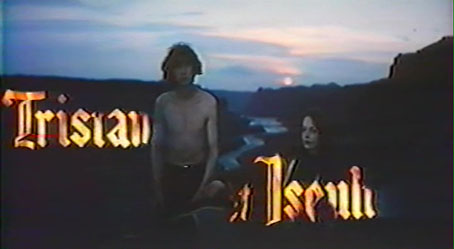
Tristan et Iseult (1972): a French feature film with a score by Christian Vander and three members of Magma. The soundtrack album was later incorporated into the Magma official discography as Ẁurdah Ïtah.

Moi y’en a vouloir des sous (1973): a French satire in which Magma make a brief appearance as a way-out rock group.


6: Lovecraftian Zeuhl
shub-niggurath.jpg

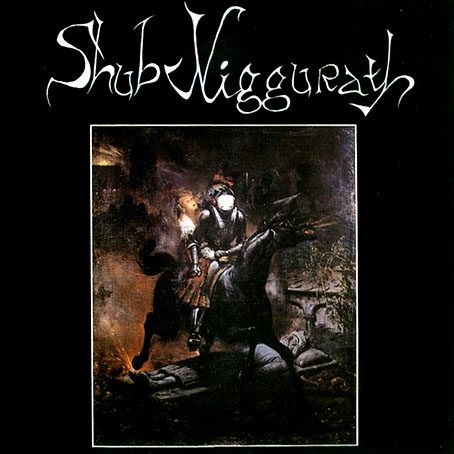
Les Morts Vont Vite (1986) by Shub Niggurath. Cover art: La Ballade de Lénore (1839) by Horace Vernet.

Liriïk Necronomicus Kanht (1978) by Magma.

Dagon (1980) by Eskaton.

La musique d’Erich Zann (1981) by Univers Zero (a Belgian group, originally named Necronomicon, which included former members of an earlier group named Arkham).

Yog-Sothoth (1986) by Shub Niggurath.


7: Comic Zeuhl

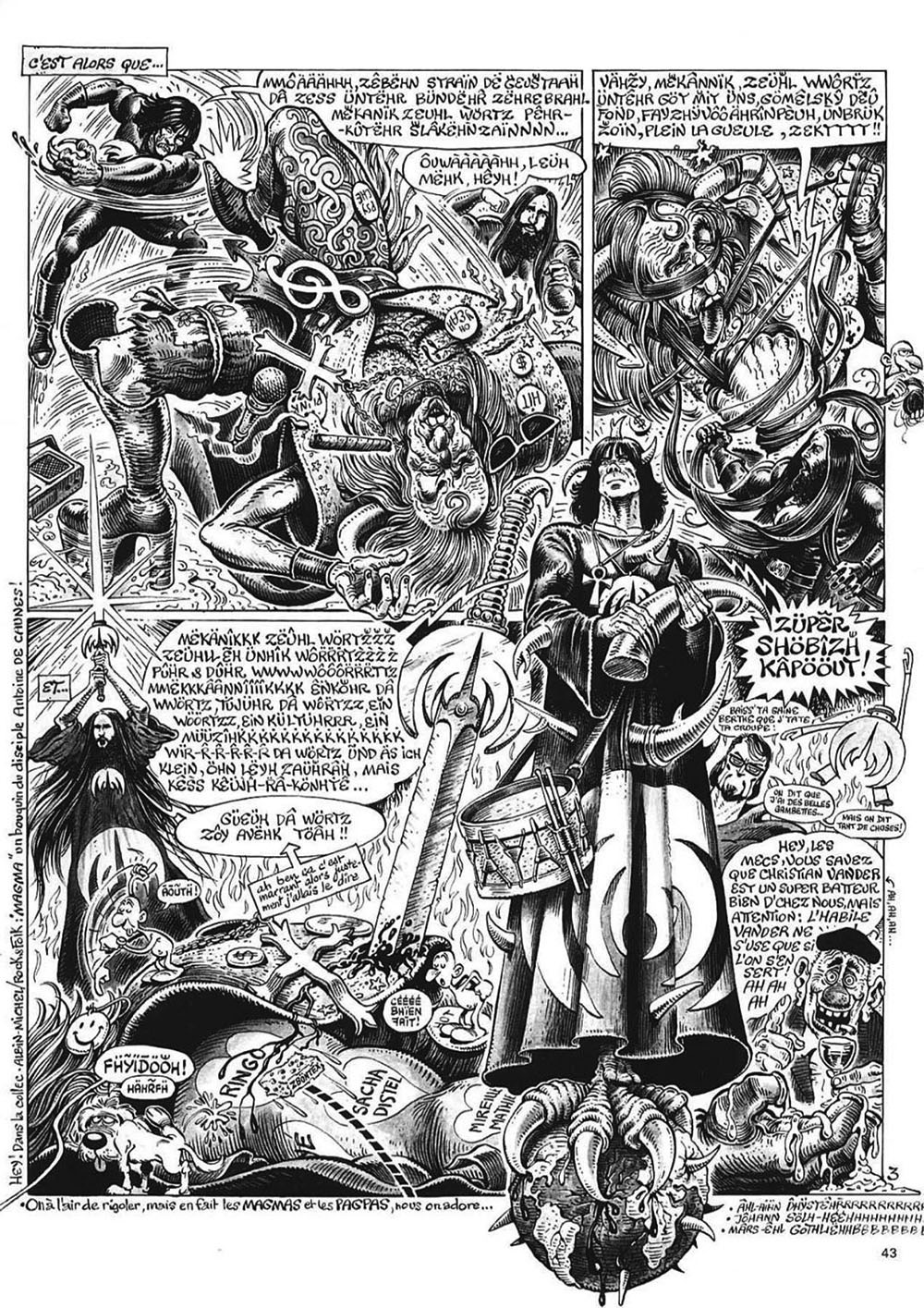
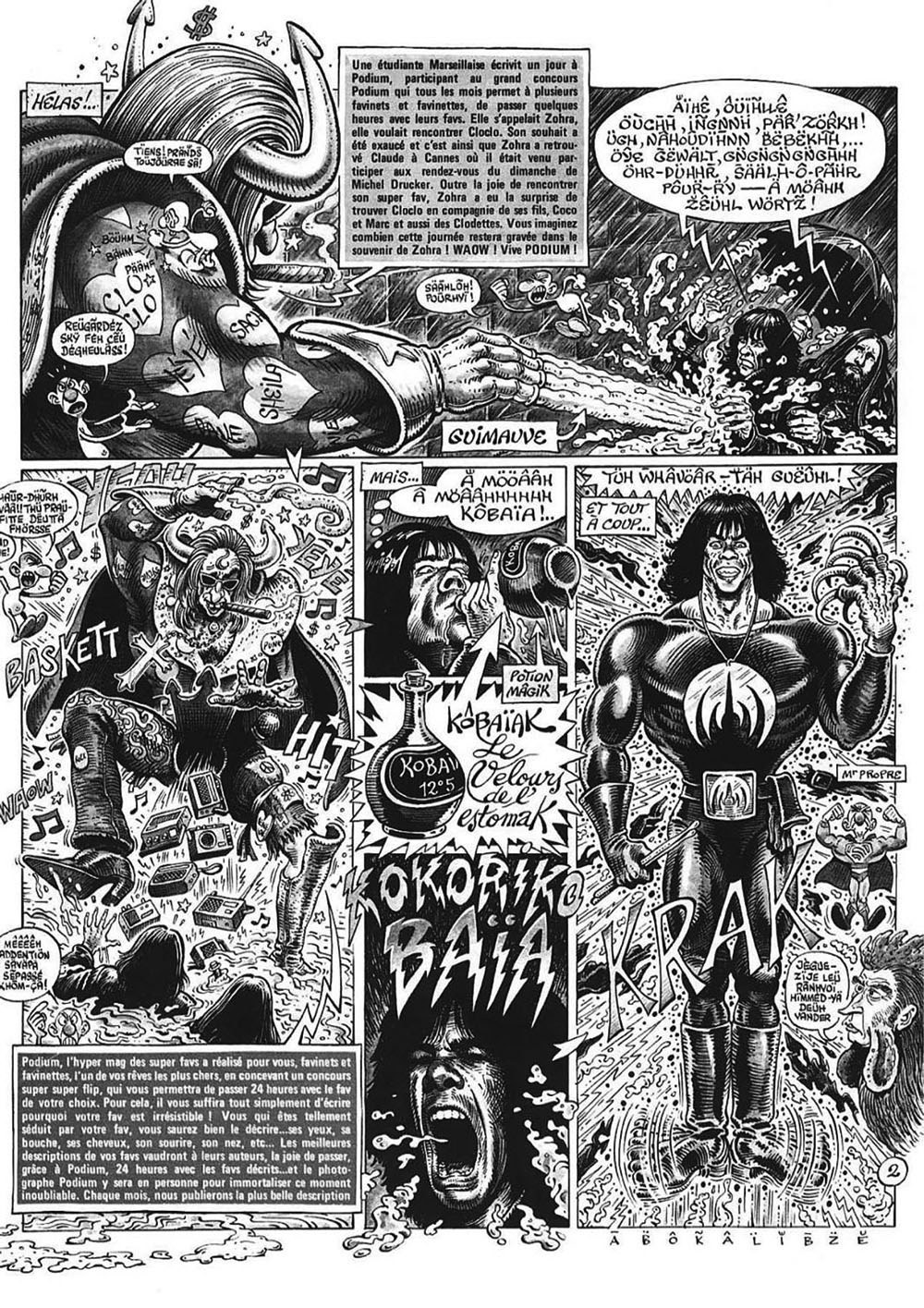
Magma’s Christian Vander and Klaus Blasquiz in a three-page comic strip from Pop & Rock & Colégram (1978), a collection of satirical music-themed pieces by Jean Solé, Alain Dister & Marcel Gotlib.
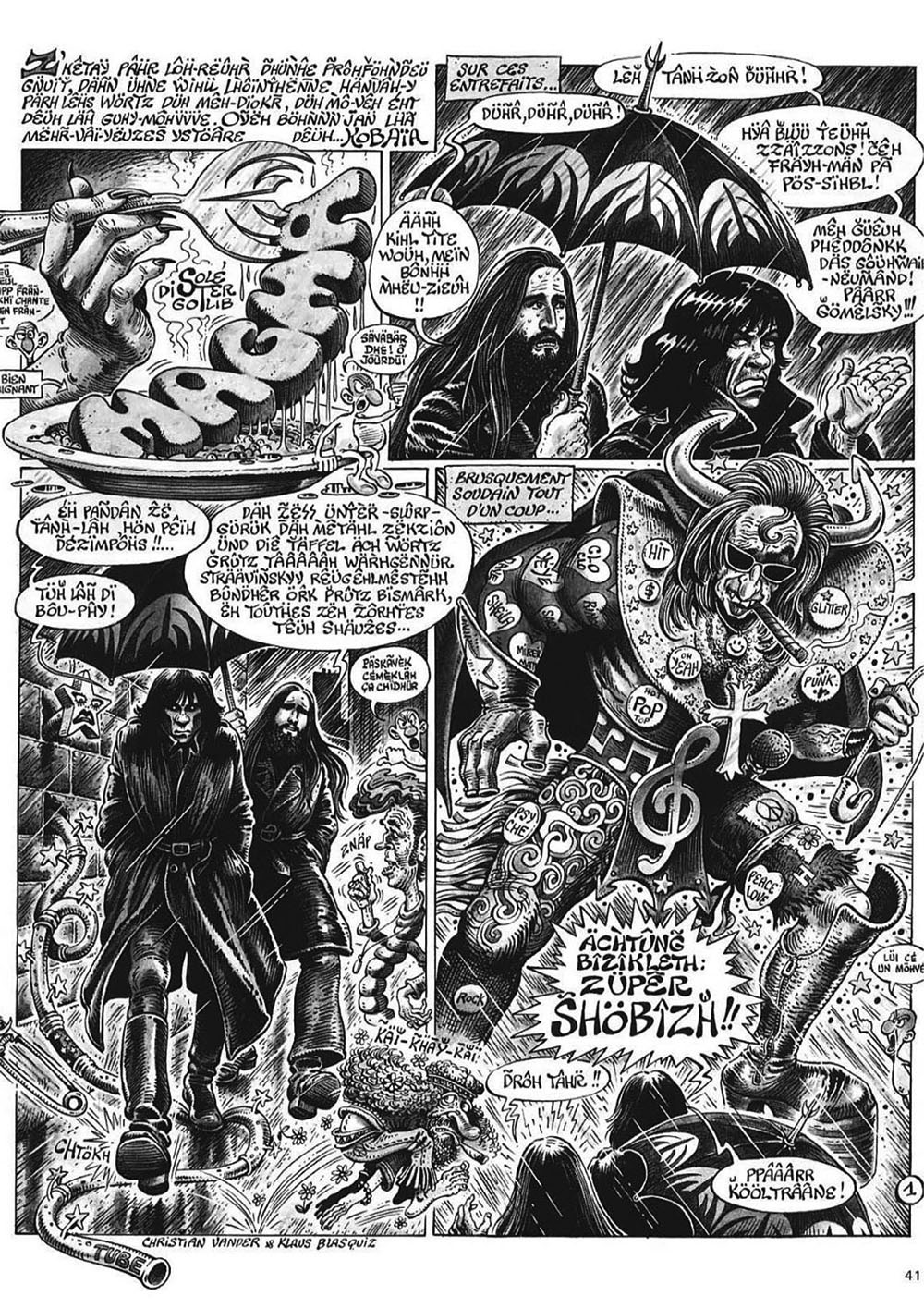
magma-comic1.jpg

magma-comic2.jpg

magma-comic3.jpg

Previously on { feuilleton }
Dune: some French connections
HR Giger album covers

Weekend links 801

waterhouse.jpg

The Magic Circle (1886) by John William Waterhouse.

The Moon and Serpent Bumper Book of Magic has just been published in France by Editions Delcourt. A preview here shows how carefully they’ve managed to translate and reletter my page designs.

• Among the new titles at Standard Ebooks, the home of free, high-quality, public-domain texts: Algernon Blackwood’s stories of John Silence, occult detective.

• Relevant to some of my recent reading: The Necronomicon Wars, an examination of the many attempts to give life to HP Lovecraft’s fictional grimoire.

Altered States is tremendously exciting to watch—and not only during its psychedelic interludes when goat Jesus is being crucified and writhing red figures are toppling, Hieronymus Bosch–like, into hell and abstract splotches give the impression of cells endlessly dividing or murky membranes dissolving and beautiful women stare into Magritte skies and waves of lava crash as though the molten core of humanity itself were erupting. Even in its quieter moments, it is a beautiful film, with Hurt’s every appearance shot by cinematographer Jordan Cronenweth to emphasize his character’s alien otherworldliness.

Jessica Kiang explores the creation of Ken Russell’s flawed but fascinating psychedelic feature, Altered States

• A new catalogue of lots at another After Dark: Gay Art and Culture online auction. Homoerotic art, photos, historic porn. etc.

Tarot decks through the ages: a video showing some of the cards from Victoria and Albert Museum’s collection.

• More psychedelia: Neuroscientist Grigori Guitchounts asks “What is your brain doing on psychedelics?”

• At the Daily Heller: Ryan Hughes has published a weighty collection of his typeface designs.

• Old music: Caged (25th Anniversary Edition) by Ian Boddy & Chris Carter.

• At the BFI: Rory Doherty selects 10 great Technicolor melodramas.

• At Dennis Cooper’s: The Old School Horrors of Terence Fisher.

Photographs from the 2025 Wildlife Photographer of the Year.

Ambientblog celebrates 20 years of existence.

• RIP Dave Ball.

Necronomicon (1970) by Les Baxter | Liriïk Necronomicus Kahnt (1975) by Magma | Necronomicon–The Magus (2004) by John Zorn

Pin culture

pins1.jpg

In the mail this week, a pair of new pins from the pin-maker and seller who made the exquisite Future Days pin. (eBay shop | Etsy shop) The Ege Bamyasi pin isn’t as effective as the earlier Can design but I feel compelled to encourage the effort, especially when most of the designs from this maker are for punk or post-punk bands. I also enjoy the novelty of seeing things like this at all. The years when I was discovering German music via secondhand releases (late 70s, early 80s) coincided with a period when I spent a lot of time scouring local shops for unusual badges. Growing up in a holiday resort gave me access to a greater quantity of cultural ephemera than you’d find in nearby towns, yet during this time I never saw any badges related to the German groups, not even Kraftwerk. As for prestige enamel items, you seldom saw these outside concert merchandise stalls where hardcore fans could be relied upon to pay more for their memorabilia.

pins2.jpg

Official pins from Hawkwind, Magma and Ghost Box Records.

The recent emergence of a cottage industry devoted to enamel pins means that these aren’t the only such items you’ll find on eBay or Etsy, but most of the others I’ve seen are either substandard (like another attempt to rework the Future Days cover) or are from North American sellers who want you to pay £25 or more for postage. Nein danke. But wherever the pin makers are located they all face the problem of how to create something related to groups who didn’t have a graphic identity that can easily be converted to metal and enamel. Where Can are concerned you could at least do this with their name as it appears on the Tago Mago cover. (Maybe such a thing exists already?) And I was amused to see that one pin maker has managed to reduce Manuel Göttsching’s chessboard cover for E2–E4 to pin size. What I’d really like now is a Neu! pin in black and white like the design on the cover of Neu! 75. Here’s hoping…

Previously on { feuilleton }
A Can pin
Rock shirts

Weekend links 669

claveloux.jpg

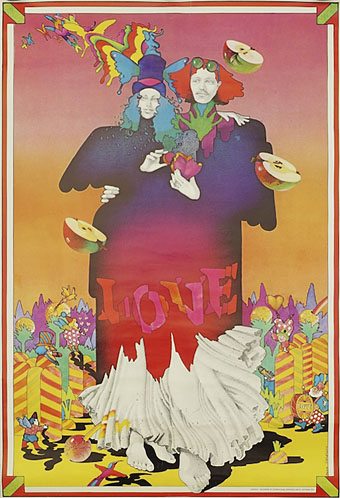
Love (1973), a poster by Nicole Claveloux.

• “Warner Brothers had been keen on a Rolling Stones movie. Jagger was keen on being a movie star. But Donald Cammell’s script was no Beatles’ jolly japes musical comedy…” Des Barry examines the ninth minute of Cammell & Roeg’s Performance.

• “…part of what made his 1970s work so original was the degree to which his band cross-pollinated guitar with synthesizer.” Aquarium Drunkard explores the esoteric jazz-rock of Steve Hillage.

• Magma, the cosmic jazz-rock group from France, have been around for 50 years without making a music video. Hakëhn Deïs is their first.

There was half-Tarkovsky embedded in async, “Solari” and “Stakra” and “Walker”, a hand outstretched to those great poems of living and light that we call films. “I had a strange dream last night,” Andrey Tarkovsky wrote in one of the diary entries collected in Instant Light, “I was looking up at the sky and it was very, very light and soft; and high, high above me it seemed to be slowly boiling, like light that had materialised like the fibres of a sunlit fabric, like silken living stitches in a piece of Japanese embroidery.”

David Toop remembers Ryuichi Sakamoto

• “Floor796 is an ever-expanding animation scene showing the life of the 796th floor of the huge space station…”

• The Electrifying Dreamworld of The Green Hand: Dan Clowes on the comic-art of Nicole Claveloux.

• At Bandcamp: Andy Thomas on the post-punk pop subversion of David Cunningham.

• At Unquiet Things: An enigmatic baroness and her collection of skulls.

• New music: River Of Dreams by Romance & Dean Hurley.

• Steven Heller’s font of the month is Ray Gun.

• Mix of the week: DreamScenes – April 2023.

• RIP Al Jaffee.

Skulls Of Broken Hill (1996) by Bill Laswell | The Bees Made Honey In The Lion’s Skull (2008) by Earth | Black Skulls (2018) by Jóhann Jóhannsson

Solid Space: Jon Anderson’s cosmic voyage

olias1.jpg

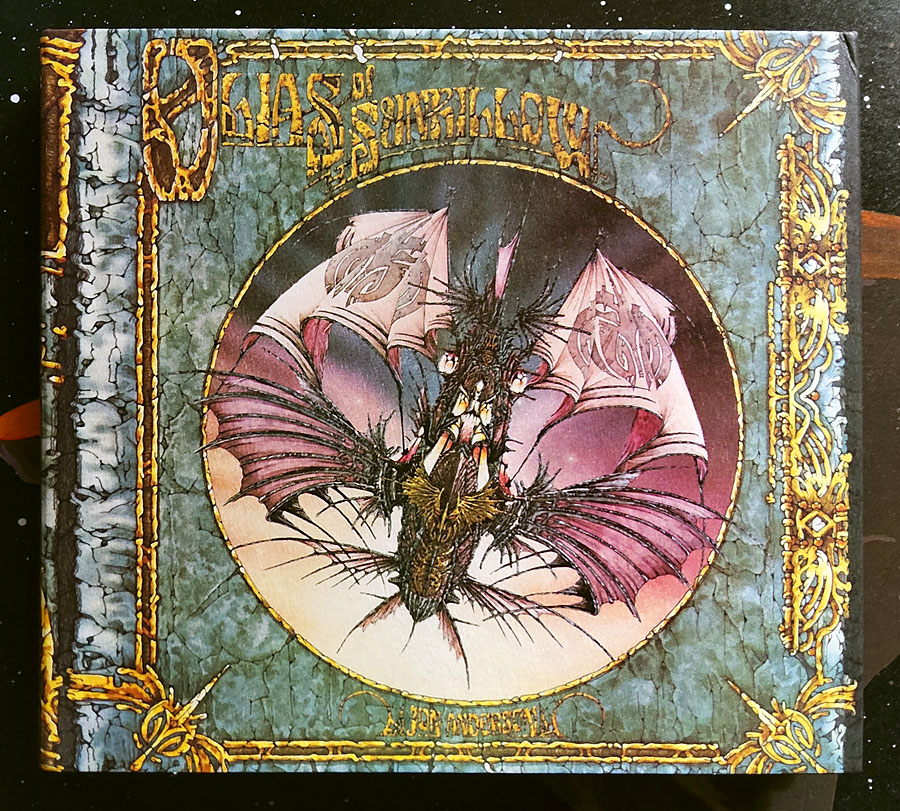
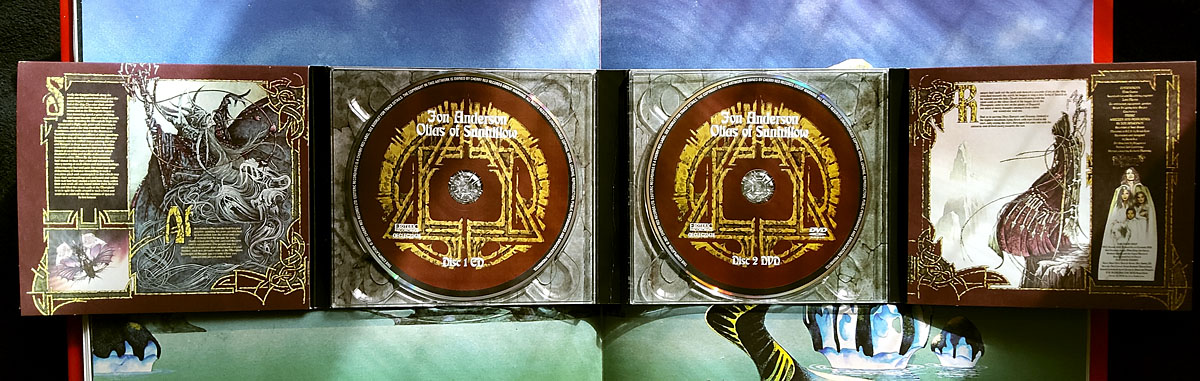
Jon Anderson’s solo debut, Olias Of Sunhillow, is reissued this week in a double-disc set comprising a remastered CD plus an audio DVD. I’d been hoping for some time that this album might be given a proper reissue, it’s one I like a great deal but my old CD has never sounded as good as it ought to. The album may command cult status round here but you don’t see it mentioned anywhere outside Yes forums or partisan enclaves like the Prog Archives. This post may be taken as a small corrective to the neglect.

olias2.jpg

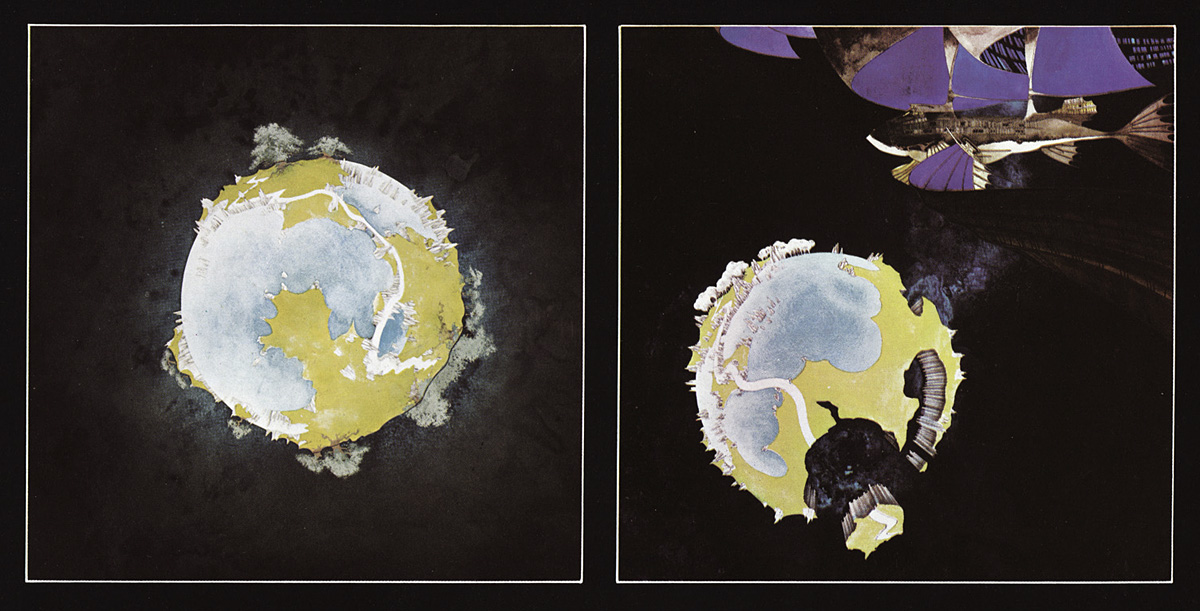
Olias Of Sunhillow was released in 1976, and was the most unusual of all the solo albums recorded by the individual members of Yes in the mid-70s, being a spin-off from some of the group’s early albums, or at least their cover art. Roger Dean’s first cover work for the group was on Fragile in 1971, for which he painted a miniature world rather like one of MC Escher’s planetoids. This was Dean’s idea, the band had suggested a broken piece of porcelain as the cover image. The back cover of the album showed the same planet in a state of fragmentation with a fish-like spaceship floating above it (see below). Another drawing of the fish-ship was added to the front cover before the album’s release, and it’s this ship, and the narrative it suggests, that leads eventually to Anderson’s solo album. Two years after Fragile, the planetary disintegration had turned into an exodus on the group’s triple-live album, Yessongs, the back cover of which shows pieces of planet being towed through space by a similar fish-ship. The other panels of the cover depict the arrival of these fragments on a newer, larger world. Anderson’s album takes this sequence of events then filters them through Vera Stanley Alder’s mysticism to craft a musical odyssey which Discogs describes as:

…the story of an alien race and their journey to a new world due to catastrophe. Olias, the title character, is the chosen architect of the glider Moorglade, which will be used to fly his people to their new home. Ranyart is the navigator for the glider, and Qoquaq is the leader who unites the four tribes of Sunhillow to partake in the exodus.

olias3.jpg

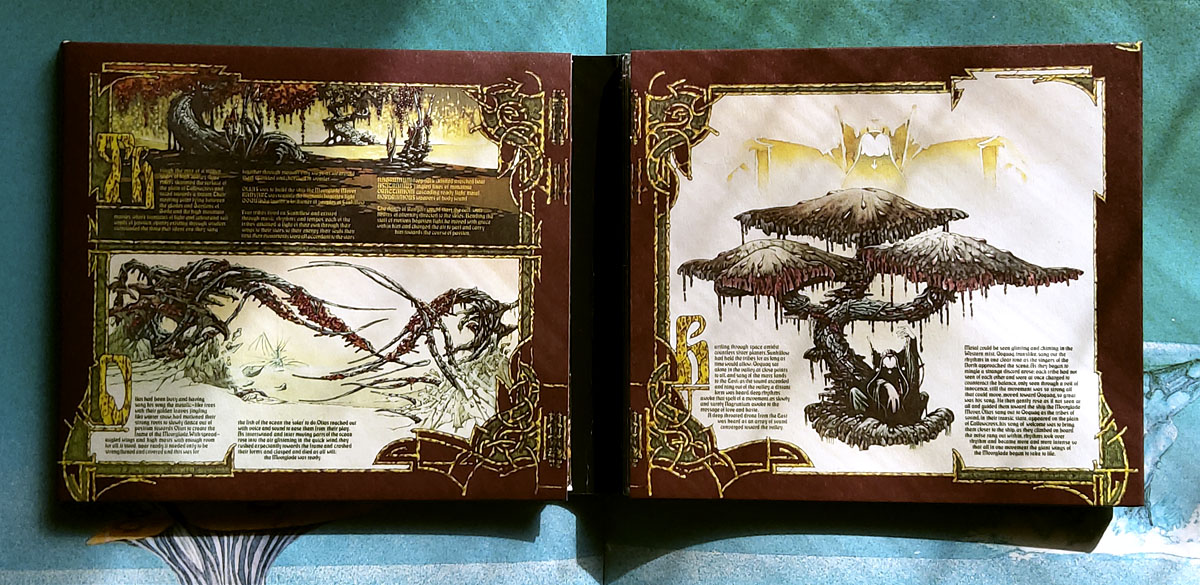
For many years in British music circles it would have been a grave error to even acknowledge this album’s existence, never mind admit to actually liking it. This was partly the old animus against progressive rock, an unexamined prejudice that lasted well into the 1990s, but Anderson’s album had so many strikes against it that it might have stood as the winner of a disapproval lottery for the more ideologically rigid writers and readers of the NME. It’s Jon Anderson (strike 1), the lead singer of progressive rock (2) group Yes (3), whose album is a science fiction (4)/ fantasy (5) concept (6), littered with Tolkien-like invented names and words (7), and with a multi-page sleeve embellished with detailed fantasy illustrations (8) by David Fairbrother-Roe. The design was art directed by Hipgnosis, who subsequently designed the next two Yes albums. Anderson originally wanted Roger Dean to create the packaging, which would have provided a further strike of disapproval against the album, but Dean’s career had gone into overdrive following the publication of Views so he either didn’t have the time or didn’t want to be involved. In Views Dean mentions “another project” based on the fish-ship’s journey which may be a reference to Anderson’s forthcoming album, the credits of which thank Dean for “planting the seed”.

views1.jpg

Roger Dean’s original artwork for Fragile (1971). Another fish-ship was added to the final cover art.

Continue reading “Solid Space: Jon Anderson’s cosmic voyage”