Kenneth Anger: Film als magisches Ritual

anger1.jpg

Writing about Steven Arnold last week I was wondering whether Arnold and Kenneth Anger had ever crossed paths. Anger moved to San Francisco in 1966 in order to channel the counter-cultural ferment into the film that would eventually become Lucifer Rising. I’m sure he must have been aware of Arnold’s midnight movie shows but if so there’s no mention of Arnold in the Bill Landis Anger biography.

anger2.jpg

When Anger died two years ago I posted links to some of the better online material related to the film-maker and his works. One of these was a German TV profile, Kenneth Anger–Magier des Untergrundfilms, a 53-minute documentary made in 1970 by Reinold E. Thiel for German TV channel WDR. The post included my complaint about the only copy of the film being blighted by an obtrusive graphic fixed to the footage by the person who uploaded it to YouTube a decade ago. The copy was further spoiled by burned-in subtitles but I felt sure that a better version would turn up eventually, and here we are with Kenneth Anger: Film als magisches Ritual, the same film under a different title, and free of obtrusive graphics. (There’s still that “WDR” in the corner but they paid for the damned thing so their proprietorial logo is at least justified.)

anger3.jpg

As a guide to Anger’s cinema, Thiel’s film only skates over the surface, with Anger being interviewed in piecemeal fashion, and explaining his work and magical philosophy to the camera. He doesn’t seem very happy in any of these sequences but WDR had paid to help with his own film so he was obliged to co-operate. We’re fortunate that they did. Thiel’s film is most valuable for having been made when Anger was shooting new scenes for Lucifer Rising in London. As far as I’m aware, this is the only documentary that shows Anger at work on any of the Magick Lantern films. The discussion of his career includes a mention of Rabbit’s Moon, the lost footage of which had been discovered in Paris but not yet pieced together into its finished form. The shots we see here are more rarities, being raw footage, untinted and unedited. The same goes for some of the shots from Lucifer Rising which include brief moments that didn’t make it to the final cut.

anger4.jpg

Anger had moved to London following his aborted attempts to make Lucifer Rising in San Francisco, a period which saw his first choice for the role of Lucifer remove himself from the production by means of suicide. His second choice, Bobby Beausoleil, fell out with Anger and stole most of the existing footage before being imprisoned for life as a result of his involvement with the Manson murders. The London phase of the film’s production was much more fruitful. In addition to the WDR funds and assistance from the Rolling Stones’ photographer, Michael Cooper, Anger was given a small grant by the BFI which helped pay for the sequences filmed in Germany and Egypt. Thiel’s footage shows Anger and assistants filming shots of the basement ritual with Aleister Crowley’s magic circle painted on the floor. Anger’s third Lucifer, Leslie Huggins, left the film before it was finished but we get to see him in several sequences, including shots of him wearing his “Lucifer” jacket. Thiel inadvertently clears up one minor mystery by revealing that the white-haired, ermine-robed Francis Cyril Rose is saying “Haven’t I seen you somewhere before?” to Huggins’ Lucifer during the ritual. In the finished Lucifer Rising we see Rose’s lips moving but the only words you ever hear in Anger’s films are the lyrics in the songs he uses.

anger5.jpg

Leslie Huggins doesn’t say a word either, even when Anger is directing his actions during the later sequences shot among the standing stones of Avebury, the same stones that would summon Derek Jarman to their circle a year later. Avebury’s megaliths have cultivated a great deal of mystery and legend but their aura is dispersed a little when you can hear an endless procession of motor traffic going by in the background. Anger shoots the stones from a low angle to make them seem more impressive, and also keep a flock of curious sheep out of the frame. Another minor mystery in Lucifer Rising was the shot of Huggins standing by the stones while making conjuring gestures towards a very stormy sky. Was the dark sky a special effect like some of the other shots in the film? Thiel reveals it to be a genuine Wiltshire thunderstorm which Anger hurries to photograph. The inhabitants of Avebury village were no doubt used to the sight of film crews gathered around the stones—a few years later the village became the location for an entire TV series—but even they must have been surprised by the sight of two film crews arriving simultaneously, with one of them filming the other. Thiel ends on a self-reflexive note, with a shot from Anger’s camera showing the camera filming him.

Previously on { feuilleton }
Kenneth Anger, 1927–2023
Anger Magick Lantern Cycle, 1966
Don’t Smoke That Cigarette by Kenneth Anger
Kenneth Anger’s Maldoror
Donald Cammell and Kenneth Anger, 1972
My Surfing Lucifer by Kenneth Anger
Inauguration of the Pleasure Dome: The Eldorado Edition
Brush of Baphomet by Kenneth Anger
Anger Sees Red
Kenneth Anger’s Hollywood Babylon</a
Lucifer Rising posters
Missoni by Kenneth Anger
Anger in London
Arabesque for Kenneth Anger by Marie Menken
Edmund Teske
Kenneth Anger on DVD again
Mouse Heaven by Kenneth Anger
The Man We Want to Hang by Kenneth Anger
Relighting the Magick Lantern
Kenneth Anger on DVD…finally

Weekend links 752

nemo.jpg

Captain Nemo by Alphonse de Neuville, from Twenty Thousand Leagues Under the Seas (1875) by Jules Verne.

• “…physical remoteness is a category of its own. It is an enhancer: It can make the glorious better and the terrible worse. The oceanic pole of inaccessibility distills physical remoteness on our planet into a pure and absolute form. […] Point Nemo is nearly impossible to get to and offers nothing when you arrive, not even a place to stand. It is the anti-Everest: It beckons because nothing is there.” Cullen Murphy explores the remotest place on Earth. A long and fascinating read, but no mention of Point Nemo’s dreaming tenant.

• More Bumper Book business: Smoky Man has posted the second part of his analysis of the book for (Quasi) (in Italian) which includes some comments from myself about the origin of the Moon and Serpent Magical Alphabet, and why the letter Q in the alphabet is assigned to Cthulhu. Elsewhere, Panini have announced an Italian edition of the Bumper Book for May next year, while at The Beat Steve Baxi reviewed the book from a philosophical perspective.

• At the BFI: David Parkinson on where to begin with Louis Feuillade. I’d suggest starting with Fantômas rather than Les Vampires but then I’m biased.

The combination of magic(k)al, ceremonial action, vivid colour and paradoxically serious camp in Jarman’s Super 8 films of the ’70s bears the influence of Kenneth Anger, but the differences between Jarman’s sensibility and Anger’s are more striking than the resemblances. Jarman’s vision is more materialist, austere and hermetic, and less sociological; where Anger identifies the glamour of American popular culture with the Will of the Crowleyan magician, Jarman situates the discovery of the cinematographic mechanism imaginatively within the history of alchemy. Anger cast rock stars as gods and adepts with the intention of harnessing the energy of their recognition; Jarman casts Fire Island, then in its heyday as a gay resort, as a desert defined by sculptural details and occupied by a single masked figure, in scenes that both recall his landscape paintings of the ’60s and ’70s and anticipate the design of his garden at Dungeness.

Luke Aspell on Derek Jarman’s hermetic film/painting, In the Shadow of the Sun

• At Smithsonian Magazine: “Visions of nuclear-powered cars captivated Cold War America, but the technology never really worked”.

• At The Spectator podcast: host Sam Leith talks to Michael Moorcock about 60 years of New Worlds magazine.

• At Public Domain Review: “Light from the Darkness” — Paul Nash’s Genesis (1924).

• At Bandcamp: “Disco godfather Cerrone’s enduring influence on dance music”.

• At Unquiet Things: The Art of Survival: Eyeball Fodder in Dark Times.

• Mix of the week: DreamScenes – November 2024 at Ambientblog.

• New music: The Laugh Is In The Eyes by Julia Holter.

• At The Daily Heller: The College of Collage.

• RIP jazz drummer Roy Haynes.

Thermonuclear Sweat (1980) by Defunkt | Nuclear Drive (1982) by Hawkwind | Nuclear Substation (2005) by The Advisory Circle

Weekend links 711

paalen.jpg

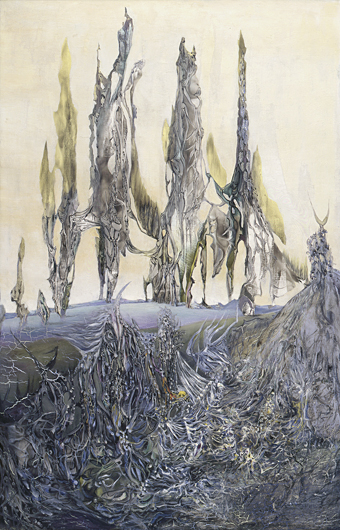
Les Étrangers (1937) by Wolfgang Paalen.

• “I was picturing Monty Python’s spoof Pasolini cricket film The Third Test Match, a man frantically rubbing his groin with a cricket ball.” Paul Gallagher writing about the time that Kenneth Anger wanted to make a film about cricket.

• The week in deserts: This camera is taking a 1,000-year-long exposure photo of Tucson’s desert landscape; Explore the surface of Mars in spectacular 4K resolution.

• At the Wired YT channel: puzzle-box maker Kagen Sound talks about the creation and operation of his amazing boxes.

• RIP Wayne Kramer, the MC5’s other incendiary guitarist. Here they are kicking out the jams on Beat-Club in 1972.

• National Gallery of Ireland acquires Harry Clarke artwork for national collection.

• At Bajo el Signo de Libra: The (mostly homoerotic) Italy photographed by Herbert List.

• New music: Fragmented by Parallel Worlds, and The Crystal Parade by Cate Brooks.

• At Wormwoodiana: Aquarius, Arcania, Arcturus: Exploring New Age shops.

• At Public Domain Review: Early modern blackwork prints.

Sun In Aquarius (1970) by Pharoah Sanders | Aquarius (1998) by Boards Of Canada | Aquarius (2018) by Beautify Junkyards

Weekend links 677

cv-brody.jpg

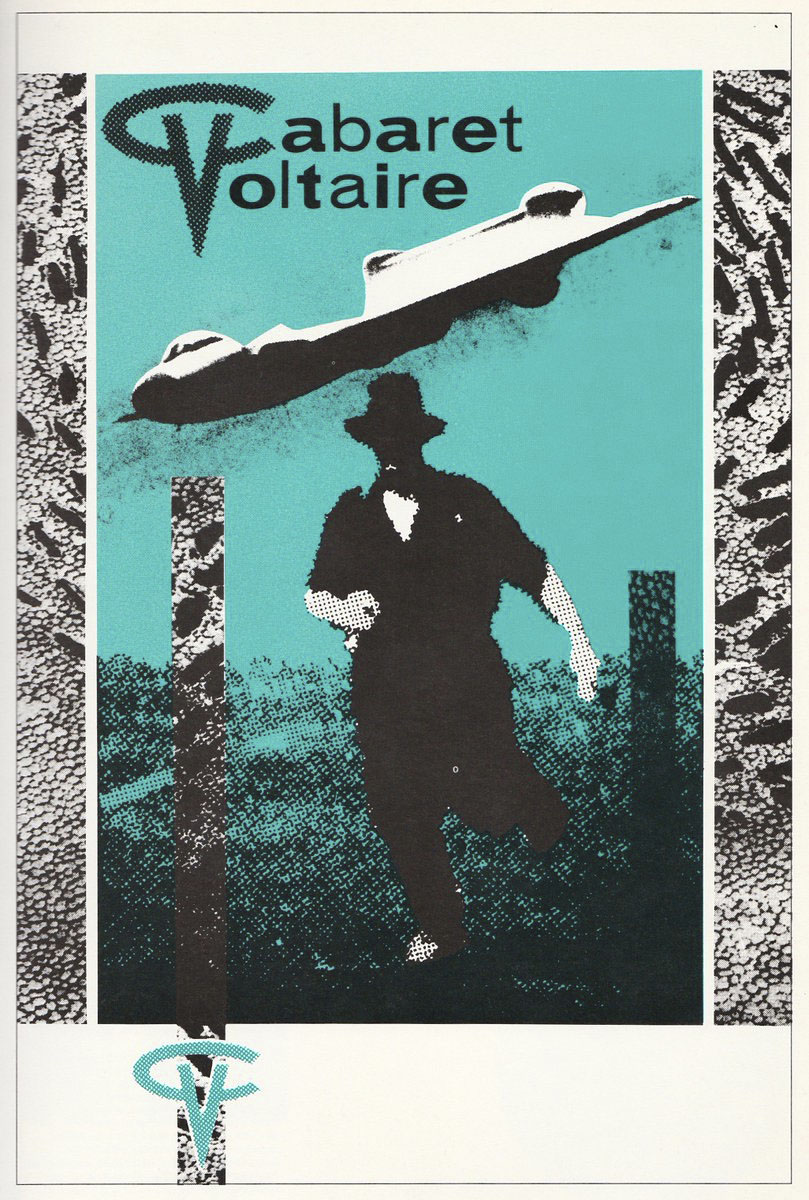
Design by Neville Brody, 1980.

• My work soundtrack for the past couple of weeks has been non-stop Cabaret Voltaire so this is pertinent. Neville Brody designed many of the group’s record sleeves in the 1980s as well as this poster and another one that I’ve only seen as a small picture in the first Brody book. He was also responsible for the CV logo which I never managed to find in badge form.

• “Anger’s preferred mode of artistry in his last decades was self-mythologising, and while he would return to filmmaking late in life, it was less as hierophant than totem—the worn keepsake of a once powerful magick.” Ryan Meehan remembers Kenneth Anger.

• New music: Waves by Ben Chasny and Rick Tomlinson, Topos by UCC Harlo, and Zango by WITCH.

Kafka’s perpetual redescription of his plight suggests that throughout his writing life he was less interested in finding a solution or even arriving at a single, definitive formulation of the problem than he was in exploring the implications and complications of his situation from new, unexpected angles and crafting an ever-expanding lexicon of figures for its inescapability.

Ross Benjamin, the translator of Franz Kafka’s diaries, on the neurotic concerns that Kafka turned into art

• “Why are men seemingly always naked in ancient Greek art?” Sarah Murray investigates.

Artists for Bibi: an auction in aid of Arthur Machen’s great-great-granddaughter.

• At Public Domain Review: Unidentified Floating Object: Edo Images of Utsuro-bune.

• Steven Heller’s font of the month is Acorn.

• Old music: Moon Journey by Mort Garson.

• RIP Tony McPhee.

Kafka (1964) by The Rowdies | Kafka (1982) by Masami Tsuchiya | Kafka (Main Title) (1992) by Cliff Martinez

Weekend links 675

stuck.jpg

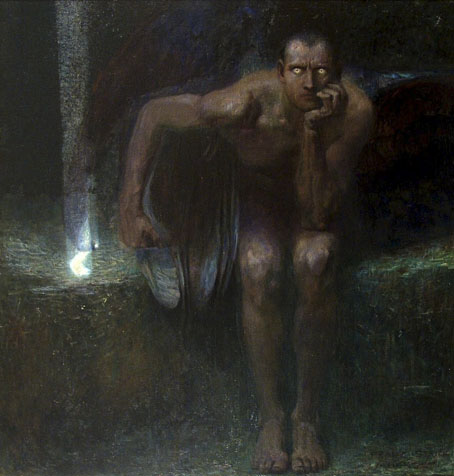
Lucifer (1890) by Franz Stuck.

• “I wanted to reclaim the word ‘psychonauts’ and take it back into the 19th century, where it describes not only renegades and rebels, but also establishment scientists, doctors, and pillars of the literary establishment. The word that was used at the time was “self-experimenter.” Mike Jay (again) talking to Steve Paulson about psychoactive research and the scientists who taste their own medicine.

• “How did countercultures commune before the internet?” asks J. Hoberman, reviewing Heads Together: Weed and the Underground Press Syndicate, 1965–1973 by David Jacob Kramer.

• At Public Domain Review: Medieval advice concerning the mythical Bonnacon: “the protection which its forehead denies this monster is furnished by its bowels”.

• DJ Food unearths posters and badges for The Kaleidoscope, a short-lived Los Angeles music venue of the late 60s.

• At Spoon & Tamago: Gaku Yamazaki has documented thousands of unusual road signs across Japan.

• New music: Psalm013: Unland by Pram of Dogs, and Intimaa by Bana Haffar.

• At Unquiet Things: A sneak peek from the forthcoming The Art of Fantasy.

• The Strange World of…Shirley Collins.

• At Dennis Cooper’s: Bruce Posner Day.

Kenneth Anger: a life in pictures.

• RIP Tina Turner.

Kaleidoscope (1967) by Kaleidoscope (UK) | Kaleidoscope (1984) by Rain Parade | Collideascope (1987) by The Dukes Of Stratosphear