Le Château du Tarot

tarot1.jpg

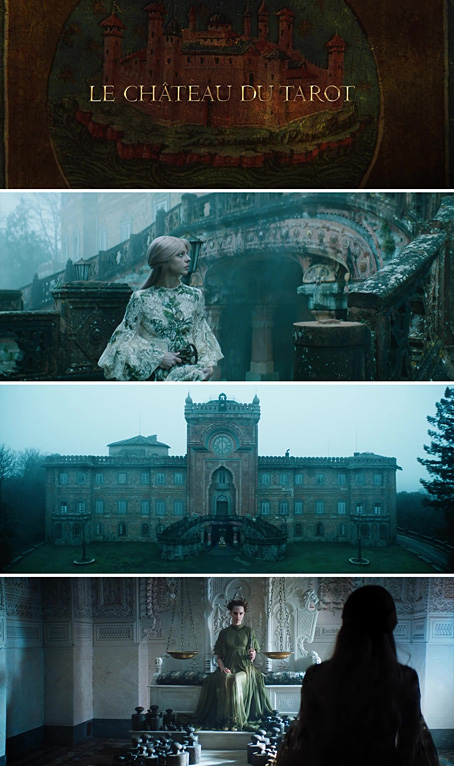
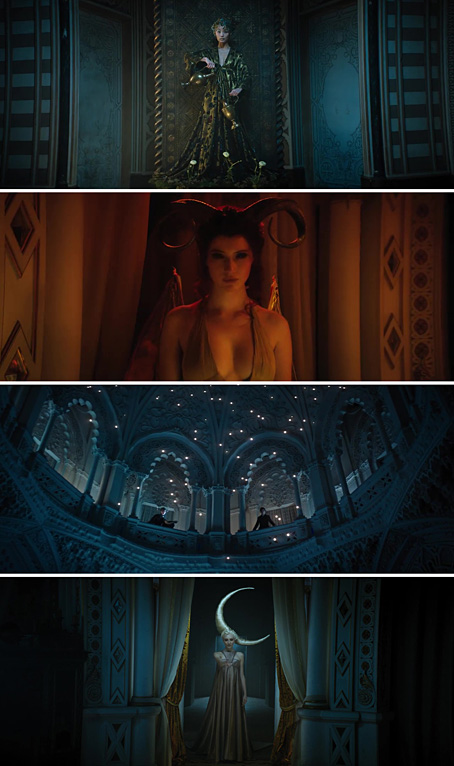
In which Christian Dior promotes its latest collection with a 15-minute Tarot-themed film directed by Matteo Garrone. The fashion world is voracious in its search for novelty so something like this feels inevitable, especially now that the art world has decided it’s no longer embarrassed by occult themes. But designer Maria Grazia Chiuri notes that Christian Dior (the person) was obsessed with divination and prophecy, while the Tarot symbolism extends to some of the clothing itself. (Given the negative associations of The Moon card I’d be wary of making that crayfish such a prominent feature.) Chiuri also mentions reading Italo Calvino’s The Castle of Crossed Destinies in order to deepen her knowledge of the cards. The novel may have suggested the narrative of Garrone’s film in which a young woman (or her spiritual avatar) finds herself in an Orientalist palazzo populated with characters from the Tarot trumps. It’s a dreamy production that’s several worlds away from the murderous Neopolitan gangsters of Garrone’s Gomorrah. Watch it here.
tarot2.jpg

Previously on { feuilleton }
The Egyptian Tarot
The Kosmische Tarot
Alas Vegas Tarot cards
Palladini’s Aquarian Tarot
Le Tarot de Philippe Lemaire
Tarotism and Fergus Hall
Giger’s Tarot
The Major Arcana by Jak Flash
The art of Pamela Colman Smith, 1878–1951
The Major Arcana

Weekend links 533

calvino.jpg

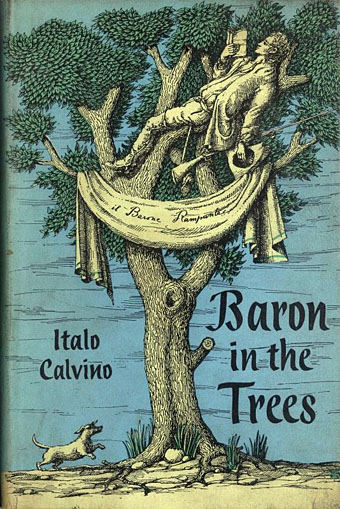
Cover art by Domenico Gnoli, 1959.

• After decades of ignoring the output of Tangerine Dream it feels strange to be interested in the group once again; musicians you’re compelled to dismiss seldom manage to recapture your attention later on. Stranger still when the group itself is now completely detached from its origins following the death of founder Edgar Froese in 2015. But it was Froese’s departure, and with it the disappearance of many years of poor aesthetic choices, that helped renew my interest. At FACT the group take up the against-the-clock challenge in which musicians are given 10 minutes to create a new piece of music.

• “We were both working at Sounds at the time and we thought that instead of listening to these terrible ’80s records like Haircut 100 we’d go off and look for Montague Summers books, so off we went!” Savage Pencil (Edwin Pouncey) on his enthusiasm for Summers, Austin Spare and Louis Wain.

• At the Paris Review: Valerie Stivers bakes pies for Italo Calvino. I’d like to see someone create a series of dishes based on every location from Invisible Cities. Elsewhere there’s William N. Copley on Joseph Cornell: “No art historian ever prophesied the coming of the box.”

• On the experimental realism of an eccentric Russian Anglophile: “For Sigizmund Krzhizhanovsky, strangeness was a matter of perspective,” says Caryl Emerson.

Nova Reperta: John Boardley on a series of 16th-century prints showing new inventions.

• RIP David Graeber. From 2014: “What’s the point if we can’t have fun?

• “Damn your blood”: John Spurr on swearing in early modern English.

• At Wormwoodiana: Mark Valentine maps the esoteric in Britain, 1920.

• At Dennis Cooper’s: Seijun Suzuki Day.

Big Fun/Holly-wuud (Take 3) (1972) by Miles Davis | Funtime (1977) by Iggy Pop | Funny Time Of Year (2002) by Beth Gibbons and Rustin Man

Weekend links 519

minotaure.jpg

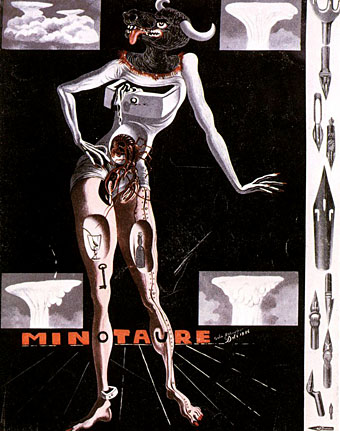
Cover of Minotaure no. 8 (1936) by Salvador Dalí.

• At Dangerous Minds: Irmin Schmidt talks to Oliver Hall about his new album of prepared piano, Nocturne, and also reveals more about the planned release of live recordings by Can.

• “Even the most zealous fan of the genre can learn something new from this book,” says Geeta Dayal in a review of Bring That Beat Back: How Sampling Built Hip-Hop, by Nate Patrin.

• The subject of a previous post but the video was later removed: Italo Calvino in a rare documentary feature for an English audience, on the BBC’s Bookmark in 1985.

• On 9th May, carillonneur Malgosia Fiebig played The Model by Kraftwerk on the bells of the Dom Tower in Utrecht as a tribute to the late Florian Schneider.

• Film footage of Alice Coltrane in her prime is a rare thing so even 17 minutes of TV from 1970 is something special.

Dan Reynolds on the fantastic alphabets designed by Jean Midolle. See also Luc Devroye’s page.

• Mix of the week: Jon Hassell tribute, part 1: Jon and his collaborators, by Dave Maier.

Nicolas Winding Refn on some of the films he’s been watching during lockdown.

• At Haute Macabre: Surrealist décor and tiny secret drawers.

HP Lovecraft dreams of a Providence trolley car in 1927.

The Museum of Ridiculously Interesting Things

Xerrox Voyage, a new recording by Alva Noto.

• At Dennis Cooper’s: Jean-Pierre Léaud Day.

The Model (1979) by Snakefinger | Model (1992) by The Balanescu Quartet | Das Modell (1997) by Rammstein

Weekend links 488

ziegler

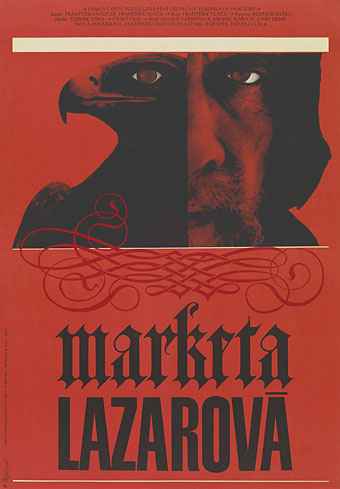
Poster by Zdeněk Ziegler for Marketa Lazarová (1966), a film by František Vláčil.

• I’ve spent the past couple of weeks watching a number of films by Béla Tarr, including his 432-minute masterwork, Sátántangó (1994). The latter was based on a novel by László Krasznahorkai, an author who not only worked with Tarr on the screenplay but helped with several of his other features. So this piece by David Schurman Wallace, about a more recent Krasznahorkai novel, Baron Wenckheim’s Homecoming, arrives at just the right moment.

The Paris Review unlocked its Art of Fiction interview with Italo Calvino. William Weaver and Daniel Pettigrew ask the questions. And at the same site: Ivan Brunetti on the deceptive simplicity of Charles Schulz’s Peanuts.

• Halloween approaches so Sudip Bose suggests 10 pieces of orchestral music to set the mood. I made a similar list of my own in 2011. Related: Adam Scovell on 10 lesser-known folk horror films.

I thought, “When I grow up, I’m going to be in a group making this kind of music.” Slowly and Shirley, I did grow up and found myself in a group but they weren’t making that kind of music. It was a hole of longing in my guts that I needed to fix.

Andy Partridge, aka Sir John Johns, on his love of psychedelic music and the remixed reissue of the Dukes Of Stratosphear catalogue

Faye Lessler on how the Internet Archive is digitizing LPs to preserve generations of audio.

• Photographing the Dark: Allison C. Meier on Nadar’s descent into the Paris Catacombs.

• At Wormwoodiana: Go Back at Once, Robert Aickman‘s unpublished second novel.

• Queen of the Flies: Mica Levi talks to Charlie Bridgen about her soundtrack music.

• At Dangerous Minds: Sex, Nazis, and classical music: Ken Russell’s Lisztomania.

• The first new Ghost Box recording artist of 2020 will be…Paul Weller.

• Mix of the week: There’s No Going Back by The Ephemeral Man.

• The Dead Travel Fast: The Gothic Ballad of Lenore in paint.

Catacombs/Cum Mortuis In Lingua Mortua (1980) by Mussorgsky (George Solti/Chicago SO) | Fade In Hong Kong (1981) by Video Liszt | La Ballade De Lenore (1986) by Shub-Niggurath

Weekend links 461

meryon.jpg

Le Stryge (The Vampire) (1853) by Charles Méryon.

Notre-Dame-de-Paris in art and photography. Related: Chris Knapp on the Notre-Dame fire, and John Boardley on the print shops that used to cluster around the cathedral. Tangentially related: Mapping Gothic France.

The Bodies Beneath: The Flipside of British Film & Television by William Fowler and Vic Pratt will be published next month by Strange Attractor. With a foreword by Nicolas Winding Refn.

• “In his new biweekly column, Pinakothek, Luc Sante excavates and examines miscellaneous visual strata of the past.”

I also gathered underland stories, from Aeneas’s descent into Hades, through the sunken necropolises of Italo Calvino’s Invisible Cities and the Wind Cave cosmogony of the Dakota Sioux, to accounts of the many cavers, cave-divers and free-divers who have died seeking what Cormac McCarthy calls “the awful darkness inside the world”—often unable to communicate to themselves, let alone others, what metaphysical gravity drew them down to death. Why go low? Obsession, incomprehension, compulsion and revelation were among the recurrent echoes of these stories—and they became part of my underland experiences, too.

Robert Macfarlane on underworlds real and imagined, past, present and future

• Mixes of the week: FACT Mix 703 by Mary Lattimore, and The Colour Of Spring by cafekaput.

• A witty appraisal by Anna Aslanyan of a lipogrammatic classic and its smart translation.

• “Unseen Kafka works may soon be revealed after Kafkaesque trial.”

• “Why do cats love bookstores?” asks Jason Diamond.

Sunn O))) pick their Bandcamp favourites.

Le Grand Nuage de Magellan

Cathedral In Flames (1984) by Coil | The Cathedral of Tears (1995) by Robert Fripp | Cathedral Et Chartres (2005) by Jack Rose