Weekend links 65

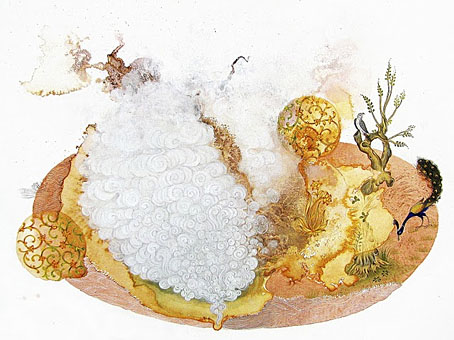
plakhova.jpg

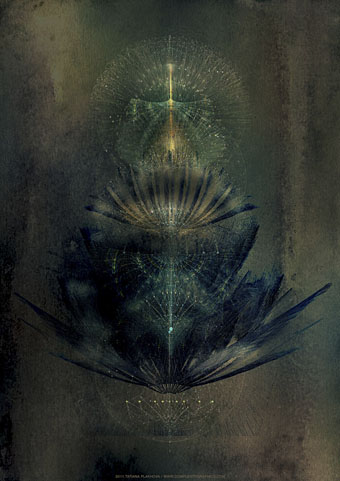
From Light Beyond Sound, a new series of works by Tatiana Plakhova.

“The invasion philosophy of the Olympic Park strikes me as just like the invasion philosophy behind going into Iraq,” he says, “or anywhere else that you blast into, put up the fence, establish the Green Zone, explain everything, put it all into this lovely eco-terminology…” Iain Sinclair

• Iain Sinclair has a new book out, Ghost Milk: Calling Time on the Grand Project, a critique of the tendency of British governments to waste money on white elephant projects. He’s visited this territory before in Sorry Meniscus, the small book/essay about the Millennium Dome. That book grew out of a piece for the London Review of Books which can be read here. Among the current round of interviews there’s this piece in which the title of the book is explained, and a talk with John Walsh at The Independent where he describes how the site for the 2012 Olympics has destroyed his patch of London.

A celebration of the writing and art of Mervyn Peake: “Mervyn Peake, creator of Gormenghast, is now recognised as a brilliant novelist and artist. Michael Moorcock, China Miéville, Hilary Spurling and AL Kennedy celebrate his achievements.”

• Looking like a children’s book invaded by the inhabitants of alchemical engravings, Die Geburtstagsreise (The Birthday Trip, 1976) by Monika Beisner.

• At AnOther mag this week: The ear in Blue Velvet and publisher Peter Owen on Salvador Dalí’s novel Hidden Faces.

Four Days, Four Recordings by Jon Brooks aka The Advisory Circle. Related: The Hauntological Society.

Leaving it to Chance: maverick director Nicolas Roeg on Don’t Look Now.

Brian Eno: “This is my problem with Tracey Emin; who fucking cares?”

• Scans of Max Ernst’s masterwork Une Semaine de Bonté.

Susie Bright: Mapping the Erotic and the Revolutionary.

How to Become a Sensuous Witch, 1971.

The View From Her Room (1982) by Weekend | Weekend live on the OGWT (October, 1982) • Gormenghast Drift (1992) by Irmin Schmidt.

Weekend links 56

kallela.jpg

Ad Astra (1907) by Akseli Gallen-Kallela.

• Andres Serrano’s works are photo prints so you can’t damage an exhibition item the way you can with a painting. That didn’t stop Catholic protestors in France attacking a copy of Piss Christ on Monday. By coincidence, Dave Maier had posted an essay about Serrano’s work a few hours earlier, and with a reminder that the notorious photograph was part of a series, a detail which is often forgotten or conveniently ignored.

• The Avant Garde Project which made available deleted experimental audio works (see this earlier post) ceased activity a while ago so it’s good to see that its archives will now be hosted at Ubuweb.

…African Head Charge again was a studio name I had to start with, and it evolved into a band about eight years later. That started out again I read an interview in a newspaper where Brian Eno talked about he’d made an album called My Life in the Bush of Ghosts with another musician—that Talking Heads fellow [David Byrne]—and he said “I had a vision of a psychedelic Africa”. And I thought, “Oh, that’s pretentious”. But then I thought about it, and thought “No, what a good idea! Make really trippy African dub”.

Adrian Sherwood on thirty years of On-U Sound.

• Related: Brian Eno has a new album out in July, Drums Between The Bells, a collaboration with Rick Holland.

“Do you think Lord Leighton could by any chance have been a homosexual?” enquired Richard. “It says here,” I replied, consulting a laminated information card, “that there is no evidence one way or the other.”

“Rent boys leave no evidence,” said Richard.

A private view of Lord Leighton’s home in Holland Park, London, which opened to the public again last year.

Passengers, an exhibition of urban transit photos by Chris Marker at Peter Blum, NYC. For a different kind of rail transport there’s this exploration of London’s disused underground Post Office Railway.

• Reappraising the recent past: Jon Savage on Taxi zum Klo, Christiane F, David Bowie and the seedy attraction of Berlin in the 70s and 80s; Iain Sinclair on the Festival of Britain sixty years on.

Stella Steyn’s illustrations for Finnegans Wake as seen in transition magazine, 1929. And speaking of literary magazines, the return of New Worlds has been announced.

Clive Hicks-Jenkins is an art monograph published next month by Lund Humphries. Clive enthused about the book’s arrival.

• 50 Watts announces the Polish Book Cover Contest.

• 4th June, 2011 is Radiophonic Creation Day.

• Americans: has your state banned sodomy?

Stardust (1931) by Louis Armstrong | Stardust (1940) by Artie Shaw | Stardust (1957) by Nat King Cole.

Weekend links 55

shah1.jpg

From the Ornamental Age series (2009) by Seher Shah.

Seher Shah has recently updated her website giving us a better view of her extraordinary art.

The Demon Regent Asmodeus, my short film of Alan Moore’s reading from the first Moon & Serpent CD, has been posted to YouTube. In other self-promotion news, Mahakala, a drawing of mine from 1984, finds an audience on Tumblr.

• Yet more Moore: Alan Moore & Iain Sinclair “explore psychogeography” at the Cheltenham Festival in June. Alan will also be discussing science and fiction with Robin Ince. Then in July he’s performing with fine fellow Stephen O’Malley at Alexandra Palace as part of Portishead’s I’ll Be Your Mirror festival. They’ll be providing text and music for Harry Smith’s Heaven and Earth Magic.

In most countries, parents can tell their kids that if they work hard and do everything right, they could grow up to be the head of state and symbol of their nation. Not us. Our head of state is decided by one factor, and one factor alone: did he pass through the womb of one aristocratic Windsor woman living in a golden palace? The US head of state grew up with a mother on food stamps. The British head of state grew up with a mother on postage stamps. Is that a contrast that fills you with pride? (…) Earlier this month, David Cameron lamented that too many people in Britain get ahead because of who their parents are. A few minutes later, without missing a beat, he praised the monarchy as the best of British. Nobody laughed.

Johann Hari kicks the royals.

• Related to the above: Lydia Leith’s royal wedding sick bag.

Beautiful Century relates a dispiriting (and very common) encounter with Google’s blog prudery. The new Beautiful Century is now at Tumblr.

• In the future, everything will be on Tumblr for fifteen minutes. Among this week’s discoveries there’s Writers and Kitties, attractive men and vintage photos at Stuff Doer, and all manner of things at Maggs Counterculture including a picture by Jim Leon I hadn’t seen before.

shah2.jpg

From the Ornamental Age series (2009) by Seher Shah.

“Sidewalk cafés, free from conservative business attire…” Film of groovy Greenwich Village in the late 1960s. Related: groovier fashions in Art Nouveau Barcelona.

Ai Weiwei’s Blog: Writings, Interviews, and Digital Rants, 2006-2009, a book from MIT Press.

The Delian Mode, a film about electronic musician Delia Derbyshire by Kara Blake.

Austin Osman Spare, a biography of the artist and occultist by Phil Baker.

• Lando Jones is giving away three limited edition prints of his artwork.

Plano Creativo, a blog (in Spanish) by Alejandro Jodorowsky.

B Magazine is a new publication for gay Americans.

Diaghilev gets his due at Coilhouse.

Baby’s On Fire (1973) by Brian Eno | Baby’s On Fire (1976) by 801 | Baby’s On Fire (from Velvet Goldmine) (1998) by The Venus In Furs.

Weekend links 44

bradley.jpg

Poster by Will Bradley for Victor Bicycles (c. 1895).

• G. Wayne Clough, chief exective of the Smithsonian Institution, finally admits that he made a hasty decision in removing David Wojnarowicz’s video from the Hide/Seek exhibition of gay art. Related: “Finland’s cultural gifts to the world include Sibelius, the Moomins and an artist that the country has been less eager to celebrate.” The belated homecoming of Tom of Finland.

The Fiend with Twenty Faces: Jonathan Clements examines the legacy of Edogawa Rampo (Hirai Taro), the Japanese master of mystery and imagination.

• RIP Susannah York. The Guardian posted a selection of clips including one from Robert Altman’s Images (1972).

• More mixtapes: Trish Keenan’s Mind Bending Motorway Mix and a selection for Quietus by Chris & Cosey.

• “Ruin photos speak to our desperate desire to have our world re-enchanted.”

tomorrow.jpg

Promo poster by Hapshash and the Coloured Coat for My White Bicycle by Tomorrow (1967).

The Raging Peloton: Iain Sinclair on two wheels good, four wheels bad.

The unknown Jorge Luis Borges: five new anthologies reviewed.

The French house untouched for 100 years (and also here).

Electrotypes on Drugs: old chemists’ labels.

South China Sea Pishkun by Dinh Q. Lê.

Bike (1967) by Pink Floyd | My White Bicycle (1967) by Tomorrow | Trip On An Orange Bicycle (1968) by Orange Bicycle.

Scenes from a carriage

tenniel.jpg

One of John Tenniel’s illustrations for Through the Looking-Glass (1871).

The collaboration with Carroll, and the production of this clairvoyant illustration gave Tenniel the chance to accuse the killer, whose identity he knew – because he had, at some level, shared in the crime. His capped (or crowned) Guard wears the Diamond and stares, eyeless, at the girl: because he is, or stands for, the Red King. He is checkmated. The Goat accuses him, a Tarot Devil, representing ‘ravishment, force, fatality’. So Tenniel is able to put into his depiction of Alice the details of the murders that the police have never made public. The hands of the victims were always tied in front of them – as Alice’s are, within her muff. They were all strangled with a knotted scarf, such as the one that Alice wears. And a single feather was knotted into their hair. I rest my case.

There’s further divination by Iain Sinclair of Tenniel’s carriage scene in his 1991 novel Downriver but you’ll have to search out the book if you want the rest. The picture above is scanned from my 1908 edition of the two Alice novels which has the sharpest reproductions of Tenniel’s illustrations I’ve seen, not least because they’re printed on quality paper. Later editions often print second- or third-generation copies with the cross-hatched areas reduced to black smudges.

ernst.jpg

Oedipus by Max Ernst from Une semaine de bonté (1934).

Tenniel’s carriage scene has always been linked for me with this collage by Max Ernst from his Surrealist masterwork, Une semaine de bonté. Sinclair’s proposed murder scenario gives the two pictures an additional resonance when you notice the body on the floor of Ernst’s carriage. Is this Oedipus’s father, recently slain by his son, or some other victim?

ernst2.jpg

Lithograph by Max Ernst from Lewis Carroll’s Wunderhorn (1970).

Salvador Dalí illustrated Alice’s Adventures in Wonderland in 1969 which perhaps prompted Ernst’s own set of mysterious Alice-inspired lithographs a year later. I’ve yet to see a complete set of the Ernst prints, if anyone has a link then please leave a comment. The artist’s collage novel is a lot easier to find since it’s one of the many great books that Dover Publications keep in print.

Previously on { feuilleton }
Through the Psychedelic Looking-Glass: the 2011 calendar
Jabberwocky
Alice in Acidland
Return to Wonderland
Dalí in Wonderland
Virtual Alice
Psychedelic Wonderland: the 2010 calendar
Charles Robinson’s Alice’s Adventures in Wonderland
Humpty Dumpty variations
Alice in Wonderland by Jonathan Miller
The Illustrators of Alice