Weekend links 419

ellison.jpg

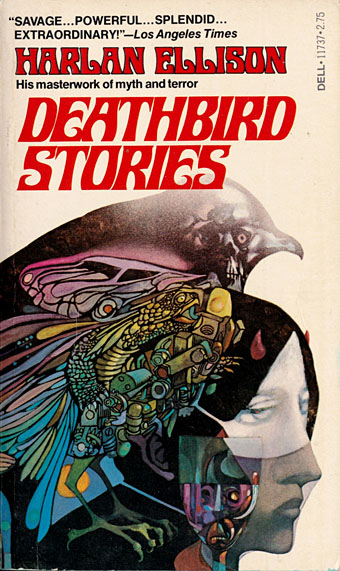
Cover art by Leo & Diane Dillon, 1975.

Art is not supposed to be easier! There are a lot of things in life that are supposed to be easier. Ridding the world of heart attacks, making the roads smoother, making old people more comfortable in the winter, but not Art. Art should always be tough. Art should demand something of you. Art should involve foot-pounds of energy being expended. It’s not supposed to be easier, and those who want it easier should not be artists. They should be out selling public relations copy.

Typical of the late Harlan Ellison to describe his vocation in terms of difficulty and struggle even when his prolific output made writing seem effortless. When my colleagues at Savoy Books published a Savoy issue of New Worlds magazine in 1979 one of the features they ran was an introduction by Michael Moorcock to an Ellison story collection. (They also published two books of Ellison’s around this time.) A copy of the magazine was duly sent to the subject of the essay since Ellison always liked to keep track of his print appearances. The back page of that particular issue is blank but for a few words in bold type from singer PJ Proby: “I am an artist; and should be exempt from shit.” Ellison cut this slogan from the magazine then glued it to his typewriter, no doubt transferring it to later models since it was still visible in the 2008 Ellison documentary, Dreams With Sharp Teeth.

My first encounter with Ellison’s work was also my first encounter with what became labelled the new wave of science fiction, via a reprint of I Have No Mouth, and I Must Scream in a book in the school library. I was only about 12 or 13 at the time, and found Ellison’s story so shocking and disturbing that it overpowered everything else in the collection. The only other story that made an equivalent impression at the time was The Colour Out of Space by HP Lovecraft, so it’s perhaps fitting that Ellison gave my work a favourable mention in his introduction to the huge Centipede Press collection of Lovecraft artwork, A Lovecraft Retrospective: Artists Inspired by HP Lovecraft. I still haven’t got over that one. After the initial encounter, the Ellison-edited Dangerous Visions and Again, Dangerous Visions were just as important for me as the paperback reprints of stories from the Moorcock-edited New Worlds: a handful of books that showed science fiction to be a literary form of limitless possibilities, as opposed to the stereotype of space adventure and future technology. The Ellison and Moorcock anthologies led me to William Burroughs, James Joyce and all points beyond; they also soured for me the preoccupation with space adventure and future technology which persists today.

My final connection with Ellison replayed his compliment in a small way, when editor Jill Roberts and I took extra care with the typesetting of Jeffty is Five for The Very Best of Fantasy & Science Fiction, Volume 2. Ellison was the only author I’ve encountered in the digital age whose corrections were still handwritten comments on printed sheets; these had to be faxed to San Francisco then scanned and emailed to me (to this day I still don’t know why the oft-reprinted story required so many adjustments). It was awkward but amusingly so, a benign taste of a legendary bloody-mindedness and insistence on precision.

• “Laughing about an acid trip with members of Can and opening up about some of the ‘scars’ left from his association with Brian Eno and David Byrne’s My Life In the Bush of Ghosts, [Jon] Hassell is candid in a way that comes naturally to those who’ve lived life on their own terms.”

• Drone Metal Mysticism: Erik Davis talks with music scholar and ethnographer Owen Coggins about amplifier worship, sonic pilgrimage, “as if” listening, metal humour, and his new book Mysticism, Ritual and Religion in Drone Metal.

Psychedelic Prophets: The Letters of Aldous Huxley and Humphry Osmond; “Letters between the men who coined the term ‘psychedelic’ and opened doors to a different way of thinking about human consciousness.”

Artaud 1937 Apocalypse: Letters from Ireland by Antonin Artaud; translated and edited by Stephen Barber.

• “I thought female sexuality was an OK thing?” says writer and porn performer, Stoya.

• “How did a major label manage to lose a John Coltrane record?” asks Ted Gioia.

• Welcome to the dollhouse: Alex Denney on a century of cinematic cutaways.

• The trailer for Mandy, a new (and much-awaited) film by Panos Cosmatos.

• Rest in Anger, Harlan Ellison (1934–2018) by Nick Mamatas.

• Mix of the week: FACT Mix 659 by BD1982.

Emily Gosling on library music design.

Record Label Logos

The Deathbird Song (1997) by The Forbidden Dimension | Eidolons (2017) by Deathbird Stories | Deathbird (2017) by Tempos De Morte
Weekend links 416

hassell.jpg

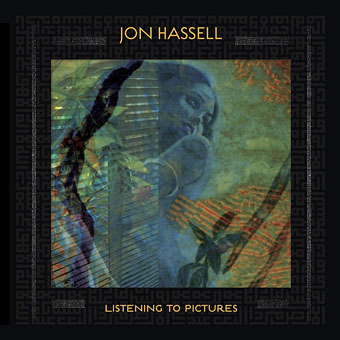
Cover art and design by Arien Vallzadeh, Dan Kuehn, Mati Klarwein & Taska Cleveland.

• At Bandcamp: “Jon Hassell collages the past on his absorbing new record”. The new album, Listening to Pictures (Pentimento Volume One), was released last week, and it joins the rest of Hassell’s catalogue in sounding unlike any of his other albums while still being recognisably the work of the same artist. Musical collage is a familiar technique today but was much less common thirty years ago; it’s almost a constant in Hassell’s work, however, going back to Possible Musics (1980), with its tape-looped rhythms and layered recordings, to the later Magic Realism (1983), an album which was in the vanguard of digital sampling, and which still sounds like nothing else.

• “We’re supposedly in the middle of a vinyl revival, streaming services are hoovering up all the coin, and everyone seems to have a cassette column. But, argues James Toth, it’s the humble compact disc that we should be celebrating.” No argument here, I’ve long favoured CDs over vinyl even before the current fad for overpriced antique (or not-so-antique) discs and equally overpriced new pressings.

• “Reading [Robert] Aickman’s strange stories is to glimpse a reality you would prefer to forget,” says John Gray. Among the other writers mentioned in Gray’s piece is the excellent (and under-recognised) Walter de la Mare; Wormwoodiana’s Mark Valentine reviews a previously unseen de la Mare story.

• At The Wire: Greetings Music Lover: The premiere of Steve Urquhart’s new audio documentary exploring the life and work of BBC Radio Lancashire broadcaster and Wire contributor Steve Barker.

• Out in November: k-punk: The Collected and Unpublished Writings of Mark Fisher (2004–2016).

• “European cinema embraces the vagina—what’s taken Hollywood so long?” asks Anne Billson.

Strange Stars: David Bowie, Pop Music, and the Decade Sci-Fi Exploded by Jason Heller.

• “Avoid all systems”: Ex-Can vocalist Damo Suzuki is interviewed at Dangerous Minds.

• “A new room in the Great Pyramid”: lost 1963 John Coltrane album discovered.

• Mixes of the week: FACT mix 656 by Mor Elian, and 6 by The Ephemeral Man.

• An introduction by Erik Davis to The Night Land by William Hope Hodgson.

Pyramid Of The Sun (1960) by Les Baxter | The Giant Pyramid Sitting At The Bottom Of The Sea Of Bermuda And The Ancient People (1979) by Isao Tomita | The Obsidian Pyramid (2005) by Eric Zann

Weekend links 403

pennington.jpg

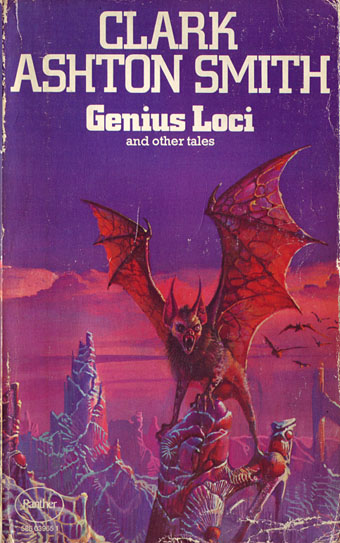
Cover art by Bruce Pennington, 1974. Via Clark Ashton Smith vs Bruce Pennington.

Garçons de Joie. Prostitution masculine à Paris 1860-1960 is an exhibition running at Galerie Au Bonheur du Jour, Paris, until May. The catalogue is expensive (and seems to be in French throughout) but features a substantial amount of rare homoerotic art.

• In the latest Expanding Mind podcast Erik Davis talks to Burt Shonberg biographer Spencer Kansa about LA bohemia, psychedelic art, Marjorie Cameron, gumshoe biography, and his new book Out There: The Transcendent Life and Art of Burt Schonberg.

Gregg Anderson on 20 years of Southern Lord’s dark and heavy art. Related: Earth’s Dylan Carlson announced a new solo album, Conquistador, and single, Scorpions In Their Mouths.

Without any formal training, Smith began to paint and draw his strange visions of sentient plants, grotesque creatures from other dimensions, and throbbing alien landscapes. Eventually commissioned to provide illustrations for Weird Tales, he became one of Lovecraft’s most voluminous correspondents (though never as voluminous as Lovecraft himself). Over the next 10 years, they filled one another’s mailboxes with effusive admiration for each other’s stories and poems. With Lovecraft’s adulatory wind at his back, Smith never strayed far from the Long Valley, and sat home to produce more than a hundred bizarre, linguistically challenging, often unforgettable stories and novelettes for the pulp magazines between 1925 and 1936. Unsurprisingly, Smith’s spurt of fictional creativity didn’t survive the death of Lovecraft in 1937, and while that rich burst of stories may not have earned Smith much money or fame, it caused an almost episteme-shifting earthquake in the brains of the young, aspiring writers lucky enough to read him.

Scott Bradfield on Clark Ashton Smith

Psychomagic, An Art That Heals will be Alejandro Jodorowsky’s next feature film if the crowdfunding is successful. Many rewards are available, large and small.

• At The Quietus this week: Val Wilmer on Sun Ra, and The Strange World of…Cocteau Twins.

• Spectacular images from Chicago’s turn-of-the-century design bible (The Inland Printer).

The shop that buys your dead uncle’s porn collection.

• Mix of the week: FACT mix 642 by Mokira.

Cafe Bohemian (1959) by The Enchanters | Genius Of Love (1981) by Tom Tom Club | A Scandal In Bohemia (1986) by United States Of Existence

Weekend links 400

bernard.jpg

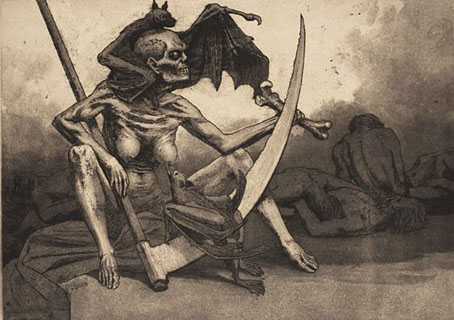
Le Répit (La Mort allaitant une chauve-souris) (1895) by Valère Bernard.

Playhouse 90 presents Heart of Darkness by Joseph Conrad. An American TV production from 1957 starring Boris Karloff, Roddy McDowall, Eartha Kitt and others; introduced by Sterling Hayden. It’s bizarre. Acidemic goes into the detail.

• Erik Davis talks to occult writer and drug geek Julian Vayne about Baphomet, the (sur)reality of spirits, evolution, ritualizing entheogens, and his new book Getting Higher: The Manual of Psychedelic Ceremony.

• “Unsurprisingly, 1. Outside was the record that the #BowieBookClub readers most readily associated with Hawksmoor.” Anna Aslanyan revisits Peter Ackroyd’s architectural mystery.

The Flowers of Dorian Gray: part one of a series of posts examining one of Oscar Wilde’s favourite symbols.

• At Haute Macabre, an interview with Michael Locascio & Heather Jean Skawold of Dellamorte & Co.

One Minute Art History, an animated film by Cao Shu.

Film posters at the Harry Ransom Center, UT-Austin.

• Mix of the week: FACT mix 639 by Black Milk.

Susanna‘s favourite albums.

• Welcome to The Spoodoir.

• Flowers Of Evil (1983) by Cortex | Baphomet (1989) by Foetus Inc. | Heart Of Darkness (1989) by Syd Straw

Weekend links 387

liquidsky.jpg

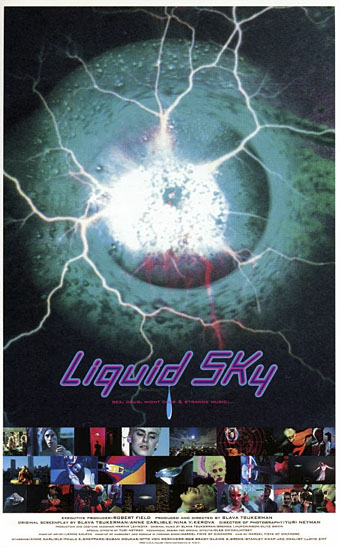
Japanese (?) poster for Liquid Sky (1982).

• The announcement this week of the death of Carl T. Ford, former editor of Dagon magazine, prompted a handful of memorial pieces. Dagon was notable for being a small British magazine devoted to Lovecraftian and other weird fiction (and the Call of Cthulhu games) at a time when the majority of such publications were American; it was also very well-produced, its later issues being typeset and filled with quality black-and-white illustration. Dagon interviewed many notable writers, including people such as Thomas Ligotti whose work at the time was still only known to a small group of enthusiasts. Mark Valentine posted a reminiscence at Wormwoodiana; Yog-Sothoth.com has an interview with Carl from 2010.

Michael “Dik Mik” Davies, manipulator of an audio generator and tape echo for Hawkwind, also died this week. Dik Mik’s primitive background electronics, augmented by Del Dettmar’s synthesizers, were an essential component of the early Hawkwind sound.

• Erik Davis talks to writer, photographer, and curator Joanna Ebenstein about Goth obsessions, memento mori, Santa Muerta, and her extraordinary new illustrated collection Death: A Graveside Companion.

• Slava Tsukerman’s cult film Liquid Sky (1982) finally gets a blu-ray release. From 2014: Punks, UFOs, and Heroin: Daniel Genis on how Liquid Sky became a cult movie.

Geeta Dayal explores the MOMA exhibition Thinking Machines: Art and Design in the Computer Age: 1959–1989.

You Should Come With Me Now is a collection of new fiction by M. John Harrison published this week.

VinylHub: “Our mission is to document every physical record shop and record event on the planet.”

Vladimir Nabokov‘s dream diary reveals experiments with “backwards timeflow”.

• Flawed Greatness: DB Jones on beauty and balance in John Ford’s The Searchers.

Irakli Kiziria on 9 synth artists who defined Eastern Europe’s post-Soviet sound.

• Edgar Allan Poe’s Hatchet Jobs: Mark Athitakis on Poe’s book reviews.

• Mix of the week: FACT mix 627 by Oneohtrix Point Never.

• At Creative Review: The design of Mute Records.

How generative music works.

Laraaji‘s favourite albums.

We Do It (1970) by Hawkwind | Adjust Me (1971) by Hawkwind | Electronic No. 1 (1973) by Hawkwind