Weekend links 334

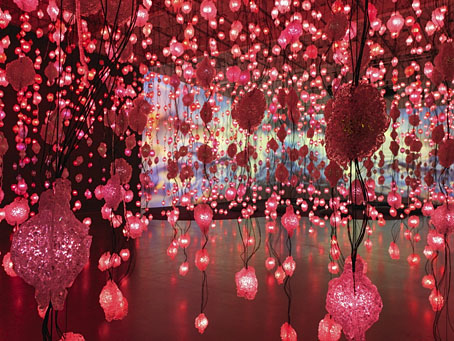
rist.jpg

Pixel Forest (2016) by Pipilotti Rist.

• “Think about it: gays, lesbians, bisexuals, and transgender people were almost completely invisible in the movies or on television, or even in newspapers and magazines. It wasn’t until LGBT people started producing their own media that we started to see consistent, positive images. But it would take until very recently for TV and cinema to catch up with what happened in books and magazines decades ago. In other words, nearly all LGBT culture only existed in print or at the bar. So when the queer bookstore disappears, where else can you find 40+ years of LGBT culture? (Hint: it’s not on Netflix.)” Ken White on starting Query Books and republishing classic LGBT literature.

• Related to the above: David Shariatmadari reviews a new edition of Coming Out, Jeffrey Weeks’ history of gay emancipation in the UK; Modern Harmonic is reissuing Love Is A Drag, a collection of “love songs by men, for men”, first released in 1962; Your Daily Male 2017: 52 international artists, 365 pages of full-colour male art; erotic portraits of Yukio Mishima by Eikoh Hosoe.

A Year In The Country revisits The Touchables (1968), a film about four Swinging Sixties girls who live in a huge plastic bubble in the countryside (must be a nightmare in winter); the quartet kidnap a rock star as “a temporary solution to the leisure problem”. Script by Ian La Frenais from a story by David & Donald Cammell. No DVD but it’s on YouTube.

• Mixes of the week are still in the Halloween zone: FACT mix 575 by Fenriz, and Resting Lich Face by SeraphicManta.

• War, love and weirdness: Brian Dillon on Powell & Pressburger’s A Matter of Life and Death, 70 years on.

• Bringing back the magic: a conversation with Hope Sandoval & The Warm Inventions.

David Toop listens, finally, to the legendary John Latham recordings of Pink Floyd.

The Synth Sounds of John Carpenter: Halloween, The Fog, Assault on Precinct 13.

• “Creep or craftsman? Hitchcock was both,” says Tom Shone.

The Dazzling Designs for a New York That Never Existed

Photography by Harry Gruyaert

The Untouchables (1959) by Nelson Riddle | The Touchables (All Of Us) (1968) by Nirvana (UK) | The Touchables (1980) by The Human League

Weekend links 316

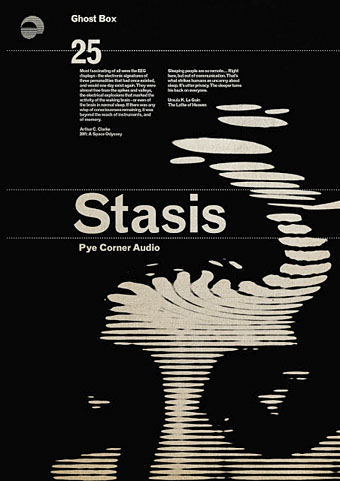
pca.jpg

Stasis, the second album by Pye Corner Audio for the Ghost Box label, will be released at the end of August. Design, as always, is by Julian House.

• “In the modern internet world you have what I talk about as the ‘War of the Certain’: people insisting that their absolutist viewpoint, in 140 characters, is exactly the right way to think, and anyone who doesn’t agree with them is terrible. If you’ve grown up reading Robert Anton Wilson this is awful. Having all of these certain people with no nuance or doubt, and no understanding of multiple-model agnosticism, is not going to go anywhere good.” Writer John Higgs talking to Ben Graham about RAW, Discordianism and related matters. A related matter: Higgs talks to Alan Moore about virtual-reality mysticism, creating a new counterculture, reinventing magick, and the eternal nature of time.

• Nicolas Winding Refn’s The Neon Demon is out this month so features and interviews are proliferating. I’ve been avoiding them for the usual spoiler-shunning reasons, but this was worth noting: Refn’s mood-establishing playlist for the production. More Neon Demon: Cliff Martinez talks about working with Refn.

• ” ‘Paint me like one of your French girls” takes on a whole new meaning in Nicole G. Albert’s book Lesbian Decadence: Representations in Art and Literature in Fin-De-Siècle France,” says Rachel Wexelbaum.

The decaying low-baroque tableau of conjugal tenderness, features eaten away by the syphilis of time, played so well, on an anvil of whitewashed cement, alongside a municipal bowling green, that it became the provocation for a pedestrian expedition testing the Brexit boundaries of a timeless mead-hall England, before the fleet of plundering Papist Normans came sailing over the horizon. Just as tabloid gangs of Albanian drug-trafficking white slavers were now reputed to be sneaking ashore on Romney Marshes, at Deal and Camber Sands, on their Rigid Inflatable Boats, kayaks and leaking air mattresses. Could anyone bring themselves actually to cast a vote for Brexit, a commodity that sounds like a cereal bowl of Nordic cattlecake manufactured from wood shavings with an added ingredient to purge the bowels?

Iain Sinclair and company head south in turbulent times

• At Dangerous Minds: a video recording of Psychic TV live in Manchester, 1983 (I’m in the audience but up on the balcony so you won’t see me), and an interview with dub maestro Adrian Sherwood.

The Columbia Years, 1968–1969: fabled recording sessions by Betty Davis are to receive an official release by Light In The Attic.

We’re Here Because We’re Here – Jeremy Deller’s silent commemoration of the soldiers of the Somme.

• Inside Las Pozas, Edward James’ Surrealist Garden in the Mexican Jungle.

• The body as amusement park: A history of masturbation by Barry Reay.

Nicholas Olsberg on the mirage of an ideal metropolis.

The Strange World of…David Toop

Static Electrician (1994) by ELpH | Static (1998) by Redshift | Static (2001) by Monolake

Weekend links 313

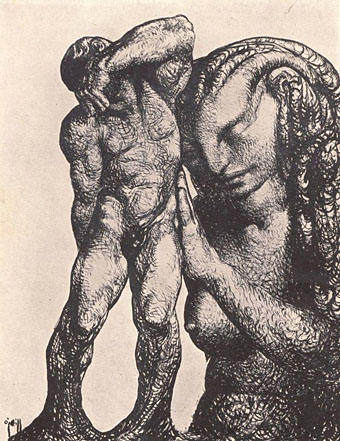
oneill.jpg

The Sullen Son (1921) by Rose O’Neill from her Sweet Monsters series (also here).

10 hours of Popcorn (1972) by Hot Butter. Related (and linked here before) 79 different versions of Gershon Kingsley’s original. If that’s not enough, there’s at least 100 more out there.

• Mixes of the week: Touristica Mystica Sigillistica by Gregg Hermetech, FACT Mix 554 by The Body, and Secret Thirteen Mix 187 by Dalhous.

• Another electronic cover version: Trans Europe Express by Cobby & Mallinder.

In the 1950s people like Pierre Schaeffer and John Cage were saying: “But there are all these sounds in the world, and if you listen to them carefully enough you will hear the music that they speak.” This immediately opened up a new world; it’s enriching once you’ve educated your ear to that, because when you’re annoyed by the sound of the street you can make music out of it. You can make music out of almost everything!

Eliane Radigue discussing her career with Paul Schütze

Patricia Highsmith’s Snail Obsession and Two Weird Tales of Monstrous Mollusks.

Youth and Alex Patterson remember the making of Little Fluffy Clouds by The Orb.

Strange Flowers pursues Sheila Legge and other Phantoms of Surrealism.

• Revealed: Cambodia’s vast medieval cities hidden beneath the jungle.

Alan Moore describes the cover of epic novel Jerusalem.

Ashgabat: the city of the living and the city of the dead.

• In praise of the tram by Christian Wolmar.

Taxidermists at DC’s

Brian The Snail (1982) by Pigbag | Slow Loris Versus Poison Snail (1996) by David Toop & Jon Hassell | Popcorn (2000) by Gershon Kingsley

Weekend links 303

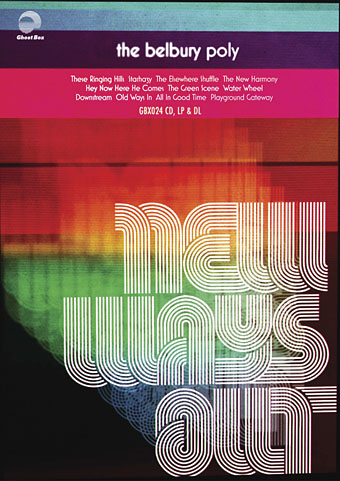
belbury.jpg

Design by Julian House.

• The last major release by Ghost Box recording artists Belbury Poly was The Belbury Tales in 2012, so news of a new album is most welcome. New Ways Out by The Belbury Poly (that definite article is a fresh addition) will be released next month. The Belbury Parish Magazine has links to larger copies of Julian House’s artwork for this and the recent release from Hintermass, The Apple Tree.

But before New Ways Out appears there’s a compilation album from A Year In The Country released at the end of April. The Quietened Village is “a study of and reflection on the lost, disappeared and once were homes and hamlets that have wandered off the maps or that have become shells of their former lives and times. Audiological contents created by Howlround, Time Attendant, The Straw Bear Band, Polypores, The Soulless Party, The Rowan Amber Mill, Cosmic Neighbourhood, A Year In The Country, Sproatly Smith, David Colohan and Richard Moult.” I’ve been fortunate to hear an advance copy, and it’s an excellent collection.

• “London’s architecture has become laughably boorish, confidently uncouth and flashily arid,” says Jonathan Meades in a review of Slow Burn City: London in the Twenty-First Century by Rowan Moore.

I feel very ill, physically and mentally ill when I hear Christmas carols. I feel so angry, so much like getting out a sniper’s rifle when I hear that kind of music. And Broadway shows with their sentimental songs, those kinds of things are terrifying for me because they call up memories from far back and I don’t necessarily know what they are but they just break me, they break my heart, they break my soul. Iannis Xenakis, the great Greek composer, he said the same thing. He couldn’t listen to the music his mother had played to him when he was young, because it was akin to thinking of someone who was disemboweled. And so for me, if I do a song that’s what you’d say is pretty, my interpretation takes it to another place because it shows the death of the virgin, the animal that goes out in the spring and then gets shot by a hunter. It is prettiness that is very alarming to me, so I tend to do a juxtaposition of something that might be pretty with something that is harsh, just because I feel that they occur in life together.

Diamanda Galás talking to Louise Brown about her work

The Fantastical Otherworlds of Adam Burke: S. Elizabeth talks to the artist behind Nightjar Illustration.

• “I try to frighten myself”: Master musician and curator David Toop on his extraordinary cassette tape archives.

• Silver Machine: Hawkwind’s Space Rock Journey throughout Science Fiction and Fantasy by Jason Heller.

• Mixes of the week: Secret Thirteen Mix 179 by Mesmeon, and a new Italian Occult Psychedelia Festival Mix.

• Offset Identities: Kenneth FitzGerald on graphic designer Barney Bubbles.

The Cine-Tourist lists some of the many cats in the films of Chris Marker.

John Patterson on Ran (1985), Akira Kurosawa’s last great masterpiece.

• Britain’s scarecrows photographed by Colin Garratt.

Strange Flowers explores the city of Turin.

The Museum of Talking Boards

Giallo-themed playing cards

Origami bookmarks

Silver Machine (1972) by Hawkwind | Silver Machine (1973) by James Last | Silver Machine (1988) by Alien Sex Fiend

Clocks of the Midnight Hours: The Work of Max Eastley

eastley1.jpg

I was hoping this might turn up on YouTube eventually, my copy being stuck on a VHS tape. Clocks of the Midnight Hours (1986) is a 25-minute film about the music of Max Eastley directed by Simon Reynell. The title is taken from a Borges poem. What makes Eastley’s music special is that all his instruments are unique “sound sculptures” that range through autonomous devices, to wind- and water-activated instruments, to creations requiring human performance. Some of the sounds, if not the look of the instruments, will be familiar to anyone who’s heard Buried Dreams, the album Eastley made in 1994 with frequent collaborator David Toop. Both Eastley and Toop appear in the film (the latter masked by a wicker helmet), as does Evan Parker in a performance in Kent’s Cavern, Torquay. An earlier Eastley & Toop collaboration, New and Rediscovered Musical Instruments (1975), may be heard at Ubuweb.

eastley2.jpg

Previously on { feuilleton }
Max Eastley’s musical sculptures