Weekend links 71

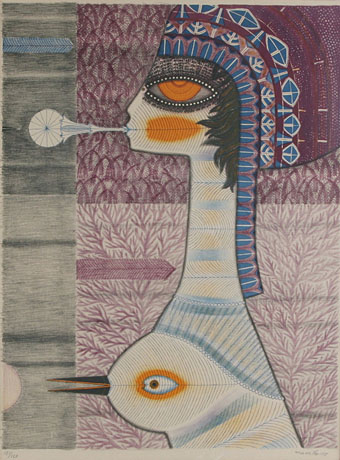
orazi.jpg

Manuel Orazi (1860–1934) was one of the best of the many Mucha imitators. An untitled & undated posting at Indigo Asmodel.

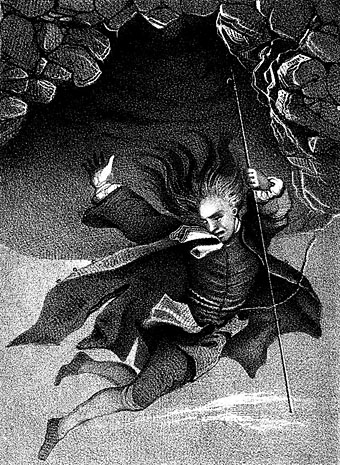
The mob now appeared to consider themselves as superior to all authority; they declared their resolution to burn all the remaining public prisons, and demolish the Bank, the Temple, Gray’s Inn, Lincoln’s Inn, the Mansion House, the Royal palaces, and the arsenal at Woolwich. The attempt upon the Bank of England was actually made twice in the course of one day; but both attacks were but feebly conducted and the rioters easily repulsed, several of them falling by the fire of the military, and many others being severely wounded.

To form an adequate idea of the distress of the inhabitants in every part of the City would be impossible. Six-and-thirty fires were to be seen blazing in the metropolis during the night.

An Account of the Riots in London in 1780, from The Newgate Calendar.

In a week of apparently limitless bloviation, a few comments stood out. Hari Kunzru: “Once, a powerful woman told us there was no such thing as society and set about engineering our country to fit her theory. Well, she got her way. This is where we live now, and if we don’t like it, we ought to make a change.” Howard Jacobson: “One medium-sized banker’s bonus would probably pay for all the trash that’s been looted this past week.” Meanwhile Boff Whalley complained about the predictable misuse of the word “anarchy” by lazy journalists.

• For further historical perspective, a list of rioters and arsonists from The Newgate Calendar (1824), and an account of the looting in London during the Blitz.

svanberg.jpg

From a selection of works by Max Walter Svanberg (1912–1994) at But Does It Float. There’s more at Cardboard Cutout Sundown.

• NASA posted a gorgeous photo from the surface of the planet Mars. Related: Astronomers have discovered the darkest known exoplanet. Obliquely related: Julio Cortázar’s From the Observatory, a prose poem inspired by the astronomical observatories at Jaipur and New Delhi, India, receives its first English translation.

The Advisory Circle is still in a Kosmische groove. Not Kosmische at all, Haxan Cloak’s mix for FACT has Wolf Eyes, Sunn O))) and Krzysztof Penderecki competing to shatter your nerves.

• The wonderful women (and friends) at Coilhouse magazine are having a Black, White and Red fundraising party in Brooklyn, NYC, on August 21st. Details here.

• Sodom’s ambassador to Paris: the flamboyant Jean Lorrain is profiled at Strange Flowers.

Empire de la Mort: Photographs of charnel houses and ossuaries by Paul Koudounaris.

The Craft of Verse by Jorge Luis Borges: The Norton Lectures, 1967–68.

• Jesse Bering examines The Contorted History of Autofellatio.

Robert Crumb explains why he won’t be visiting Australia.

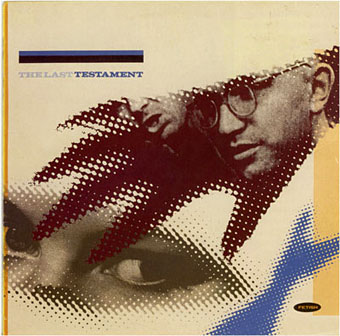
The Crackdown (1983) by Cabaret Voltaire.

Network 21 TV

network21.jpg

What was Network 21? It’s easiest to grab an explanation from the people responsible:

NeTWork 21 was a pirate television station which broadcast a 30mns program on Fridays from midnight throughout April to September 1986 in London. It had never been done before, and has not been done since anywhere in the UK. The broadcasts took place on channel 21 of the UHF band, slightly below ITV, using a low powered transmitter covering 8-10 miles across London. Program content was literally hand made, shot with a Sony Video 8 camera, edited on Low Band U-Matic, and broadcast on VHS. They showed slices of London’s artistic buzzing underground life as well as casual glimpses of everyday life, something which the normal television stations never showed. We would also offer slots to whoever was willing to appear on pirate TV, saying, showing or doing whatever they wanted, with no pre/post-production censorship of any kind. Because of our low tech approach, we could easily film people, situations and events with minimum disruption and maximum interaction. We were also free to choose program content and style according to our own mood, without having to worry about ratings, advertisers or good taste standards. (more)

In 1986 the UK only had four TV channels, and none of them ran through the night so theoretically there was plenty of space available for other broadcasters. In practice any unauthorised activity was always swiftly curtailed. Those of us outside London could only read about these illicit broadcasts but now it’s possible to jump back in time to the gloomy heart of Thatcherite Britain via the Network 21 YouTube channel. All the clips are fairly short and lean heavily towards the (for want of a better term) Industrial culture familiar from the early RE/Search publications, Simon Dwyer’s sorely-missed Rapid Eye, and Cabaret Voltaire’s “television magazine” TV Wipeout: William Burroughs (reading at the London Final Academy event in 1982), Brion Gysin, Psychic TV, Diamanda Galás, Derek Jarman et al. There’s also Roz Kaveney on passion, and Simon Watney with a news item related to the AIDS crisis in the US. The network website has complete listings for each broadcast.

Previously on { feuilleton }
ICA talks archived
The Final Academy

Weekend links 13

metropolis01.jpg

Watch the trailer for the newly-restored version of Fritz Lang’s masterwork, Metropolis.

My cover design for Jeff VanderMeer’s Finch was voted best cover in the 2010 Spinetingler Awards.

• Figment announces the 2nd Annual Figment Album Cover Design Contest. The judge this time round is William Schaff.

• Two interviews at The Quietus: Jon Brooks of The Advisory Circle and Richard H Kirk of Cabaret Voltaire.

• “Merely a Man of Letters.” Jorge Luis Borges interviewed in 1977.

• Another Engelbrecht: The Miniature Theatres of Martin Engelbrecht.

The Unearthing Box Set by Alan Moore & Mitch Jenkins.

• The gays: RIP Felix Lance Falkon, author of the landmark study, A Historic Collection of Gay Art (1972). The Independent is the latest newspaper to look at sexuality in the animal kingdom.

Publisher to Release Philip K Dick’s Insights Into Secrets of the Universe.

• Roger Ebert shows the world a draft of his unfilmed Sex Pistols screenplay, Who Killed Bambi? Jon Savage comments.

• Further Flickr sets: History of the Book/Typography and Dutch Graphic Design. Related: more Dutch graphic design at the NAGO.

Far Red: Video by u-matic & telematique, music by Monolake.

Has steampunk jumped Captain Nemo’s clockwork shark yet?

An edge over which it is impossible to look.

Surrender. It’s Brian Eno.

Ecstatic Peace Library.

• Songs of the week: See Emily Play by Pink Floyd and Metropolis by Kraftwerk.

Chris Watson: Oceanus Pacificus

watson.jpg

This is worth noting even though it’s nearly over, a short presentation of sound recordings by Chris Watson at the alt.gallery, Newcastle. Watson was a founder member of one of my favourite groups of the post-punk era, Cabaret Voltaire. He left CV in 1981 and shortly thereafter formed The Hafler Trio, an experimental audio outfit with whom I conducted some correspondence for a couple of years. I still have a letter somewhere signed by the group authorising me to act (creatively) on their behalf, a licence I’m sorry to say I never took advantage of beyond sneaking the name of their enigmatic mentor, Robert Spridgeon, into the Thackery T Lambshead Pocket Guide to Eccentric and Discredited Diseases. Watson today is an internationally renowned wildlife sound recordist, responsible for a number of stunning CDs on the Touch label, as well as much work for television documentaries. The alt.gallery exhibition runs to August 6, 2008.

Oceanus Pacificus brings the sounds of the largest ocean, encompassing almost a third of our planet, into one of the UK’s smallest galleries. This unique four channel sound installation is created from nighttime underwater recordings of the Pacific Ocean.

Recorded at the depth of three metres, reflecting the exact physical dimensions of the gallery space, the installation presents underwater voices, rhythms and movements rarely heard by the human ear. The ebb and flow of the Humboldt Current creates a seductive and harmonic rhythm as cold water wells up from the depths, drawing up the sounds of life.

The recordings were made on location around the Galapagos Islands 1000km off the coast of Ecuador, using a pair of Dolphin Ear Pro Hydrophones onto a NAGRA ARES-PII digital audio recorder. The four hydrophones were fixed on a square wooden rig and suspended three metres below the surface at night to capture the voices and rhythms of this hostile environment.

Chris Watson is a sound recordist specialising in natural history with a particular and passionate interest in recording the wildlife sounds of animals, habitats and atmospheres from around the world. He is interested in the quality, depth and diversity of sounds produced by water, from single drops to streams, ice sheets, glaciers, waterfalls and oceans. He has described the sounds of water as “the music of another medium”.

He is one of the most prolific and versatile figures working in sound today. In 1971 he was a founder member of the influential Sheffield-based experimental music group Cabaret Voltaire and in 1981 was a member of The Hafler Trio. His sound recording career began in 1981 when he joined Tyne Tees Television. Since then he has worked with David Attenborough on BBC TV productions such as The Life of Birds and The Blue Planet.  In 1998 he won a BAFTA for Best Factual Recording for The Life of Birds.

He has produced various sound installations, including Whispering in the Leaves commissioned by AV Festival 08 and Forma. From 19 July – 2 November he will be presenting the sound installation Cima Verde as part of Manifesta 7 in Italy.

The 7” record Oceanus Pacificus was released by Touch in 2007 as part of the Touch Sevens series of 7” vinyl only releases. For further information please visit www.touchmusic.org.uk/touchsevens.

www.chriswatson.net

Previously on { feuilleton }
Max Eastley’s musical sculptures
The Avant Garde Project

A cluster of Cluster

harmonia.jpg

Harmonia somewhere in the 1970s: Michael Rother, Dieter Moebius, Hans-Joachim Roedelius.

Continuing the occasional { feuilleton } series exploring the byways of musical culture, this month it’s the turn of German group Cluster, prompted by their current US tour. News of their re-emergence sent me back to the albums and I’ve been listening to little else for the past week or two.

cluster.jpgMark Pilkington has very conveniently saved me the trouble of summing up the wandering history of Dieter Moebius and Hans-Joachim Roedelius in their various incarnations with his introductory piece, Cosmic Outriders: the music of Cluster & Harmonia. Unlike many of their Krautrock contemporaries, Moebius and Roedelius have remained very active, Roedelius particularly has an extensive solo discography. I’ve never been very taken with their work since the early Eighties, however. I have an inordinate fondness for the analogue keyboards which contribute to their early sound; as the Eighties progressed they took to using digital keyboards and their music lost much of its earlier charm as a result.

The Cluster discography is very long and confused, encompassing Kluster (pre-Cluster line-up with Conrad Schnitzler), Cluster, Harmonia (Cluster with Michael Rother from Neu!), Cluster with Brian Eno, then Moebius and Roedelius’s numerous solo works and collaborations with other artists. As a result, a guide such as this is useful for the curious. So here we go with another blog list…

ClusterCluster 71 (1971)
A timeless racket. Three long noisy slabs of synth distortion that make the first two noisy Kraftwerk albums seem positively melodic. This could easily be passed off as an unreleased Throbbing Gristle or Cabaret Voltaire album.

ClusterCluster II (1972)
The second album continues the granular challenge but lets some light and music into the mix.

HarmoniaDeluxe (1975)
I prefer the second Harmonia album to the first, and prefer both to Cluster’s third opus, Zuckerzeit, recorded around the same time as this. Michael Rother’s involvement in Harmonia pushes the sound very close to Neu! in places, especially the more melodic strains of Neu! 75.

HarmoniaHarmonia 76: Tracks & Traces (1976)
Albums of studio outtakes are usually for die-hard listeners only but this one is surprisingly good with an outstanding long atmospheric piece, Sometimes In Autumn. Brian Eno was hanging out with Cluster by this point and he contributes a vocal on Luneberg Heath.

ClusterSowiesoso (1976)
The most melodic and relaxed of all the Cluster albums and the one which birthed a host of inferior copyists on the Sky label.

Cluster & Eno (1977)
Recorded at around the same time as By This River on Eno’s Before And After Science. Holger Czukay from Can is a guest on the Eno albums.

Eno, Moebius & Roedelius—After The Heat (1978)
Of the two Cluster & Eno albums this is probably the best and ends with three Eno songs which turned out to be his last vocal works until Nerve Net in 1992. Note that the CD reissue has a different (and in my view, inferior) track ordering to the vinyl original.

ClusterGrosses Wasser (1979)
Produced by ex-Tangerine Dream member Peter Baumann and recorded at his studio which gave the Cluster guys the opportunity to use his superior synth equipment. As a result a couple of the tracks here are very similar to Baumann’s solo work.

Moebius & PlankRastakraut Pasta (1980)
This album and its follow-up should be added to the list of works which influenced Eno & Byrne’s My Life in the Bush of Ghosts. The opening track News, features sampled radio voices (as per later Eno & Byrne) mixed with a plodding rhythm that includes a recurrent synth note that’s the spit of similar sounds used on My Life.

Moebius & Plank—Material (1981)
Genius producer Conny Plank brought out the best in many of the artists he worked with and these two collaborations with Moebius are a great example of that. He had a similar effect with Roedelius on an early solo album, Durch die Wüste, moving Roedelius out of his ambient keyboards comfort zone. The tone on Material is more strident and uptempo than Rastakraut Pasta, especially on Tollkühn which is like some mad techno synth run ten years too early.

Cluster and co. on YouTube
Cluster 71
Harmonia—Deluxe (Immer Wieder)
Cluster—Sowiesoso
Cluster & Eno—Für Luise
Brian Eno—By This River

Previously on { feuilleton }
The Avant Garde Project
White Noise: Electric Storms, Radiophonics and the Delian Mode
Chrome: Perfumed Metal
Metabolist: Goatmanauts, Drömm-heads and the Zuehl Axis
The music of Igor Wakhévitch
My Life in the Bush of Ghosts