The Crackdown by Cabaret Voltaire

crackdown1.jpg

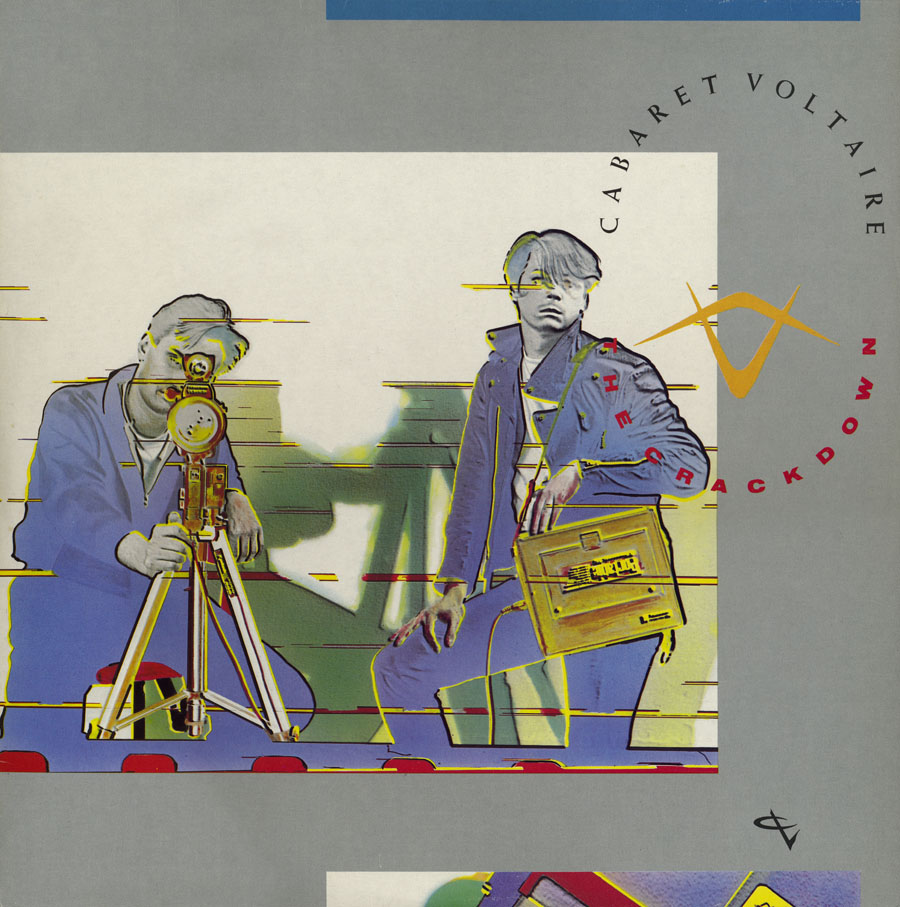
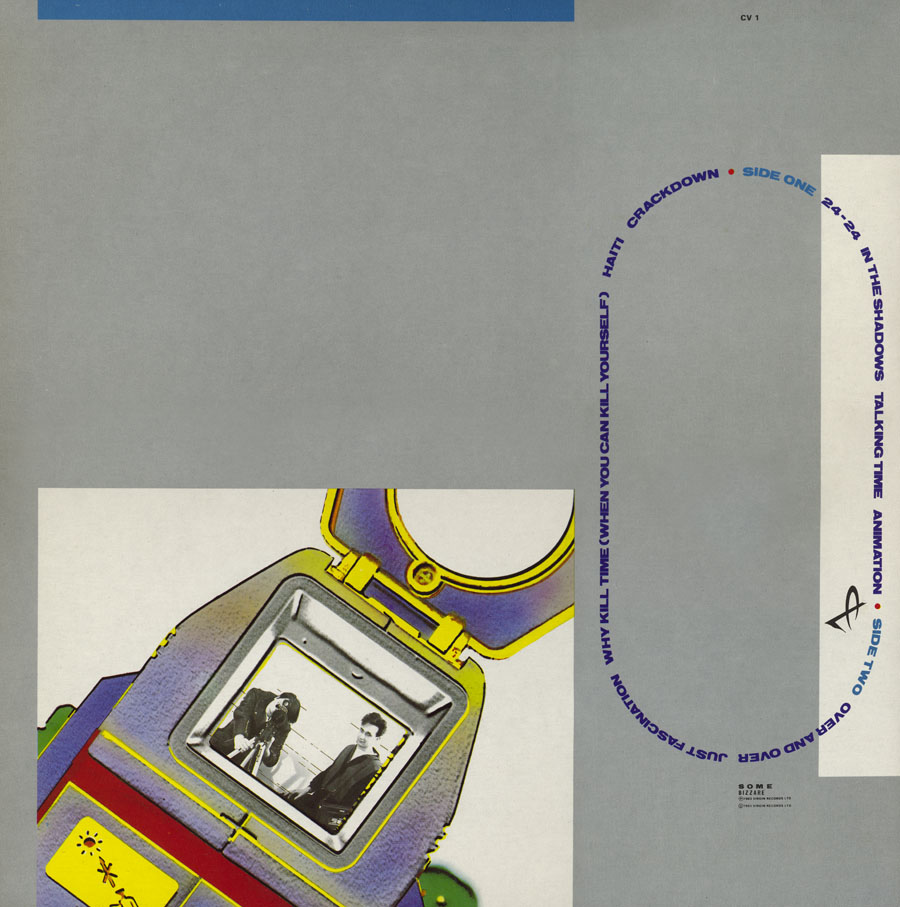
I mentioned yesterday Richard H. Kirk’s announcement that Cabaret Voltaire’s albums on the Virgin label are to be reissued next year by Mute Records. The news gives me a topical excuse to write something about the first album in that series, The Crackdown, which happens to be my favourite of all their releases. Cabaret Voltaire, like 23 Skidoo, benefited a great deal from their association with designer Neville Brody in the early 1980s, and this post mostly concerns Brody’s design for The Crackdown and its accompanying singles. The Crackdown was released in 1983 with the advance from Virgin having allowed them to buy new equipment and add a degree of polish to their recordings which earlier albums had lacked. Brody had been designing their covers for the past two years, and continued to do so for the next few releases before leaving the music business to concentrate on magazine and other design work.

crackdown2.jpg

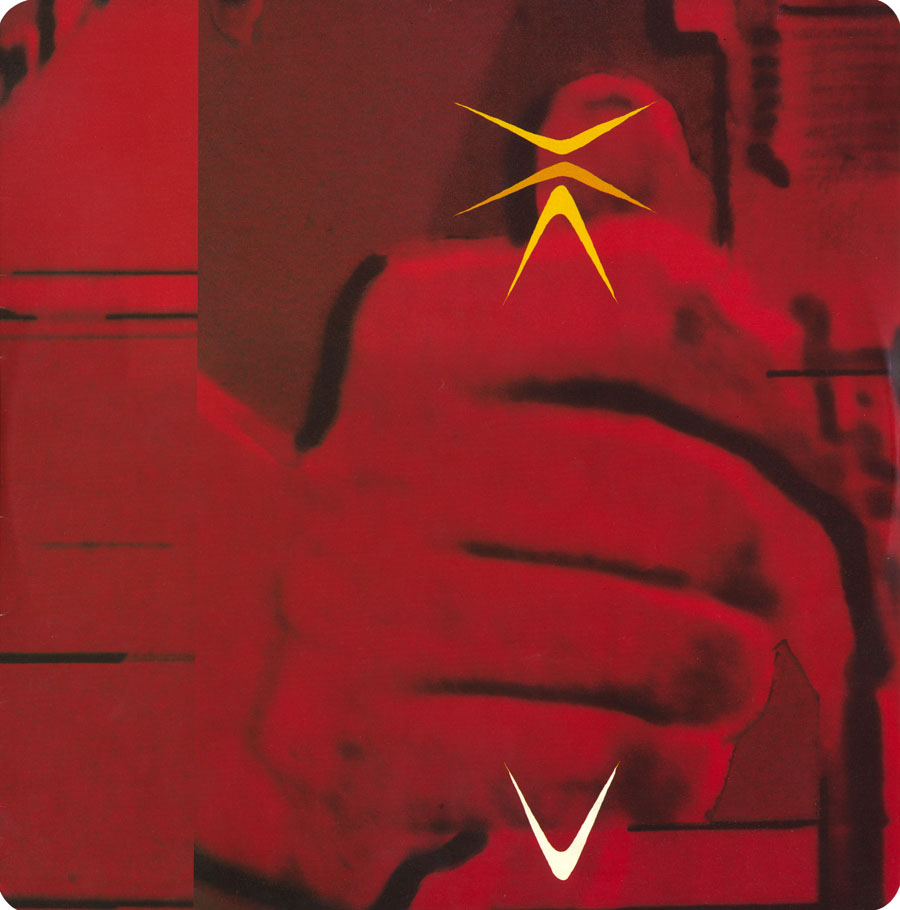
What I liked about this sleeve was the way it gets the most out of the careful arrangement of a few simple elements. The front photo showing Stephen Mallinder and Richard Kirk posing with video equipment (monitoring the viewer) is enlarged and cropped to provide backgrounds elsewhere. The sleeve photos wrap around front and back while the shape made by the titles determines the layout of track titles and credits. (The various CV graphics are credited to Phil Barnes.) The type wasn’t set digitally but was applied by hand using Letraset rub-down lettering which makes me wonder how much planning was required to get the track titles to perfectly fit their intended shape.

crackdown3.jpg

Continue reading “The Crackdown by Cabaret Voltaire”

Weekend links 83

hackett.jpg

In Memory by Caitlin Hackett who describes her astonishing drawings as “contemporary mythology”.

• David Lynch’s solo album, Crazy Clown Time has just been released so The Guardian last Friday let the artist/director/musician edit their G2 supplement. Xan Brooks tried to get Lynch to open up about his inspirations while elsewhere Lynch had a chat with ZZ Top’s Billy Gibbons. Of more interest to me was news that some of the deleted sequences from Blue Velvet have been discovered. I’ve known about these for years from a feature in Video Watchdog magazine but never thought we might get to see them. Related: a mixtape by David Lynch & musical collaborator/engineer ‘Big’ Dean Hurley.

• “Book jackets these days, for reasons I won’t unpack, seem to revel, overtly, in wit, conceptual deviousness, unusual clever or droll juxtapositions – we, as a professional community, seem to have elevated the visual bon mot above all other virtues.” Peter Mendelsund in a great post about certain problems in book design, starting with the very problematic question of what to do with Nabokov’s Lolita. Related: Covering Lolita, a gallery of covers through the ages which run the gamut of bad decisions.

• “For his sins Pinocchio is not only hanged but robbed, kidnapped, stabbed, whipped, starved, jailed, punched in the head, and has his legs burned off.” Nathaniel Rich goes back to Carlo Collodi’s original Pinocchio. Disney it ain’t.

wolpe.jpg

Some of Berthold Wolpe’s Faber cover designs are now available as prints from wire-frame whose Pelham/Ballard prints were mentioned here recently. Related (and worth another visit): Faber 20th century classics at Flickr.

Technical Vocabularies – Games for May, a small collection of poems by Alan Moore & Steve Moore, is now online with authorial permission. Alan’s Beardsley pastiche on the cover is a bonus.

• Cabaret Voltaire’s Richard H. Kirk says the group’s Virgin albums will be reissued next year by Mute. A new edition of The Crackdown? Yes, please.

• “Homo Riot can only think of six or seven street artists in the world who regularly feature gay themes in their work, and he knows all of them.”

Rub Out The Words: Letters from William Burroughs and Philip K. Dick on the language virus theory of William Burroughs.

L’exilé de Capri: the connections between Jacques d’Adelswärd-Fersen and Roger Peyrefitte explored at Strange Flowers.

• Flying cars and monorails: Soviet Russia in the 1960s also had a Gerry Anderson view of the future.

Are You An Anarchist? The Answer May Surprise You.

Baby’s On Fire (1973) by Brian Eno | Baby’s On Fire (live, 1974) by Eno & The Winkies | Baby’s On Fire (live, 1976) by 801 | Baby’s On Fire (1998) by The Venus In Furs.

Weekend links 80

holberg.jpg

Niels Klim’s descent to the planet Nazar from the 1845 edition of Nicolai Klimii Iter Subterraneum (Niels Klim’s Underground Travels) (1741) by Ludvig Holberg.

BibliOdyssey posts illustrations from different editions of Ludvig Holberg’s satirical fantasy, appends the usual informative links and draws our attention Stories of a Hollow Earth at The Public Domain Review. I’d not come across the latter site before but it’s now bookmarked.

• While the economy of Europe continues to circle the toilet bowl it’s good to know that our Prime Minister is focusing on the important issues such as…limiting access to internet pornography. “Look at the implementation, and no matter where you stand on porn, I think you’ll see this plan is going to cause a lot of problems on its way to the eventual fail bin,” says Violet Blue. I was wondering how the four targeted ISPs would feel about a filtering plan that would drive many new customers elsewhere. The Register reports their response which comes down to offering guidelines rather than attempting the difficult and contentious task of filtering millions of websites.

• Related: Won’t you fuck off, Reg Bailey, in which the report by the small Christian pressure group that started all the fuss is eviscerated. | Elsewhere: Porn is good for society says Anna Arrowsmith, while Tristan Taormino asserts that “writing and publishing erotica, especially for minorities, is a political act.” Then there’s Pornsaints, “an artistic approach to porn, a pornographic approach to art, a pornartistic approach to religion.”

• In the music world: Richard H Kirk and Peter Care discuss Cabaret Voltaire and Johnny YesNo, Roy Harper talks to Alexis Petridis, and soundtrack composer Cliff Martinez is interviewed (and pictured playing a Cristal).

Witch’s Cradle at Strange Flowers (Maya Deren, Marcel Duchamp and Peggy Guggenheim), The Ghosts of Senate House, London, and Aleister Crowley’s Abbey of Thelema as it is today.

• RIP Frank Kameny, co-founder of the Mattachine Society, and a tireless gay rights advocate from the early 1960s on.

Bruce Weber photographs some of the dancers from Matthew Bourne’s Dance Company.

Terry Gilliam says “I used to think I could will things into existence. Not any more.”

• Charts at Business Insider: What the Wall Street protesters are so angry about.

Five From…: assorted wit and wisdom in the Tumblr labyrinth.

• Glass art by Jasmine Targett.

Ballard Geocoded.

Porno Base (1982) by 23 Skidoo | Kylie Minogue (2003) by Satanicpornocultshop | Tantric Porno (live) (2009) by Bardo Pond.

Graphic design in Heat

heat4.jpg

Amy Brenneman.

In which Neville Brody’s early record sleeves lurk in the midst of a Michael Mann crime drama…

I picked up some cheap DVDs last week, among them a copy of Mann’s Heat (1995) which I hadn’t seen for over ten years. I like Mann best when he’s doing his high-tech thriller thing (although I also have a soft spot for The Keep), and enjoy this one despite its being too long for the thin story and characterisation. Something I’d completely forgotten when re-watching it was the scene where Eady (played by Amy Brenneman), a part-time graphic designer, is on the phone to her bank-robbing boyfriend, played by Robert De Niro. This is one of those cinematic moments where some stray cultural reference that no one is meant to notice leaps to your attention and for a few seconds upsets all interest in plot and dialogue. Offhand I can think of the moment in Alan Pakula’s Presumed Innocent where a copy of a Ramsey Campbell novel is seen on a bookshelf during a conversation. Much worse, since it’s an error as well as a distraction, is Picasso’s Les Demoiselles d’Avignon being shown onboard the Titanic in James Cameron’s fatuous disaster movie when the real painting has been hanging safe and sound for years in the Museum of Modern Art in New York.

heat1.jpg

In Heat we have a scene in Eady’s apartment where the walls are covered with what I assume are meant to be examples of her design work. 99.9% of the audience will pay no attention to this but anyone with a copy of The Graphic Design of Neville Brody would recognise a number of familiar designs. Something I hadn’t spotted before was the word “FUSE” on the computer screen, Fuse being the name of the experimental typography magazine created in the 1990s by Brody and Jon Wozencroft. On the window to the left of the computer there’s pinned a copy of Brody’s design for Wipe Out, a single by Z’ev on the Fetish label. Brody designed nearly everything for Fetish during the label’s brief existence in the early 1980s, and the most visible Brody examples in this scene are all Fetish designs. This seems an odd choice for a film made in the mid-90s although in an earlier conversation Eady mentions having designed some music CDs. Brody’s later design work was very influential and overshadowed his work for Fetish which I’ve always liked a great deal.

wipe_out.jpg

Wipe Out by Z’ev.

heat2.jpg

In another part of Eady’s apartment there’s a large reproduction of the sleeve for a Fetish compilation, The Last Testament.

testament.jpg

heat3.jpg

While further along the same wall there’s the sleeve for Diddy Wah Diddy by 8 Eyed Spy, yet another Fetish single. On the far right of the shot above there’s a face from one of Brody’s theatre posters which confirms that Mann’s set decorators must have plundered a copy of Brody’s book.

diddy.jpg

This isn’t a complaint, of course, I’d commend Mann and co. for their excellent taste, and for having used work by a real graphic designer rather than trying to fake something. It’s even possible to find a tenuous connection between the record sleeves and Mann’s eclectic soundtrack. Many of the Fetish artists—Throbbing Gristle, 23 Skidoo, Clock DVA, Stephen Mallinder—were in the first wave of Industrial music, and Mann briefly uses a great piece by Einstürzende Neubauten from their own Industrial phase. I’d have suggested he also use Blue Heat by Cabaret Voltaire (from an album with another Brody cover) but that’s just my obsessions showing.

Previously on { feuilleton }
Neville Brody and Fetish Records
Alex in the Chelsea Drug Store

Weekend links 74

johnnyyesno.jpg

Johnny YesNo video cover, 1983. Design by Neville Brody.

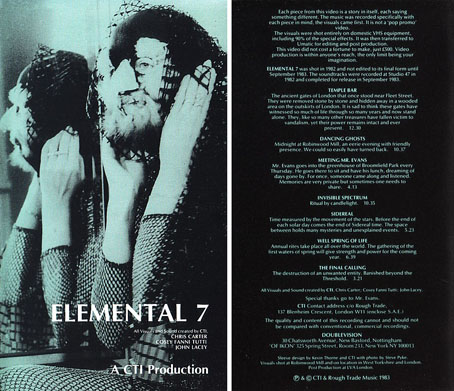
Being a Cabaret Voltaire enthusiast of long standing it was good to hear last week about the imminent reappearance of Johnny YesNo, an hour-long film by Peter Care for which the Cabs provided the soundtrack. Mute Records will be releasing Care’s debut on DVD in a set which includes two versions of the film together with two music CDs. I never got to see the original release on CV’s VHS label, Doublevision; for most of the 1980s I didn’t even have a colour TV never mind a video recorder so I missed all CV’s videocassettes aside from Gasoline In Your Eye. The new edition will be available in November. Brainwashed has a list of the contents while The Quietus posted a clip from the new “redux” version. (And before anyone tells me it’s on YouTube…yeah, everything is on YT in shitty quality and barnacled with the misanthropy-inducing drivel which passes there for comment. If I’m going to watch something for the first time I’d prefer it to be on a shiny disc, thanks.)

• The world has noticed Terrence Malick again following the release of The Tree of Life. Malick’s second feature is returning briefly to UK cinema screens, an event which prompted David Thomson to ask Is Days of Heaven the most beautiful film ever made?

• This week in imaginative art: S. Elizabeth on The Fantastical Fairy Tale Art of Sveta Dorosheva, AS Byatt on the strange paintings of Richard Dadd (there’s another Dadd article here), and Rick Poynor on Chris Foss and the Technological Sublime.

Ethan Hein demonstrates how Alan Lomax came to have copyright control over many songs he had nothing to do with simply by recording traditional music.

Visual Vitriol:  The Street Art and Subcultures of the Punk and Hardcore Generation, a book by David Ensminger.

• More Club Silencio: Inside David Lynch’s Paris nightclub and a gallery of photos.

Histoire un-Naturelle, selected works by Ruth Marten.

Come hither: The deceptive beauty of orchids.

Facsimile Dust Jackets.

• More Peter Care: Just Fascination (1983) by Cabaret Voltaire | Sensoria (1984) by Cabaret Voltaire | Rise (1986) by Public Image Ltd.