Weekend links 488

ziegler

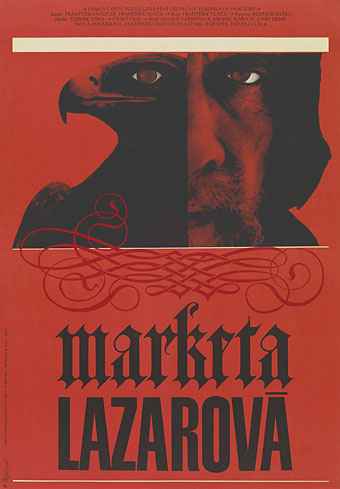
Poster by Zdeněk Ziegler for Marketa Lazarová (1966), a film by František Vláčil.

• I’ve spent the past couple of weeks watching a number of films by Béla Tarr, including his 432-minute masterwork, Sátántangó (1994). The latter was based on a novel by László Krasznahorkai, an author who not only worked with Tarr on the screenplay but helped with several of his other features. So this piece by David Schurman Wallace, about a more recent Krasznahorkai novel, Baron Wenckheim’s Homecoming, arrives at just the right moment.

The Paris Review unlocked its Art of Fiction interview with Italo Calvino. William Weaver and Daniel Pettigrew ask the questions. And at the same site: Ivan Brunetti on the deceptive simplicity of Charles Schulz’s Peanuts.

• Halloween approaches so Sudip Bose suggests 10 pieces of orchestral music to set the mood. I made a similar list of my own in 2011. Related: Adam Scovell on 10 lesser-known folk horror films.

I thought, “When I grow up, I’m going to be in a group making this kind of music.” Slowly and Shirley, I did grow up and found myself in a group but they weren’t making that kind of music. It was a hole of longing in my guts that I needed to fix.

Andy Partridge, aka Sir John Johns, on his love of psychedelic music and the remixed reissue of the Dukes Of Stratosphear catalogue

Faye Lessler on how the Internet Archive is digitizing LPs to preserve generations of audio.

• Photographing the Dark: Allison C. Meier on Nadar’s descent into the Paris Catacombs.

• At Wormwoodiana: Go Back at Once, Robert Aickman‘s unpublished second novel.

• Queen of the Flies: Mica Levi talks to Charlie Bridgen about her soundtrack music.

• At Dangerous Minds: Sex, Nazis, and classical music: Ken Russell’s Lisztomania.

• The first new Ghost Box recording artist of 2020 will be…Paul Weller.

• Mix of the week: There’s No Going Back by The Ephemeral Man.

• The Dead Travel Fast: The Gothic Ballad of Lenore in paint.

Catacombs/Cum Mortuis In Lingua Mortua (1980) by Mussorgsky (George Solti/Chicago SO) | Fade In Hong Kong (1981) by Video Liszt | La Ballade De Lenore (1986) by Shub-Niggurath
Weekend links 454

ewerswunderwald.jpg

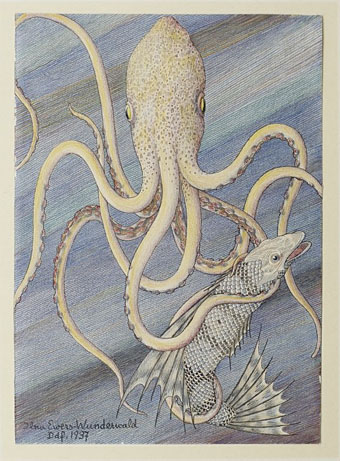
Octopus and Pike (1937) by Ilna Ewers-Wunderwald.

• At Expanding Mind: writer and avant-garde publisher Tosh Berman talks with Erik Davis growing up in postwar California, hipster sexism, the hippie horrors of Topanga canyon, his impressions of family friends like Cameron and Brian Jones, and his charming new memoir Tosh, about growing up with his father, the remarkable underground California artist Wallace Berman.

• At Haute Macabre: A Sentiment of Spirits: Conversations with Handsome Devils Puppets.

• “We felt a huge responsibility.” Behind the landmark Apollo 11 documentary.

Jarman’s work was a statement that conservatism did not, or at least should not, define the perception of Britishness. His vision extended all of the way back to the likes of William Blake, John Dee and Gerard Winstanley, the radicals, mystics and outcasts of English history. His era, on the other hand, looked inwards and pessimistically so. The outward world was solely a free market. Our projected national identity was little else but the retread of colonial fantasies, a faux benevolence to the world that handily discarded the violence and tyranny that built it. Jarman saw through this imaginary landscape, often skewering it in his films.

Adam Scovell on the much-missed radicalism of Derek Jarman

• Director Nicolas Winding Refn: “Film is not an art-form any more.”

• Mix of the week: Secret Thirteen Mix 281 by Blakk Harbor.

• At Greydogtales: Hope Hodgson and the Haunted Ear.

Hans Prinzhorn’s Artistry of the Mentally Ill (1922).

Michael Rother‘s favourite albums.

Renaissance metal

Puppet Theatre (1984) by Thomas Dolby | Puppet Motel (1994) by Laurie Anderson | Maybe You’re My Puppet (2002) by Cliff Martinez

Weekend links 442

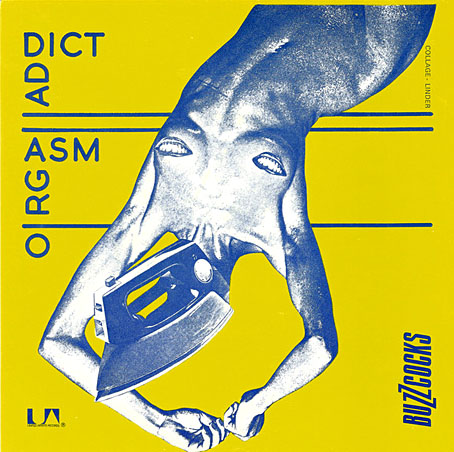
buzzcocks.jpg

Orgasm Addict (1977). Design by Malcolm Garrett; collage by Linder.

• RIP Pete Shelley, Buzzcock and Homosapien. Shelley is celebrated for being in the vanguard of Britain’s punk movement, of course. (Buzzcocks’ Spiral Scratch was the UK’s first independent single.) But he also loved Can, recorded an album of electronic drones (Sky Yen), and in 1983 successfully blended home-computer graphics with his own brand of superior electronic pop music. Related: Malcolm Garrett’s Buzzcocks band logo at Fonts In Use; B’dum, B’dum: Tony Wilson in 1978 talking to Pete Shelley and Howard Devoto about Buzzcocks and Magazine.

• Winter demands ghost stories so Adam Scovell suggests 10 great winter ghost films. Related: Alexandra Heller-Nicholas presents an A–Z of Women’s Horror Filmmaking.

Carey Dunne on the rise of underground LSD guides for psychotherapy. Related: “Psychedelics change the perception of time,” says Shayla Love.

• Ex-Neu! guitarist Michael Rother receives the box-set treatment early next year when the Groenland label reissues his early solo albums.

Jodorowsky, an exhibition devoted to the writer and director, will be staged at El Museo del Barrio, New York, from February next year.

• “From Georges Méliès to Bill and Ted, movie hells remain seriously in hock to the Judeo-Christian playbook,” says Anne Billson.

The Owl’s Legacy, Chris Marker’s 13-part documentary series on Greek culture, receives its debut DVD release.

Topic II (1989), a short film by Pascal Baes of pixilated dancers in the night streets of Prague.

• Mix of the week: Secret Thirteen Mix 274 by Koray Kantarcioglu.

• We are the first humans to hear the winds of the planet Mars.

• Patrick Magee reads The Third Policeman by Flann O’Brien.

• At Dennis Cooper’s: Jean-Louis Trintignant Day.

• Mongolian biker rock: Wolf Totem by The HU.

The Quietus albums of the year.

Hell (2001) by Techno Animal ft. Dälek | Hell’s Winter (2011) by Earth | Hell A (2017) by The Bug vs. Earth

Weekend links 418

vertigo.jpg

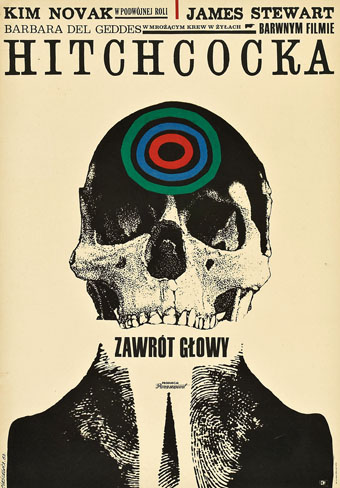
Poster by Roman Cieślewicz for the 1963 Polish release of Vertigo. Via The Hitchcock Zone.

• Alfred Hitchcock’s Vertigo is sixty years old this year. It’s a film I’ve always found to be preposterous and very over-rated, despite the considerable strengths of its cast, production, etc; consequently, any claims to its being an unalloyed masterpiece (such as being voted the best film of all time in the 2012 Sight & Sound poll) have been difficult to accept. For the latest anniversary, David Thomson examined the film in the light of changing social attitudes.

• Currently seeking funding at Unbound: Stars, Fools and Lovers: An illustrated guide to the art and history of the Tarot by Joanna Ebenstein, Laetitia Barbier and Mark Pilkington. Another Tarot-related book, Pamela Colman Smith: The Untold Story by Stuart R. Kaplan with Mary K. Greer, Elizabeth Foley O’Connor and Melinda Boyd Parsons, will be published next month.

• Everybody wants to talk to Jon Hassell at the moment, which is no bad thing: recent interviews have appeared at The Vinyl Factory, Red Bull Radio and Vice.

• Coming soon from Lazarus Corporation: England’s Dark Dreaming by Paul Watson.

• Sean Kitching on The Strange World of Charles Hayward (This Heat et al).

• At Dennis Copper’s: The title sequences of 56 mostly horror movies.

• Stone circles: Adam Scovell chooses 10 notable cinematic examples.

• “You gotta be selfish. It’s a terrible thing,” says David Lynch.

Wolf’s Kompaktkiste shows off a serious record collection.

Boy with Cat (1966), a short film by Donald Richie.

• Mix of the week: Secret Thirteen Mix 256 by Nina.

Tank (2018), a short film by Stu Maschwitz.

Phantom Islands—A Sonic Atlas

Letraset, design and music

• Vertigo (1988) by Flash Cero | Psyko (Themes from Psycho and Vertigo) (1993) by Laika & The Cosmonauts | Vértigo Magnético (2014) by Liquidarlo Celuloide

Weekend links 399

quays.jpg

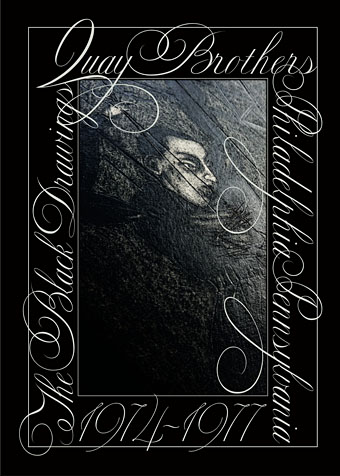
• “In the mid-Seventies the influential stop-motion animators, Stephen and Timothy Quay, embarked on a series of dark graphite drawings, conceived as imaginary film posters. They kept their first autonomous art project hidden for decades, allowing only a few glimpses to transpire in some of their animation classics such as Noctura Artificialia and Street of Crocodiles. In hindsight, the Black Drawings can be considered as a blueprint for their future work. This book offers a first in-depth exploration of this important graphic series that reveals many of the themes and techniques that would come to life in their celebrated animation films.” Quay Brothers: The Black Drawings 1974—1977 is a book by Edwin Carels and Tommy Simoens.

• The first of the BFI’s forthcoming blu-ray boxes of Derek Jarman films is now available for preorder. In addition to what I presume will be an uncensored presentation of Sebastiane (1976) the set also includes the digital premiere of In the Shadow of the Sun (1980) an “alchemical” blending/transmutation of Jarman’s early Super-8 films with a score by Throbbing Gristle. Related: Adam Scovell on another of the films in the set, Jubilee (1978), and one that Jarman disliked even though it incorporates many of his obsessions, especially in the punk-baiting sequences derived from Shakespeare and Elizabethan metaphysics.

• Mixes of the week: FACT mix 638: Circuit des Yeux, XLR8R Podcast 528 by Huxley Anne, Secret Thirteen Mix 246 by Hiro Kone, and drone works from Abby Drohne. And since the untimely death of composer Jóhann Jóhannsson was announced a few hours ago, a return to his sombre mix for FACT from 2015.

Nabokov’s ambitions weren’t interpretive. He “held nothing but contempt for Freud’s crude oneirology,” Barabtarlo explains, and in tracking his dreams he wasn’t turning his gaze inward. For him, the mystery was outside—far outside. Nabokov had been reading deeply into serialism, a philosophy positing that time is reversible. The theory came from JW Dunne, a British engineer and armchair philosopher who, in 1927, published An Experiment with Time, arguing, in part, that our dreams afforded us rare access to a higher order of time. Was it possible that we were glimpsing snatches of the future in our dreams—that what we wrote off as déjà vu was actually a leap into the metaphysical ether? Dunne himself claimed to have had no fewer than eight precognitive dreams, including one in which he foresaw a headline about a volcanic eruption.

Daniel Piepenbring reviewing Insomniac Dreams by Gennady Barabtarlo

• Gavin Stamp 1948—2017: a eulogy to the late architectural writer by Jonathan Meades. One of Stamp’s more offbeat assignments was providing illustrations for the George Hay Necronomicon in 1978.

Embassy of the Free Mind is the name of the new online library whose digitisation of rare occult volumes was financed by author Dan Brown.

• At Dangerous Minds: Meet Princess Tinymeat, the obscure genderbending trashglam post-punk goth offshoot of Virgin Prunes.

• “Why are film-makers obsessed with the story of doomed British sailor Donald Crowhurst?” asks Jonathan Coe.

• “Asian music influenced Debussy who influenced me—it’s all a huge circle,” says Ryuichi Sakamoto.

• At Spoon & Tamago: The birds of Tokyo beautifully illustrated by Ryo Takemasa.

Mark Pilkington is In Wild Air

Professor Yaffle

The Sun’s Gone Dim And The Sky’s Turned Black (2006) by Jóhann Jóhannsson | The Great God Pan is Dead (2008) by Jóhann Jóhannsson | A Pile of Dust (2016) by Jóhann Jóhannsson