Haunted: The Ferryman

ferryman1.jpg

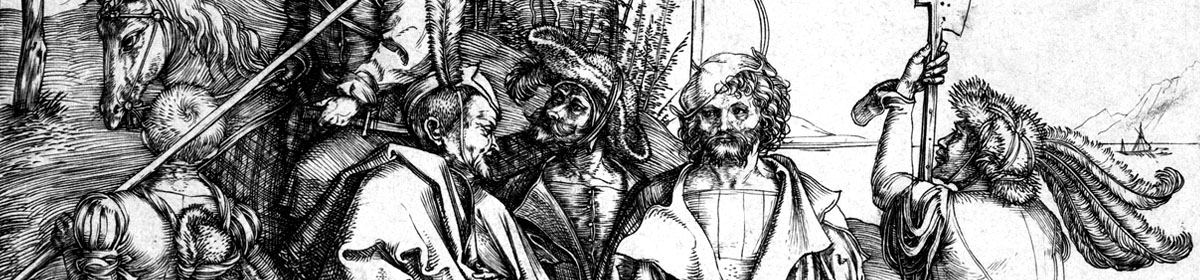
Another television ghost story from the 1970s, The Ferryman (1974) is no relation to the 2007 horror film of the same name. This 50-minute drama isn’t in the same league as Schalcken the Painter, or the other BBC ghost films, but it’s one I remembered and was surprised to find on YouTube. Haunted was a Granada production for ITV, and although it sounds like a series it seems there was only one other film in the run, Poor Girl (not on YouTube), a Turn of the Screw-like piece based on a story by Elizabeth Taylor (author not actress). The Ferryman is based on a story by Kingsley Amis, adapted by Julian Bond and directed by John Irvin, later to direct the BBC’s exceptional multi-part adaptation of Tinker, Tailor, Soldier, Spy. Interesting to see from Irvin’s credits that he also directed the now-forgotten Ghost Story (1981), a poor attempt to cram Peter Straub’s huge novel into a two-hour film.

The best thing about The Ferryman is seeing a very handsome Jeremy Brett playing novelist Sheridan Owen whose recent horror novel seems to have predicted events that he and his wife find themselves experiencing. (Ten years later Brett was back at Granada as my favourite Sherlock Holmes.) Despite some initial promise The Ferryman is less successful than you’d hope, possibly because of the weak and confused source material. With its middle class characters encountering the uncanny this could so easily have been a Robert Aickman story, and would have been far better for it. But it does serve a purpose in throwing into relief tomorrow’s post. Stay tuned.

Previously on { feuilleton }
Schalcken the Painter
“The game is afoot!”

Weekend links 132

janini1.jpg

La Hora del Fantasma (no date) by Joaquim Pla Janini.

• Many of the art links featured here are tips from Thom Ayres, so it’s only right to point to his new album project which he’s funding through Kickstarter and embellishing with his own nature photography.

• Anne Billson is another writer beguiled by Philippe Jullian’s masterwork, Dreamers of Decadence. And thanks to Ms Billson for drawing attention to the insane opening of Crime Without Passion (1934).

• Does this fake ad for The Necronomicon use one of my Cthulhu pictures? Possibly. Get the picture for yourself in this year’s Cthulhu calendar. (My thanks to everyone who’s bought a copy so far.)

To break the ice, I talk about books: he is delighted to discover that I have read his beloved Denton Welch, also J. W. Dunne’s An Experiment With Time. I have found them in my old school library, and know both have been a tremendous influence on him in different ways. Knowing of his interest I also mention that I have just read Colin Wilson’s The Quest For Wilhelm Reich, published the year before. He likes Wilson, he says, jokes that “the Colonel” with his cottage in Wales in Wilson’s Return of the Lloigor and his own Colonel Sutton-Smith from The Discipline of DE are one and the same. On something of a roll, I mention Real Magic by Isaac Bonewits, and he acknowledges that it has “some good information” – but is much more enthusiastic about Magic: An Occult Primer by David Conway [years later I would discover that Burroughs & Conway had in fact exchanged letters on various subjects pertaining to magic, occultism, and psychic phenomena – but that is decidedly another story!]

Matthew Levi Stevens recalls The Final Academy and an encounter with William Burroughs thirty years ago.

Locomotif: A short survey of trains, music & experiments: Gautam Pemmaraju on Kraftwerk, Pierre Schaeffer, Luigi Russolo and others.

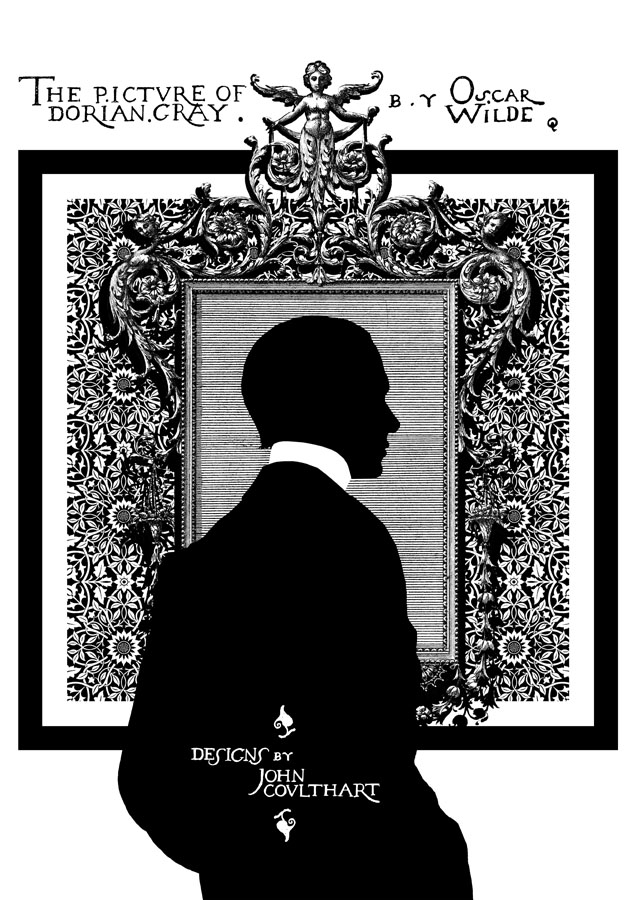
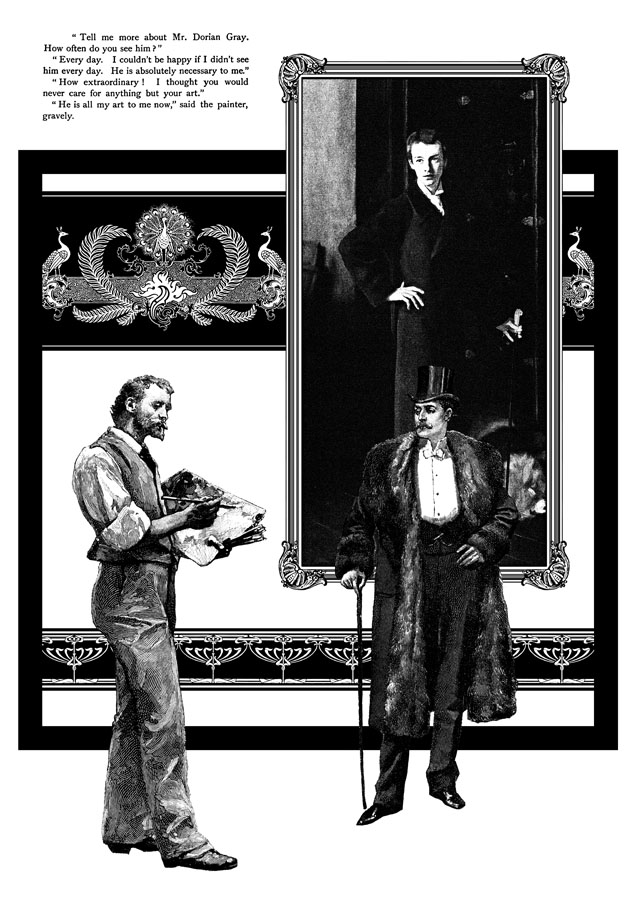
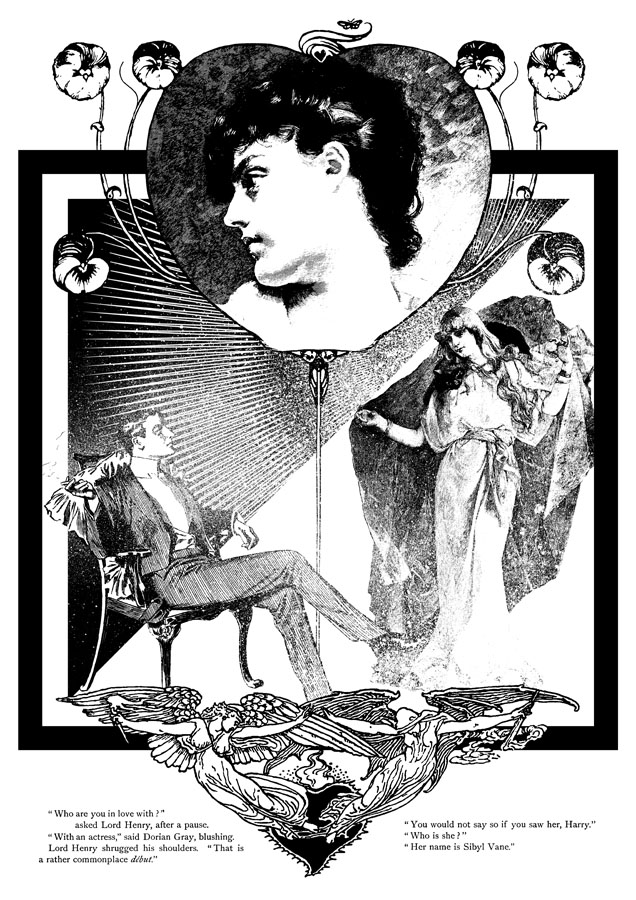
A flip-through of The Graphic Canon, volume 2. Wait to the end and you’ll see a couple of my Dorian Gray pages. Imprint has a review of the book.

• Julian Bell reviews two new books about Romantic painter Caspar David Friedrich.

Alan Moore talks to The Occupied Times about art, education and anarchism.

• Colin Dickey reviews Vilém Flusser’s Vampyroteuthis Infernalis: A Treatise.

janini2.jpg

Las Parcas II (1930) by Joaquim Pla Janini.

• Michael Newton reviews A Natural History of Ghosts by Roger Clarke.

• Golden Age Comic Book Stories revisits the work of Sidney Sime.

Front Free Endpaper asks “What’s in an inscription…?”

Mormon Missionary Positions

Amateur Aesthete

Ghosts (1981) by Japan | Ghosts (2008) by Ladytron | Ghosts (2012) by Monolake.

Schalcken the Painter

schalcken.jpg

Next week the BFI releases a box set of the BBC’s Ghost Stories for Christmas, a series of hour-long TV films broadcast during the 1970s, most of which were adaptations of stories by MR James. One film that isn’t among them, unfortunately, is Leslie Megahey‘s superb Schalcken the Painter, a 70-minute drama based on Strange Event in the Life of Schalken the Painter (1839) by J. Sheridan Le Fanu. Megahey gets mentioned here more than any other TV director (see this earlier post), for years he was someone whose productions I looked out for with a kind of cult fervour.

schalcken2.jpg

Schalcken the Painter was first screened on 23rd December, 1979, and repeated two or three times over the next decade. Megahey directed several period dramas for the BBC but this is his only supernatural piece. Its story of real-life Dutch painters Godfried Schalcken (1643–1706) and Gerrit Dou (1613–1675) is beautifully produced, with great attention to period detail, lighting and photography. The BBC used 16mm film for everything at this time but lighting cameraman John Hooper does an excellent job of creating shots that resemble Schalcken’s celebrated chiaroscuro paintings, still life tableaux or scenes from Vermeer. Many of the shots appear, Barry Lyndon-like, to be illuminated with nothing but candles. The acting is equally good, with Jeremy Clyde as Schalcken, Maurice Denham as the heartless Dou, and Cheryl Kennedy as Dou’s daughter, Rose. The narrator is the splendid Charles Gray.

schalcken3.jpg

Self-portrait of Godfried Schalcken (1694).

Given all of this it’s surprising the BFI haven’t included the film in their DVD series, it’s a superior work compared to several of the other inclusions, not least the most recent (and terrible) Whistle and I’ll Come to You. YouTube has a couple of uploads, however, so the curious may choose from a full-length version here or the usual multi-part version here. None of these fuzzy VHS copies do John Hooper’s photography any favours at all but for now this is the only way most people will be able to see Leslie Megahey’s beautiful and chilling ghost story.

Previously on { feuilleton }
Leslie Megahey’s Bluebeard
“Who is this who is coming?”
The Watcher and Other Weird Stories by J. Sheridan Le Fanu
Chiaroscuro

Steampunk Revolution

srev01.jpg

The “S” word again. One of the jobs from earlier this year is now available for purchase from publishers Tachyon and other outlets. Steampunk Revolution is the third in a series of steampunk story collections edited by Ann VanderMeer (Jeff VanderMeer was co-editor on the first two volumes). I designed the previous title, Steampunk Reloaded, and was working on these pages whilst also putting together the cover for Lavie Tidhar’s The Bookman Histories. Tidhar’s trilogy is a steampunk affair (and this collection features one of his Bookman stories) so there’s some slight overlap between the two designs, notably the use of a typographic “charm” I took from a Victorian printer’s catalogue. I’ve since seen that shape used elsewhere so it’s evidently more common than I thought. Bah.

The title page design above can be added to my ongoing obsession with the Exposition Universelle of 1900. Malissa Kent’s story, The Heart is the Matter, ends with a scene at the Exposition so I had an excuse to use an elaborate banner which includes an Exposition medal. (The same medal, incidentally, that you still see on the labels of Campbell’s Soup). The illustration below is adapted from one of Walter Crane’s Socialist drawings, and I feel bad now that we didn’t credit him for it. Sorry, Walter.

srev05.jpg

srev03.jpg

srev04.jpg

Continue reading “Steampunk Revolution”

Astronomy in China: The Pekin Observatory, 1888

observatory6.jpg

Observatoire de Peking (c. 1790).

Work this week has necessitated going through more 19th-century journals. For a while now I’ve had some downloaded copies of Scientific News, a kind of London equivalent of Scientific American, but I hadn’t noticed this particular article until I had to look through it again. The uncredited piece describes the ancient astronomical instruments at the observatory in the heart of Beijing, China (or “Pekin” as they have it here). Armillary spheres always catch my attention, and the Beijing ones are splendid examples supported by ornamental dragons. The text is informative but also mildly condescending as most discussion of China or Japan at this time tended to be. The piece includes some nice engraved illustrations of the instruments (scroll down), all of which can still be seen today surrounded by a city which the Chinese of 1888 would no longer recognise.

*   *   *

ASTRONOMY IN CHINA: THE PEKIN OBSERVATORY

VICE-ADMIRAL MOUCHEZ has just received from Pekin, for the Astronomical Museum which he has founded in connection with the Observatory of Paris, a series of photographs representing the Pekin Observatory and the instruments there erected. By the courtesy of our contemporary La Nature we are enabled to place these curious views before our readers, and thus give them an exact idea of the present state of astronomy in the nation which has cultivated it with the greatest zeal, for the longest time, and among whom it has received the most remarkable developments.

Astronomical functions have not ceased to be held in honour in China, and the Observatory of the Celestial Empire is at present under the direction of an uncle of the Emperor, who ranks as the fifth prince of the blood, and bears the title of Chancellor.

The number of persons attached to this establishment is more considerable than that at Paris. It amounts, including students, to 196. The chief functionaries after the Chancellor are a Chinese director and a Tartar director, having the right to wear a button of a precious stone, and to bear on the chest the image of a sea-raven. Then follow two sub-directors, one Chinese and one Tartar, and two assistants entrusted with calculations. These latter, prior to the expulsion of the Jesuits, were always foreigners. Two other functionaries require to be noted. The first is the keeper of the buildings, and the second the custodian of the water-clocks, as chronometers have not been as yet introduced into the observatory, any more than have telescopes.

Continue reading “Astronomy in China: The Pekin Observatory, 1888”