Gockinga’s Bacchanal and an unknown portrait of Fritz Klein

bacchanal.jpg

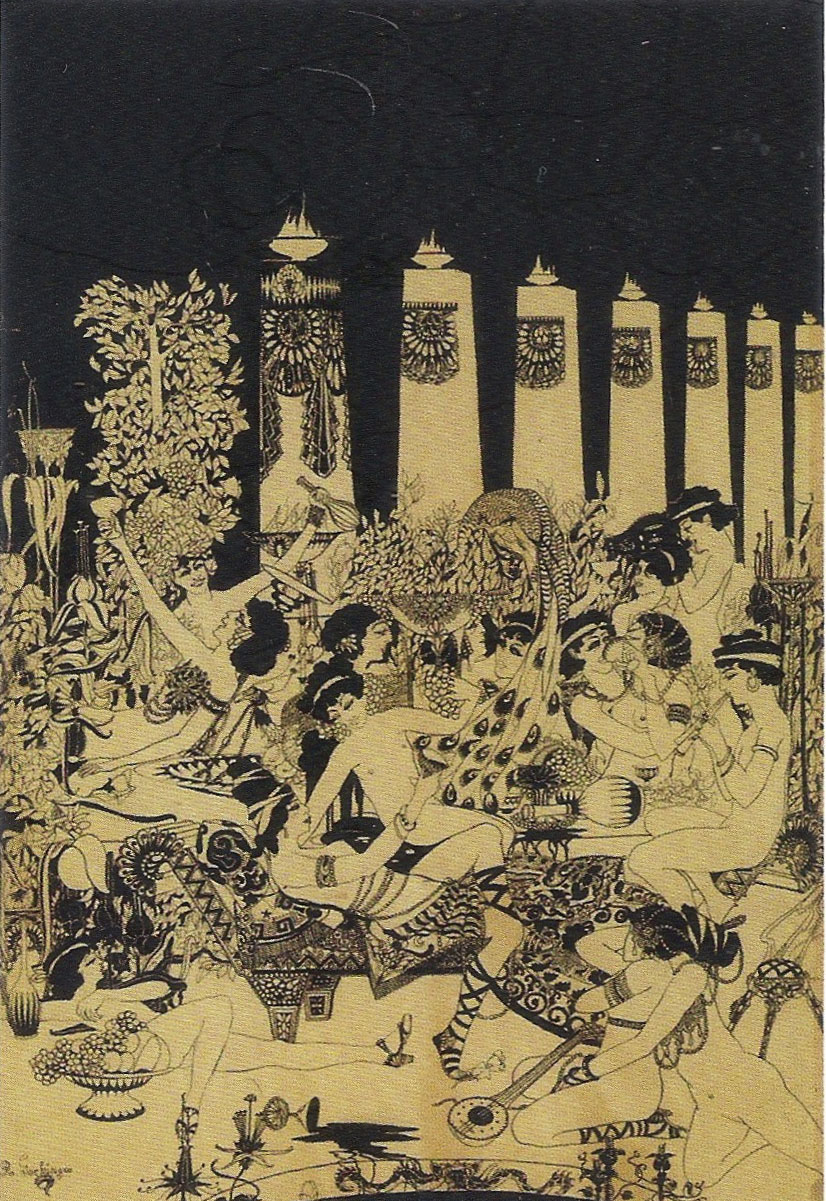
Bacchanal by René Gockinga.

A guest post today by Sander Bink who generously translated his latest piece of research into the Dutch artists of the early 20th century who took the Beardsley style as a foundation for their own black-and-white delineations. As with this earlier post on the subject, many of these drawings are very good but the artists are less well-known than the Beardsley followers in other countries who were their contemporaries. Here’s Sander.

* * *

Ladies and gentlemen, welcome to another episode of ‘Droomkunst’. This time we’ll discuss our cult hero Joseph René Gockinga who has a drawing exhibited at the Singer Museum Droomkunst exhibition. An obvious choice, because how often do you see his work—which I wrote about more in detail here—in a museum? Almost never. In 1976, two works by Gockinga were shown in the Kunstenaren der Idee exhibition but unfortunately I was only just born that year. The current locations of these works by the way is still unknown to me.
salome.jpg

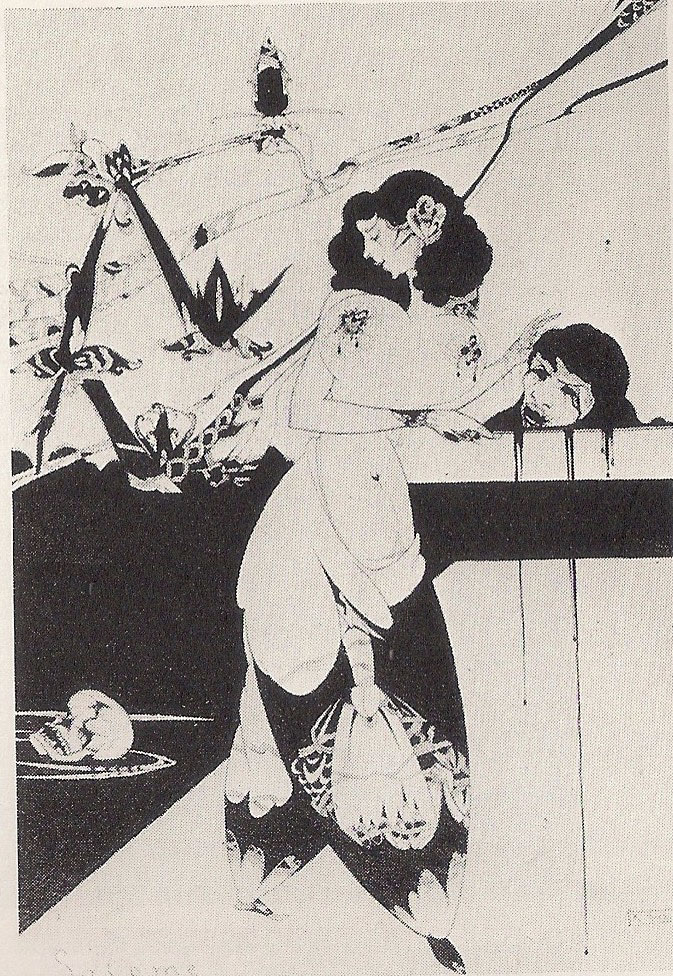
Salomé by René Gockinga.

One of them, however, Gockinga’s version of Salomé, resurfaced in 1995 but I don’t know the current location either. And the acclaimed Louis Couperus Museum last year showed an unknown Couperus illustration of Gockinga from a private collection (no, not mine). In Droomkunst now hangs a small but fine work in a similar style: the Bacchanal already mentioned here. The Droomkunst catalogue dates the work about 1915. I would dare to date is somewhat earlier, I think 1913.

In his opening speech Singer director de Lorm compared Gockinga’s Bacchanal with the work of Erwin Olaf because of the hedonistic, decadent parallels between the two works. If I remember correctly, de Lorm also talked about certain places preferred by these artists, in addition to the perverse, decadent, decayed Amsterdam also Indonesia and especially Java, which was known as a kind of international gay colony.

Now, our Gockinga has also dwelled there; I do not know exactly where and when, but—and this is information that surfaced after my earlier mentioned article was published—he lived in the late thirties in Bali for a while in the home of the renowned painter W.G. Hofker. And in a recent study Imagining Gay Paradise: Bali, Bangkok, Singapore and cyber-Singapore we read that Gockinga was one of the victims of a scandal; he was arrested because of his homosexuality in December 1938 in Denpasar. Here, the comparison with the 2000 generation of artists limp, which, after all, in Amsterdam and elsewhere were partying without having fears of being arrested for lewd behaviour.
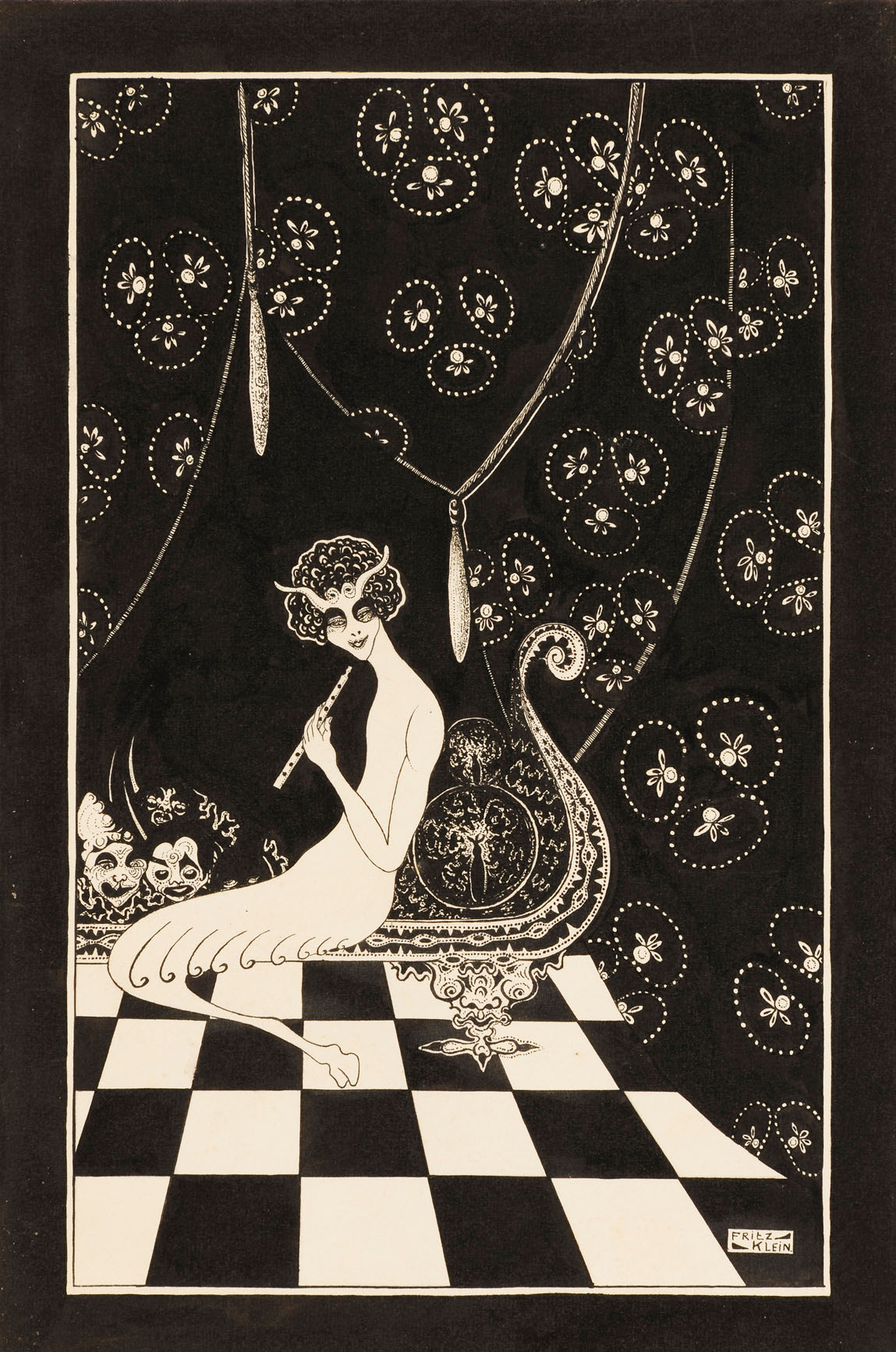
klein.jpg

Fritz Klein by René Gockinga.

Where several generations of artists do come together is in the following, in our humble opinion a very nice item that was sent us last year. The majority of Gockinga’s Beardsley and the Nérée-like drawings from around 1917 are still unfortunately lost. Probably the “immoral” nature of his work is the main reason. So the item presented here is, as far as we know for the first time, is a new discovery.

It is a Beardsley-like portrait from 1917 or thereafter and it portrays none other than the painter Fred (Fritz) Klein (1898–1990), father of the famous and important Yves Klein.

Huh? What? How can that be? Well, that is of course very well possible. They were more or less contemporaries (Klein was born in 1898, Gockinga in 1893), were both born in the Dutch East Indies and were back in The Netherlands in 1913. They shared a great interest in art. In 1920, Klein moved to France, where he would make his sunny canvases that he became known for. Before that, he was apparently also in The Hague, where he visited his friend Gockinga. That friend has now made a special and somewhat decadent portrait of Klein: a kind of mythological half-man, surrounded by masks and, as I said, in a nice Beardsley-style. You could interpret the masks and the mix of male/female characteristics in a certain way but I leave that to the viewer. In any case, a special drawing can be added to the mysterious oeuvre of the Dutch Symbolist. Big thanks to the Klein relatives that allowed me to write about and portray it, of course.

Sander Bink

Previously on { feuilleton }
Antony Little’s echoes of Aubrey
Aubrey in LIFE
Beardsley reviewed
Aubrey Beardsley in The Studio
Ads for The Yellow Book
Beardsley and His Work
Further echoes of Aubrey
A Wilde Night
Echoes of Aubrey
After Beardsley by Chris James
Illustrating Poe #1: Aubrey Beardsley
Beardsley’s Rape of the Lock
The Savoy magazine
Beardsley at the V&A
Merely fanciful or grotesque
Aubrey Beardsley’s musical afterlife
Aubrey by John Selwyn Gilbert
“Weirdsley Daubery”: Beardsley and Punch
Alla Nazimova’s Salomé

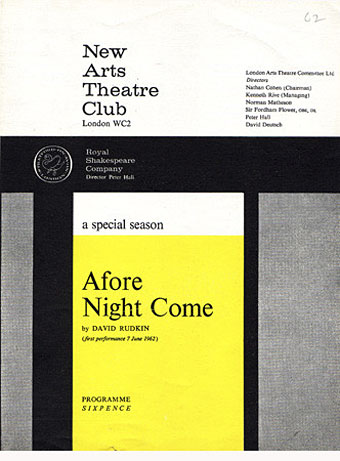
Afore Night Come by David Rudkin

rudkin.jpg

RSC programme, 1962.

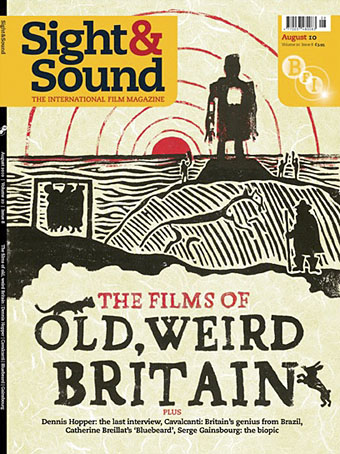
Not a review, this, you can’t really review a stage play you’ve never seen. Following the re-viewing of David Rudkin’s White Lady I’ve gone back to some of the published plays. If all you know of Rudkin’s work is his television drama, the plays are instructive for showing the consistency of his themes across the years. The recent resurgence of interest in Penda’s Fen and Artemis 81 has seen Rudkin’s work included among that group of film and TV dramas that Rob Young memorably labelled Old Weird Britain (after Greil Marcus and The Old, Weird America), a loose affiliate that would include films such as The Wicker Man and Blood on Satan’s Claw, television works by Nigel Kneale and Alan Garner (The Owl Service, Red Shift), and the BBC MR James adaptations, one of which, The Ash Tree, was also written by Rudkin.

If the Old Weird Britain lies at an intersection between different dramatic forms—ghost story, horror story, science fiction, historical drama—then not all of Rudkin’s work would fall into the intersection, but two of the plays—The Sons of Light and his first staged work, Afore Night Come—could be coaxed into the charmed circle: The Sons of Light, with its sinister human experiments taking place underground, has ties to Artemis 81, while Afore Night Come is another piece about (intentional or otherwise) human sacrifice in rural England. I hadn’t read Afore Night Come until last week, and was struck by its similarity to John Bowen’s Robin Redbreast (1970), a more deliberately ritualistic piece of work. In its first act Afore Night Come is an almost documentary-like account of a day in the life of workers hired to pick the pear harvest in an orchard outside Birmingham; the eruption of violence in the second act is certainly foreshadowed but seems less premeditated than in Robin Redbreast, a factor which has apparently shocked many audiences. During its performances in the early 1960s the tendency was to see the play in the light of Harold Pinter and Artaud’s Theatre of Cruelty, it’s only in retrospect that a connection with more generic works emerges. There’s also a connection to White Lady via the pesticide spraying about which the workers are continually warned, and whose advent coincides with the moments of violence.

oldweird.jpg

Sight and Sound, August 2010. Illustration by Becca Thorne.

A couple of other things are worth noting: until 1968 all the plays performed in Britain were vetted by the Lord Chamberlain’s office who would routinely strike out any material deemed offensive or irreligious. Knowing this I was surprised by the recurrence of the word “fuck” in Rudkin’s script, and also the hint of same-sex attraction between two of the male characters, a detail that would usually have been removed. It seems that plays pre-1968 could be performed without censorship if the theatre was declared to be a private club for the evening (a similar state of affairs helped evade some film censorship) which is what happened with Afore Night Come in 1962. Given this, and the incident of a decapitated head being rolled across a London stage (probably the first since the Jacobeans, says Rudkin), it’s easy to see why audiences at the time might have felt assaulted, although the play still won the Evening Standard Drama Award that year. Sexual ambiguity/ambivalence or outright homosexuality have been a continual thread in Rudkin’s drama yet he’s seldom been given much credit for this pioneering work. A year after Afore Night Come there was Rudkin’s first play for television, The Stone Dance, a piece which sounds like another potential addition to the works in the Old Weird Britain catalogue. Rudkin describes it thus:

A Revivalist pastor pitches his crusade tent within a Cornish stone circle. His repressed son becomes sexually obsessed with an outward-going local boy, and suffers a hysterical loss of speech. A storm blows the pastor’s tent away, and amid the stones, their primal purity reasserted, by the boy’s accepting touch the son is healed.

I believe that, prior to this, no tv play had overtly treated homosexual emotions as a central theme. (In Britain at this time, any gay sex could incur a prison sentence of up to two years.)

Many of the TV plays from the 1960s are now lost so there’s no guarantee that we’ll ever see this, a shame considering that Michael Hordern and John Hurt were the leads. No guarantee either that we’ll see any staging of the more interesting plays like The Sons of Light and The Triumph of Death which seem to be too eccentric for theatre directors. The scripts can at least be picked up relatively cheaply. To date there’s only Afore Night Come that seems to be revived with any regularity. Michael Billington, a long-time champion of Rudkin, reviews the Young Vic production from 2001 here.

Previously on { feuilleton }
White Lady by David Rudkin
The Horror Fields
Robin Redbreast by John Bowen
Red Shift by Alan Garner
Children of the Stones
Penda’s Fen by David Rudkin
David Rudkin on Carl Dreyer’s Vampyr

Weekend links 218

white.jpg

The End of a Thousand Years (2014) by Hilary White. Via Phantasmaphile.

• It’s taken a while to shamble into the world but A Mountain Walked, an anthology of Cthulhu Mythos stories edited by leading Lovecraft scholar ST Joshi, will be published by Centipede Press next month. The publisher’s page for the book shows that my contribution will be facing Joshi’s introduction which is something I wasn’t aware of until this week. It also says the 692-page limited edition is sold out, although book dealers often buy collectible volumes such as this to sell on after adding their own markup. Be warned that it was listed on Amazon at $160 so if there are copies available anywhere they won’t be cheap.

• It’s not such a surprise to hear that magic mushrooms were an inspiration for Frank Herbert’s Dune. David Lynch’s film of Dune receives passing mention in this profile by Jeremy Kay of Lynch and the Twin Peaks film/TV series.

• “Whitechapel station is one of Giambattista Piranesi’s imaginary prisons, colonised by frantic electrical engineers and watched over by CCTV.” Will Wiles on the chaos and tangled energy of modern cities.

The word perfume comes from the French root “fume”—smoke—and where there’s smoke, there’s fire! I think most people are turned on sexually by scents and smells. Certain body odours can be very sexually stimulating. We purposefully chose certain ingredients for my Obscenity perfume that are associated with occult or religious rituals, including vetiver, labdanum, and oud, and others that are considered aphrodisiacal, including patchouli and sandalwood. The point of Obscenity is that there is no conflict between the religious and the sexual, and in fact they should be completely complimentary. The fragrance is meant to stimulate you sexually, but it also literally contains water from Lourdes, so it also has religious notes and perhaps even healing properties!

Bruce LaBruce talks to Kathy Grayson about his new fragrance, Obscenity

The Baffler, “a journal of iconoclastic wit and cultural analysis” relaunches with full access to its archives from 1988 to the present.

Pineal, the new album by Othon, is dark and “properly, brilliantly queer,” says David Peschek.

• At Core77: How to improve the audio quality of vinyl records with wood glue.

• P. Adams Sitney interviews Kenneth Anger on WNYC’s Arts Forum (1972).

• At BibliOdyssey: Le Bestiaire Fabuleux by Jean Lurçat.

• Mix of the week: Secret Thirteen mix 123 by Evol.

Meawbin the Creepy Cat

Perfumed Metal (1981) by Chrome | Fragrance (Ode To Perfume) (1982) by Holger Czukay | The Perfume (2006) by Johnny Klimek, Reinhold Heil, Tom Tykwer

More Songs for the Witch Woman

cameron1.jpg

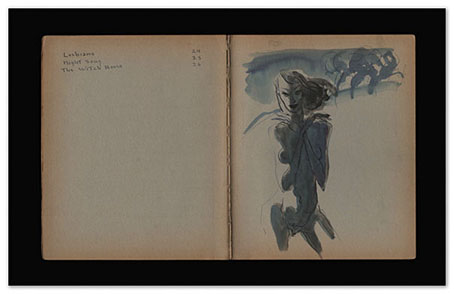
This month I’ve been enjoying the latest quality publication from Fulgur, Songs for the Witch Woman, the centrepiece of which is a cover-to-cover reproduction of the book of occult poetry and art created by Jack Parsons and Marjorie Cameron in the early 1950s. It’s been a great pleasure in recent years seeing the welling of interest in Cameron’s work. In 2001 when I was compiling notes for an abandoned study of occult cinema, Cameron as artist, witch or mere human being was a shadowy presence about whom nothing substantial seemed to have been written; her art was impossible to see anywhere, all one had were fleeting references in books, and her appearances in The Inauguration of the Pleasure Dome and Curtis Harrington’s Night Tide, a pair of films that only exaggerated her mystique. The intervening years have seen a lifting of successive veils so we’re now able to watch Curtis Harrington’s film portrait, The Wormwood Star, and see her work in books and exhibitions like this one (also titled Songs for the Witch Woman) which will be showing at the Pacific Design Center in Los Angeles from mid-October. As an early precursor to that there’s this feature by Robert Garrova at SPRC which includes comments about the exhibition from organisers Scott Hobbs and Yael Lipschutz.

cameron2.jpg

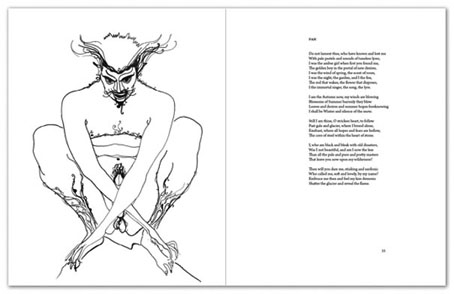
Pan: art by Cameron, poem by Parsons.

Previously on { feuilleton }
Songs for the Witch Woman
More Cameron
Inauguration of the Pleasure Dome: The Eldorado Edition
The Wormwood Star
Street Fair, 1959
House of Harrington
Curtis Harrington, 1926–2007
The art of Cameron, 1922–1995

Du Tac au Tac: Druillet, Hogarth and Buscema

tacautac.jpg

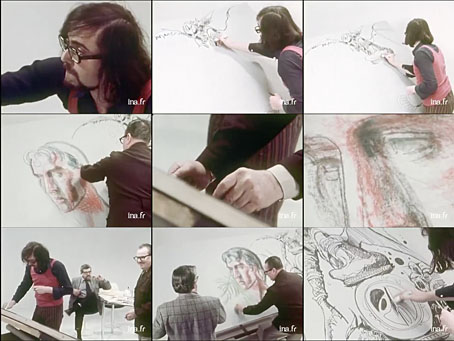
I thought I was done with Druillet for this week but no, there’s more. I hadn’t come across Du Tac au Tac before, a French TV show from the early 70s in which three (sometimes four) different comic artists are given a total of 15 minutes to improvise a drawing on a single board. The list of contributors is a who’s who of comic talent from France, Belgium, America and elsewhere. French TV site Ina.fr (which is pay-to-view) has 130 episodes in their archive, many of which have found their way onto YouTube. Druillet was a regular contributor, as was Moebius.

I’ve singled out this episode from 1972 for the astonishing conjunction of Druillet with Burne Hogarth, two artists with a considerable influence on my own comics work. Without the example of Heavy Metal magazine in general, and Druillet in particular, I might not have bothered trying to adapt Lovecraft’s stories into comics in the 1980s; at one point I was prepared to put together a book of stories-plus-illustrations along the lines of Berni Wrightson’s Frankenstein. Burne Hogarth, meanwhile, casts a Tarzan-shaped shadow over the darker shadows of the Reverbstorm series, his work being quoted throughout, especially in the appropriation of the bizarre and sinister Ononoes from the Tarzan Sunday strips. The third artist present, John Buscema, is notable if only for representing the comics creation that I like the least: the over-muscled, flat-groined, stupidly-costumed, always-fighting, corporate superhero. As it is, Buscema doesn’t fare too well in this exchange, sketching a half-hearted Silver Surfer while Hogarth (who was left-handed; don’t think I knew that) draws a profile of Tarzan in pastels, and Druillet works furiously with markers to create a typical melange of bat-winged demon, alien glyph and screaming head. I’ve not watched any of the other episodes yet but for those interested there are two channels of the things here and here.

Previously on { feuilleton }
Sorcerer: Druillet and Friedkin
Ô Sidarta: a film about Philippe Druillet
Lovecraft: Démons et Merveilles
Heavy Metal, October 1979: the Lovecraft special
Philippe Druillet album covers
Druillet’s vampires
Salammbô illustrated
Druillet meets Hodgson