Weekend links 219

balbusso.jpg

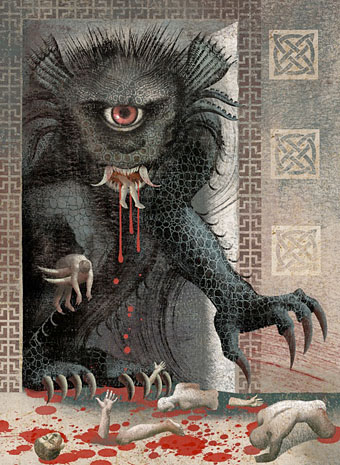
Grendel Monster (2013) by Anna & Elena Balbusso.

Rick Poynor looks at the Guide de la France mystérieuse (1964), a fantastic (in every sense) doorstop of a volume whose collage alphabet by Roman Cieślewicz can be seen on the cover of Carnival In Babylon (1972) by Amon Düül II.

• Boolean mathematics, Charles Howard Hinton, The Voynich Manuscript, and the effects of surveillance on the political process: Adam Curtis firing on all cylinders as usual.

• At Strange Flowers: The Picture of John Gray, remembering the minor fin de siècle figure who gave Oscar Wilde a surname for his most famous creation.

In “32 Cardinal Virtues of Dennis Cooper,” Wayne Koestenbaum remarks: “Cooper’s quest for the unseeable is virtually religious. I mean: sedulous, abstract, perpetual, unrewarded, unreasonable.” There’s much more to be said of Gone, its power, its pain, its odd intrigues, but perhaps it will suffice to say that it is revealing: unlike Burroughs’ scrapbooks hidden away by some private collector, never to see the light of day, Gone (and its sister texts at the Fales Library) illuminate in perpetuity Cooper’s obscure quest for the unseeable.

Diarmuid Hester looks at Dennis Cooper’s scrapbooks

The Sallow Tree, a single by Lutine. More music: An hour of Julia Holter‘s St John’s Sessions performance.

• At Dangerous Minds: Christian televangelists listen to Stairway To Heaven forwards.

• Cathy Camper reviews Fearful Hunter, a graphic novel by Jon Macy.

• Mix of the week: FACT mix 452 by Claude Speeed.

Roman Cieślewicz at Pinterest.

The Adobe Illustrator Story

The House of Julian

Unofficial Britain

• Amon Düül II singles: Rattlesnakeplumcake (1970) | Between The Eyes (1970) | Light (1971) | Lemmingmania (1971)
August

august1.jpg

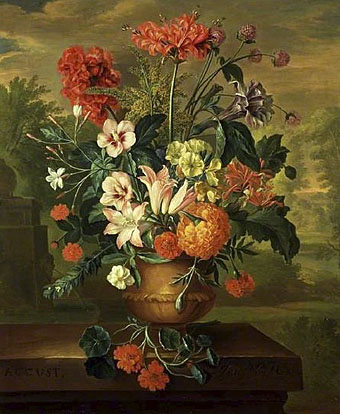
Twelve Months of Flowers: August (no date) by Jacob van Huysum.

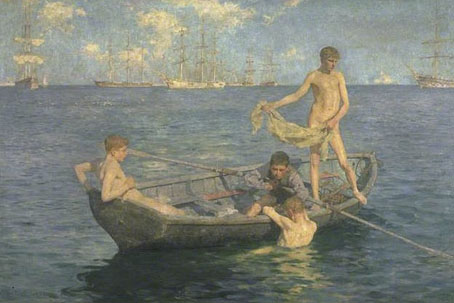
The eighth month in paintings. Alan Bennett is a British artist, not to be confused with the well-known British playwright of the same name. There is, however, a slight connection between playwright and Henry Scott Tuke: Bennett’s BBC film Portrait or Bust (1994) involves an exploration of Leeds Art Gallery during which there’s a glimpse of Tuke’s The Bathers, one of the artist’s many studies of unclothed boys.

august8.jpg

August Blue (1893–4) by Henry Scott Tuke.

august7.jpg

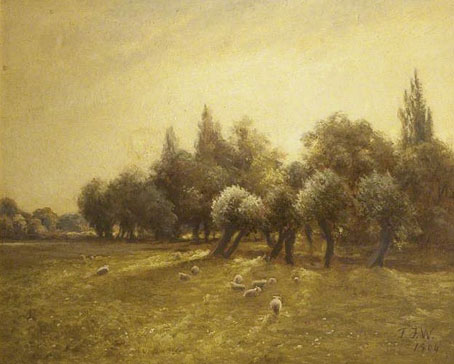
August Afternoon near Dorking (1904) by TF Wilkinson.

august2.jpg

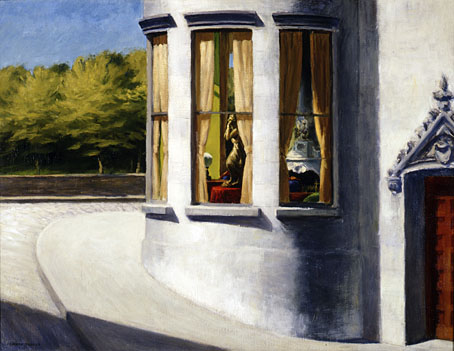
August in the City (1945) by Edward Hopper.

Continue reading “August”

Dick Smith, 1922–2014

smith1.jpg

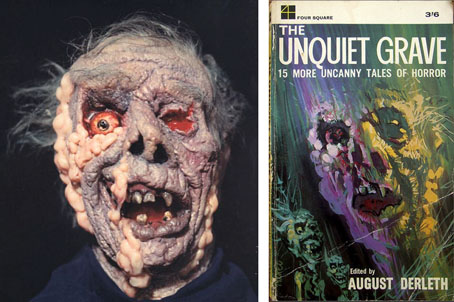
left: Dummy head by Dick Smith for The Picture of Dorian Gray (1961); right: Cover art by Michel Atkinson (aka Michel) for The Unquiet Grave (1963).

Cinema in the 1970s would have been very different without Dick Smith‘s makeup artistry.

smith2.jpg

Dustin Hoffman in Little Big Man (1970).

smith3.jpg

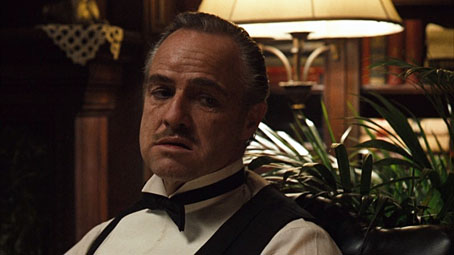
Marlon Brando in The Godfather (1972).

smith4.jpg

Linda Blair in The Exorcist (1973).

Continue reading “Dick Smith, 1922–2014”

Synthesizing

synths1.jpg

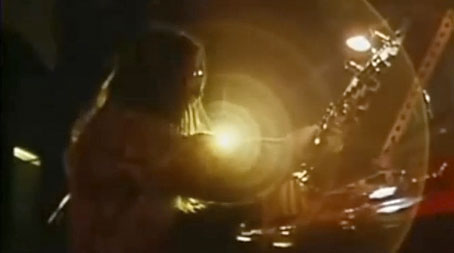
Tangerine Dream’s Chris Franke, 1973.

Following yesterday’s post, more synth-mania with an emphasis on the Analogue Seventies. YouTube is laden with this stuff but the best things often take some searching out.

Tangerine Dream, Paris, 1973
This is one I’d not seen before, Tangerine Dream when they were still in their Krautrock phase prior to signing to Virgin. The music sounds like outtakes from the Atem album, and as usual with these films it’s great to see what instruments are being used.

synths2.jpg

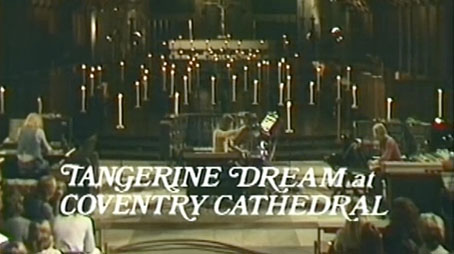
Tangerine Dream at Coventry Cathedral, 1975
Baumann, Franke and Froese again performing one of their cathedral concerts. Tony Palmer directed this but the sound was lost so the 27-minute film has edits of the Ricochet album as the soundtrack. (See Voices in the Net.) Ricochet was compiled from live recordings from the same period so it’s not so inappropriate.

synths3.jpg

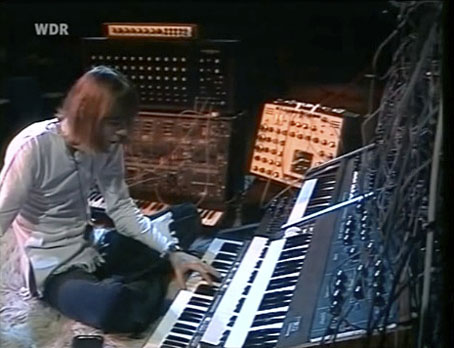
Klaus Schulze, 1977
Klaus Schulze played drums on the first Tangerine Dream album, Electronic Meditation (1970), but was never an official member of the group. This lengthy improvisation is typical of the swathes of beatless music he was producing for much of the 1970s.

synths6.jpg

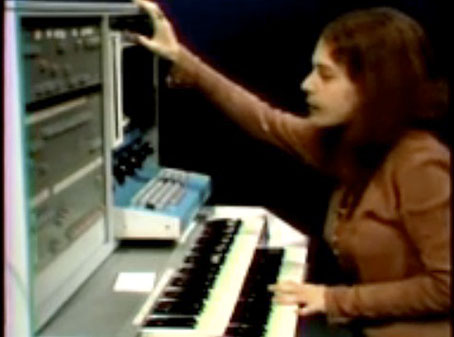
Laurie Spiegel, 1977
Laurie Spiegel demonstrates one of the earliest digital synthesizers. Spiegel’s 1980 album, The Expanding Universe, was reissued in 2012, and is well worth seeking out. There’s more rare analogue and digital synthesis on her YouTube channel.

synths4.jpg

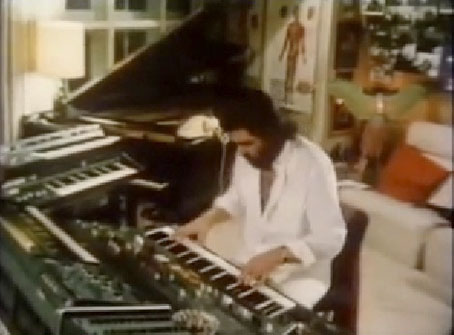
Vangelis, 1978
Vangelis in the studio recording the China (1979) album. If you can overlook the Chinoiserie clichés there’s some very good music on this release, some of which looks forward to the Blade Runner soundtrack.

synths7.jpg

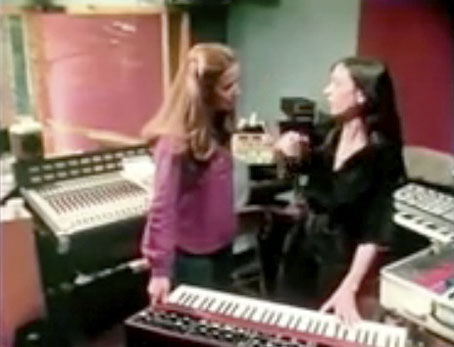
3-2-1 Contact, 1980
A great little film with Suzanne Ciani demonstrating synthesizers for a show on the Children’s Television Workshop. Featuring an oscilloscope and a Prophet 5.

synths5.jpg

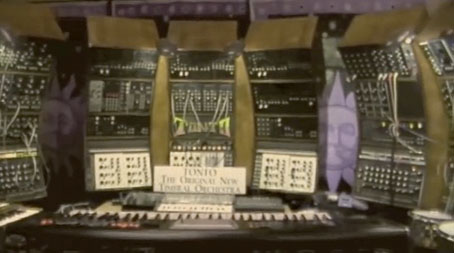
The Original New Timbral Orchestra
Malcolm Cecil and Robert Margouleff made their name as Tonto’s Expanding Head Band, “Tonto” being Cecil’s custom-built TONTO (The Original New Timbral Orchestra) synthesizer. Cecil shows off his analogue gear in this short film.

Previously on { feuilleton }
Tangerine Dream in Poland
Electronic Music Review
Tonto’s expanding frog men
A Clockwork Orange: The Complete Original Score
White Noise: Electric Storms, Radiophonics and the Delian Mode

Tangerine Dream in Poland

td1.jpg

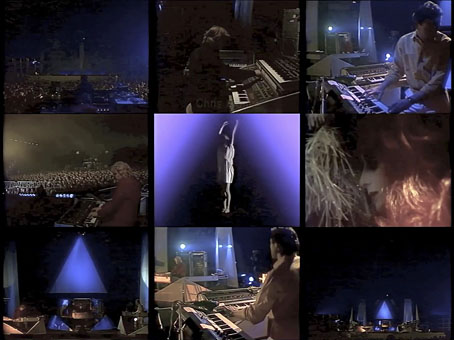
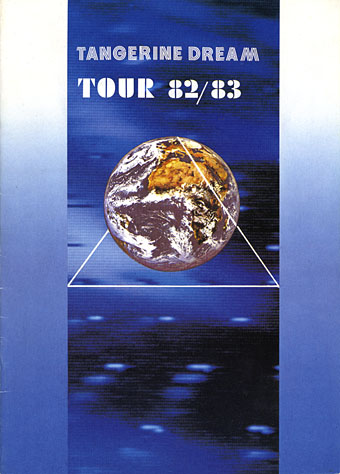
The conjunction this month of the Sorcerer reissue and Celestite, the latest album from Wolves In The Throne Room, has had me listening to a lot of electronica from the 70s and 80s. This in turn led to the discovery of a Polish TV broadcast of the concert Tangerine Dream played in Warsaw on 10th December, 1983, the end of a lengthy world tour which included a date in Manchester on 1st November, 1982, that I was fortunate enough to see. Anyone familiar with the Johannes Schmoelling period of the group will probably know the Logos album, a recording of the concert played at the Dominion theatre, London, a few days after the Manchester gig. At this point the group was playing the same set (with minor variations) at each performance. The Poland event, by contrast, was a special concert taking place in what was still a part of the Soviet bloc for which the group composed over two hours of entirely new music. The full concert was documented on a double-vinyl set, Poland, released a year later, an album I used to play regularly, so it’s fascinating seeing the first half hour being performed here. Also good to see the Schmoelling line-up in action; there’s a fair amount of film of the group from the 1970s but this is the first substantial footage I’ve seen from the 1980s. The TV producers seemed a little confounded by how to present this unorthodox music, so between shots of the group there are cutaways to showroom dummies (shades of Kraftwerk), Polish street scenes, and a woman dancing around in a manner that seems hopelessly naive to a jaded Western viewer. The blue triangle stage set was a nod to the White Eagle album sleeve.

td82.jpg

Tour programme.

Poland was the last Tangerine Dream album I enjoyed wholeheartedly. The final studio release with Schmoelling, Le Parc (1985), had some high points but was more like one of the soundtrack albums the group were producing in increasing numbers at the time. I saw them perform again in 1986 when Paul Haslinger had replaced Schmoelling and the concert sent me to sleep for a minute, after which I decided that it was time for Tangerine Dream and I to go our separate ways.