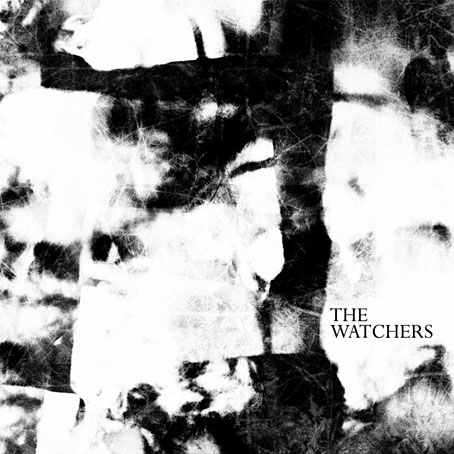
The Watchers

watchers.jpg

The latest release from A Year In The Country is The Watchers, a compilation album which takes as its theme the ancient trees of the British Isles. The slow time of a tree’s life becomes centuries in the case of the oldest specimens. Some of Britain’s yew trees are so old you imagine that if trees perceive human beings at all it would be as fleeting blurs, continually changing the landscape (and destroying the trees) before being replaced. It’s fitting that yew trees are often found growing in graveyards.

Some of them have lived through invasions of their island home undertaken by wooden ships, sword and arrow, the final days and passing of the old ways and the times of magic and witchcraft, the coming of the industrial revolution and the dawning of the digital era.

Track list:
1) Grey Frequency—In A Clearing
2) Field Lines Cartographer—A Thousand Autumns
3) Widow’s Weeds ft Kitchen Cynics—The Brave Old Oak
4) Depatterning—Ook/Dair
5) A Year In The Country—Radicle Ether
6) Phonofiction—Xylem Flow
7) Pulselovers—Circles Within Circles
8) Sproatly Smith—Watching You
9) Vic Mars—The Test Of Time
10) The Heartwood Institute—The Trees That Watch The Stones
11) Howlround—The Winter Dream of Novel’s Oak

The theme may be a pastoral one but, as with earlier compilations, several of the pieces here are very much products of the digital era; many of the pieces are also instrumentals which might pose a problem in illustrating the theme but each artist provides a note describing their intentions: Grey Frequency investigate a rooky wood; Widow’s Weeds provide the folkiest offering with The Brave Old Oak, a song about the ancient Scottish woodland of Dalkeith Oakwood; Depatterning attempt to convey in sound the shared genetic history of English and Irish Oaks.

I’m often resistant to music (or art) that relies on text for support but it’s difficult to avoid with an album like this. It’s also no different to the old “programme” tradition of illustrative instrumental music, a form whose most familiar example is Vivaldi’s Four Seasons. The listener may ignore the notes, of course, but doing so would mean missing details such as Phonofiction’s referring to their “drumkit of tree hits”. The best piece is Watching You by Sproatly Smith, a group who always seem to stand out on these compilations. Watching You delivers the theme with sympathy and economy, and since this is a song no notes are required. Many of the other pieces are less distinct, and without textual support they risk blurring into an undifferentiated electronic fuzz. Given the theme, this may be appropriate, the artists themselves becoming the fleeting blurs that the ancient trees perceive.

The Watchers will be released on 7th June, and is available for pre-order now.

Previously on { feuilleton }
The Corn Mother
The Quietened Mechanisms
The Shildam Hall Tapes
Audio Albion
A Year In The Country: the book
All The Merry Year Round
The Quietened Cosmologists
Undercurrents
From The Furthest Signals
The Restless Field
The Marks Upon The Land
The Forest / The Wald
The Quietened Bunker
Fractures

Weekend links 464

picaud.jpg

13 Circles by Julien Picaud.

• The 50th anniversary of the Apollo Moon landing is only two months away so it’s no surprise that Brian Eno’s Apollo: Atmospheres And Soundtracks is being reissued. The latest release will include an additional disc of new music by Eno with his collaborators from the original sessions, Daniel Lanois and Roger Eno. Related: the Apollo 11 Command Module as an explorable (and printable) 3D model.

• From the real Moon to the presence of the satellite in myth and history, the next book from Strange Attractor will be Selene: The Moon Goddess & The Cave Oracle, a volume which is also the final work by the late Steve Moore. With a foreword by Bob Rickard, and an afterword by Alan Moore.

• Guitar-noise maestro Caspar Brötzmann released a handful of thrilling albums in the 1990s then disappeared from view. Spyros Stasis talked to Brötzmann about his hiatus and his recent resurfacing on the Southern Lord label.

• A year late, but I didn’t know Paul Schrader had written an updated introduction to his 1972 study of Ozu, Bresson and Dreyer, Transcendental Style in Film. I love the idea of “The Tarkovsky Ring” as a directorial event horizon.

• “Nothing written is utterly without value, as I proved to myself by reading two random works.” Theodore Dalrymple on the lasting worth of “worthless” books.

Cinemagician: Conversations with Kenneth Anger, a documentary by Carl Abrahamsson about the director/writer/magus.

• Mirror, Mirror: When Movie Characters Look Back at Themselves by Sheila O’Malley.

• From Susan Sontag to the Met Gala: Jon Savage on the evolution of camp.

• Mix of the week: Secret Thirteen Mix 289 by Mondkopf.

• Portrait of the Artist as a Consumer: Anne Billson.

• A video by IMPATV for Religion by Teleplasmiste.

Obscure Sound ~ Cosmic: a list.

Mira Calix‘s favourite records.

Transcendental Overdrive (1980) by Harald Grosskopf | Transcendental Moonshine (1991) by Steroid Maximus | The Transcendent (1999) by Jah Wobble

The art of Jacob Bendien, 1890–1933

bendien07.jpg

Corner of a Canal (1919–20).

This week’s post is another by Sander Bink about a Dutch artist whose work may be unfamiliar to those outside the Netherlands. Jacob Bendien was certainly new to me. My thanks again to Sander for the post.

* * *

Jacob Bendien, born in Amsterdam in 1890, was one of the pioneers of abstract art (“absolut art” as Bendien and kindred artistic spirits called it) but is nevertheless little known in the Anglophone world. In the Netherlands he is not ignored or forgotten since he is mentioned in most overviews of early Dutch abstract art. Bendien’s work belongs to a somewhat later period than the other Dutch artists in this series but can be related thematically via his roots in the mystical/Symbolist art from around 1900.

Although Bendien was an early admirer of Mondrian’s art, his work differs from Neo-plasticism in its use of lines and round forms instead of bars and straight lines.

bendien01.jpg

Composition (1912); Stedelijk Museum, Amsterdam.

bendien02.jpg

Peinture I (1912); Centraal Museum, Utrecht.

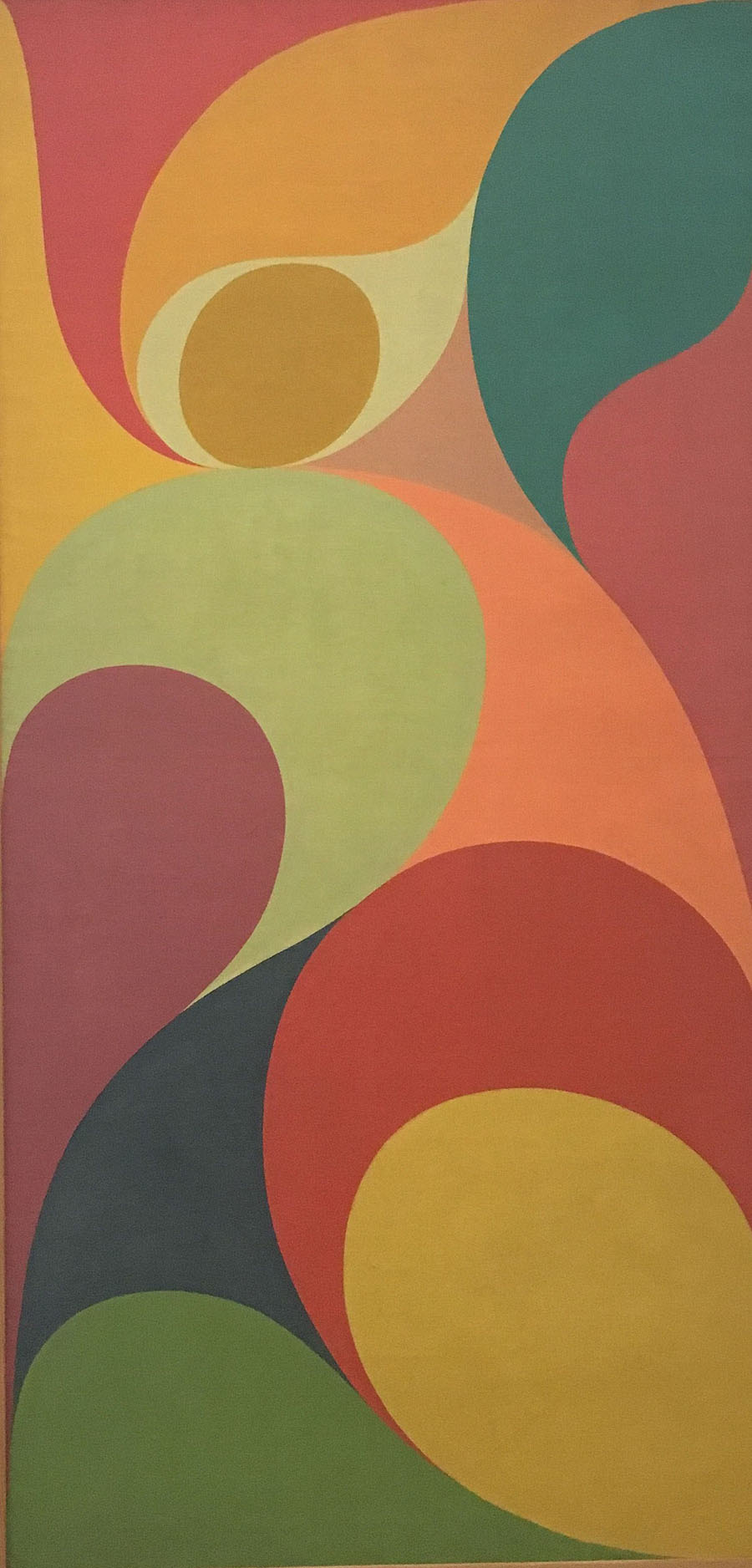
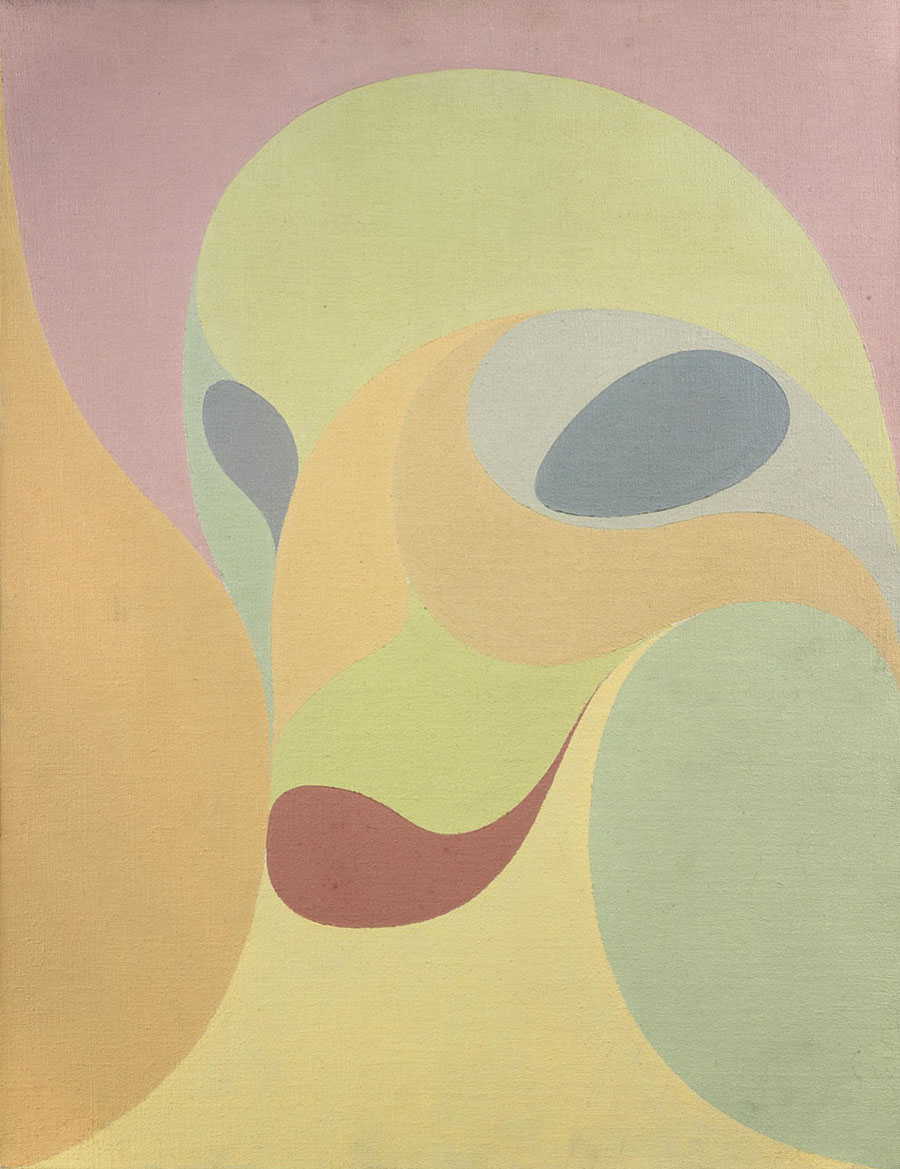
Two examples of Bendien’s early abstractions are the graceful oil-on-canvas Composition from 1912, and the slightly Surrealist portrait Peinture I from the same year.

bendien03.jpg

Amsterdam Canal (1916).

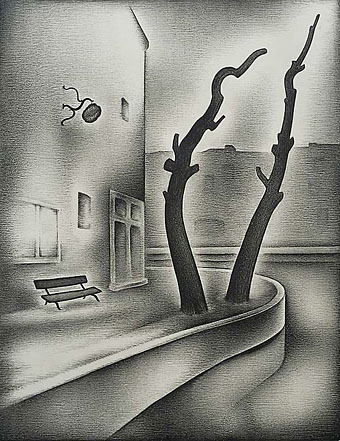
Somewhere between Surrealism, Modernism and Symbolism is the lithograph Amsterdam Canal which could just as well be a décor for some German Expressionist movie from the 1920s.

bendien04.jpg

Seven Masks (1917); Museum Belvédère, Heerenveen.

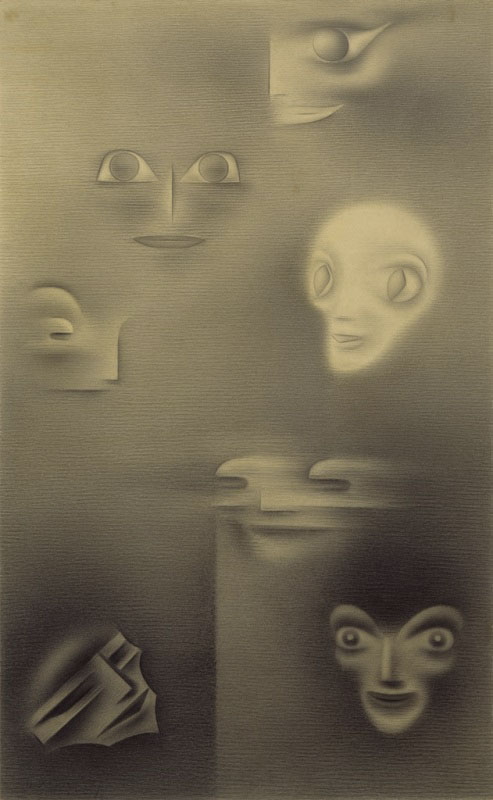
Surreal and Redon-like is his chalk drawing Seven Masks from 1917.

bendien05.jpg

Melancholy (1917).

Around 1916 Bendien made some drawings which seem to be directly inspired by Dutch Decadent-Symbolist artist Carel de Nerée (see this Dutch article) of which his self-portrait Melancholy is a fine example.

bendien06.jpg

Musician.

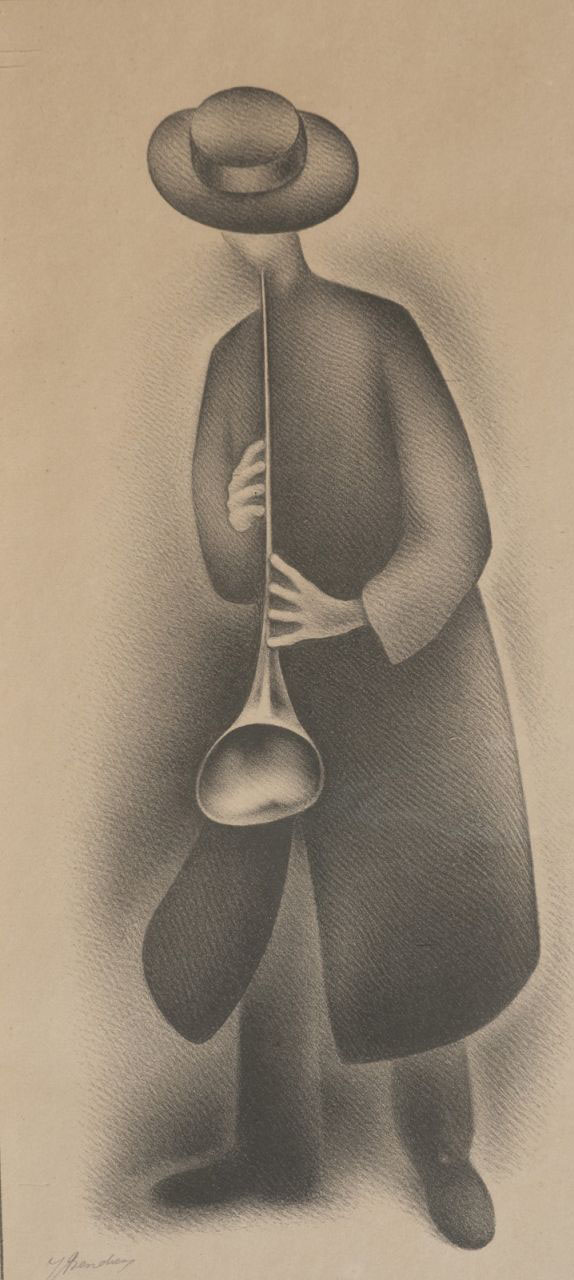
More realist but quite endearing is his Musician lithograph from the early 1920s.

As far as I know the last Bendien exhibition was in Utrecht in 1985. His work is hard to find and rarely offered on sale although if one is lucky one can find his lithographs.

Sander Bink

Previously on { feuilleton }
The art of Henricus Jansen, 1867–1921
The art of Antoon van Welie, 1866–1956
The art of Simon Moulijn, 1866–1948
René Gockinga revisited
Gockinga’s Bacchanal and an unknown portrait of Fritz Klein
More from the Decadent Dutch

Weekend links 463

eye.jpg

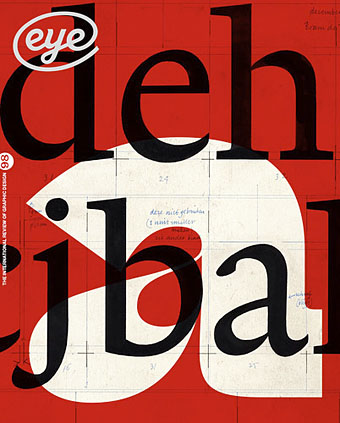
Eye 98: Beatrice Display Black, Sharp Type, 2018, and a detail from an original drawing for Lexicon by Bram de Does, 1989.

Issue 98 of Eye, the international design journal, is out this month. The new issue is a typography special but also features my review of Mark Dery’s Born to be Posthumous: The Eccentric Life and Mysterious Genius of Edward Gorey. This is the second time I’ve written about Dery’s book, with the new piece focusing more on Gorey’s work as a designer/book creator, and his place in the history of illustration.

Portal is a new release by Slovakian metal band Doomas, the artwork of which adapts one of my illustrations for Lovecraft’s Monsters. The band also have a suitably Lovecraftian video.

• Reading recommendations by M. John Harrison: the old (the excellent Rogue Moon by Algis Budrys) and the new (Underland et al).

I first started drawing in my Wake to count the number of rivers mentioned in an episode, one page alone counting 85. Gradually, I would be so moved by a line or a character I would colour them in, the most obvious being the 28 Rainbow girls to the more obscure nebulae, railroad tracks, hidden mythical islands and turn of the century lightships. Themes began to emerge which demanded documentation and always the sad, ecstatic relief of finishing a chapter merited some sort of coloured tribute. By the time I finished four years later, I simply drew a leaf to reflect Joyce’s metaphor on the last page: my leaves have drifted from me. All. But one clings still.

Susie Lopez on Finnegans Wake at 80

• Old ghosts at The Paris Review: a preview of The Spectacle of Illusion by Matthew L. Tompkins.

• At Dangerous Minds: Malcolm McDowell and the making of Lindsay Anderson’s O Lucky Man!

Herbie Hancock: “I felt like I stood on the shoulders of giants and now it’s my turn”.

• Mix of the week: XLR8R Podcast 590 by Christian Löffler.

• The discography of Diamanda Galás is now at Bandcamp.

• RIP Quentin Fiore, graphic designer and book creator.

• At Dennis Cooper’s: Haunted dolls.

Antique Doll (1967) by The Electric Prunes | The Doll’s House (1980) by Landscape | Voodoo Dolly (1981) by Siouxsie And The Banshees

Synapse: The Electronic Music Magazine, 1976–1979

synapse01.jpg

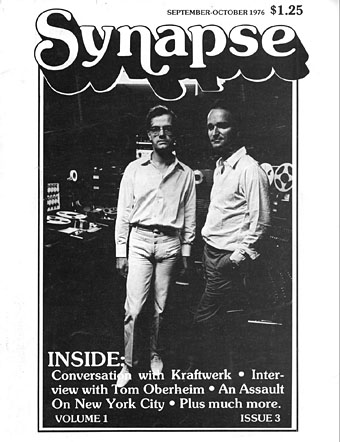
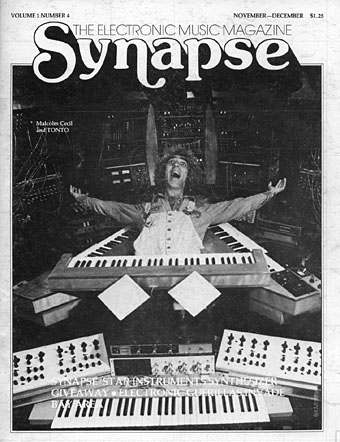
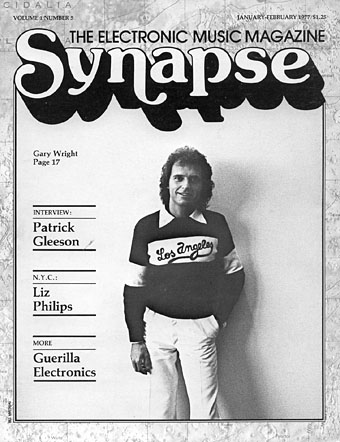
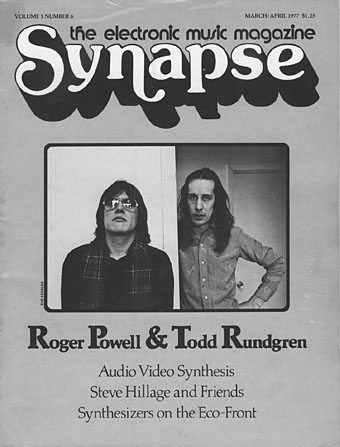
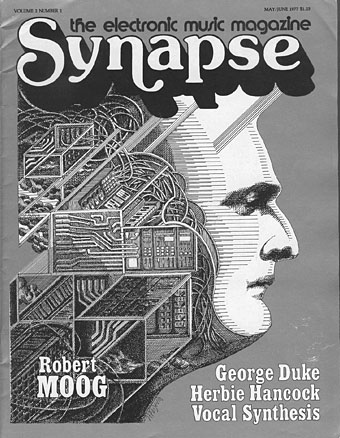
Synapse magazine has been mentioned here before, but only briefly in a weekend post. Looking last week for one of the back issues revealed that the scans of the magazine placed online by the publishers in 2012 have now vanished so this post links to an archive of PDFs at Monoskop. The publishers didn’t have copies of the first two issues so the run begins with issue 3.

synapse02.jpg

Synapse wasn’t around for very long but it’s of great interest for people like myself who have an enthusiasm for the analogue synthesizer music of the 1970s. The magazine was small but managed to secure interviews with major synthesists of the period (and Stockhausen!), as well as lesser-known figures who you wouldn’t expect to see in the general music press. Tangerine Dream and Brian Eno have never been starved of attention but the interviews with Isao Tomita and Michael Hoenig are valuable ones; the latter discusses his earlier career in the Kosmische band Agitation Free as well as his new album, the very Tangerine Dream-like Departure From The Northern Wasteland.

synapse03.jpg

Elsewhere in the magazine there are the usual technical articles that were common in journals of this type (the border between art and engineering in the early synthesizer world used to be as permeable as it was in the first decades of science fiction); and the latest synth-related albums receive reviews, many of which are more equivocal than you might expect. It’s a surprise seeing an album such as Ricochet by Tangerine Dream being treated with scepticism but then the reviewer evidently preferred the recordings of the group’s pre-Virgin period. Likewise, Kraftwerk were featured in the third issue but their Man-Machine album is given the same “Is this the future we really want?” appraisal they used to receive from the rock press.

synapse04.jpg

As always with old magazines, the ads are often as interesting as the editorial, and Synapse is filled with promotional material for a wide range of synth gear, from the major keyboard manufacturers to tiny electronic companies. It’s not every magazine where you can see a full-page command to “Trade in your Mellotron”.

Synapse contents list at Wikipedia

synapse05.jpg

Continue reading “Synapse: The Electronic Music Magazine, 1976–1979”