Holger’s Radio Pictures

Turn the dials with your hand / Till you find the shortwave band

Kraftwerk

The sounds of the radio, especially the distant voices and atmospheric distortions of the shortwave band, were a continual presence in the work of the late Holger Czukay. The Canaxis piece on his first album outside Can (also known today as Canaxis) opens with a series of electronic bleeps reminiscent of (or maybe derived from) radio signals. In Czukay’s later TV appearances with Can he left the bass playing to Rosko Gee, preferring instead to stand at the side of the stage with a collection of radios and tape machines. On one of his first high-profile collaborations of the 1980s, David Sylvian’s Words With The Shaman, he’s credited solely with “radio”. The radio continued to provide source material for his subsequent collaborations and solo albums.

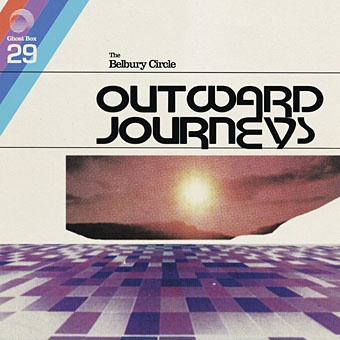
What you have here is my own mix of some favourite Czukay compositions all of which favour radio signals. The title is derived from the two tracks taken from the Full Circle EP, a collaboration between Czukay, Jah Wobble and Jaki Liebezeit; Full Circle and Mystery are both labelled “RPS” or “Radio Picture Series”. Being numbered pieces this has always begged the question of where the other six in the series might be. Now the composer is gone we may never know.

Tracks:
Jah Wobble, Holger Czukay & Jaki Liebezeit—Full Circle R.P.S. (No. 7) (1981)
Holger Czukay—Music In The Air (1987)
Jah Wobble, Holger Czukay & Jaki Liebezeit—Mystery R.P.S. (No. 8) (1981)
Holger Czukay—Radio In An Hourglass (1992)
Holger Czukay—Traum Mal Wieder (1984)
Holger Czukay—Mirage (1999)

Weekend links 366

kashiki.jpg

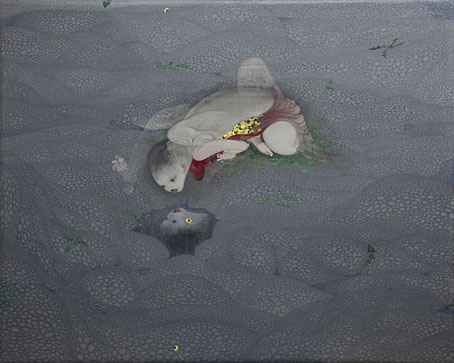
Dandelion (2009) by Tomoko Kashiki.

• “Standard Ebooks takes ebooks from sources like Project Gutenberg, formats and typesets them using a carefully designed and professional-grade style guide, lightly modernizes them, fully proofreads and corrects them, and then builds them to take advantage of state-of-the-art ereader and browser technology.”

Obscenity and the Arts, a previously unpublished essay by Anthony Burgess, will appear in book form later this year via Pariah Press.

• Mixes of the week: VF Mix 97: Talk Talk by The Last Dinosaur, and Secret Thirteen Mix 225 by Janek Schaefer.

Rub any two writers together and similarities will show. No two writers, however different, are completely different. Here’s a crucial instance: Lovecraft and Ballard both put architecture at the heart of their fiction, even though neither had the slightest formal training in the subject. And it is via this interest that the two intersect in an unexpected way. They are connected, through time and space, by that most humble of architectural events: the corner, the junction between two walls. What Lovecraft and Ballard did was to make the corner into a place of nightmares — and in doing so, they reveal its secret history.

Will Wiles in a long and rewarding essay, The Corner of Lovecraft and Ballard

• Dungeons Deep, Forests Dark – A beginner’s guide to Dungeon Synth by Daniel Pietersen.

Alex Ross on Joséphin Péladan, the Symbolists and the occult roots of Modernism.

• Cooling the Tube: engineering heat out of the [London] Underground by IanVisits.

Caroline on the mysteries of Pye Corner: Flames, poltergeists and bodysnatchers.

• The Saint of Sin City – Tony Kail Visits Las Vegas’ Santuario de la Santa Muerte.

• Photographs of Art Nouveau architecture by Keiichi Tahara.

• A stream of the new Porter Ricks album, Anguilla Electrica.

Jasper Sharp on 100 years of Japanese animation.

• At Dennis Cooper’s: 197 clocks.

On The Corner [Take 4] (1972) by Miles Davis | Corner Crew Dub (1976) by Augustus Pablo | Empty Avenues And Dark Corners (Pye Corner Audio Mix) (2013) by John Foxx and the Belbury Circle

Weekend links 359

azuma.jpg

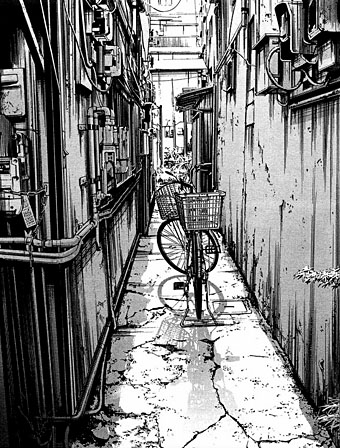
An urban scene from Yotsuba&! by manga artist Kiyohiko Azuma.

• The resurgence of interest in Alice Coltrane’s music is very welcome even if she joins for the moment the list of those artists (usually women: see Leonora Carrington) tagged by editors as “lost”, “forgotten”, “unrecognised”, etc. Alice Coltrane was only ever lost if you weren’t paying attention, and was notable enough fifteen years ago to be given the cover of The Wire magazine. Articles appearing this week have been prompted by a compilation of the devotional music that Coltrane recorded for a series of self-released cassettes in the 1980s. Geeta Dayal writes about the creation of the ashram recordings, while Stewart Smith suggests starting points for new listeners.

• Mentioned here before, but there’s now a page for the book: a new edition of Hashish (1902) by Oscar Schmitz will be published by Wakefield Press in November. “A collection of decadent, interweaving tales of Satanism, eroticism, sadism, cannibalism, necrophilia, and death”, illustrated by Alfred Kubin.

• Mixes of the week: A Dark Entries mix for the 400th issue of The Wire, Procedure, LA, April 25, 2017 by Pinkcourtesyphone, and Secret Thirteen Mix 220, a 4-hour epic by Ricardo Gomez Y De Buck.

• More off-the-beaten-path film lists: Sarah Lyons for Dirge Magazine on three occult documentaries, and Terry Ratchett for Dennis Cooper on 18 needlessly obscured avant-garde films.

• An Island of Peace: James Conway on Amanda DeMarco’s new translation of Walking in Berlin: A Flâneur in the Capital by Franz Hessel.

Ryuichi Sakamoto talks to Aaron Coultate about overcoming cancer, The Revenant and his new album, async.

Ingrid D. Rowland on Caravaggio: The Virtuoso of Compassion.

• “I think I am weirdly politically correct,” says John Waters.

Mnemonic Generator

• Berliner Nächte Part 1 (1990) by Seigen Ono | Berlinerstrasse (1995) by Coco, Steel & Lovebomb | Berlin (1998) by Pole

Weekend links 357

brzezanska.jpg

Ruth St Denis (2010) by Agnieszka Brzezanska.

As Above, So Below: Portals, Visions, Spirits & Mystics is an exhibition of occult-oriented art at IMMA, Dublin. “An alternative history of art of the last century,” says Aidan Dunne.

THIS IS THE SALiVATION ARMY: a Tumblr archive of Scott Treleavan’s queer-pagan-punk zine, 1996–1999.

• Mixes of the week: Secret Thirteen Mix 219 by Paper Dollhouse, and a Mika Vainio Tribute Mix by broken20.

• Valdimar Ásmundsson’s Icelandic translation of Bram Stoker’s Dracula has been translated back to English.

• First evidence for higher state of consciousness found (thanks to psychedelic drugs).

• At Bibliothèque Gay: Narkiss (1908) by Jean Lorrain.

Boyd White on finding Arthur Machen’s bookplate.

Barry Adamson’s favourite albums.

John Waters: By the Book.

Dread: Lustmord in dub.

XXY Oscilloscope

Vampire (1976) by Devon Irons | Keep On Dubbing (1976) by Augustus Pablo | African Dub (1977) by The Silvertones

Weekend links 355

carrington.jpg

Quería ser pájaro (1960) by Leonora Carrington.

• Artist and author Leonora Carrington was born 100 years ago this week. Marina Warner, an advocate of Carrington’s work in the years when the artist was “forgotten” (ie: ignored by those who should have known better), remembered her friend as someone adept at making “visible the invisible”. Elsewhere, Carrington’s centenary was noted by Phantasmaphile (with many links), Strange Flowers and the LRB, the latter being a Leonora Carrington A-Z by Chloe Aridjis.

Geeta Dayal on Ikutaro Kakehashi who died this week. The synthesizers, drum machines, effects units and other gear produced by Kakehashi’s Roland Corporation are inextricably entwined with the development of electronic music in the 1970s and 80s.

• Do we really need a compilation of singles by Can? Not when all the music has been available for years on albums and compilations. Of more interest is Rob Young‘s forthcoming (well…not until next year) biography of the band, All Gates Open.

• Out from Thames & Hudson this week: Vinyl . Album . Cover . Art: The Complete Hipgnosis Catalogue by Aubrey Powell.

• At Dangerous Minds: The Master of Moorcock: The psychedelic sci-fi book covers and art of Bob Haberfield.

Abigail Ward on Queer Noise: the history of LGB music & club culture in Manchester.

FullFathom5, home of “something rich and strange” makes a welcome return.

• At Flickr: Occult Beliefs and Themes in British Popular Culture (1875–1947)

• At I Love Typography: Jamie Clarke on the evolution of chromatic fonts.

• Mix of the week: a mix for The Wire by Patterned Air Recordings.

Invisible Cities (1990) by Invaders Of The Heart | Invisible Architecture (1997) by John Foxx | Invisible (2005) by Monolake