The Quietened Cosmologists

quietened.jpg

It was a coincidence, but the destruction last week of the Cassini probe in the atmosphere of Saturn parallels the theme of the latest music collection from A Year In The Country:

The Quietened Cosmologists is a reflection on space exploration projects that have been abandoned and/or that were never realised, of connected lost or imagined futures and dreams, the intrigue and sometimes melancholia of related derelict sites and technological remnants that lie scattered and forgotten.

It takes as its initial starting points the shape of the future’s past via the discarded British space program of the 1950s to 1970s; the sometimes statuesque and startling derelict artefacts and infrastructure from the Soviet Union’s once far reaching space projects; the way in which manned spaceflight beyond Earth’s orbit/to the moon and the associated sense of a coming space age came to be largely put to one side after the 1969 to 1972 US Apollo flights.

Track list:
1) Field Lines Cartographer — OPS-4
2) Pulselovers — Lonely Puck
3) Magpahi — Chayka
4) Howlround — Night Call, Collect
5) Vic Mars — X-3
6) Unit One — Voyages Of The Moon
7) A Year In The Country — The March Of Progress/Frontier Dreams
8) Keith Seatman — 093A-Prospero
9) Grey Frequency — Phantom Cosmonauts
10) Time Attendant — Adrift
11) Listening Center — Mlécný Perihelion Weekend
12) Polypores — The Amateur Astronomer
13) David Colohan — Landfall At William Creek

The Cassini expedition wasn’t a failed one, of course, but the destruction of the probe (planned from the outset to avoid space-junk wandering the Solar System) is a reminder of the realities of the Space Age, that this is a frontier with the same casualties and ruins as any other. The ruins of Britain’s own contribution to the Space Race—especially those like the abandoned launch-pad at High Down on the Isle of Wight—are all the more poignant for the gulf between their past ambition and present state of decay.

As you might expect, the entries on this collection tend towards the electronic, and there’s even an uptempo synth piece from Keith Seatman whose title—093A-Prospero—is a nod to one of the old British rockets. By way of contrast, David Colohan’s Landfall At William Creek sounds more pastoral unless you know that his title refers to the region of Australia where Britain’s rockets and nuclear missiles were tested during the 1950s and 1960s.

The Quietened Cosmologists will be released on 3rd October, and is available for pre-order now.

Previously on { feuilleton }
Undercurrents
From The Furthest Signals
The Restless Field
The Marks Upon The Land
The Forest / The Wald
The Quietened Bunker
Fractures

Weekend links 378

belbury.jpg

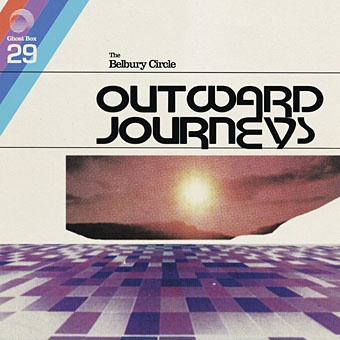
Outward Journeys, which will be released on November 3, is the second album on the Ghost Box label by The Belbury Circle (Belbury Poly with The Advisory Circle). As before, John Foxx is a guest vocalist, and as always, Julian House provides the graphic design.

• Music non-stop: Geeta Dayal in 2012 talking to Rebecca Allen about the challenges of turning Kraftwerk into computer animations.

• At the BFI: Jon Towlson on the sublimity of Close Encounters of the Third Kind; and Stephen King’s favourite films.

Bookogs is the Discogs concept applied to books. Stupid name (Bibliogs would be much better) but there it is.

belbury2.jpg

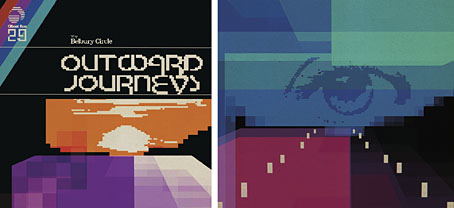
Julian House goes 8-bit. More artwork for The Belbury Circle.

Iain Sinclair‘s farewell to London. Sinclair talked to Alan Moore about his book earlier this month.

• At Dangerous Minds: Paul Gallagher on the occult art of Austin Osman Spare.

• The places where Cold War numbers stations broadcast spies’ secret codes.

• Rodney Brooks on the seven deadly sins of predicting the future of AI.

Nadja Spiegelman on the peculiar poetry of Paris’s Lost and Found.

• At Wormwoodiana: The rise of secondhand bookshops in Britain.

• RIP Grant Hart and Harry Dean Stanton. (And Dirge Magazine.)

• Mix of the week: FACT mix 618 by Tara Jane O’Neil.

• An introduction to Conny Plank in 10 records.

Reoccurring Dreams (1984) by Hüsker Dü | Canción Mixteca (1985) by Ry Cooder | You Don’t Miss Your Water (1993) by Harry Dean Stanton

Weekend links 376

newton.jpg

The House by the Canal (1945) by Algernon Cecil Newton.

• RIP Tobe Hooper. Black Hole Reviews recounts the troubled history of The Texas Chain Saw Massacre in Britain, a film that was given a short-lived cinema release then banned for 20 years. Elsewhere: Who sampled from Tobe Hooper’s films? Tucktonia, a model village whose London buildings were destroyed for Hooper’s Lifeforce.

• Graphic language of the wall: Rick Poynor on Brassaï’s photographs of graffiti for Le Livre de Poche. More Poynor: National Theatre Posters: A Design History is available for pre-order from Unit Editions. There’s more from the latter here.

• “A question of queer as a kind of futurism: an attitude or tendency that connects mid-20th-century performers and photographers to contemporary digital art and fashion.” Brian Dillon reviewing Queer British Art at Tate Britain.

In evolutionary terms, the intelligence of octopuses is an anomaly. The last common ancestor between octopuses on the one hand, and humans and other intelligent animals (monkeys, dolphins, dogs, crows) on the other, was probably a primitive, blind worm-like creature that existed six hundred million years ago. Other creatures that are so evolutionarily distant from humans—lobsters, snails, slugs, clams—rate pretty low on the cognitive scale. But octopuses—and to some extent their cephalopod cousins, cuttlefish and squid—frustrate the neat evolutionary division between clever vertebrates and simple-minded invertebrates. They are sophisticated problem solvers; they learn, and can use tools; and they show a capacity for mimicry, deception and, some think, humour. Just how refined their abilities are is a matter of scientific debate: their very strangeness makes octopuses hard to study. Their intelligence is like ours, and utterly unlike ours. Octopuses are the closest we can come, on earth, to knowing what it might be like to encounter intelligent aliens.

Amia Srinivasan reviewing Other Minds: The Octopus and the Evolution of Intelligent Life by Peter Godfrey-Smith, and The Soul of an Octopus: A Surprising Exploration into the Wonder of Consciousness by Sy Montgomery

Royal Academy of Arts to reveal explicit side of Dalí and Duchamp.

• At Wormwoodiana: Mark Valentine on The Mystic Umbrellas.

Norton Critical Edition’s Periodic Table of Literary Villains.

• Mix of the week: FACT mix 616 by Lanark Artefax.

Virus Fonts has a new website.

Little Umbrellas (1969) by Frank Zappa | Umbrellas (1971) by Weather Report | Black Umbrellas (2003) by Broadcast

Weekend links 372

mognetti.jpg

Battistero della Basilica di Santa Maria Maggiore, Bergamo (2017) by Mattia Mognetti.

• “Mumbo Jumbo: a dazzling classic finally gets the recognition it deserves.” Jonathan McAloon on Ishmael Reed’s unique novel being reissued as a Penguin Modern Classic.

• Amanda Gefter talks to Donald D. Hoffman, professor of cognitive science at the University of California, about “the evolutionary argument against reality”.

• Geeta Dayal on composer Raymond Scott. A new compilation, Three Willow Park, collects more of Scott’s electronic music from the 1960s.

Nagle critiques the follies of campus identity politics and social media liberalism not from the right, but as a left-leaning feminist. As she elucidates point after reasonable point, it feels as if a grown-up has finally entered the room. Like Mark Fisher, the Marxist critic who was savaged by his putative comrades for decrying “the stench of bad conscience and witch-hunting moralism” of the online left, Nagle has no sympathy for Twitter/Tumblr liberalism’s “cult of fragility and victimhood mixed with a vicious culture of group attacks, group shaming, and attempts to destroy the reputations and lives of others”. It is reassuring to find a self-described feminist disdaining the “hysterical” liberal call-out culture, and acknowledging that it has produced “a breeding ground for an online backlash of irreverent mockery and anti-PC”. Without joining the forces of reaction or losing sight of the vileness of the alt-right, she writes of “the deep intellectual rot of contemporary political progressivism”; “the moral self-flattery of … a tired liberal intellectual conformity”; and “the hysteria and faux-politics of liberal Internet culture”.

Rob Doyle reviewing Kill All Normies by Angela Nagle

• Mixes of the week: XLR8R Podcast 501 by Ryan Elliott, and ReMelodiya vol. 1 by Laurent Fairon.

Sumit Paul-Choudhury on the slime mould instruments that make sweet music.

The Wire Salon: an audience with photographer and writer Val Wilmer.

Simon McCallum‘s list of 10 great lesser-known British LGB films.

Zaria Gorvett on the ghostly radio station that no one claims to run.

S. Elizabeth reposted her Coilhouse interview with me from 2010.

• “Boys are selling sex in Japan. Who is buying?” Boys For Sale

• At Spoon & Tamago: Ando Tadao’s Hill of Buddha.

• At Dennis Cooper’s: Gisèle Vienne Day.

Sun Ra is now on Bandcamp.

Shaolin Buddha Finger (1994) by Depth Charge | Atomic Buddha (1998) by Techno Animal | Psycho Buddha (2001) by Acid Mothers Temple & The Melting Paraiso U.F.O.

Weekend links 357

brzezanska.jpg

Ruth St Denis (2010) by Agnieszka Brzezanska.

As Above, So Below: Portals, Visions, Spirits & Mystics is an exhibition of occult-oriented art at IMMA, Dublin. “An alternative history of art of the last century,” says Aidan Dunne.

THIS IS THE SALiVATION ARMY: a Tumblr archive of Scott Treleavan’s queer-pagan-punk zine, 1996–1999.

• Mixes of the week: Secret Thirteen Mix 219 by Paper Dollhouse, and a Mika Vainio Tribute Mix by broken20.

• Valdimar Ásmundsson’s Icelandic translation of Bram Stoker’s Dracula has been translated back to English.

• First evidence for higher state of consciousness found (thanks to psychedelic drugs).

• At Bibliothèque Gay: Narkiss (1908) by Jean Lorrain.

Boyd White on finding Arthur Machen’s bookplate.

Barry Adamson’s favourite albums.

John Waters: By the Book.

Dread: Lustmord in dub.

XXY Oscilloscope

Vampire (1976) by Devon Irons | Keep On Dubbing (1976) by Augustus Pablo | African Dub (1977) by The Silvertones