Weekend links 510

phaseiv.jpg

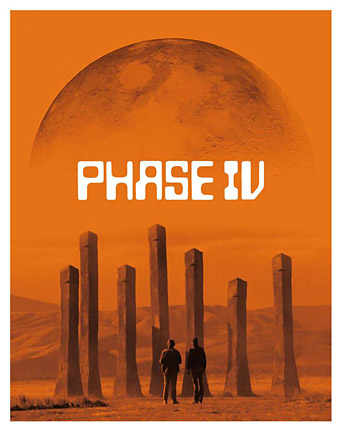
• Saul Bass’s cult science-fiction film, Phase IV, has received a very welcome (Region B) blu-ray release from 101 Films. Everything is a metaphor for the unavoidable just now, but a film about a group of scientists besieged by a tiny and insidious biological threat can’t help but have additional resonance. The new release includes the original (and seldom seen) cosmic ending plus another disc containing several of Bass’s short films. Previously: Directed by Saul Bass.

• Music at the Internet Archive: Live at Metro (2007) by Sora, and three rare cassette releases by French synth-rock duo Fondation: Metamorphoses (1980), Sans Etiquette (1980), and Le Vaisseau Blanc (1983).

• Mixes of the week: a Manu Dibango (RIP) mix from Aquarium Drunkard, and Industrial Synth Rave Isolation Mix by Moon Wiring Club.

We must talk about Nightwood. The novel that sits between those early and late phases of her writing life, the tale of Felix Volkbein, Robin Vote, Dr Matthew-Mighty-Grain-of-Salt-Dante-O’Connor and many others, caught between world wars and each other, in the decadent cities of Europe. The novel follows the journey of Robin Vote, who is more “earth-flesh, fungi, which smells of captured dampness” than person. Sleepwalking through life, she nonetheless wakes up her fellow characters Nora, Felix and Jenny, who each try and pin her down, to no avail. It is a novel that defies synopsis. It is unsurprising that this remarkable book has attracted a “burgeoning body of interpretations”, as Tyrus Miller here notes; yet it seems that there are still new ways to approach it. Julie Taylor offers an affective reading, for example; Joanne Winning concentrates on Nightwood’s collaborative origins, exploring the fruitful and often overlooked creative relationship between Barnes and her partner, Thelma Wood. This is not just a case of considering that relationship as source material for the novel, but unpacking what Winning describes as their “lesbian modernist grotesque”. It is particularly welcome that Winning treats Wood as a silver-point artist in her own right.

Jade French reviews Shattered Objects: Djuna Barnes’s Modernism

• Ben Beaumont-Thomas on where to start with Kraftwerk, and Jennifer Lucy Allan on where to start with Alice Coltrane.

• The BBC’s Culture page discovers Tom of Finland but can’t bring itself to show much of his artwork.

• The art of Asterix: illustrator Albert Uderzo (RIP) at work.

Clive Hicks-Jenkins on “a marvel of clockwork ingenuity”.

• The films Wes Anderson is watching during isolation.

Greydogtales on six more strange tales that linger.

Adrian Searle‘s favourite online art galleries.

• The Ghost Box label is now at Bandcamp.

Twin Flames (Edit) by Lustmord.

• At Dennis Cooper’s: Flamboyant.

Phase By Phase (1976) by Peter Baumann | Phase 3: Agni Detonating Over The Thar Desert… (1995) by Earth | Phase Draft (2003) by Bill Laswell

Double weird

weird1.jpg

Two of the books whose covers I was working on late last year have been announced so here they are. This is more work for PS Publishing where wraparound covers are the standard, so once again I was able to work in a pictorial, landscape format. (PS also do their design in-house so I only did the art this time. Click on the pictures below for larger views.)

weird2.jpg

Apostles of the Weird is a collection of contemporary weird fiction edited by ST Joshi:

Weird fiction is an incredibly rich and varied genre, running the gamut from supernatural horror to imaginary-world fantasy to psychological terror. This anthology seeks to exhibit the wide range of themes, motifs, and imagery that weird fiction allows, as embodied in the work of some of the leading contemporary writers in the field. (more)

“Weird” is indeed a very broad category so rather than try and create something that represented a single genre I opted for a weird view instead. The idea was to do something like Borges’s Library of Babel in a space that was a hybrid of Piranesi and MC Escher. I was hoping originally to make this more Escher-like, with a number of gravity-defying staircases, but the underlying drawing took so long that I didn’t have time.

weird3.jpg

His Own Most Fantastic Creation: Stories About HP Lovecraft is also edited by ST Joshi:

HP Lovecraft (1890–1937), the pioneering writer of weird fiction, has himself become an icon in popular culture. Stories, novels, and other works featuring the gaunt, lantern-jawed gentleman from Providence, Rhode Island, have proliferated. These works have been triggered by the incredible amount of knowledge we have on the writer—his family, his friends, his idiosyncrasies and eccentricities—as found in his thousands of surviving letters. (more)

This was much easier to achieve since HP Lovecraft is familiar territory. The idea here was to do a portrait of Lovecraft situated in a Lovecraftian zone, a colossal idol of a type that might be found in some of his Cyclopean ruins. Lovecraft and his Weird Tales colleagues had a habit of referring to each other in their stories and letters as though they were ancient priests or sorcerers so portraying Lovecraft in this manner is fitting. The combination of perspective and lighting worked against creating an accurate likeness, however—it doesn’t help that Lovecraft’s features are weird in themselves—so the “HPL” icon is there to affirm the identity.

Both books will be published next month if Great Cthulhu hasn’t risen from the depths by then.

Elsewhere on { feuilleton }
The Lovecraft archive

Previously on { feuilleton }
Something from Below

Weekend links 504

maclean.jpg

Eric Burdon and the Animals, Mother Earth, Hour Glass; Fillmore Auditorium, October 19-21, 1967 by Bonnie MacLean.

• RIP Bonnie MacLean, another of the original San Francisco poster artists, and the only woman of note in the US psychedelic poster scene. (Not the only woman, however; in Europe we had Marijke Koger.) Related: Bonnie MacLean’s posters at Wolfgang’s. And RIP to illustrator Tom Adams, an artist whose exceptional covers for novels by Agatha Christie are only one part of a long and varied career.

The Litanies Of Satan (1982), the short but uncompromising debut album by Diamanda Galás, is reissued on Galás’s own label later this month. Further albums from her remarkable back catalogue will follow. Related: video of Galás performing The Litanies Of Satan in 1985.

• “Scorsese is amazed that United Artists didn’t touch one frame of Raging Bull, since it’s the first time in his life as a feature director that this has apparently occurred.” In 1981 Derek Malcolm talked to Martin Scorsese about his reasons for making a boxing picture.

“…in a post-AIDS world, its scenes of mass male-on-male decadence evoke a sense of the spiritual: Not to put so blunt a phrase on it, but the majority of the men we see in Cruising‘s bars would likely die within the next decade, victims of a very heterosexual genocide of neglect. These are blurred, melancholic memories locked forever within Cruising‘s celluloid; a phantasmagoria of men whose liberation was not legislatively delivered, but recovered in the privacy of leather bars and cruising joints. The film’s overt sexuality makes it hard to escape a sense of catastrophic loss.”

Jack King on William Friedkin’s Cruising

• The Pet Shop Boys’ eccentric feature film, It Couldn’t Happen Here (1988), is released on blu-ray and DVD in June. The video for You Were Always On My Mind gives an idea of the contents.

• “Orion being one of the brightest constellations makes it a lot of people’s favourites, and he was my favourite as a kid.” Ben Chasny on his history of stargazing.

• “You think the Holy Grail is lost? No. I have it on my piano.” John Boorman talks to Xan Brooks.

• Laura Cumming on the dark and haunting paintings of Belgian Symbolist Léon Spilliaert.

• Mix of the week: XLR8R Podcast 631 by Ondness.

Alistair Ryder chooses 10 great killer plant films.

Howl by John Foxx And The Maths.

• At Dennis Cooper’s: Gleam.

The Litanies Of Satan (1969) by Ruth White | Grail (1971) by Grail | Plants’ Music (1981) by Ippu-Do

Illustrating Zothique

zothique00.jpg

Cover art by George Barr, 1970.

A few years ago I wrote a short piece about Virgil Finlay’s illustrations for a Zothique story by Clark Ashton Smith, The Garden of Adompha, so this post may be regarded as a more substantial sequel. If Smith remains something of a cult author then Zothique is the pre-eminent cult creation from his career as a writer of weird fiction. Most of Smith’s stories can be grouped together according to their location: Atlantis, Hyperborea, Averoigne in medieval France, the planet Mars, and so on. Zothique was a more original conception than his other worlds, being the last continent on Earth in the final years of the planet, an idea which had precedents in earlier novels such as William Hope Hodgson’s The Night Land but which hadn’t been used before as a setting for a cycle of stories. The distant future suggests science fiction but, as with the Zothique-influenced Dying Earth of Jack Vance, science and technology is long-forgotten and sorcery rules the day. The poetry that Smith wrote before he took to writing short stories had a distinctly Decadent quality—”like a verbal Gustave Moreau painting“—and Zothique is a richly Decadent world, with the entire planet in a state of decay along with its barbarous, demon-worshipping peoples.

zothique01.jpg

Weird Tales, September 1932. Art by T. Wyatt Nelson.

All the Zothique stories had their first printings in Weird Tales, a magazine that ran illustrations with most contributions, but unless you’re a pulp collector many of the illustrations have been difficult to see until very recently. One of the pleasures of looking through fiction magazines is seeing how their stories might have been illustrated when they were first published. Popular tales eventually find their way into book collections but their illustrations tend to be marooned in the titles where they first appeared unless the artist is of sufficient merit to warrant a collection of their own.

zothique02.jpg

Weird Tales, March 1933. Art by Jayem Wilcox.

The examples here are all from recent uploads at the Internet Archive which now has a complete run of Weird Tales from 1923 to 1954. The illustrations also run in order of publication with links to the relevant issues, although I agree with Lin Carter’s ordering of the stories. Smith never organised them himself, and the later reprints from Arkham House and others tend to scatter them through separate volumes. When Lin Carter edited the Zothique collection in 1970 he put the stories into an order that follows the very loose chronology running through the cycle.

zothique06.jpg

Weird Tales, January 1934. Art by Clark Ashton Smith.

One surprise of this search was discovering that Smith himself had provided illustrations for several of the stories. Some Smith enthusiasts like his drawings and paintings but I’m afraid I’m not among them, his sculpture work is better. It’s doubtful that these would have been printed at all if they weren’t the work of the author.

Continue reading “Illustrating Zothique”

Weekend links 498

mead.jpg

The Sentinel 280, a car design by Syd Mead from 1964.

• “Boris Dolgov did not exist. The man who bore that name may have existed, but there never was a man in the United States with that name until 1956, too late for Weird Tales.” Teller of Weird Tales on the mysterious identity of a magazine artist.

• Saying goodbye to 2019 also meant saying farewell to Vaughan Oliver, Neil Innes and Syd Mead. Related: Vaughan Oliver at Discogs; I’m The Urban Spaceman; a look back at Syd Mead’s vehicle designs.

Lanre Bakare on how ambient music became cool. (Again. This begs the question of when it became uncool, especially when a ten-year-old Brian Eno piece about “the death of uncool” is being quoted.)

Westerners interpreted the peyote experience very differently from the practitioners of the peyote religion, where the focus was “ritual, song and prayer, and to dissect one’s private sensations was to miss the point”. Writers such as Havelock Ellis, who published an essay on his peyote experiences in the Lancet in 1897 (it’s likely that he also administered the substance to his friends W.B. Yeats and Arthur Symons), instead tended to focus on its visual effects. Ellis described “the brilliance, delicacy and variety of the colours” and “their lovely and various textures”. Peyote reached Europe in tandem with the X-ray, cinema and electric lights, Jay notes, and “nothing delighted the eye of the mescal eater so much as the new electrical sublime”.

Emily Witt reviewing Mescaline: A Global History of the First Psychedelic by Mike Jay

Peter Bradshaw takes on the thankless task of ranking Federico Fellini’s feature films.

Geoff Manaugh on when Russia and America coöperated to avert a Y2K apocalypse.

• “Music is an ideal medium for interstellar communication,” says Daniel Oberhaus.

Keith Allison on Karel Zeman, a creator of remarkable cinematic fantasies.

•  Japanese Designer New Year’s Cards of 2020.

• At Dennis Cooper’s: Vera Chytilová Day.

2020 in public domain.

Sentinel (1992) by Mike Oldfield | Sentinels (2001) by Cyclobe | Sentinel (2004) by Transglobal Underground