Weekend links 475

brooks.jpg

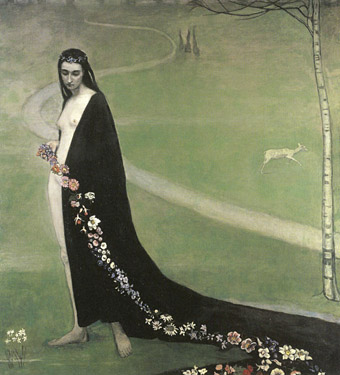
Femme avec des fleurs (c. 1912) by Romaine Brooks.

• “Boring people tend not to exile themselves to rocky islands, but even among the intriguing personalities we encounter in Capri, some individuals prove more extravagantly memorable than others.” Steve Susoyev reviews Pagan Light: Dreams of Freedom and Beauty in Capri by Jamie James.

• “The Mad “idiots” subverted the comic form into a mainstream ideological weapon, aimed at icons of the left and the right—attacking both McCarthyism and the Beat Generation, Nixon and Kennedy, Hollywood and Madison Avenue.” Jordan Orlando on a world without Mad Magazine.

• RIP Sam Gafford, Paul Krassner and Rutger Hauer. Related to the latter: Hauer’s first role as Floris, the hero of a Dutch TV series directed by Paul Verhoeven.

I cannot tell you what it does to me to hear pre-Stonewall. And even in our literature, even in the art, pre-Stonewall, post-Stonewall. I wrote three books pre-Stonewall and a dozen more post-Stonewall. There’s no demarcation. Gay history is centuries and centuries from the Romans to the Greeks to Oscar Wilde to all kinds of outrages. And those seem to be put back and pre-Stonewall is passive. Post-Stonewall is brave and dignified. I actually have heard things like that. I’ve talked, I’ve lectured and I’ve been invited all the way from Harvard to USC. And I talk about what it was like, what we had to survive.

Look, pre-Stonewall produced Allen Ginsberg, William Burroughs, Oscar Wilde, and I could go on. Post-Stonewall produced Bret Easton Ellis, who jumps out of the closet only now and then and then rushes back in, and Queer Eye for the Straight Guy, where we’re reduced to clowns for straight people. The husband of Mr. Buttigieg, he is so darling talking about the silver he’s going to be choosing for the White House. It embarrasses me, it embarrasses me very much because that’s what people expect a gay man to do, to be very precious, and that’s not what we are. A good solid queen I will protect forever, they are heroes.

A lot of people think that everything stopped, everything, all harassment stopped. Look, it’s still going on. It’s still going on, for god’s sake. The same tactics are often used in a different way.

John Rechy talking to Jason McGahan

• The genius of Barry Adamson: An exclusive interview by Paul Gallagher at Dangerous Minds.

Three hours of the Prophecy Theme from Dune (by Brian Eno with Daniel Lanois & Roger Eno).

Ed Sanders on why pop culture still can’t get enough of Charles Manson.

• Havelock Ellis takes a trip: Mike Jay on peyote among the Aesthetes.

Darren Anderson on why little works of architecture deserve respect.

• Mix of the week: Stephen O’Malley presents / Java / Apr 27 2017.

Phil Hine reviews Folk Horror Revival: Urban Wyrd 1 & 2.

John Waters revisits “The Golden Age of Monkey Art”.

I Must Be Mad (1966) by The Craig | The Day My Pad Went Mad (1982) by John Cooper Clarke | Yesterday, When I Was Mad (1993) by Pet Shop Boys

Weekend links 473

spectra.jpg

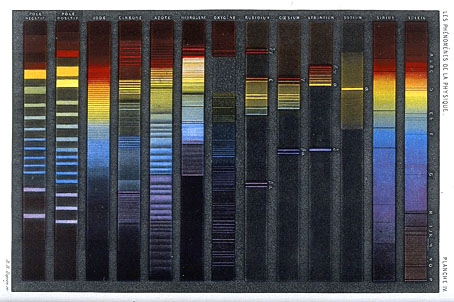
“Spectra of various light sources, solar, stellar, metallic, gaseous, electric”, print by René Henri Digeon; plate IV in Les phénomènes de la physique (1868).

• More polari: Thom Cuell this time with another review of Fabulosa!: The Story of Polari by Paul Baker. Good as it is to see these articles, one thing they all share is paying tribute to the polari-enriched radio series Round the Horne without crediting its writers, Barry Took and Marty Feldman.

• “…with its conspiracy theories, babbling demagogues and demonised minorities, Bahr’s investigation is sadly all too relevant today.” Antisemitism (1894) by Hermann Bahr, is the latest new translation from Rixdorf Editions.

Isao Tomita in 1978 showing a presenter from NHK around his tiny studio. Japanese-only but the discussion reveals that the words “synthesizer”, “tape recorder” and “mixer” sound the same as they do in English.

Ben Frost talks to Patrick Clarke about his music for German TV series, Dark.

• PYUR composes a guide through limbo with Oratorio For The Underworld.

• Steven Heller on Don Wall’s book design for a Paolo Soleri retrospective.

• Coming soon from Fulgur Press: Ira Cohen: Into the Mylar Chamber.

Will Harris compiles an oral history of Q: The Winged Serpent.

• Mix of the week: a mix for The Wire by Overlook.

• At Dennis Cooper’s: Magic Shop Internationale.

Shadow In Twilight by Pram.

The Feathered Serpent Of The Aztecs (1960) by Les Baxter | The Serpent (In Quicksilver) (1981) by Harold Budd | Black Jewelled Serpent Of Sound (1986) by The Dukes Of Stratosphear

Weekend links 471

maclean.jpg

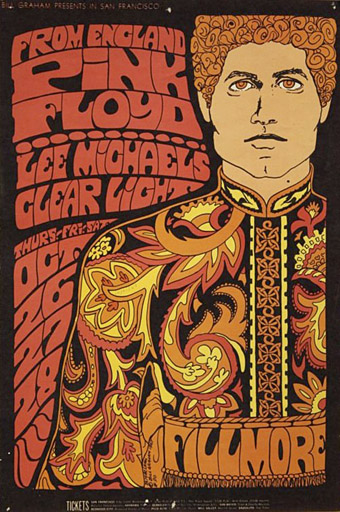
Pink Floyd, Lee Michaels, Clear Light (1967) by Bonnie MacLean.

• Electronic musician Mort Garson has been subject to a revival of interest recently, with reissues of his works as Ataraxia (The Unexplained), and Lucifer (Black Mass). The latest reissue is Mother Earth’s Plantasia (1976), an album released under Garson’s own name, and one of several works of plant mysticism from the 1970s (see Stevie Wonder’s Journey Through The Secret Life Of Plants, and Green by Steve Hillage).

• “It is striking how much of this work sounds like a missing link from the art world to the popular groups of the time, such as the Detroit techno pioneers Cybotron and the Japanese electro legends Yellow Magic Orchestra.” Geeta Dayal on the reconfigured Speak & Spell machinery of Paul DeMarinis.

The cost of free love and the designers who bore it: Madeleine Morley meets the women of psychedelic design.

For the transhumanist anarchist Wilson, the neurological relativism revealed by his own learning and personal deprogramming experiments called for a form of ‘guerrilla ontology’ that lampooned, rejected and transmitted much needed interference into the ‘reality tunnels’ that attempt to control much of contemporary society and individual behaviour. In the Schrödinger’s Cat Trilogy, characters are repeatedly placed in positions of cognitive dissonance, where they are forced to reevaluate their own belief systems due to experiences that they are unable to accommodate.

Sean Kitching on the 40th anniversary of Robert Anton Wilson’s Schrödinger’s Cat Trilogy

• They said books were dead, they were wrong: Adrian Shaughnessy on a decade of Unit Editions.

• Mixes of the week: Xianedelica by Jesús Bacalão, and Kosmische Mix By Tarotplane.

• Swinging 60s surrealist Penny Slinger: “Collectors thought I came with the art”.

• Cabaret Voltaire: Chance Versus Causality (Teaser).

Luc Sante on postcards of American violence.

• At Dennis Cooper’s: Peter Whitehead Day.

Computerwelt (1981) by Kraftwerk | Speak And Spell (1984) by Christina Kubisch | Time Space Transmat (1985) by Model 500

Weekend links 469

X.jpg

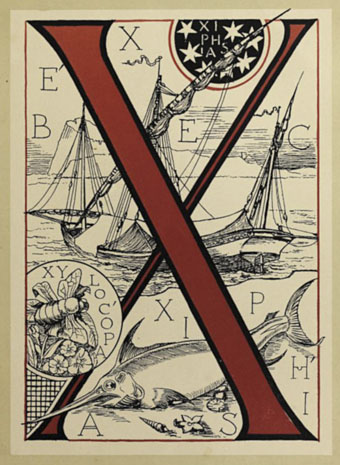
X from Theodore Howard’s ABC (1880) by Theodore Howard.

• “[Parade] has everything: joy and sadness, get-down and wistfulness, mourning and melancholia, group funk and Debussy interludes, echoes of Ellington, Joni, film music, chanson. It’s a perfectly realised whole.” Ian Penman on the enigmas and pleasures of Prince.

• “Mescaline reads like the culmination of a lifetime’s wanderings in the very farthest outposts of scientific and medical history.” Ian Sansom review’s Mike Jay’s history of the psychedelic alkaloid.

• The Day the Music Burned by Jody Rosen: “It was the biggest disaster in the history of the music business—and almost nobody knew. This is the story of the 2008 Universal fire.”

This willing constriction of intellectual freedom will do lasting damage. It corrupts the ability to think clearly, and it undermines both culture and progress. Good art doesn’t come from wokeness, and social problems starved of debate can’t find real solutions. “Nothing is gained by teaching a parrot a new word,” Orwell wrote in 1946. “What is needed is the right to print what one believes to be true, without having to fear bullying or blackmail from any side.” Not much has changed since the 1940s. The will to power still passes through hatred on the right and virtue on the left.

George Packer on what George Orwell’s Nineteen Eighty-Four means today

• Having spent the past week watching Jacques Rivette’s 775-minute Out 1, this interview with Rivette from 1974 was of particular interest.

• At Dangerous Minds: Donald Sutherland as “a sperm-filled waxwork with the eyes of a masturbator” in Fellini’s Casanova.

The Adventures of the Son of Exploding Sausage (1969): the Bonzo Dog Band getting it untogether in the country.

• Dark, velvety dark: Nabokov’s discarded ending to Camera Obscura, introduced by Olga Voronina.

• “Spotify pursues emotional surveillance for global profit”, says Liz Pelly.

• Mix of the week: Then Space Began To Toll by The Ephemeral Man.

• An interview with master of horror manga Junji Ito.

• Announcing the Arthur Machen Essay Prizes.

• RIP film-maker and author Peter Whitehead.

X is for…

X Offender (1976) by Blondie | X-Factor (1981) by Patrick Cowley | X-Flies (1997) by Mouse On Mars

Weekend links 465

palladini.jpg

The Star (1970) from The Aquarian Tarot by David Palladini.

• Artist David Palladini died in March but I only heard the news this week. His poster for Werner Herzog’s Nosferatu has been a favourite of mine ever since the film’s release, while some of his other works have featured here in the past. Still popular among Tarot users is the Aquarian Tarot (1970), a deck published a few years after Palladini had helped with the production of the Linweave Tarot. From the same period as the Aquarian deck is a set of Zodiac posters, all of which exhibit Palladini’s distinctive blend of Art Nouveau and Deco stylings. In addition to posters, Palladini produced book covers and illustrations, and even a few record covers. A book collecting all of this work would be very welcome.

Erotikus: A History of the Gay Movies (1974? 75? 78?): Fred Halsted presents a 90-minute history of American gay porn, from the earliest beefcake films to the hardcore of the 1970s, some of which Halsted also helped create. Related: Centurians of Rome [sic]: Ashley West and April Hall on the bank robber who made the most expensive gay porno of all time.

Peter Bradshaw reviews Too Old to Die Young, a Nicolas Winding Refn TV series described as “a supernatural noir”. Sign me up.

Naomi Wolf’s Outrages establishes the context for [John Addington] Symonds’s desperate efforts to justify his own sexual feelings. Since he was born in 1840, he was 15 when the first edition of Walt Whitman’s Leaves of Grass appeared, the same year that legislation in Britain streamlined the laws against sodomy and ensured that men found guilty of it served long prison sentences. With intelligence and flair, Wolf uses the various responses to Whitman to show the levels of intense need in the decades after the publication of Leaves of Grass for images and books that would rescue homosexuality from increasing public disapproval.

Colm Tóibín reviews Outrages: Sex, Censorship and the Criminalisation of Love by Naomi Wolf

• Record label Dark Entries has discovered 40 more reels (!) of music by Patrick Cowley dating from 1974 to 1979.

• “Is Stockhausen’s Licht the most bonkers operatic spectacle ever?” asks Robert Barry.

• Sex, Spunk, Shoes and Sweet Satisfaction: A Q&A with artist Cary Kwok.

• Tripping his brains out: Eric Bulson on Michel Foucault and LSD.

• Paul O’Callaghan chooses 10 best Dennis Hopper performances.

• “More obscene than De Sade.” Luc Sante on the fotonovela.

• Karl Blossfeldt’s Urformen der Kunst (1928).

• The Strange World of…Gong

Neonlicht (1978) by Kraftwerk | Brüder Des Schattens, Söhne Des Lichtes (1978) by Popol Vuh | Lichtfest (2017) by ToiToiToi