Weekend links 365

brunovsky.jpg

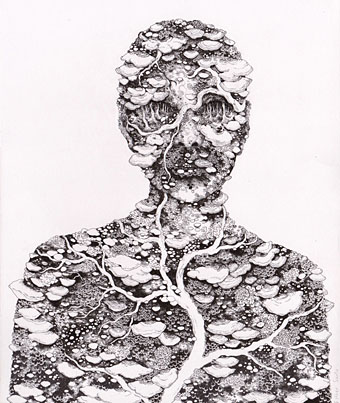
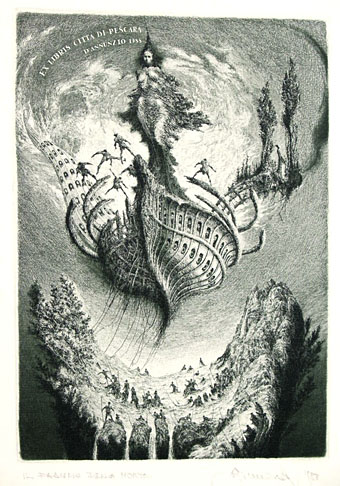
Il Fascino Della Morte (1988) by Albin Brunovsky.

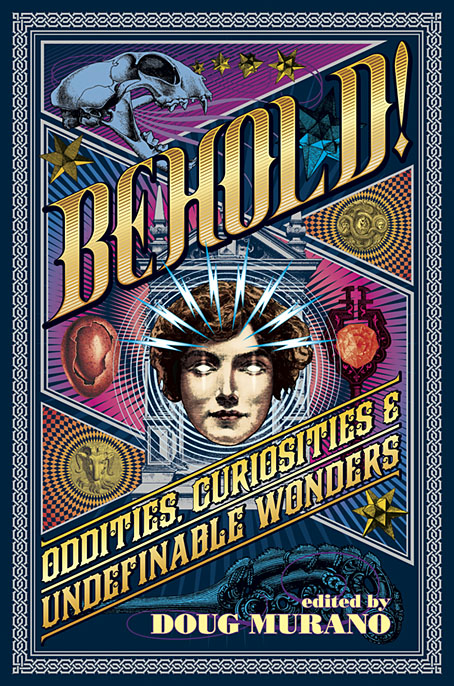
• One of the forthcoming books featuring my cover art is Behold! Oddities, Curiosities, & Undefinable Wonders, a story collection due to be published next month by Crystal Lake Publishing. Bleeding Cool talked to editor Doug Murano about the collection and its contributors.

Six episodes of Tom Keating on Painters, a TV series from 1983 presented by Britain’s most well-known art forger. In six further episodes Keating examines the work of the Impressionists and Post-Impressionists.

• Opening at the Guggenheim, NYC, at the end of this month: Mystical Symbolism: The Salon de la Rose+Croix in Paris, 1892–1897.

The most potent form of gatekeeping is religion. When certain beliefs are deemed sacred, they are put beyond questioning. To challenge such beliefs is to commit blasphemy. The accusation of cultural appropriation is a secular version of the charge of blasphemy. It’s the insistence that certain beliefs and images are so important to particular cultures that they may not appropriated by others.

In Defence of Cultural Appropriation by Kenan Malik

• Mixes of the week: FACT Mix 605 by Anthony Parasole, and Secret Thirteen Mix 224 by Fanny Kaplan.

• Artist Tom Phillips at 80: “I’m still reading books. Nothing changes and everything changes.”

Negative Chambers is a new album by Yair Elazar Glotman and Mats Erlandsson.

• “Pornhub is the Kinsey Report of our time,” says Maureen O’Connor.

• “Postmodernism is dead. What comes next?” asks Alison Gibbons.

Cat Street View

Mystic Eyes (1965) by Them | Mystical Dream (1965) by The Roland Kirk Quartet | Mystic Green (1985) by Rain Parade

Weekend links 362

yoshi47.jpg

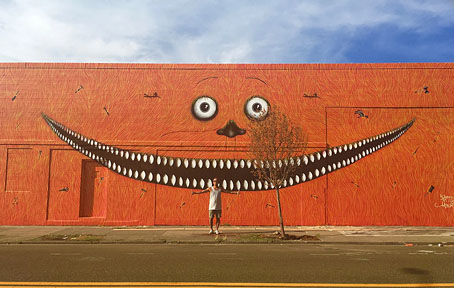
A mural for Forest For The Trees, 2016, by Yoshi47.

• “Who’s the real cunt?” Andrew O’Hagan on the Daily Mail‘s hypocrisies, Little England bigotries and omni-outrage in a review of Mail Men: The Unauthorised Story of the ‘Daily Mail’, the Paper that Divided and Conquered Britain by Adrian Addison.

Deutschlandspiegel 198/1971: a short film at the German Federal Archive which includes footage of Popol Vuh (still in their electronic phase) six minutes in.

• A meeting of remarkable minds: a live radio discussion between Annea Lockwood and Pauline Oliveros from December 1972.

The House In The Woods (aka Martin Jenkins of Pye Corner Audio) at Rare Air, Seattle, 14th May 2017.

• “Peaceful but not to be messed with.” Tony Naylor on how the bee came to symbolise Manchester.

• Mixes of the week: FACT Mix 602 by Deathprod, and Secret Thirteen Mix 222 by Yuji Kondo.

Emptyset and Mouse On Mars’s Jan St Werner on space, time and the evolution of sound.

• At Indiegogo, a funding call for Subotnick: Portrait of an Electronic Music Pioneer.

Shannon Taggart’s Camera Fantastica: an interview by Peter Bebergal.

Study finds mushrooms are the safest recreational drug.

Mary Anne Hobbs‘ favourite albums.

Bumble Bee Bolero (1957) by Harry Breuer | Bee Stings (1998) by Coil | The Bees Made Honey In The Lion’s Skull (2008) by Earth

Weekend links 354

diment.jpg

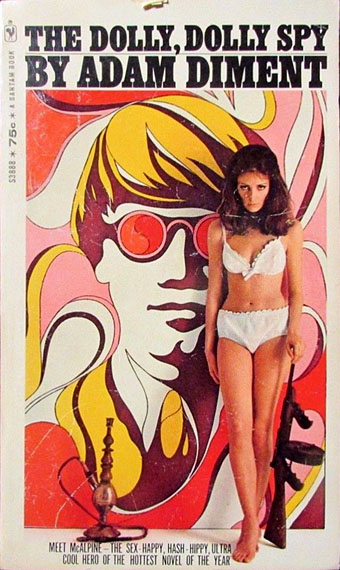
The Dolly, Dolly Spy (1968).

• As mentioned previously, Concrete Desert is a musical collaboration between The Bug (Kevin Martin) and Earth’s Dylan Carlson inspired, they say, by Los Angeles and the fiction of JG Ballard. Martin & Carlson talked to Patrick Clarke at The Quietus about the album’s creation. Elsewhere, Kevin Martin compiled a list for Bleep of ten musical influences on the album, and Dylan Carlson had a Fireside Chat with Red Bull Music.

• Phil Legard of Xenis Emputae Travelling Band and Hawthonn has released a new EP, Hesperian Garden, featuring compositions derived from the Monas Hieroglyphica of John Dee.

• More Ballard: Mike Holliday maps the evolution of Crash, a novel which is published in a new “Collector’s Edition” by Fourth Estate next week.

Teleplasmiste “bridge the oscillation gap from deep listening ambient music and the heaviest of doomy drones,” says Richard Fontenoy.

David Barnett on Adam Diment, “the superstar spy novelist who vanished for four decades”.

• The queer art underground of 1980s London as photographed by David Gwinnutt.

A sculpture of a Buddhist deity made from 20,000 beetles.

• Mix of the week: XLR8R Podcast 483 by Jane Fitz.

• RIP Gilbert Baker, designer of the rainbow flag.

• Rubber Dolly Rag (1930) by Uncle Bud Landress with Georgia Yellow Hammers | Voodoo Dolly (1981) by Siouxsie and the Banshees | Cosmic Funky Dolly (2003) by Acid Mothers Temple & The Melting Paraiso U.F.O.

Weekend links 353

tuke.jpg

The Critics (1927) by Henry Scott Tuke.

• Geeta Dayal talks to ambient musician Midori Takada about Through The Looking-Glass (1983), an album being reissued this month by Palto Flats/We Release Whatever The Fuck We Want Records.

Jacob Brogan reviews The Abominable Mr. Seabrook by Joe Ollmann, a graphic biography of writer, occultist, explorer and determined cannibal, William Seabrook.

• More from the usual suspects (on these pages at least): Jonathan Meades on his new cookbook and a recent bout of heart surgery; and Iain Sinclair on The Last London.

The law only applied to men, but that didn’t mean same-sex relationships between women were immune to opprobrium. Dorothy Todd was hired as the editor of British Vogue in 1922. Under her visionary stewardship, the magazine became a bastion of high modernist style, swapping petticoats and corsets for Picasso, Cocteau, Man Ray and Woolf. Todd lived with her lover, the fashion editor Madge Garland. Sacked in 1926 because of declining circulation, she planned to sue the magazine, but was silenced when the publisher Condé Nast threatened to publicly expose her “morals”.

In such an inimical climate, it’s not surprising that art became a zone of enchantment as well as resistance. The plenitude of camp aesthetics, the lush excess, the cross-pollination of high and low forms might be conceived as a direct response to the paucity and hostility of the culture at large. From the mannered decadence of Aubrey Beardsley’s naughty woodcuts, to Cecil Beaton’s portraits of Stephen Tennant as a radiant boy prince, to the cabaret high jinks of Danny La Rue, to the wickedly doctored library book covers made by the playwright Joe Orton (a crime for which he received a jail sentence), camp offered a way of remaking the world, cutting it down to size and reassembling it in richly strange and strangely rich new forms.

Olivia Lang on the British artists working in defiance of iniquitous laws prior to the (partial) decriminalisation of homosexual acts in 1967.

• Due for publication later this year, You Should Come With Me Now, a new collection of short fiction by M. John Harrison.

Daniel Marner reviews Scarred For Life Volume One: The 70s, a book about the dark side of British pop culture.

Jay Babcock talks to Erik Davis about the end of Arthur magazine and his new life in the Californian desert.

• The nature photography of Nobuyuki Kobayashi and the ruin photography of Gina Soden.

Jon Forss of design team Non-Format on his time designing The Wire magazine.

Mac McClelland on how doctors treat mental illness with psychedelic drugs.

• Mix of the week: Secret Thirteen Mix 216 by WSR.

Hisham Matar on Jorge Luis Borges.

London Boys (1976) by T. Rex | Last Train To London (1979) by Electric Light Orchestra | London (2004) by Patrick Wolf

Weekend links 352

taggart.jpg

Table-Tipping Workshop at Rev. Jane’s House, Erie, Pennsylvania, 2014 by Shannon Taggart.

• Canadian electronic musician Sarah Davachi talks to Erik Davis about analogue synthesizers, reverberating cathedrals, attention spans, and her ambient drone album All My Circles Run.

• Orson Welles’ The Other Side of the Wind may now be released by Netflix. (I’m restraining my excitement for the moment since this one has been a long time arriving.)

• Mixes of the week: VF Mix 86: Jah Shaka by Roly Porter, Secret Thirteen Mix 215 by Twins, and What Good Is God? (1:11:11.111 Melon Collie Mix) by Gregg Hermetech.

• Making sense of The Weird and the Eerie: Roger Luckhurst reviews the final book from the late Mark Fisher.

• Pye Corner Audio has been very productive this year (I’m not complaining); the latest release is The Spiral.

• “I don’t like acceptance,” says Cosi Fanni Tutti, “it makes me think I’ve done something wrong.”

• Jon Brooks on the Continental inspiration for his next album, Autres Directions.

Séance: Spiritualist Ritual and the Search for Ectoplasm by Shannon Taggart.

• Corny and clichéd: Matthew Bown on bad painting in the twentieth century.

• At Wormwoodiana: Douglas A. Anderson on Borges and a forgotten book.

• At the BFI: Samuel Wigley chooses 10 great films set in the jungle.

Jungle Flower (1951) by Les Baxter | Jungle Fever (1973) by The Upsetters | The Jungle Dream (1973–1980) by Patrick Cowley