Weekend links 129

proffer.jpg

Daughters of Maternal Impression by Arabella Proffer.

A genre’s landscape should be littered with used tropes half-visible through their own smoke & surrounded by salvage artists with welding sets, otherwise it isn’t a genre at all.

M. John Harrison, incisive as ever, on what he memorably labels “Pink Slime Fiction”. Elsewhere (and at much greater length) Cowardice, Laziness and Irony: How Science Fiction Lost the Future by Jonathan McCalmont, and a two-part Paul Kincaid interview here and here.

• “Once upon a time, in almost every city, many rivers flowed. Why did they disappear? How? And could we see them again? This documentary tries to find answers by meeting visionary urban thinkers, activists and artists from around the world.” A trailer for Lost Rivers, written and directed by Caroline Bâcle. Related (and mentioned here before), London’s Lost Rivers: A Walker’s Guide by Tom Bolton.

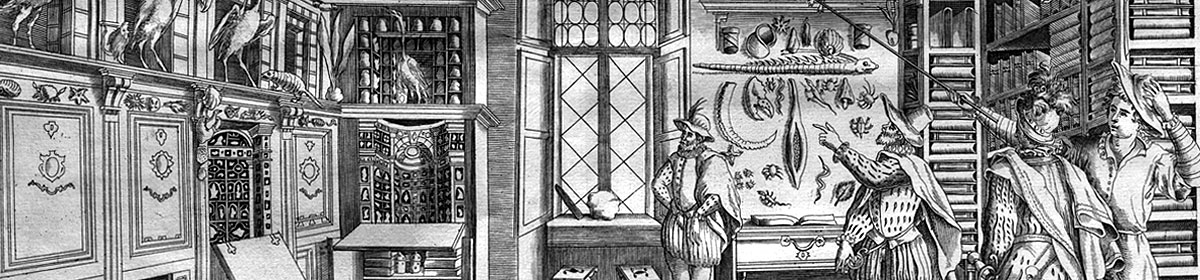
Ghosts in the Machine: “Curated by Massimiliano Gioni and Gary Carrion-Murayari, a recent exhibition was imagined as a Wunderkammer simultaneously tracing and questioning the relationship between people and technology.” And in Istanbul a Wunderkammer of a different kind: Rick Poynor looks at Orhan Pamuk’s Museum of Innocence.

• “There’s a vast territory still to be explored…” Bristol duo Emptyset (James Ginzburg & Paul Purgas), many of whose releases I’ve designed, talk about their music. Tracks from their new EP on the Raster-Noton label can be heard here. You’re going to need bigger speakers.

• “I liked doing it one time but I don’t want to become the gay porn soundtrack guy.” Ben Chasny of Six Organs of Admittance talking to Sir Richard Bishop about one of his more unusual commissions.

durham.jpg

Double Vision (2009) by Bonnie Durham.

FACT mix 349: Silent Servant puts together a great selection of music old and new with the emphasis on the grit of the early Industrial era.

• Read Joyce’s Ulysses line by line, for the next 22 years, with Frank Delaney’s podcast.

Borges and the Plain Sense of Things, an article from 2006 by Gabriel Josipovici.

Clive Hicks-Jenkins on Equus and seeing your inspirations come full circle.

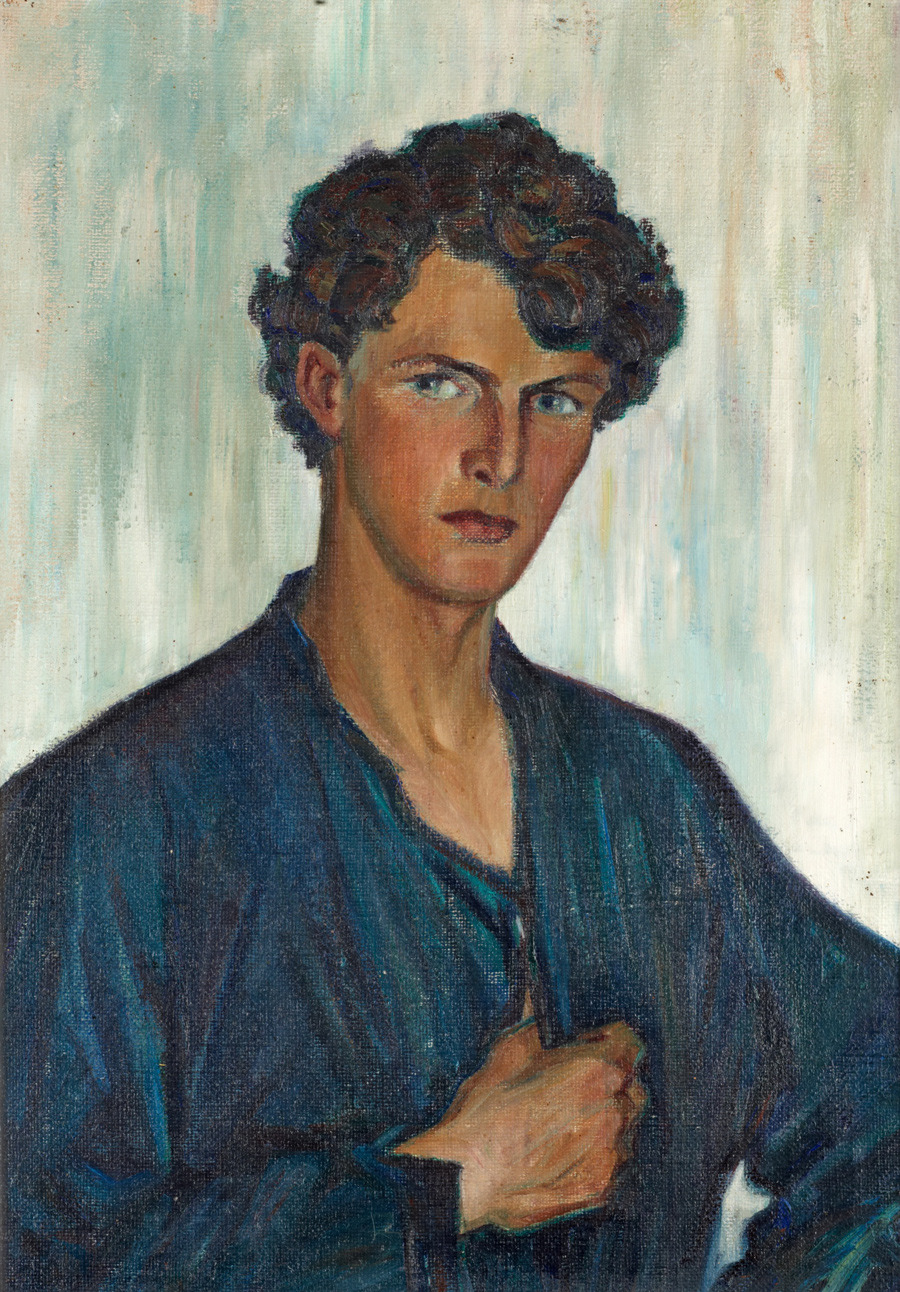
• At Pinterest: A few nice paintings of men

Spunk [arts] magazine

Derelict London

• Ritualistic Bug Use (2009) by Pink Skull | Demiurge Variations (2012) by Emptyset | Utopian Disaster (End) (2012) by Silent Servant.

The art of Guido Reni, 1575–1642

reni01.jpg

Atalanta and Hippomenes (c. 1612).

More golden apples appear in this painting by Guido Reni, not the most famous ones in art history—those would be all the Apples of Discord seen in the various Judgements of Paris—these are the fruit of the sacred tree in the Garden of the Hesperides which Hippomenes drops to prevent Atalanta from beating him in a race. The object of interest here isn’t the apples but the near-naked male, a favourite subject for Baroque artist Guido Reni whose work strikes viewers today as significantly homoerotic. This interpretation is by no means a recent one: Oscar Wilde was famously smitten with Reni’s depiction of Saint Sebastian (below) when he saw the painting in Genoa; in the 20th century the same painting (or one of Reni’s other Sebastians) excited the 12-year-old protagonist in Yukio Mishima’s novel Confessions of a Mask. Here’s what GLBTQ has to say about Reni:

Given the fierce homophobia prevailing in Europe during the Baroque era, historians seeking to reconstruct the lifestyles and works of queer artists often have to depend upon undocumented anecdotes and innuendoes.

Utilizing this type of evidence (including rumors about his supposed disdain of women, his possible romantic involvement with his long-time assistant, his interest in cross-dressing, and his “delicate” mannerisms), recent scholars interpret Guido Reni (1575–1642) as a gay artist.

The disdain of women is referred to in an earlier account, as are other pertinent details:

He was accustomed to paint with his mantle about him, gathered gracefully over his left arm. His pupils, of whom he had a great number—at one period no less than eighty, drawn from nearly every nation of Europe—vied with each other to serve him, esteeming themselves fortunate to have opportunities to clean his brushes or to prepare his palette. He had no dearth of models in the multitude of youths and disciples which surrounded him; but all that Guido cared of them was to refresh his memory by viewing their limbs and torsos, and after that he could adjust them and correct their imperfections.

In the same way any head sufficed him for a model. Being once besought by Count Aldovrandi to confide in him who the lady was of whom he availed himself in drawing his beautiful Madonnas and Magdalens, he made his color-grinder, a fellow of scoundrelly visage, sit down, and commanding him to look upward, drew from him such a marvelous head of a saint that it seemed as if it had been done by magic. Better than any other artist he understood how to portray upturned faces, and boasted that he knew a hundred ways of making heads with their eyes lifted to heaven. He often declared that his favorite, models were the ‘Venus of Medici’ and the wonderful heads in the Niobe group.

He was always in great fear of sorcery and poisoning, and for that reason could not endure women in his house, abhorring to have any dealings with them, and, when such were unavoidable, hurrying them through as rapidly as possible. Old women were his especial detestation, and he always fled from them, and lamented grievously if one of them should appear when he was about beginning or closing some commission.

From Guido Reni (1903)

That’s one way of either justifying your misogyny or explaining to the neighbours why your house is full of young men with no women.

reni10.jpg

Saint Sebastian (1615).

Speculation about the sexuality of artists from past centuries seldom leads anywhere but it can be a fun parlour game, provided you take accounts like the one above with a pinch of salt. In Reni’s case you’d have to point to the many paintings where a religious subject is used as the merest pretext for some shirtless male pulchritude. This was a common ploy in other areas of art: landscape painting evolved as a genre in its own right when post-Renaissance artists began to shrink the religious figures who were the ostensible subject of their commissions into the corner of a field or the shadows of a valley; the imagination could be given free rein by the expedient of painting an apocalypse or a Temptation of St Anthony.

Reni lets loose his temperament by returning to a range of religious subjects that happen to feature attractive youths. Even his picture of Sacred Love defeating Profane Love (below) shows a divine figure who seems to represent more of the libido than the subject should require. Elsewhere he follows Caravaggio with a youthful John the Baptist preaching in the wilderness in an almost total state of nature. Reni’s angels are some of the most androgynous figures you’ll find in Baroque painting; the model for his very girlish Archangel Gabriel also appears as Jesus in another painting, raising a somewhat scandalous implication as to the real paternity of Christ.

reni07.jpg

David with the Head of Goliath (1605).

The following selection of paintings is a prejudiced choice, of course. Some of these can be seen at a much larger size at the Google Art Project. Frivolous speculation aside, at his best Reni could be very good indeed as in this superb portrait of Saint Matthew with another androgynous angel. It’s no surprise to read that his work was in great demand throughout his life.

Continue reading “The art of Guido Reni, 1575–1642”

Tentacles #1: The Boats of the ‘Glen Carrig’

boats-1945.jpg

Famous Fantastic Mysteries, June 1945. Illustration by Lawrence (Sterne Stevens).

Following last week’s revelation of Lovecraftian horror, I thought it might be worth demonstrating just how much the tentacle-menacing-a-ship scenario is owned by William Hope Hodgson. The Boats of the ‘Glen Carrig’ (1907) is one of Hodgson’s lesser novels, overshadowed by the cosmic horrors of The House on the Borderland and The Night Land, but it’s a memorable work all the same. The narrative fits into his cycle of Sargasso Sea stories: a small band of 18th-century sailors, survivors of the wreck of the ‘Glen Carrig’, drift across the Atlantic into the weed-strewn “cemetery of the oceans” where they have to fight off giant octopuses and the predations of “weed men”, humanoid creatures with tentacular hands. As will be seen below, it’s the attack on a wrecked ship trapped in the weed that many of the illustrators have chosen to focus on.

tideless-1911.jpg

Illustration by Lawson Wood (1911).

This was something I hadn’t seen before: an illustration for a story with a scenario very similar to ‘Glen Carrig’ where the sailors journey under canvas in their lifeboats. Another tale of the sinister Sargasso:

This is the fifth message that I have sent abroad over the loathsome surface of this vast Weed-World, praying that it may come to the open sea ere the lifting power of my fire-balloon be gone, and yet, if it come there, how shall I be the better for it? Yet write I must, or go mad, and so I choose to write, though feeling as I write that no living creature, save it be some giant octopus that lives in the weed about me, will ever see the thing I write. (more)

boats-1971-1.jpg

Les Canots du “Glen Carrig” / La Maison au bord du monde / Les pirates fantômes (1971). Illustration by Philippe Druillet.

A French Hodgson collection, the octopoid cover of which can be seen here. These were the endpapers; the rest of Druillet’s illustrations can be seen here.

Continue reading “Tentacles #1: The Boats of the ‘Glen Carrig’”

Weekend links 125

cme.jpg

Coronal Mass Ejection from the surface of the Sun, August 31st, 2012.

• “Most of the main parts were recorded in a single day using Vangelis’s famous technique: try to play as many synths as possible at once.” Simon Drax on the prolific musical output of Zali Krishna. The new Krishna opus is Bremsstrahlung Sommerwind, free to download at the Internet Archive.

• The Northants International Comics Expo (N.I.C.E.) opens on September 22nd. Among the many attendees there will be Mr Alan Moore making his first convention appearance since 1987.

• “Isolated for one night in a boat overlooking the Thames, Geoff Dyer explores representations of reality through the lens of Joseph Conrad’s Heart of Darkness.”

Now seems the right time to revisit this secret archive of public broadcasting. It’s an antidote to the celebrity-led, format-driven nature of so many arts documentaries made today. It shows that it’s possible to produce TV that is both populist and experimental. And it also refutes the cliché that the 1970s was a decade only of crisis and downturn. “Feminism, political theatre, Ways of Seeing: I wasn’t thinking, ‘what a terrible time’. It was very dynamic, activist, political. Creatively it was very exciting. Yet all they show on those television retrospectives are episodes of Top of the Pops.”

Sukhdev Sandhu talks to Mike Dibb, the director of Ways of Seeing.

• From 1999: Colm Tóibín reviews A History of Gay Literature: The Male Tradition by Gregory Woods.

What We See: a song by Julia Holter & Nite Jewel with a film by Delaney Bishop & Jose Wolff.

Rick Poynor on The crash test dummy: from subcultural fringes to pop culture mainstream.

In his 1973 book on Joyce, Joysprick, Burgess made a provocative distinction between what he calls the “A” novelist and the “B” novelist: the A novelist is interested in plot, character and psychological insight, whereas the B novelist is interested, above all, in the play of words. The most famous B novel is Finnegans Wake, which Nabokov aptly described as “a cold pudding of a book, a persistent snore in the next room.” The B novel, as a genre, is now utterly defunct; and A Clockwork Orange may be its only long-term survivor.

Martin Amis on A Clockwork Orange, fifty years on. My old post about the film’s record shop scene continues to be one of the most popular pages here.

• Wild Boys: David Bowie and William Burroughs in 1974, hand-coloured by DB.

Alfred Kubin‘s illustrations for Haschisch (1902) by Oscar AH Schmitz.

• Revolution off: industrial ruins photographed by Thomas Jorion.

• Tetrahedra of Space: 22 pulp illustrations by Frank R. Paul.

The Blue Boy Studiolo: a Tumblr.

Marina Warner visits Hell.

• The art of Casey Weldon.

RainyMood.com

Third Stone From The Sun (1967) by The Jimi Hendrix Experience | Sunrise In The Third System (1971) by Tangerine Dream | 3rd From The Sun (1982) by Chrome.

Three stages of Icarus

icarus1.jpg

Daedalus and Icarus (1615–1625) by Anthony van Dyck.

The story of the doomed youth as seen via the few Icarus works at the Google Art Project. Brueghel’s famous painting is absent, unfortunately, so I won’t quote the equally famous lines by Auden either. Van Dyck gives us a golden-haired twink that Auden might approve of although I seem to recall the poet preferred rougher trade. No indication as to how those wings are supposed to function when they don’t seem to be attached to anything. The father points ominously skyward while the boy already knows where he’s headed.


icarus2.jpg

Icarus (1655) by Artus Quellinus.

Artus Quellinus was a Flemish sculptor whose work is a deliberate harking back to Classical antecedents.


icarus3.jpg

The Lament for Icarus (1898) by Herbert Draper.

Herbert Draper has been dismissed for years as a late-Victorian kitsch-monger, far too academic to be worthy of consideration. Since I often feel an affection for anything that upsets art critics I rather like his brand of fin-de-siècle soft porn. Many artists of the period at least varied their output often enough to avoid accusations of unseemly interests. Not so Draper, whose oeuvre runs the gamut of wet mythological females: naiads, sirens, kelpies, mermaids, etc. Even with dead Icarus as a subject he has to throw in a naiad or three. Van Dyck’s twink has transmuted here into a muscular hunk; he’d need to be strong to wield those colossal wings. Interesting to see from the study below that the figure was developed considerably from the original model. The study is also a better piece of draughtsmanship than the painting where the right arm seems wrong somehow, and the legs appear to be melting down the rock on which he’s beached. Barry Windsor Smith produced a variation on the theme in the 1980s that may have been inspired by the Draper, something he called Self-Portrait with Wings.

icarus4.jpg

Study for Icarus (1898) by Herbert Draper.

Previously on { feuilleton }
The end of Orpheus