Weekend links 531

miller.jpg

Cover art by Ian Miller, 1979.

• Ray Bradbury was born 100 years ago today. Emily Temple expresses surprise that Truman Capote encouraged the publication of a Bradbury short story at Mademoiselle in 1946. I’m more surprised that Bradbury was paid $400 for his work; no wonder he was so eager to write for the non-genre magazines. Elsewhere: Ray Bradbury—The Illustrated Man: the BBC’s Omnibus arts strand profiled Bradbury in 1980 with enthusiastic assistance (narrating/reading/performing) from the man himself; Ray Bradbury book and magazine covers at Flickr.

Anna Smith asks whether Linda Fiorentino was the greatest femme fatale ever in The Last Seduction (1994). A substantial claim, especially for a neo-noir playing so self-consciously with the theme, but it’s a very good film, and one I’d like to see again.

• “Bad as a work of art, and morally bad…” Vladimir Nabokov’s Lolita being reviewed by Kingsley Amis, a writer who preferred the peerless prose and stainless morals of Ian Fleming. Dan Sheehan looks at other contemporary reactions to Nabokov’s novel.

• At Dennis Cooper’s: Mary Ellen Bute Day, and (how could I avoid it?) ClicketyClack presents…Brothers Quay Day.

• More from The Art of the Occult: S. Elizabeth offers a glimpse of the contents of her forthcoming book.

• Make the letter bigger: John Boardley on the development of the illuminated capital.

• In 1987 Anne Billson talked to Nicolas Roeg about his latest film, Castaway.

• Five controversial arthouse features from Japanese filmmaker Sion Sono.

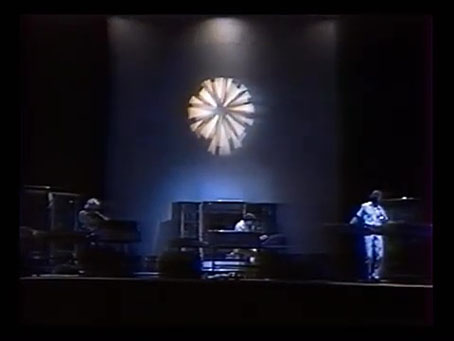
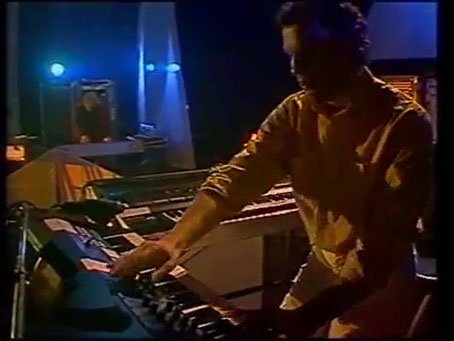
• It’s that group again: Joe Banks on the strange world of Hawkwind.

C82: Works of Nicholas Rougeux.

Fahrenheit 451 (1982) by Hawkwind | Something Wicked This Way Comes (1996) by Barry Adamson | The Martian Chronicles (2007) by Dimension X

Recoil and Cabaret Voltaire

recoil1.jpg

Since it was announced this week that Cabaret Voltaire will release a new album in November, here’s a short Cabs-related film that used to be impossible to see. A Sheffield art student, Nick Allday, made Recoil in 1981 as part of his course work, and managed to persuade Cabaret Voltaire to create a soundtrack:

The concept originated with raw material of video feedback and some sparse nuclear bomb footage available at the time. The idea was to represent in abstract form the cruel chaotic dysfunctional nature of the human condition with all its potential for self destruction. It was conceived as a manifestation of wretched anger, fury, and regret. (more)

Very typical of the early 1980s, in other words. The film was mentioned in a few of the group’s interviews around this time, and was also screened before some of their performances, but it otherwise remained a mystery until the footage was rediscovered and restored a few years ago. The copy of Recoil at Vimeo was uploaded by the organiser of the Gofundme launched to pay for the restoration, revealing music that sounds like an outtake from Red Mecca. (According to the post linked above this was mostly the work of Stephen Mallinder rather than the group as a whole.) And having written about Last and First Men a couple of days ago, it’s worth mentioning that Chris Watson, who was still a member of Cabaret Voltaire in 1981, recorded the natural sounds for Jóhann Jóhannsson’s film.

recoil2.jpg

As to the forthcoming album, Shadow Of Fear, I’m not the only person who finds everything credited to the group since Plasticity (1992) to be barely distinguishable from many of Richard Kirk’s solo works. Stephen Mallinder seems to be present in name only on these albums which makes you wonder what there is about a CV release that differs from a Kirk release, especially when the preview track, Vasto, sounds like more of the same. The real shadow of fear is the worry that a worthwhile project is being perpetuated for no good reason.

Previously on { feuilleton }
Pow-Wow by Stephen Mallinder
TV Wipeout revisited
Doublevision Presents Cabaret Voltaire
Just the ticket: Cabaret Voltaire
European Rendezvous by CTI
TV Wipeout
Seven Songs by 23 Skidoo
Elemental 7 by CTI
The Crackdown by Cabaret Voltaire
Neville Brody and Fetish Records

Last and First Men

johannsson1.jpg

“Existence has always been precarious. At any stage of its career, humanity might have been exterminated by some slight alteration to its chemical environment, by a more than usually malignant microbe, by a radical change of climate, by the manifold effects of its own folly.”

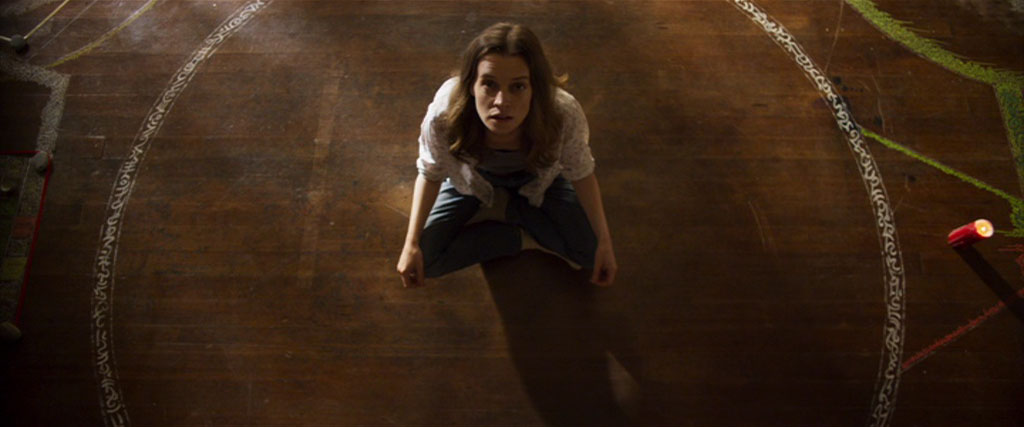
I loved this, but then it had several points immediately in its favour: a late work by Jóhann Jóhannsson (with a superb score written in collaboration with Yair Elazar Glotman); a study of the concrete memorials from the former Yugoslavia known as spomeniks; narration by Tilda Swinton; and science fiction that isn’t more tiresome Hollywood space opera. Olaf Stapledon’s novel was published in 1930 but it took until 2017 for it to reach a cinema screen when Jóhannsson’s film was premiered at the Manchester International Festival. The film is not only the first adaptation of the novel but also the first film based on any of Stapledon’s novels. Last and First Men and Star Maker (1937) have inspired many notable writers but the philosophical nature of Stapledon’s work combined with the colossal spans of time he deals with make his novels resistant to adaptation by popular narrative forms. Jóhannsson’s film is very small-scale—mostly black-and-white, and shot on grainy 16mm—but it demonstrates how a work that those with greater resources might consider unfilmable can be turned into a substantial drama. The technique of using narration to connect disparate images is a familiar one from documentaries but is less common in fiction cinema despite its flexibility and convenience, especially for low-budget films such as this.

johannsson2.jpg

Tilda Swinton’s voice is that of a spokesperson for “the Eighteenth Men”, a terminal evolution of the human species 2,000 million years in the future. The last humans now live on the planet Neptune, a forced relocation after the expansion of the Sun has made the inner planets of the solar system uninhabitable. Swinton’s unidentified messenger is speaking to us, “the First Men”, describing some of the history that awaits while also warning of an impending and inescapable cataclysm. This is the last section of Stapledon’s novel, the previous chapters of which relate the intervening aeons between our time and the distant future. While the voice informs us about humanity’s fate we contemplate the enigmatic spomeniks, filmed in close-up or at a distance, in bright sunlight or shrouded in mist. What connection there is between the narration and the concrete structures is for the viewer to decide, there are few points of direct correspondence. The combination of strange architectural forms with a vast, invented history had me thinking of At the Mountains of Madness by HP Lovecraft, although in Lovecraft’s story the stellar evolution is an alien one which human beings discover. The congruence is reinforced by Lovecraft’s enthusiasm for Stapledon’s novel which he called “a thing of unparalleled power“. It should be noted, however, that Jóhannsson never suggests that the monuments are anything other than what they are.

johannsson3.jpg

Roger Luckhurst’s Sight & Sound review of the film included questions about the use of the spomeniks, while elsewhere Owen Hatherley has expressed concern about the fetishising of memorials and structures that mark sites of wartime massacre. Stapledon’s novel explores the continuity of human endeavour in all its best and worst aspects; warfare and strife remain persistent problems, so Jóhannsson’s roaming views may be taken as signposts to the future as much as remembrances of the past. There’s also one significant detail that many critics will be unaware of (and which Luckhurst does acknowledge): the first part of the novel is titled “Balkan Europe”, and the opening chapters describe the wars that ravage the Earth throughout the 21st century, wars which have their root in the very conflicts that the spomeniks record. Stapledon’s future history was an attempt to consider the ways in which humanity might overcome its worst impulses. Beyond this, the concrete structures also stand as simple markers of the passage of time; many of the monuments are now weathered and eroded, blained with lichens and besieged by weeds. Humanity may live long enough to resolve its own internal conflicts but its creations, whatever they represent, face a continual struggle against the universal process of entropy.

johannsson4.jpg

Jóhannsson’s film is available in a digipak release from Deutsche Grammophon which packages a blu-ray disc with a CD of the score. This is now a memorial to its creator so the sombre livery seems appropriate: the last major work we’ll have from a remarkable, much-missed artist.

Further reading: The Spomenik Database.

Weekend links 530

yoshino.jpg

Kami #58 -bloom- (2019) by Momo Yoshino.

• “Set amid the countryside and the beaches of coastal Sussex, They depicts a world in which plundering bands of philistines prowl England destroying art, books, sculpture, musical instruments and scores, punishing those artistically and intellectually inclined outliers who refuse to abide by this new mob rule.” Lucy Scholes on They: A Sequence of Unease (1977) by Kay Dick, which she calls “a lost dystopian masterpiece”. This is revelatory in a minor way since for years I’ve remembered seeing a slim volume with the title They in a bookshop, and which I later thought might have been a Rudyard Kipling book (there’s a Kipling story with the same title). The timing is right, the sighting would have been in 1977 or 78. The combination of that short, one-word title with a stark cover image and a sinister description on the rear was hard to forget but I didn’t take note of the author’s name. (I also didn’t buy the book, opting instead for some inferior work.) A shame that it seems to be resolutely out of print.

• “The threat to civil liberties goes way beyond ‘cancel culture’,” says Leigh Phillips. It makes a change seeing this coming from Jacobin when so much of the left today can find nothing wrong with censorship so long as it’s in a good cause. (Every censor that ever lived believed they were acting in a good cause, were on “the right side of history”, etc, etc.) The piece includes a dismissal of the increasingly common riposte that “only the state can censor”: this would be news to my colleagues at Savoy Books who endured years of police harassment including the seizure and destruction of printed material; the same with the long history of police action against UK rap artists. Related: “Work that’s cancelled for being ‘of its time’ was probably objected to, at the time.” Dorian Lynskey on chronocentrism and “the narcissism of the present”.

• “Cruising baths, bars, and subway toilets, snorting poppers and ‘fist fucking with 40 guys for 14 hours’ (as he recalled in You Got to Burn to Shine, his 1993 collection of prose and poems), he found meaning in a religion of radical eros whose sacrament was anonymous sex.” Mark Dery reviewing Great Demon Kings: A Memoir of Poetry, Sex, Art, Death, and Enlightenment by John Giorno.

Aubrey Powell says his best photograph is the burning man from the cover of Wish You Were Here by Pink Floyd.

• Mixes of the week: Fact mix 770 by Lyra Pramuk, and mr.K’s Kooky Kuts Vol.4 by radioShirley & mr.K.

• The Alchemical Brothers: Brian Eno & Roger Eno interviewed by Wyndham Wallace.

• Origami-inspired optical illusion oil paintings by Momo Yoshino.

Alexander Larman on the demise of the second-hand bookshop.

• New music: Follow The Road by Yumah, and Röschen by Pole.

• At Dennis Cooper’s: Lighting.

• RIP Linda Manz.

My Boyfriend’s Back (1963) by The Angels | Carnival of the Animals, R. 125: VII. The Aquarium (Camille Saint-Saëns) (1975) by the Württemberg Chamber Orchestra, Heilbronn with Marylene Dosse & Anne Petit, conducted by Jörg Faerber | Kill All Hippies (2000) by Primal Scream

Weekend links 529

hiroshige.jpg

Naruto Whirlpool, Awa Province, from the series Views of Famous Places in the Sixty-Odd Provinces (c. 1853) by Hiroshige.

• Eric Margolis: “Yukio Mishima may have gone out in an inglorious blaze in 1970, but three of his previously untranslated works have been released in the English-speaking world in the last two years, with another on the way.” The forthcoming novel is Mishima’s only venture into science fiction (!), A Beautiful Star. The book was filmed by Daihachi Yoshida in 2017.

• “[Ace in the Hole] did well in Europe but not here, perhaps because Americans expected a cocktail and felt I was giving them a shot of vinegar instead.” Billy Wilder discussing his career with Charles Higham in 1967.

• Mixes of the week: All these things invisible by The Ephemeral Man, and Secret Thirteen Mix 306 by Yogev Freilichman.

“So I got a phone number for Vangelis, he was living in Paris and I went there and called him up. He said (affects a gruff Greek accent) ‘Hello’, I said, ‘My name’s Jon Anderson’. He said ‘What?’ I said, ‘I’m in a band called Yes’, he said, ‘Are you a singer? Well, come over’, so I went over. There was this big guy with a long kaftan on and a bow and arrow around his shoulder. I got into his palatial apartment near the Champs-Élysées and there’s quite a long hallway down to his living room, and there’s a little old man there sitting by the TV. Vangelis takes out his bow and sends this arrow down the hallway and it goes right through the window, because the window was open. I said, ‘Vangelis, you could have killed somebody’, he said, ‘Oh, don’t worry, I’m Greek’. I said, ‘I know you’re Greek, but come on’.”

Jon Anderson talking to Duncan Seaman about his first encounters with Vangelis

Tarot cards though the ages; examples from a new book on the subject published by Taschen.

The Suspended Vocation again: Ryan Ruby on Pierre Klossowski, “Brilliant Brother of Balthus”.

• Secret Sound podcast #17 is devoted to The Galaxy of Turiya aka Alice Coltrane.

• At Dennis Cooper’s: Shaye Saint John Day.

Kenneth Anger smiles!

Make Me Smile (Come Up And See Me) (1975) by Steve Harley and Cockney Rebel | Uncertain Smile (1983) by The The | Fleeting Smile (1988) by Roger Eno