Weekend links 716

poynter.jpg

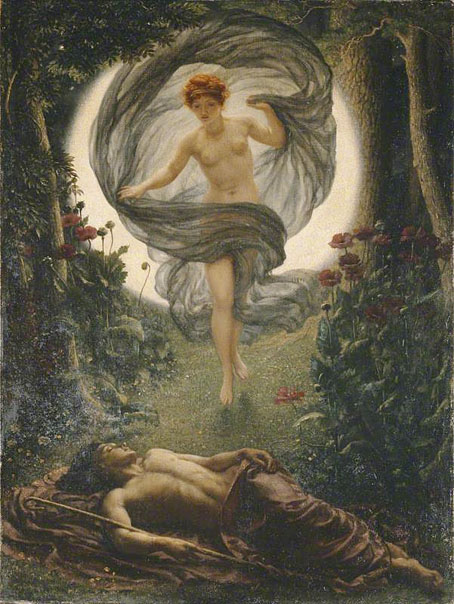
The Vision of Endymion (1902) by Edward John Poynter.

• The Art and History of Lettering Comics by Todd Klein. Eight of the pages in the forthcoming Moon & Serpent book have been lettered by Todd.

• At Igloomag: Chang Terhune looks for music to help you sleep. No mention of an obvious (and superior) candidate, Sleep by Max Richter.

• New music: Ghosted II by Oren Ambarchi, Johan Berthling and Andreas Werliin; and The Ship by David Shea.

But unlike macroscopic drugs like cannabis, LSD is so small and so powerful that its consumption almost always requires an inert housing—the water, tablets, sugar cubes, bits of string, or pieces of paper that transport the drug from manufacturer to tripper. In the law, this vehicle is described as the “carrier medium,” an object impregnated with drugs, one that can be sold, seized, presented as evidence, and dissolved into the hearts, minds, and guts of consumers.

When you print images onto a paper carrier medium, you are adding another layer of mediation to an already loopy transmission. Hence, a meta medium, a liminal genre of print culture that dissolves the boundaries between a postage stamp, a ticket, a bubble gum card, and the communion host. This makes blotter a central if barely recognized artifact of psychedelic print culture, alongside rock posters and underground newspapers and comix, but with the extra ouroboric weirdness that it is designed to be ingested, to disappear. Blotter is the most ephemeral of all psychedelic ephemera. It is produced to be eaten, to blur the divide between object and subject, dissolving material signs and molecules into a phenomenological upsurge of sensory, poetic, and cognitive immediacy.

Erik Davis, in an extract from Blotter: The Untold Story of an Acid Medium

• At Wormwoodiana: John Howard on The London Adventure, or, The Art of Wandering by Arthur Machen.

• At Unquiet Things: Hidden Marvels on Your Bookshelf: The Artistic Legacy of Laurence Schwinger.

• “Some intelligent civilizations will be trapped on their worlds”. Evan Gough explains.

• At Vinyl Factory: The Latin-American women of 20th-century electronic music.

• At Dennis Cooper’s: Steve Erickson presents A Black Psychedelia Primer Day.

• At Public Domain Review: Animated Putty by Walter R. Booth.

• Vinita Joshi’s favourite music.

• Sleepy Theory (1982) by Weekend | Sleep 3 (1995) by Paul Schütze | Sleep Games (2012) by Pye Corner Audio


The Werewolf of Anarchy

werewolf.jpg

Synchronicity is as universal as gravity. When you start looking you find it everywhere.

Thus Discordian anarchist Stella Maris, making her first appearance in my re-reading of Illuminatus! (previously) in a week when more synchronicities related to the novel have been imposing themselves. “The Werewolf of Anarchy” (published on the 23rd of the month, of course) was a picture that turned up a couple of days ago when I was searching through the back issues of Punch magazine. Punch did a lot of this kind of thing, dropping the humour now and then for some heavy-handed pictorial comment about international affairs. Given my current reading the word “anarchy” was bound to catch my attention but the werewolf image is unusual—why not a regular wolf?—while being further bound to the novel via Robert Anton Wilson’s fondness for Lon Chaney Jr’s lycanthrope. I often wondered why Wilson used to refer to this as much as he did. Illuminatus! mentions the werewolf legend from the first Universal film in its grab-bag of cultural weirdness, and I seem to recall there being more references in Wilson’s later novels. In the 1980s Wilson was living in Ireland where he wrote a werewolf-themed song with a local band, The Golden Horde, one of the few (only?) Irish groups who can be counted as part of the fleeting psychedelic revival that took place in the middle of the decade. The Golden Horde’s first album, The Chocolate Biscuit Conspiracy, appeared in 1985, and ends with Lawrence Talbot Suite, a number which is “explained” with the following words: “Lon Chaney Jr, The Easter Bunny, The primeval sleeve note, red curtain, the stings, a crush-can dominates a scowling buddha”. Whatever that means.

hillage.jpg

Meanwhile, my RSS feed informs me that Pentagrams Of Discordia have just released a new album whose final number bears the title Planetary Radiation (RAW); Robert Anton Wilson turns up again at the end of the track to talk about Chaos Theory in relation to Discordian history. And the above item arrived in the mail this week, a two-disc CD release of a newly-discovered live recording of Steve Hillage and band performing at the Bataclan in 1979. I own a lot of live Hillage albums, along with all his studio recordings, and this is one of the very best. The concert is pertinent for including an early rendition of New Age Synthesis (Unzipping The Zype), a song that made its first appearance in 1979 on the studio side of Live Herald, and which contains what may be the first reference to Illuminatus! in song form (the album sleeve includes thanks “to Robert Anton Wilson for his intriguing books”). Hillage offered an explanation of the studio songs’ lyrics in his own mysterious sleeve note:

For those who find the lingo a bit strange—“unzipping the zype” can be defined as (rising organ music please!):—the spontaneous inner exorcism by which a person can neutralise the harmful, consciousness-distorting effects of the artificial elemental spirits (zypes) formed around each word of everyday language.

The zypes are built up by the identification process by which we manufacture “reality.” Occultists refer to them as “astral glamour,” yogis as “the web of Maya”—but no word is zype-proof, not even zype. Cherish this phrase—it’s a royal flush!

Hmm, okay… No indication there or in the lyrics as to how you go about “unzipping the zype”. New Age Synthesis is a call-and-response between Hillage and partner Miquette Giraudy in which Hillage recounts his experience with the zypes. In the first verse he mentions “word spirits” to which Giraudy replies “Egregores!”, an occult concept which—quelle surprise—has connections to Chaos Magic. In the next verse Hillage blames the existence of the word spirits on the Illuminati—”Paranoia!” responds Giraudy—only to discard this claim in the lines that follow: “It isn’t really them at all, but you and me”. Hillage’s albums of the 1970s are filled with all manner of New Age business—flying saucers, ley lines, mysticism of various kinds—but he isn’t a David Icke. Why werewolves? What zypes? Mysteries abound. This is a great album, anyway, in or out of the Synchronicity Zone.

Previously on { feuilleton }
• Ewige Blumenkraft
• Twinkle, twinkle little stars

Weekend links 715

hugo.jpg

Portrait d’Arthur Rimbaud (1933) by Valentine Hugo.

• Among the new titles at Standard Ebooks, the home of free, high-quality, public-domain texts: At the Mountains of Madness by HP Lovecraft.

• Retro-Forteana is “Andrew May’s Forteana Blog, focusing on the weirder fringes of history (and other old-fashioned stuff)”.

• Mixes of the week Bill Laswell Mix No. 7: The Return of Celluloid by Voice of Cassandre, and Isolatedmix 126 by Saphileaum.

• At Bajo el Signo de Libra: The second part of a look at photographs by Herbert List of Italians and Italian life.

• New music: Worship: Bernard Herrmann Tribute by The Lord, and Cursory Asperses by Celer.

• At Wormwoodiana: Mark Valentine on the joy of obscure journals.

• At Dennis Cooper’s: Paul Clipson Day.

• Persher’s favourite music.

• At The Mountains Of Madness (1968) by HP Lovecraft | Mountains Of The Moon (2002) by Jah Wobble And Temple Of Sound | Mountains Crave (2012) by Anna von Hausswolff

Weekend links 714

agar.jpg

An Exceptional Occurrence (1950) by Eileen Agar.

• New music: The Endless Echo by Pye Corner Audio, coming soon from Ghost Box. PCA continue to fly the flag for the original Ghost Box mission of bringing various forms of weirdness to electronic music. The new album “draws inspiration from scientific and science-fictional notions about the nature of time and the idea that it may be entirely unreal”. Over at Bandcamp there’s Here by Stefano Guzzetti and Ian Hawgood.

• “Powell and Pressburger emerge from this film, more than ever, as sui generis: inventors of their own kind of film, gentleman amateurs of cinema in some ways…” Peter Bradshaw reviewing Martin Scorsese’s Made in England: The Films of Powell and Pressburger.

• Velocity and Creation, a pair of short films by Vadim Sherbakov made with magnets, glitter and inks. The scores are too bombastic but I like the visuals.

Art is for increasing life. That, I believe, after all the other purposes receive their due, is really what it’s for—why we revere it, why we give our hearts to it. What do I mean by increasing life? How can we live more, given that we can’t live longer? Through attention and intensity. Being fully present to the world, and feeling without reservation: the two things that making art requires and that experiencing it involves.

William Deresiewicz on thirteen ways of looking at art

• Modern Illustration is a project by illustrator Zara Picken, featuring print artefacts from her extensive personal collection.

• Mix of the week: Aquarium Drunkard presents Pulp Jazz: Twenty-First Century Groove Music. Great stuff.

• At Public Domain Review: Tales of the Catfish God: Earthquakes in Japanese Woodblock Prints.

• At The Quietus: Jonathan Meades interviews Saint Leonard. And vice versa.

• At Dennis Cooper’s: Michelangelo Antonioni Day.

• The Strange World of…Bill Laswell.

• Creation (1971) by Arthur Brown’s Kingdom Come | Création Du Monde (1971) by Vangelis | Creation (1977) by Tangerine Dream

On Babaluma

babaluma.jpg

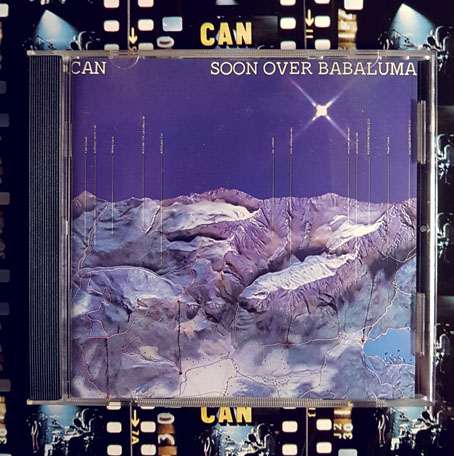
It’s never the same without the foil sleeve.

Since the death of Damo Suzuki I’ve been reading the Rob Young and Irmin Schmidt book about Can, All Gates Open. Can’s history isn’t exactly unfamiliar so it’s taken me a while to get round to it. I’ve been listening to their music for over 40 years, and bought the Can Box when it came out, a release which includes the Can Book, a substantial volume by Hildegard Schmidt and Wolf Kampmann containing career-spanning interviews with the core members of the group. Mysteries persist, however, so it’s been satisfying to have some of them resolved in the newer book, like the question of what exactly the title of the group’s sixth album, Soon Over Babaluma (1974) refers to. I’ve always liked this album, it was the second or third one I bought in 1981 when I found a secondhand copy of the original release in its shiny foil sleeve. Irmin Schmidt sings the words “Soon over Babaluma” on the second track, Come Sta, La Luna, a title which Young reveals as originating with Leonardo da Vinci. Then he has this to say:

Playfully extemporising from this text, Irmin cast his eyes across the studio to where Jaki’s girlfriend of the time, a woman called Christine, was perched on a sofa with accustomed stillness. “She had this really mysterious aura around her… She could sit there for hours like a cat not moving, or just drawing, or maybe doing nothing,” Irmin recalls. “So ‘Come sta, la luna’ was about Christine in a way. I’m talking about this girl who is going through walls. I don’t remember the words any more and I have never written it down. But there is something very spacey in the words—’Dancer on the rope, in the space’ or something. But when I wrote that, she was sitting in the studio and I was looking at her… I found her very mysterious and very beautiful.”

Almost by accident, the phrase “soon over Babaluma” emerged out of this stream of consciousness. “The word ‘Babaluma’ came out of a conversation with Jaki about the words. He maybe thought I had another word before, and he said, ‘What did you say? Babaluma?’ And because it rhymed with ‘luna’, it was a kind of playing with words—it didn’t mean anything. And it’s true surrealism. But the whole text is about something happening in space, out there. Seeing the moon and, from there, soon being over Babaluma—which must be another star or something. So it has another story behind it.”

So it was automatic writing after all. For a group whose compositions evolved out of endless improvisation this almost seems inevitable. Young makes a good argument for Soon Over Babaluma being Can’s cosmic album, made at a time when the kosmische idiom was peaking in Germany; even Kraftwerk were a little cosmic in 1973/74, with their Kohoutek-Kometenmelodie single being reworked for side 2 of Autobahn. There’s a lot of enlightening detail in All Gates Open, I recommend it. (Although I’m sure that’s a Stylophone solo on Moonshake, not a melodica as he seems to think.)

Meanwhile, Damo returns to the world this month with an official release for the Paris, 1973 concert. This one has circulated for years as a bootleg, and it’s a better showing by the band than some of the other recordings in the recent live series. More, please.

Previously on { feuilleton }
• Holger’s Radio Pictures
• Jaki Liebezeit times ten
• Can esoterics
• Can soundtracks
• Can’s Lost Tapes