Weekend links 136

tintenfisches.jpg

Der Triumph des Tintenfisches from Meggendorfer-Blätter (c. 1900). Via Beautiful Century.

Much dismay this week at the news that Coilhouse—the web and print magazine founded in 2008 by Nadya Lev, Meredith Yayanos and Zoetica Ebb—was closing its doors for the foreseeable future. I always loved what they were doing, and was delighted when S. Elizabeth interviewed me for the website two years ago. Looking at the list of their featured articles is like seeing the contents of my head laid bare. Have a browse and see what you may have missed. And fingers crossed they return soon.

• “I think we are just used to seeing naked women because they are used as objects of desire in advertisements and TV. Naked men are not that common—we are not used to seeing a penis. I think that is the main problem for people.” The shock of the (male) nude.

Michael Clarke asks “What Can Publishers Learn from Indie Rock?” Also: Michelle Dean on the value of used books.

Queers find themselves on both sides of the free speech question. Those of us who are writers want the freedom to write and say what we want. I know I do. Yet a preponderance of LGBT people have become part of the larger wave of those who would limit free speech. Because while we want to be able to say whatever we want about “them,” we do not want “them” to say whatever they want about us.

Victoria Brownworth on The Case Against Censorship

• Caspar Henderson re-reads The Book of Imaginary Beings by Jorge Luis Borges.

One hundred classic minimalism, electronic, ambient and drone recordings.

• BLDGBLOG visits the Chand Baori stepwell in Abhaneri, India.

Brion Gysin’s Dreamachine is launched in the UK.

Ken Hollings visits Ludwig II’s Venus Grotto.

• A guide to Meredith Monk‘s music.

• RIP Boris Strugatsky.

Maldorora: a Tumblr.

Stalker: Meditation (1979) by Edward Artemiev | Undulating Terrain (1995) by Robert Rich & B. Lustmord | Stalker (2004) by Shackleton.

Hill figures

whitehorse.jpg

Last year I was searching out various works of American land art via Google Maps. This is a similar post looking for some of Britain’s hillside figures, all of which are far older than any 20th-century artworks even if some of them aren’t as old as people hope. The antiquity of the Uffington White Horse in Oxfordshire has been established, however, the figure being estimated to be at least three thousand years old. The debate in this case is whether it represents a horse, a dragon or some other creature. What’s most fascinating about the figure is that it can’t be seen from any of the surrounding area, it’s only visible at the top of the hill; all other hill figures are intended to be viewed from a distance. There are other white horse figures carved into southern England’s chalky hillsides but the rest look like distinctly modern creatures. The Uffington carving resembles the kind of animals seen in cave paintings.

longman.jpg

The Long Man of Wilmington in East Sussex provokes endless speculation as to its age and purpose. In the case of this figure and the Cerne Abbas Giant (below) there are no written records of them earlier than the 16th century whereas the Uffington horse is mentioned in medieval texts. This doesn’t rule out their being far older but it implies that their origin may be more recent and more mundane than some would like to believe. The satellite view of the Long Man currently on Google Maps shows that local wags have given the figure a smiley face.

cerneabbas.jpg

The most famous erect penis in Britain can be found near the village of Cerne Abbas in Dorset. In the 1930s the Bishop of Salisbury petitioned the Home Office to have the giant phallus covered over, to no avail.

cropcircle.jpg

Not a hill figure, this is the remains of a crop circle I noticed when looking at Avebury from the air. There are no doubt more to be found, Wiltshire is apparently a popular area for circle makers.

uno.jpg

Uno (1974) by Uno.

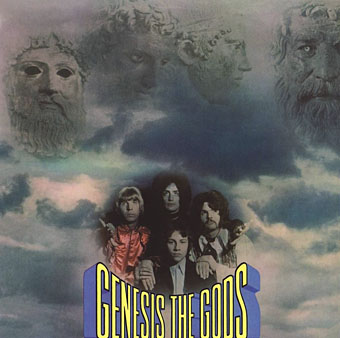
Given the usual subjects of concern here I have to mention these two album covers which make use of hill figures. The Uno sleeve is a design by Hipgnosis which is a lot more well-known than the album it decorates. The original XTC vinyl sleeve designed by Ken Ansell was textured card with the horse and lettering embossed into the surface. I’ve not been able to find a cover featuring the Cerne Abbas Giant although that doesn’t mean to say there isn’t one.

xtc.jpg

English Settlement (1982) by XTC.

Elsewhere on { feuilleton }
The album covers archive

Previously on { feuilleton }
Land art
How to make crop circles

Early British Trackways

watkins01.jpg

Continuing the Earth mysteries/megaliths theme, Early British Trackways: Moats, Mounds, Camps, and Sites (1922) by Alfred Watkins (1855–1935) was the first book in which the ley lines theory was proposed. Watkins was an amateur archaeologist (more a kind of early psychogeographer), photographer and writer who theorised that ancient Britons had marked the land with pathways connected by a variety of natural and man-made features: hills, mounds, trees, ponds, hillside notches and (of course) standing stones. Watkins coined the term “ley” after noticing that many of the lines connecting these features ran through villages or areas of land whose names ended in “-ley”, “-lay” or similar. The thesis was developed more fully in The Old Straight Track (1925), a book which became the ur-text for subsequent ley hunters. I’ve never seen any of Watkins’ books so it was interesting finding this short volume at the Internet Archive, not least because several of the photos appear in Mysterious Britain (1972) by Janet & Colin Bord, a classic guide to Britain’s sacred sites and folk rituals.

watkins02.jpg

Watkins never regarded ley lines as having any mystic significance, he thought they were probably old trade routes. Archaeologists have never agreed with his suppositions, however, and Watkins himself might have disapproved of the conjectures added to his theories by John Michell in The View Over Atlantis (1969) which wedded ley line theory to feng shui to create the whole “lines of energy” idea. Whatever one thinks of Michell’s theories, that book and subsequent volumes put ley lines firmly into popular culture, and without them we wouldn’t have the references in Children of the Stones, Steve Hillage’s Green (1978) (pretty much a Michell-inspired concept album), Nigel Kneale’s Quatermass (1979) and so on. But this slim book is where it all begins.

tvoa.jpg

Illustration by Roger Dean (1972).

watkins03.jpg

Continue reading “Early British Trackways”

Weekend links 135

kuhlman.jpg

Two Grove Press covers by Roy Kuhlman. From Arden Kuhlman Riordan’s Pinterest page collecting her father’s cover designs.

• “When people asked me what boylesque was, I’d say I’m doing burlesque and I have a penis,” said Mr. Ferguson.

Sequence5: 42 tracks of new, atmospheric/ambient music. A free download in a variety of formats.

The trailer for Jimmy’s End, the forthcoming film by Alan Moore and Mitch Jenkins.

As a porn performer, I can say from experience and with confidence that I’ve never been objectified by other performers. Nor have I been objectified by viewers. At least not in a way that seemed to confuse them into thinking I was an object. What happens instead is that I shift in and out of object-hood. Athletes do this too—they engage with their bodies for a specific task. At the end of the game or the shoot, the context changes.

Conner Habib on The Virtues of Being an Object

Secret Weapons (1972), David Cronenberg’s lost TV movie resurfaces.

Joseph Burnett reviews Nude, the new album by The Irrepressibles.

Over a third of e-readers are used just once before being set aside.

The guarded, the cautious, the small-scale, the modest, the well-crafted—such books may be rewarded (in our own time, at the national level), but they are rarely preserved. They are not preserved because guardedness, caution, smallness, modesty, and craft can be replaced in any given generation. What is irreplaceable is excess: Of verbal kinesis, religious intensity, intellectual voracity.

Amit Majmudar on Entertainment and Excess: The Great Literary Audiences

Miniature Book Interviews with Louis Wain Bound by Hand.

A Tour Inside Salvador Dalí’s Labyrinthine Spanish Home.

• Horror fiction should be deep, not cheap, says Nina Allan.

• RIP Peter Kuhlmann aka Pete Namlook

More is More by Alex Trochut

The Useless Web

Lost In The Sea (1992) by Sequential (Pete Namlook & DJ Criss) | Angel Tech (1994) by Bill Laswell & Pete Namlook | Yenlik (Part II) (1996) by Burhan Öçal & Pete Namlook

Arthur Rising

arthurrising.jpg

In which the sorely missed Arthur magazine returns to the world of print after a four-year slumber in Avalon. I was involved with the magazine from the outset so regular readers may recall many earlier posts about America’s most vital cultural bulletin:

After a four-year sabbatical (faked death?), your beloved revolutionary sweetheart Arthur returns to print, renewed, refreshed, reinvigorated and in a bold new format: pages as tall and wide as a daily newspaper, printed in color and black and white on compostable newsprint, with ads only on the back cover(s). Amazing!

In partnership with Portland, Oregon’s Floating World Comics, Arthur’s gang of goofs, know-it-alls and village explainers are back, from Bull Tonguers Byron Coley and Thurston Moore to radical ecologist Nance Klehm to trickster activists Center for Tactical Magic to Defend Brooklyn‘s socio-political commentator Dave Reeves to a host of new, fresh-faced troublemakers, edited by ol’ fool Jay Babcock and art directed by Yasmin Khan. You want a peek at the contents? Sorry, compadre. That would be saying too much, too soon. Wait ’til Dec. 22, 2012: that’s right—THE DAY AFTER THE NON-END OF THE WORLD!

Please keep in mind… Arthur is no longer distributed for free anywhere. Those days are (sadly) long gone. Now you gotta buy Arthur or you won’t see it. Our price: Five bucks cheeeeeep!

Arthur No. 33
Broadsheet newspaper, 15″ x 22.75″
Available Dec. 22, 2012
NOW YOU MAY PRE-ORDER ARTHUR NO. 33 HERE.

The NYT picked up on the news on Thursday. Is re-launching a paper magazine in 2012 a crazy idea? We’re about to find out. A selection of my illustrations for previous issues follows.

mbvarkestra.jpg

MBV Arkestra (2003).

crowley.jpg

The Aeon of Horus (2004).

pentagon.jpg

Out, Demons, Out! (2004).

eno.jpg

Brian Eno (2005).

richardbishop.jpg

Sir Richard Bishop (2007).