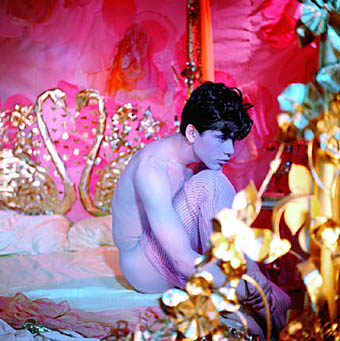
Eyetoon, a film by Jerry Abrams

eyetoon1.jpg

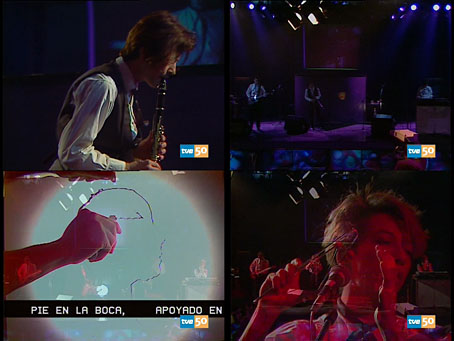
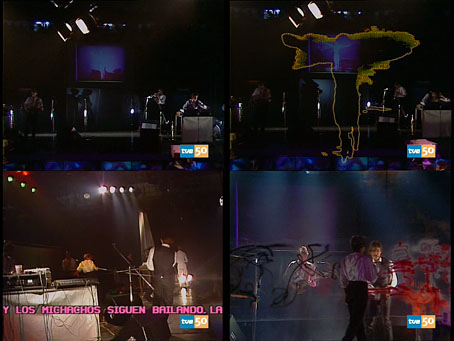
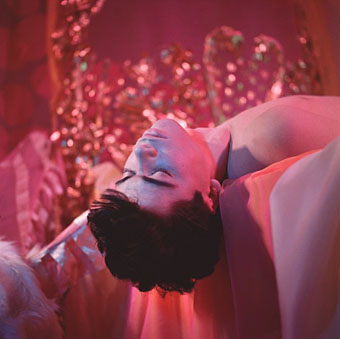
“Fuck for Peace” declares a title card at the end of Jerry Abrams’ Eyetoon, an 8-minute slice of psychedelia from 1968 whose second half has a hippyish couple doing exactly that as they run through a few hardcore Kama Sutra moves. The rest of the film is comprised of rapid editing and some brief animated overlays, together with street shots of the residents of what I’m guessing is San Francisco. The buzzing, twittering electronic score is by David Litwin. A year before this Abrams had documented the Human Be-In, the first major hippy gathering in Golden Gate Park in January 1967. His equally psychedelic film of that event can be seen here.

eyetoon2.jpg

Previously on { feuilleton }
Street Fair, 1959
San Francisco by Anthony Stern

Weekend links 204

somnium.jpg

RIP Steve Moore. We never met, unfortunately, but I was very pleased he asked me to create a cover for his unique occult novel, Somnium, in 2011. Prior to this we’d been connected by shared acquaintances, colleagues, and membership in the informal cabal that was (and maybe still is) The Moon & Serpent Grand Egyptian Theatre of Marvels. Steve’s long friendship with Alan Moore (no relation) is well-documented, not least by Alan himself who made Steve the subject of his Unearthing project. One surprising connection for me was that Steve also had a link to Savoy Books. In the late 1960s he was working for comics publisher Odhams where he was able to copy for David Britton some Ken Reid comic art which Odhams had refused to print. Dave published the forbidden pages in his first magazine, Weird Fantasy, in 1969. In 2011 Steve talked to Pádraig Ó Méalóid about Somnium, and also to Aug Stone at The Quietus. Aug Stone penned a few memorial words here.

• “People love using the word ‘porn’ as long as there’s a partner for it. Pair ‘porn’ with something else and it’s usually a good thing. A celebration of style and culture. But that word on its own? Well.” Porn star Conner Habib asks why people have such a problem with porn actors.

Dave Maier‘s Russian cinema recommendations. Several favourites there including the magical and remarkable Shadows of Our Forgotten Ancestors (1964) which, as Maier notes, isn’t really Russian but should be seen in any case.

Shakespeare uses verbal magic, cantrips and ditties, nonsense songs and verses throughout the plays, but in Othello he gives a glimpse of how powerful a spell becomes when it’s no longer oral, but fixed in material form. The fatal handkerchief is no ordinary hanky; it’s a love spell, and it was made with gruesome and potent ingredients (mummified “maiden’s hearts”) by a two-hundred-year-old sibyl in Egypt—Egypt being the birthplace and pinnacle of magic knowledge.

Marina Warner on magic.

• Mixes of the week: an hour of electro-acoustics and contemporary classical recordings sequenced by Laurel Halo, and (from 2010) 36-minutes of “umbral electronic hypnagogia” by The Wyrding Module.

• “This is the book that, 10 years later, inspired Richard Hollis’s landmark design for John Berger’s Ways of Seeing.” Rick Poynor on Chris Marker’s Commentaires.

• Is the Linweave Tarot the grooviest deck ever made? Dangerous Minds thinks so.

• Bobby Barry talks to Holger Czukay about his 1969 audio collage, Canaxis 5.

• “What Happened to Experimental Writing?” asks Susan Steinberg.

Aldous Huxley‘s lectures on visionary experience at MIT, 1962.

Laura Palmer will see Agent Cooper again in just a few hours.

Callum found a copy of The Gay Coloring Book (1964).

Metal Cats

Moonshake (1973) by Can | Lunar Musick Suite (1976) by Steve Hillage | Dark Moon (1993) by Holger Czukay | Boy In The Moon (2012) by Julia Holter

The Triangular Lodge again

temples.jpg

Artwork & photography by Abbie Stephens, Zoë Maxwell. Design by Thomas Caslin.

Passing through a record shop the day after looking at photos of the Winchester Mystery House I couldn’t help but notice this sleeve for the debut album by British band Temples. Yesterday I described Sarah Winchester’s house as a folly, which it is, but it was also her home. The ideal folly is an ostensibly purposeless structure, although many of the ones scattered around the UK do serve some kind of decorative function, often as fake ruins intended to be seen from a distance.

Thomas Tresham’s mysterious Triangular Lodge near Rushton, Northants, has always been a favourite, a small triangular building constructed in the 16th century, and encoded all over with references to the number 3. Tresham was a Catholic at a time when the faith was persecuted in England so the lodge is an expression of his devotion to the Holy Trinity. Given the unusual appearance of the building you’d think it might have appeared on an album cover before now. Temples are from Kettering in Northants so they can claim some local attachment to the place. The cover picture has something of a Hipgnosis look to it, which is no bad thing, and there’s also some Hipgnosis-style collaging at work; those trees in the background have been copied then flipped over. One benefit of the current vinyl resurgence is that sleeve designs like this aren’t spoiled by being only seen at CD size. Some of Temples’ songs can be heard on their SoundCloud page, while Pinterest has more views of the Triangular Lodge.

Elsewhere on { feuilleton }
The album covers archive

Previously on { feuilleton }
The Triangular Lodge

The Winchester Mystery House

winchester1.jpg

Winchester House, 525 South Winchester Boulevard, San Jose, Santa Clara County, CA.

“One of the peculiar traits of Hill House is its design—”

“Crazy house at the carnival.”

“Precisely. Have you not wondered at our extreme difficulty in finding our way around? An ordinary house would not have had the four of us in such confusion for so long, and yet time after time we choose the wrong doors, the room we want eludes us. Even I have had my troubles.” He sighed and nodded. “I daresay,” he went on, “that old Hugh Crain expected that someday Hill House might become a showplace, like the Winchester House in California or the many octagon houses; he designed Hill House himself, remember, and, I have told you before, he was a strange man. Every angle”—and the doctor gestured toward the doorway—”every angle is slightly wrong. Hugh Crain must have detested other people and their sensible squared-away houses, because he made his house to suit his mind. Angles which you assume are the right angles you are accustomed to, and have every right to expect are true, are actually a fraction of a degree off in one direction or another. I am sure, for instance, that you believe that the stairs you are sitting on are level, because you are not prepared for stairs which are not level—”

They moved uneasily, and Theodora put out a quick hand to take hold of the balustrade, as though she felt she might be falling.

“—are actually on a very slight slant toward the central shaft; the doorways are all a very little bit off centre—that may be, by the way, the reason the doors swing shut unless they are held…”

The Haunting of Hill House (1959) by Shirley Jackson.

I re-read Shirley Jackson’s novel a few months ago but neglected at the time to follow-up the reference to the Winchester House. News this week that Sarah Winchester’s sprawling folly in San Jose is to finally allow overnight stays prompted some investigation. The most remarkable thing about the Winchester Mystery House is that it’s much more of an oddity than its fictional relation, if you overlook (so to speak) the fact that Shirley Jackson’s house is a home to malevolent spectres. Sarah Winchester was heir to the Winchester rifle fortune, and instituted a process of continual and completely uncoordinated house-building for thirty-seven years, believing that this would confound the ghosts of those killed by the weapons bearing her name. Among the house’s 160 rooms are extraneous chambers and closets, doors to nowhere, and stairways serving no purpose. The spirit-trapping decorations include repeated spider-web motifs, and a recurrence of the number 13; one room at least was originally a Séance Room. This blog post concerns a tour round the house as it is today, while the Library of Congress has a number of views of the place.

winchester2.jpg

View looking west from top floor.

It’s unfortunate that the house was built in California’s earthquake zone, the structure had reached seven stories until the 1906 earthquake forced the removal of the three topmost floors. I had to go looking for views of the pre-quake building, and happily there are a few preserved on old postcards. When Blue Öyster Cult chose Adolph Sutro’s Cliff House for the cover of their Imaginos album they certainly picked the more immediately photogenic building, but the Winchester Mystery House a few miles to the south has it beat when it comes to metaphysical cachet.

The Winchester Mystery House at Pinterest.

winchester4.jpg

winchester3.jpg

Previously on { feuilleton }
The Cliff House revisited
Adolph Sutro’s Gingerbread Palace

Weekend links 203

budich.jpg

A Dune-inspired piece by Joshua Budich for In Dreams: an art show tribute to David Lynch at Spoke Art.

• “[Montague] Summers was a friend of Aleister Crowley and, like [Jacques d’Adelswärd] Fersen, conducted homoerotic black masses; whatever eldritch divinity received their entreaties was evidently propitiated by nude youths.” Strange Flowers goes in search of the Reverend Summers.

• More Jarmania: Veronica Horwell on the theatrical life of Derek Jarman, Paul Gallagher on When Derek Jarman met William Burroughs, and Scott Treleaven on Derek Jarman’s Advice to a Young Queer Artist.

Robert Henke of Monolake talks to Secret Thirteen about his electronic music. More electronica: analogue-synth group Node have recorded a new album, their first since their debut in 1995.

This hypertrophied response to decay and dilapidation is what drives the “ruin gaze”, a kind of steroidal sublime that enables us to enlarge the past because we cannot enlarge the present. When ruin-meister Giovanni Piranesi introduced human figures into his “Views of Rome”, they were always disproportionately small in relation to his colossal (and colossally inaccurate) wrecks of empire. It’s not that Piranesi, an architect, couldn’t do the maths: he wasn’t trying to document the remains so much as translate them into a grand melancholic view. As Marguerite Yourcenar put it, Piranesi was not only the interpreter but “virtually the inventor of Rome’s tragic beauty”. His “sublime dreams”, Horace Walpole said, had conjured “visions of Rome beyond what it boasted even in the meridian of its splendour”.

Frances Stonor Saunders on How ruins reveal our deepest fears and desires.

Gustave Doré. L’imaginaire au pouvoir: Four short films from the Musée d’Orsay to accompany their current exhibition, Gustave Doré (1832–1883): Master of Imagination.

• At Dangerous Minds: Remembering Cathy Berberian, the hippest—and funniest—lady of avant-garde classical music.

• “Merely a Man of Letters”: Jorge Luis Borges interviewed in 1977 by Denis Dutton & Michael Palencia-Roth.

Luke Epplin on Big as Life (1966), a science-fiction novel by EL Doctorow which the author has since disowned.

The Psychomagical Realism of Alejandro Jodorowsky: Eric Benson talks to the tireless polymath.

• A video essay by Matt Zoller Seitz for the 10th anniversary of David Milch’s Deadwood.

Eugene Brennan on Scott Walker’s The Climate of Hunter (1984).

Dune at Pinterest.

• Prophecy Theme from Dune (1984) by Brian Eno | Olivine (1995) by Node | Gobi 110 35′ south 45 58′ (1999) by Monolake