Weekend links 251

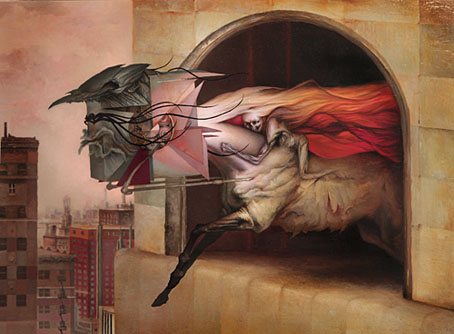
quintana.jpg

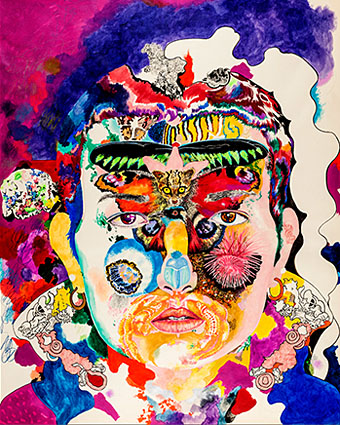
Beliel (2013) by Dan Quintana.

Guida essenziale all’Italian Occult Psychedelia. Out next month: Nostra Signora Delle Tenebre, a tribute to “movies that…retained a decidedly Italian flavour, a bizarre mix of nasty violence, lurid sexuality and feverish Catholic mysticism, all filtered through a manic obsession with death, blood and the sins of the flesh.” In the meantime, try the Italic Environments mix by Lay Llamas.

• “His work matters more than ever now because it stands in contrast to all the sequels, the comic-book adaptations, that Hollywood makes to sell lunchboxes.” Ryan Gilbey looks at a new documentary about the great Robert Altman.

• Psychedelic Culture at the Crossroads: Erik Davis on the ongoing reappraisal of the value of psychedelic drugs. Related: Dude, You Can Draw Magic Mushrooms With an Oscilloscope.

Like [Ellen Sofie] Lauritzen, what I appreciate about music, writing, and films that vary from dated to downright misogynist is the rawness I see expressed, a sheer energy that can’t toe the line of perfect political obeisance. I join her in hoping that we back down from using “problematic” as a censorious bludgeon against creative achievements, no matter how problematic they are.

Sarah Seltzer on whether feminists can enjoy misogynist art

• Mixes of the week: Roger Eagle’s jukebox selection for Eric’s club, Liverpool; Switched On! Vol. 4 by AnchSounds; T-P-F Mix 3: Bucolic Intrigue Romance by The Pattern Forms.

• At Dangerous Minds: Paul Gallagher on the whimsical anarchism of the White Bicycle revolution.

• Opening the Ghost Box: Dave Thompson on a record label that’s mentioned here more than most.

Abominations Of Yondo (2007), a free album inspired by the weird fiction of Clark Ashton Smith.

• Placards of earthly delight: Isabel Stevens on Vera Chytilová’s film posters.

• I’m an artist to watch according to Nakid Magazine.

Tomb of Insomnia

Death Surf (2012) by Heroin In Tahiti | Voices Call (2015) by Lay Llamas | Averno (2015) by OVO
Weekend links 250

gebbie.jpg

Untitled artwork by Melinda Gebbie.

• “Johnny Rocket is like a Chaucerian epic retold by David Peace with music by Bruce Haack and The Focus Group for a music hall located in Hell.” John Doran talks to Maxine Peake and the Eccentronic Research Council about their “psychedelic ouija pop”.

Allison Meier looks at a new exhibition of Victor Moscoso’s psychedelic drawings. Related: Julia Bigham writing in Eye magazine in 2001 about London’s psychedelic poster scene.

• “Oh to eye the very enfilade through which that orchidaceous entity would make his stately progress…” Strange Flowers on the eccentric Count Stenbock.

Melinda Gebbie: What Is The Female Gaze? The artist is in conversation next month with Mark Pilkington and Tai Shani at the Horse Hospital, London.

Pamela Colman Smith: She Believes in Fairies. The Tarot artist and illustrator in a rare interview from 1912.

• Minimalist posters: “a lack of nuance disguised as insight,” says John Brownlee.

• Saturday night in the City of the Dead: Richard Metzger on the John Foxx-era Ultravox.

The Will Gregory Moog Ensemble plays the Brandenberg Concerto No. 3.

• “In a weird way”: a brief history of a phrase by Ivan Kreilkamp.

Die Hexe: An installation by Alex Da Corte.

• RIP Daevid Allen

Istaqsinaayok

You Can’t Kill Me (1971) by Gong | Master Builder (1974) by Gong | When (1982) by Daevid Allen

The Tidal Path by Watch Repair

tidal1.jpg

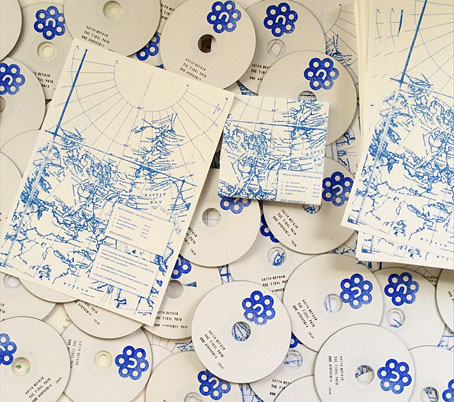
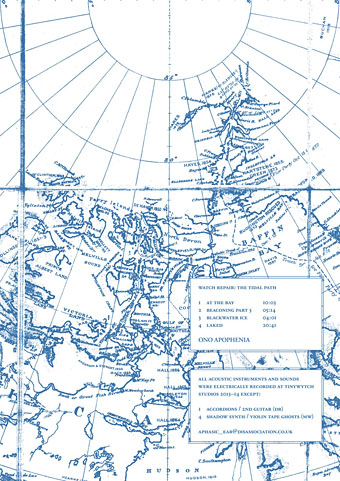
When it comes to my work for the music world, this week has ranged from one pole to the other. On Tuesday Enki , the album whose cover I designed last year for Melechesh, was released in the US on multiple formats including coloured vinyl and (if you want the expensive option) a CD with bundled T-shirt; on Wednesday local musicians Watch Repair released The Tidal Path, a hand-crafted CD-R limited to 100 copies for which I designed the Risographed insert.

tidal2.jpg

Musically you can’t compare these releases, and it would be unwise to do so, they’re both operating in very different areas. Watch Repair (who otherwise prefer to remain anonymous) have for the past two years been producing a distinct form of improvised music that combines acoustic instruments, ambient recordings and treated/processed sounds. The predominant atmosphere on The Tidal Path is winter, frozen water and icy wastes, hence the choice of an old map of the northern polar regions for the insert artwork. The map also features a few surreptitious references to related works by other artists but I’ll leave it to informed listeners to detect those. The Tidal Path is a release on Manchester’s Ono label which may be ordered from Piccadilly Records.

Previously on { feuilleton }
Watch Repair

Spare things

spare-cthulhu.jpg

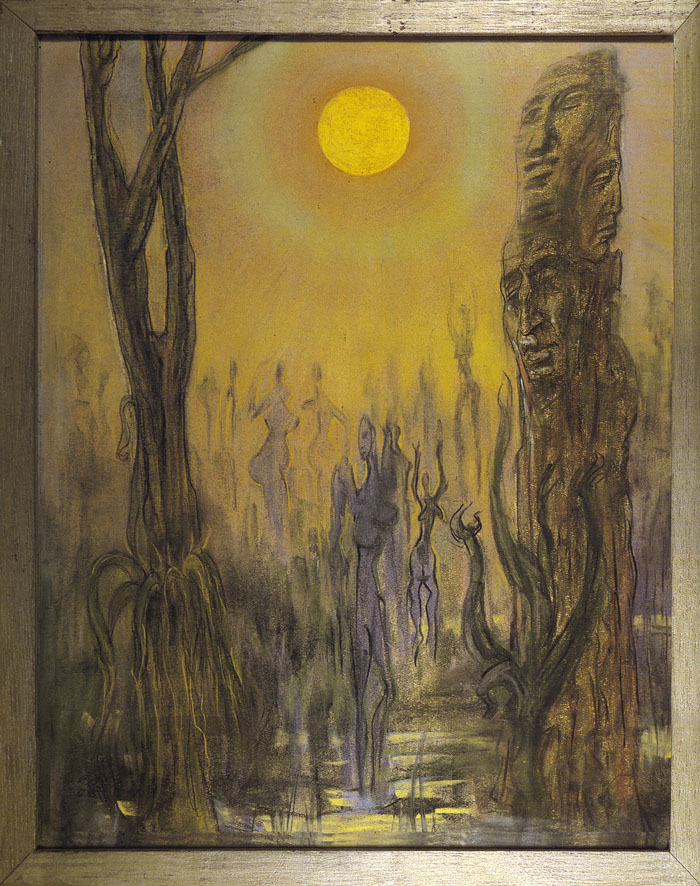
Cthulhu Cultus: The Sun is Sick (no date) by Austin Osman Spare.

I’ve been telling people about this drawing for years but I’ve not posted it here before. Spare produced this piece after Kenneth Grant gave him some of HP Lovecraft’s stories to read. I’ve never seen it dated but it’s probably from the mid-50s when Kenneth and Steffi Grant were corresponding with Spare and commissioning new artworks. What’s notable for me is that this is probably the first Lovecraft-derived drawing that wasn’t either a magazine or book illustration, or something done for one of the horror fanzines.

coc.jpg

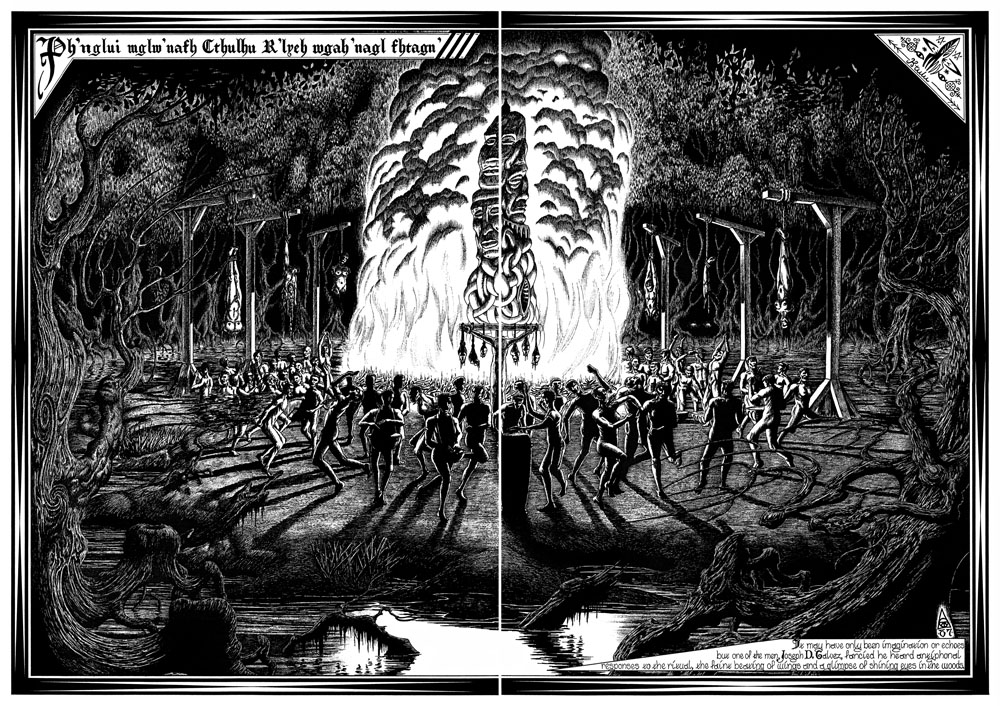
The Call of Cthulhu (1987) by John Coulthart.

Lovecraft aficionados have never seemed aware of Spare’s drawing since Lovecraft studies tended until very recently to remain fixed on popular media and the often parochial world of genre fandom. When I came to draw the swamp scene for The Call of Cthulhu in 1987 I borrowed the faces from Spare’s pillar for the column in the centre of the picture.

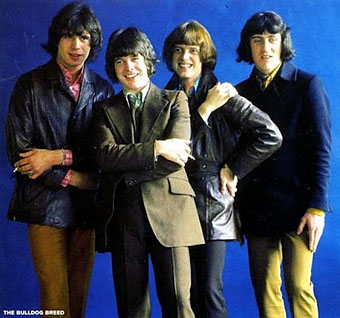
bulldogbreed.jpg

Bulldog Breed.

While we’re on the subject, and in the spirit of showing how all the obsessions here connect in one way or another, Phil Baker’s excellent biography of Austin Spare notes a surprising reference to the artist that predates Man, Myth and Magic via the psychedelic music scene. Bulldog Breed were a short-lived London group, one of many being promoted by the Deram label in the late 1960s. The group’s one-and-only album, Made In England, was released in 1969. The cover art is dreadful but the final song is a number entitled Austin Osmanspare [sic], a paean to the artist that turns AOS into a typical character from British psychedelia: an eccentric, oddly named, Victorian type with a sinister and mysterious glamour. According to Baker one of the band members had an aunt who knew Spare. It’s not a bad song, and the choice of magus gave them an edge over the Beatles who went for the more obvious Aleister Crowley. “They said he was before his time…”

Previously on { feuilleton }
Dreaming Out of Space: Kenneth Grant on HP Lovecraft
MMM in IT
Intertextuality
Abrahadabra
The Occult Explosion
Murmur Become Ceaseless and Myriad
Kenneth Grant, 1924–2011
New Austin Spare grimoires
Austin Spare absinthe
Austin Spare’s Behind the Veil
Austin Osman Spare

Weekend links 249

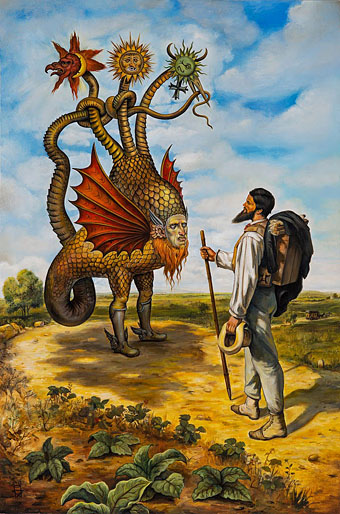
ulrich.jpg

The Philosophers (Homage to Courbet) by Christopher Ulrich. Another great tip from Full Fathom Five.

• “Mushrooms are the only psychedelic drugs that I take, and I don’t take them very often. But I would trust them. Once you’ve done them a few times it’s very easy to feel a sense of entity. You can feel that there is a characteristic in this level of consciousness which almost seems…playful? Or aware, or sometimes a bit spooky.” Alan Moore discussing art and psychedelics in Mustard magazine. Related: “Psychedelics not linked to mental health problems or suicidal behavior: A population study.”

• “Leonora Carrington transcended her stolid background to become an avant-garde star,” says Boyd Tonkin. At the BBC Chris Long looks at Leonora Carrington’s journey from Lancashire to Mexico. The Carrington exhibition at Tate Liverpool opened on Friday.

A Savoyard’s First Brush with Censorship, Clara Casian’s proposed documentary film about Savoy Books, is looking for Kickstarter funding.

Warner suggests that there are four characteristics that define a veritable fairy tale: first, it should be short; second, it should be (or seem) familiar; third, it should suggest ‘the necessary presence of the past’ through well-known plots and characters; fourth, since fairy tales are told in what Warner aptly calls ‘a symbolic Esperanto’, it should allow horrid deeds and truculent events to be read as matter-of-fact. If, as Warner says, ‘the scope of a fairy tale is made by language’, it is through language that our unconscious world, with its dreams and half-grasped intuitions, comes into being and its phantoms are transformed into comprehensible figures like cannibal giants, wicked parents or friendly beasts.

Alberto Manguel reviewing Once Upon a Time: A Short History of Fairy Tale by Marina Warner

De Natura Sonorum (1976) by Bernard Parmegiani: a free download at AGP of the original vinyl recording, something I overlooked several years ago.

• At Dangerous Minds: Real Horrorshow!: Malcolm McDowell and Anthony Burgess discuss Kubrick and A Clockwork Orange.

Meeting Bernard Szajner, a short film about the French electronic musician by Tom Colvile, Nathan Gibson & Abdullah Al-wali.

• Dismembrance of the Thing’s Past: Dave Tompkins on John Carpenter’s The Thing.

That Battle Is Over, a new song by Jenny Hval.

Mushroom (1971) by Can | The Mushroom Family (2010) by The Time And Space Machine | Growing Mushrooms Of Potency (2012) by Expo ’70