Weekend links 334

rist.jpg

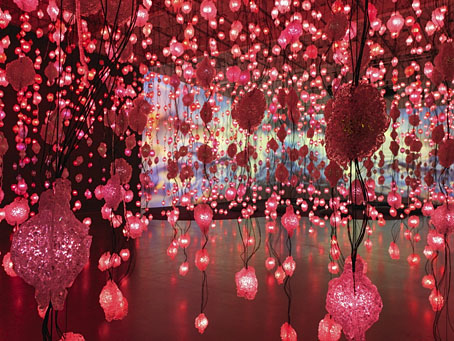
Pixel Forest (2016) by Pipilotti Rist.

• “Think about it: gays, lesbians, bisexuals, and transgender people were almost completely invisible in the movies or on television, or even in newspapers and magazines. It wasn’t until LGBT people started producing their own media that we started to see consistent, positive images. But it would take until very recently for TV and cinema to catch up with what happened in books and magazines decades ago. In other words, nearly all LGBT culture only existed in print or at the bar. So when the queer bookstore disappears, where else can you find 40+ years of LGBT culture? (Hint: it’s not on Netflix.)” Ken White on starting Query Books and republishing classic LGBT literature.

• Related to the above: David Shariatmadari reviews a new edition of Coming Out, Jeffrey Weeks’ history of gay emancipation in the UK; Modern Harmonic is reissuing Love Is A Drag, a collection of “love songs by men, for men”, first released in 1962; Your Daily Male 2017: 52 international artists, 365 pages of full-colour male art; erotic portraits of Yukio Mishima by Eikoh Hosoe.

A Year In The Country revisits The Touchables (1968), a film about four Swinging Sixties girls who live in a huge plastic bubble in the countryside (must be a nightmare in winter); the quartet kidnap a rock star as “a temporary solution to the leisure problem”. Script by Ian La Frenais from a story by David & Donald Cammell. No DVD but it’s on YouTube.

• Mixes of the week are still in the Halloween zone: FACT mix 575 by Fenriz, and Resting Lich Face by SeraphicManta.

• War, love and weirdness: Brian Dillon on Powell & Pressburger’s A Matter of Life and Death, 70 years on.

• Bringing back the magic: a conversation with Hope Sandoval & The Warm Inventions.

David Toop listens, finally, to the legendary John Latham recordings of Pink Floyd.

The Synth Sounds of John Carpenter: Halloween, The Fog, Assault on Precinct 13.

• “Creep or craftsman? Hitchcock was both,” says Tom Shone.

The Dazzling Designs for a New York That Never Existed

Photography by Harry Gruyaert

The Untouchables (1959) by Nelson Riddle | The Touchables (All Of Us) (1968) by Nirvana (UK) | The Touchables (1980) by The Human League
The Forest / The Wald

forest.jpg

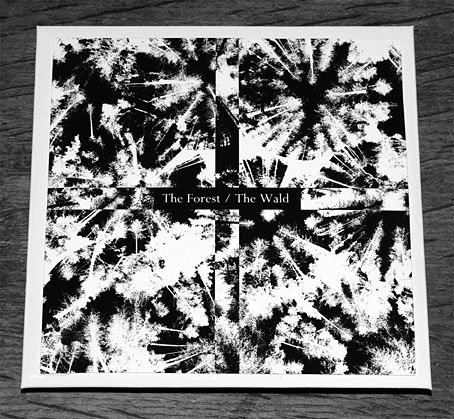
November brings another compilation from the masters of monochromatic packaging, A Year In The Country. The Forest / The Wald takes woods and their folklore as its theme, so the autumn months would seem an ideal time for such a release. Trees make their presence most apparent during the leaf-shedding months of October and November, and one of the pieces on this new collection, The Hand of Auctumnus by Richard Moult, refers directly to the season.

The album takes as one of its initial reference points Electric Eden author Rob Young’s observations of the roots of the word folk as being “…the music of the ‘Volk’, a word born of the Teutonic Wald, the wild wood where society was organised ad hoc, bottom-up and frequently savage…”; places where rituals endured and perplexed their heirs.

In amongst The Forest / The Wald can be found expressions of greenwood rituals performed in the modern-day, echoes of fantastical childhood rhymes, sylvan siren calls that tremble through tangles of branches, electronics pressed into the summoning of otherworldly arboreal creations unearthed amidst the creeping thickets and elegies to woodland intrusions, solitudes and seasons.

Track list:
1) The Abney Ritual – Bare Bones
2) Hawthorn Heart – Magpahi
3) Deep Undergrowth – Polypores
4) Fantastic Mass – Time Attendant
5) Waldeinsamkeit – David Colohan
6) The Hand Of Auctumnus – Richard Moult
7) Tomo’s Tale – Sproatly Smith
8) A Whisper In The Woods – The Hare And The Moon ft Alaska
9) Ocarina Procession – The Rowan Amber Mill
10) Trees Grew All Around Her – The Séance with Lutine
11) Equinox – Cosmic Neighbourhood
12) Where Once We Wandered Free – A Year In The Country

Not everything here is folk-oriented, some of the contributions, such as those by Polypores and Time Attendant, are electronic pieces. David Colohan, Sproatly Smith, The Rowan Amber Mill, Richard Moult and others follow more familiar paths through the trees. Compared to Fractures and The Quietened Bunker, two of the earlier releases in this series, The Forest / The Wald is much closer to the territory mapped out by Xenis Emputae Travelling Band (or their present incarnation, Hawthonn), a response to British folk traditions that acknowledges the history without seeming beholden to it.

The Forest / The Wald will be released on 14th November.

Previously on { feuilleton }
The Quietened Bunker
Fractures

Weekend links 333

timeout.jpg

Time Out (London), no. 2403. No illustrator or designer credited.

• October isn’t all about the dark, there’s also psychedelia: Ned Raggett reviews a new collection of British psych, Let’s Go Down And Blow Our Minds: The British Psychedelic Sounds of 1967, while Floodgate Companion, a forthcoming collection of art by Robert Beatty, is previewed here.

• Mixes of the week (aside from my own, of course): Samhain Seance 5: Invasion of the Robot Witch by The Ephemeral Man, Thee Finders Kreepers Halloween Spezial, and Secret Thirteen Mix 199 by Blue Hour.

• “No diggin’ ‘ere!” Adam Scovell revisits the ghostly locations of the BBC’s A Warning to the Curious, and presents a short film based on the same.

• Stanley Kubrick’s film of The Shining has lost its shine through endless quotation and over-familiarity, says Anne Billson. Hard to disagree.

Between Ballard’s Ears: in which two short stories by JG Ballard—Track 12 and Venus Smiles—are dramatised in binaural sound.

John Carpenter talks to Adam Woodward about remakes, his love of early synthesisers and why nostalgia works in mysterious ways.

• Next month at the British Library: Brion Gysin: A Centennial Invocation with Alan Moore, Iain Sinclair, Barry Miles and others.

Peter Bebergal on the Fraternity of the Rosy Cross, “a shadowy medieval brotherhood that probably didn’t exist”.

Until The Hunter, a new album by Hope Sandoval and The Warm Inventions, is streaming here.

• San Fran-disco: Geeta Dayal on how Patrick Cowley and Sylvester changed dance music forever.

• A small portion of Bill Laswell‘s vast back catalogue is now on Bandcamp.

• At MetaFilter: The strange history of books bound in human skin.

• Italian composer Fabio Frizzi remembers 50 years of cult horror.

Matthew Cheney on the strange horrors of Robert Aickman.

Jóhann Jóhannsson’s favourite records

Dark Start (1995) by ELpH vs Coil | Darkstalker (2000) by Bohren & Der Club Of Gore | Dark (2012) by Moritz Von Oswald Trio

A mix for Halloween: Analogue Spectres

Presenting the eleventh Halloween playlist, and another mix of my own. Previous mixes have been wide-ranging and not a little nerve-jangling so this year the focus has been narrowed to a synth-only mix. The theme is the analogue synthesizer music of the 1970s, particularly the style popularised by Tangerine Dream on Phaedra, Rubycon, Ricochet and Stratosfear.

The “fear” element of the latter title is significant in this context. Tangerine Dream from their earliest days produced timbres and atmospheres that tended towards the sinister and the doom-laden. This quality continued when they moved to Virgin Records in 1974, using new synthesizers and sequencers to develop their sound. In part the doomy atmosphere was a result of limitations, a combination of organ-led chord sequences and the difficulties of using primitive electronics for anything other than unnatural atmospheres. The earliest albums by Klaus Schulze are equally sombre but Schulze lost this tendency as his playing improved. Tangerine Dream, meanwhile, seemed to enter a Gothic phase with the move to Virgin: their track titles became darker—Mysterious Semblance At The Strand Of Nightmares, The Big Sleep In Search Of Hades, Stratosfear—and they swapped concert halls for the cavernous spaces of European cathedrals. William Friedkin in his sleeve note for the Sorcerer soundtrack album expressed disappointment that he hadn’t heard the group soon enough for them to provide music for The Exorcist.

Tangerine Dream are only represented here with two tracks—one of them from the Sorcerer soundtrack—but their influential Virgin years provide the template for several other pieces. Two of the groups, Redshift and Node, are British ensembles who take Tangerine Dream’s albums of the 1970s as their sole template. In the case of Redshift this has yielded a number of albums that are flawless in their imitation (and extension) of the Rubycon/Ricochet template, and the group are highly recommended to anyone who enjoys those albums. Redshift have also continued with the doom-laden atmospheres which is why this mix contains so many of their pieces.

The other axis here is the early scores by John Carpenter which have often seemed as influential as his films: imitated, sampled, and inspiring the sinister, throbbing electronica of Pye Corner Audio and others. Carpenter has frequently mentioned Tangerine Dream in lists of favourite electronic musicians; no surprise there but it feels satisfying to have things join up.

As before, Mixcloud no longer allows the posting of a tracklist so this is the running order:

Tangerine DreamSorcerer (Main Title) (1977)
Pye Corner AudioProwler (2015)
RedshiftLeave The Light On (2004)
John CarpenterThe Fog Enters The Town (1980)
Ian BoddyThere’s Something In Your Attic (1999)
NodeDark Beneath The Earth (2014)
Tangerine DreamDesert Dream (1977)
RedshiftWraith (2002)
RedshiftNightshift (2007)
RedshiftDown Time (2001)
Pye Corner AudioStars Shine Like Eyes (2015)

Previously on { feuilleton }
A mix for Halloween: Teatro Grottesco
A mix for Halloween: Unheimlich Manoeuvres
A mix for Halloween: Ectoplasm Forming
A playlist for Halloween: Hauntology
A playlist for Halloween: Orchestral and electro-acoustic
A playlist for Halloween: Drones and atmospheres
A playlist for Halloween: Voodoo!
Dead on the Dancefloor
Another playlist for Halloween
A playlist for Halloween

Weekend links 332

seamans.jpg

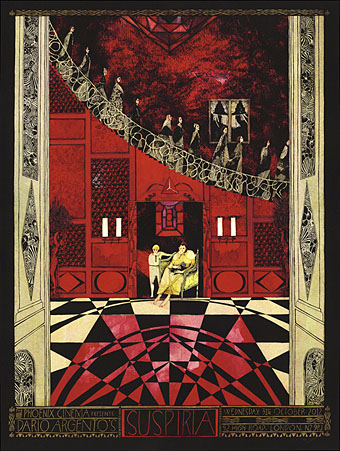
Suspiria (2012) by Jessica Seamans.

Matthew Sperling on Tom Phillips’ “treated Victorian novel” A Humument, which he calls “a multimedia masterpiece”. Phillips’ sixth and final edition of the book is published by Thames & Hudson next month.

Strange Flowers on Monsieur de Bougrelon (1897), a short novel by Jean Lorrain which will be published next month by Spurl Editions. The book is currently on my to-be-read-next pile.

Theodore Carter finds images of skulls by artists through the ages. I’d have included Giacometti’s almost abstract Head-Skull (1934) or his sketch of 1923.

• The horror stories of EF Benson contain “enough nastiness to give you just the right kind of frisson for the time of year,” says Nicholas Lezard.

• Covers for One, an American magazine of the 50s and 60s dedicated to “the homosexual viewpoint”.

Kelly Sullivan takes a close look at the illustrations and stained-glass work of the great Harry Clarke.

• Lost Moomins cartoon strips will be shown in the first UK Tove Jansson exhibition.

• The extravagant homes of Ludwig II of Bavaria are in urgent need of restoration.

• Mix of the week: The Nine Ten Never Sleep Again Mix by The Curiosity Pipe.

Ténéré Tàqqàl (what has become of the Ténéré), a new song by Tinariwen.

• The King of Weird: Joyce Carol Oates on HP Lovecraft.

• Charting the legacy of cult 1970s band, Big Star.

Falling (1992) by Miranda Sex Garden | Inferno (Version II) (1993) by Miranda Sex Garden | Peep Show (1994) by Miranda Sex Garden