Weekend links 826

vasarely.jpg

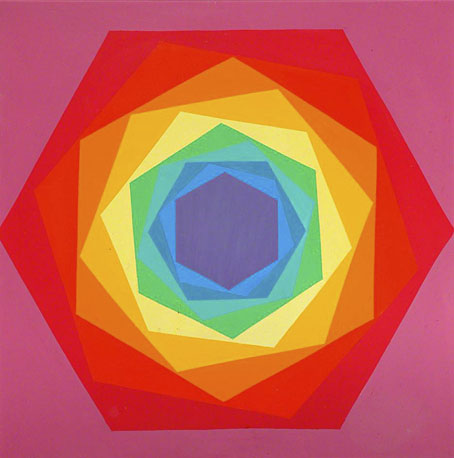
Hexa (1971) by Victor Vasarely.

• New music of the week is Tape 05, three minutes from Boards Of Canada following their thirteen-year silence, which was released on Thursday after several days of the group and their record label teasing a comeback with mysterious VHS cassettes and cryptic posters. I’ve been listening to the Sandison brothers’ discography for most of the week while trying to get a major illustration commission finished; this revelation has been the icing on a deteriorated, over-processed cake. I’m now looking forward to whatever emerges next.

The Long London Uncovered: Alan Moore (again) and Iain Sinclair (again) in conversation. Alan’s second novel in the Long London cycle, I Hear A New World, will be published next month.

• RIP Chris Mullen. Not a name that most will recognise but Mullen’s sprawling website, The Visual Telling of Stories, has been linked here on many occasions. A remarkable resource.

• More new music: Boots On The Ground by Massive Attack, Tom Waits; Angel Lost by Luca Formentini; Phaser For The Ocean, Chorus For The Moon by Hatchback.

• Coming soon from Strange Attractor: Sensual Laboratories, Light Shows, Experimental, Film and Psychedelic Art by Sophia Satchell-Baeza.

• At Public Domain Review: “A beautiful purplish hue”: Frank Dudley Beane’s experience with ergot and Cannabis Indica (1884).

• Mixes of the week: An Invisible Jukebox mix for Irmin Schmidt at The Wire; and DreamScenes – April 2026 at Ambientblog.

• At The Quietus: Greg Anderson and Stephen O’Malley of Sunn O))) discuss their love of hiking.

• At Film Quarterly: Elinor Dolliver on the surprising folklore of analogue horror.

• Steven Heller’s font of the month is Gilway Paradox.

• The Strange World of…Spacemen 3.

Tape Kebab (1974) by Can | The Attic Tapes (1975/6) by Cabaret Voltaire | The Black Mill Video Tape (2012) by Pye Corner Audio

Weekend links 825

demeric.jpg

Hexagon Sequence II (c. 1970) by Rosalie de Meric.

• Boards Of Canada obsessives have been in a frenzy this week following the appearance of mysterious VHS cassettes sent at random to a small number of users of the Warp Records mail-order service. The contents of the tapes look like this. With the group having been silent for the past thirteen years there’s been an understandable flood of wild speculation on the BOC Reddit page, the supposition being that the tapes (and now an equally cryptic set of posters) mean that a new record release is on the way. We’ll find out soon enough. In the meantime, here’s DJ Food’s O Is For Orange 2025 (version 3), a Boards Of Canada-themed mix that I neglected to link to last year.

• “There is no artistic process that isn’t magical in that it’s an attempt to magically conjure an idea, something that is invisible and intangible, into material form…” Alan Moore (again) talking to Dominique Musorrafiti about art and magic. Also the comics business, which people really ought to stop asking him about when his reluctance to discuss his old work is so evident.

• “I’m not a commercial director—I’m not even a professional film-maker.” Jim Jarmusch talking to Amy Raphael about his career and his latest film, Father Mother Sister Brother. At Little White Lies, Claire Biddle examines the music in Jarmusch’s films and his collaborative albums.

• “Painting and sculpture influenced me greatly. You start to see the world, the outside, everything around you, the tone, with the eyes of seeing a picture that’s framed.” Irmin Schmidt talking to Adelle Stripe about his early life and Requiem, his new album.

• New music: All Clouds Bring Not Rain by Memorials; Afterlife Requiem by Those Who Walk Away; Where Light Pauses In The Silence Of The Sun by Abul Mogard & Rafael Anton Irisarri.

• At Colossal: Daniel Sackheim traverses Los Angeles’ noir side in The City Unseen.

• At Bandcamp Daily: Jim Allen on the sound of the ’70s French Underground.

• At the BFI: Rory Doherty selects 10 great Australian debut features.

NASA Johnson

Hexagon (1990) by Ruins | Octagon (1994) by Basic Channel | Triangles And Rhombuses (1998) by Boards Of Canada

Weekend links 823

crab.jpg

NASA’s Hubble revisits Crab Nebula to track 25 years of expansion.

Snakes and Ladders is a video adaptation of the one-off Moon and Serpent performance presented by Alan Moore and Tim Perkins at Conway Hall, London, in 1999. With visual samples from Eddie Campbell’s comic-strip adaptation of the audio recording, plus my artwork from the CD release. (Thanks to Francis for the tip!)

• The spring catalogue of lots for the After Dark: Gay Art and Culture online auction. Homoerotic art, photos, historic porn, etc.

• New music: State Of Matter by Dobrawa Czocher; Plague Dogs by The Heartwood Institute.

• “Why we made a film about Mark Fisher called We Are Making A Film About Mark Fisher.

• At Colossal: “Ambiguity reigns in Olaf Hajek’s mysterious illustrations”.

• At Public Domain Review: Monet’s early caricatures (ca. late 1850s).

• At the BFI: George Orwell, film critic.

• The Strange World of…Ladytron.

The Plague (1967) by Scott Walker | A Plague Of Angels (2007) by Earth | The Plague (2014) by Cosmic Ground

Locked Groove

locked1.jpg

It’s been a while since Scotto Moore’s newsletter turned up any of the abstract animated visuals I enjoy. Locked Groove by Emanuele Kabu fits the bill perfectly, an exercise in vibrant random symmetry which bears the subtitle “A hypnotic audiovisual animation inspired by pareidolia”. The video might also have been inspired by psychedelic hallucination given the way it captures the tendency of the abstract patterns generated by psychedelic delirium to continually change their size, shape and colour. This is one feature of the psychedelic experience you don’t see reproduced very often even though animation has long been the ideal medium for creating such effects. Kabu has soundtracked the metamorphoses with analogue synth noises but you could just as easily watch them with a suitably psychedelic piece of music.

locked2.jpg

Previously on { feuilleton }
Short films by Hideki Inaba

Weekend links 821

tevis.jpg

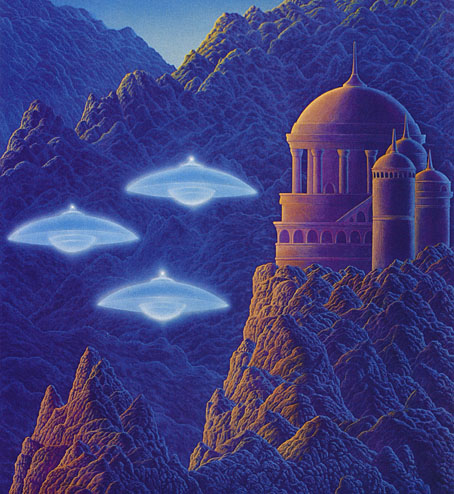
The first UK paperback edition, 1976. Cover art by David Bowie’s illustrator friend George Underwood.

• At the BFI: “Humanity, lost and found”. The original Sight and Sound review by Tom Milne of The Man Who Fell to Earth which was released 50 years ago this month. The film is another Nicolas Roeg project whose lofty reputation today has made everyone forget the bewildered or even hostile reaction it generated at the time, including from the US distributor, Paramount, who hated it. Milne, by contrast, had read the novel it was based on, and paid close attention to what the film’s writer, Paul Mayersberg, described as its “minefield of images”.

• Among the new titles at Standard Ebooks, the home of free, high-quality, public-domain texts: The Varieties of Religious Experience by William James.

• Issue 13 of Verbal magazine features an interview with Michael Moorcock, Iain Sinclair in the “Talking Books” section, and more.

• New music: 4 Hours (DVATION 2026 Version) by Clock DVA; -Music For Oriental Hotel Okinawa Resort & Spa- by Harikuyamaku.

• The Shaw Brothers Cinema YouTube channel has whole feature films from the studio’s huge archive free to view.

• At Colossal: “Historic architecture emerges from stone in Matthew Simmonds‘ ethereal sculptures”.

• “Music with Balls”: Terry Riley performing live with an arrangement of shiny silver spheres on KQED TV in 1969.

• Mixes of the week: DreamScenes – March 2026 at Ambientblog, and Motorik by Jon Savage.

• “What is electronic music?” Daphne Oram explains.

• RIP Country Joe MacDonald.

Stardust (1941) by Artie Shaw And His Orchestra | Stardust (1959) by Martin Denny | Stardust (1985) by Yasuaki Shimizu & Saxofonettes