Weekend links 623

blot.jpg

A symmetrical ink blot from Gobolinks, or Shadow Pictures for Young and Old (1896) by Ruth McEnery Stuart & Albert Bigelow Paine, a book where the blots are much more interesting than the interpretative verses that accompany them.

• “…within a year, they were on The Tube, performing their German-language extrapolation of Throbbing Gristle’s Discipline to a visibly nonplussed audience.” Alexis Petridis on the return of Propaganda. The group’s debut album, A Secret Wish (previously), has long been an obscure object of desire round here.

• RIP Alan White, drummer in Yes for much of the 1970s (see Sound Chaser for details), and also—although nobody mentioned this at the time—the originator of the drum sounds sampled on a Fairlight for Beat Box by the Art Of Noise.

• “For the anthropologist Stewart Guthrie, pareidolia is not a fringe phenomenon: it is at the core of religious experience.” Hunter Dukes on the interpretation of ink blots.

• “…self-righteousness is the one thing that I don’t agree with,” says John Waters. “We used humour to fight when I was young.”

• New music: October Cut Up by Black Glass Ensemble, and New Witness by Michael Begg.

• Also RIP Shiv Kumar Sharma, master of the santoor.

• “Scientists recreate Cleopatra’s favourite perfume.

Simon Fisher Turner’s favourite albums.

• At Dennis Cooper’s: Len Lye Day.

Cleopatra’s Barge (1962) by Alex North | Cleopatra’s Needle (1963) by Ahab And The Wailers | Cleopatra King Size (2002) by Jah Wobble & Temple Of Sound

Weekend links 622

balbi.jpg

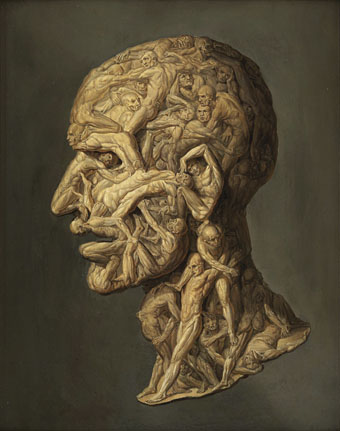
Testa Anatomica (1854) by Filippo Balbi.

The New School of the Anthropocene is “…an experiment. But it is also an act of repair. In partnership with October Gallery in London, we seek to reinstate the intellectual adventure and creative risk that formerly characterised arts education before the university system capitulated to market principles and managerial bureaucracy… (more)”

• “Every once in a while, you come across old music that generates a shock of new excitement.” Geeta Dayal on Oksana Linde whose electronic compositions are being released in a retrospective collection next month.

• More Walerian Borowczyk: Anatomy of the Devil, a collection of Borowczyk’s short stories, newly translated into English by Michael Levy, and with a cover design by the Quay Brothers.

• Washing machines, garden snails, and plastic surgery: A stroll through the Matmos catalogue. Related: “Why scientists are turning molecules into music.”

• Coming soon from Strange Attractor: Boogie Down Predictions, Hip Hop, Time and Afrofuturism, edited by Roy Christopher.

• At Spoon & Tamago: Exploring Japan’s historical landmarks and shrines in the middle of streets.

• New music: Adrian Sherwood Presents: Dub No Frontiers, music by female dub artists.

Winners of the 2022 Milky Way Photographer of the Year.

• A Vision In Many Voices: The art of Leo and Diane Dillon.

Molecular Delusion (1971) by Ramases | DNA Music (Molecular Meditation) (1985) by Riley McLaughlin | Pop Molecule (Molecular Pop 1) (2008) by Stereolab

Vangelis, 1943–2022

china.jpg

NME ad for the China album, April 1979. Via.

Farewell, Captain Nemo. In the past I’ve been known to describe Blade Runner as a very large and very expensive music video for a Vangelis album. (I mention this because so many of the headlines about the late musician are referring to Ridley Scott’s masterpiece and that boring film about athletes in big shorts.) Blade Runner is rather more than a music video, of course, but the viewpoint is a useful one if you’ve watched the damned thing so many times in so many different versions and formats that any re-viewing is almost enough to have you mouthing the dialogue along with the characters, like Charlton Heston in The Omega Man watching Woodstock for the 100th time. Vangelis recorded almost 40 albums under his own name, and many more as collaborations; he was much more than a soundtrack composer, which isn’t something you can always say about soundtrack composers.

vangelis.jpg

He liked Outer Spacers. The composer accepts a chutney-flavoured cosmic snack, circa 1979.

All the same, film and score are so inextricably connected it’s impossible to imagine Blade Runner with any other soundtrack, just as it’s impossible to imagine Sergio Leone’s “Dollars” trilogy without Ennio Morricone’s whip-cracks, bells and whistles. The thing is—and this is the reason for my facetious music-video comment—Morricone’s Western scores were tailored to their content in a way that Blade Runner‘s music wasn’t at all. If Blade Runner had never been made, many of those musical cues would have worked perfectly well as another Vangelis solo album. Three of the albums he made before Blade Runner that feature his beloved Yamaha CS-80 keyboard—Spiral, Opera Sauvage and China—contain elements that coalesce in the film score; there you’ll find the same synthesizer timbres, filter sweeps, percussive crashes, Fender Rhodes solos and musical pastiche (Chinese rather than Middle Eastern). Another album, See You Later, is a patchy collection of songs, instrumentals and spoken-word pieces but it does contain the original version of Memories Of Green. That melancholy piano and all the bleeps, sirens and metallic square-waves that seem so intrinsic to the shots of Deckard moping around his apartment were recorded two years before the film soundtrack. For years I’ve been urging anyone who only knows Vangelis from his most famous soundtracks to listen to those earlier albums, especially Opera Sauvage (itself a soundtrack for a TV series that nobody ever mentions) and China.

Speaking of China, here’s a short film of Vangelis in his studio miming to pieces from the album. And I’m pleased to find that the Spanish TV film showing him in 1982 improvising on his CS-80 has resurfaced again. I linked to a copy years ago but YouTube is a useless archive so it vanished soon after. This clip seems to be better quality as well.

• “Vangelis wasn’t just a film composer – he blew apart the boundaries of pop

Previously on { feuilleton }
Blade Runner vs. Metropolis
Synthesizing
Salvador Dalí’s apocalyptic happening

Ghost Power

ghostpower.jpg

This week I’ve been enjoying the Ghost Power album, a collection of groovy instrumentals from Tim Gane and Jeremy Novak. A heavier use of synthesizers and samples than you usually hear from Gane, together with trace elements of his previous project, Cavern Of Anti-Matter. The highlight is the final track, Astral Melancholy Suite, a 15-minute synth odyssey that includes an extended sequencer run of a kind usually associated with the Berlin School.

The comic-book details that decorate the packaging are credited to Samplerman, whoever they are. There’s further continuity here with Stereolab who borrowed graphics from French comics for the artwork on some of their singles and EPs. I’ve never been a fervent collector of Duophonic releases so it was years before I realised that the graphic on this cover for Instant 0 In The Universe

stereolab.jpg

…was swiped from this page in the fabulously rare Saga de Xam.

saga.jpg

Update: Samplerman is here. Thanks, Dave C!

Weekend links 620

varo

Premonition (1953) by Remedios Varo.

• “Classical mythology, Arcadian idylls, occult speculation, and an interest in cultural curiosities coexisted in the grotto, allowing for the playful exploration of a new tension emerging between Nature and Artifice.” Laura Tradii explores the artificial grottoes of the Renaissance and beyond.

• “Some of the symbols and signs seem like bridges to nowhere, and perhaps Nabokov was lovingly teasing our endless quest to find patterns and generate meaning.” David M. Rubin on writing a response to a Nabokov short story.

• New music: “KMRU & Aho Ssan erupt in post-apocalyptic extremity with Resurgence“. I did the layout for this latest release on the Subtext label but I still haven’t got round to updating my web pages so you’ll have to take my word for it.

• Powell & Pressburger’s Black Narcissus “unleashes a level of eroticism that’s surprising for 1940s British cinema,” says Adam Scovell.

• “Premonitions are impossible, and they come true all the time.” Fiona Sturges reviews The Premonitions Bureau by Sam Knight.

• Between Hell and Paradise: paintings by Hieronymus Bosch and his followers at the Museum of Fine Arts, Budapest.

• At The Collector: Olivia Barrett on the Voodoo Queens of New Orleans.

• Steven Heller’s font of the month is Astronef Super.

• Mix of the week: Isolatedmix 118 by Pan American.

TMP-01 Vintage Synth TV Series from Benge.

• Vale, A Year In The Country.

Premonition (1979) by Simple Minds | Premonition (1980) by Cabaret Voltaire | Premonition (Giant Empty Iron Vessel) (1987) by David Sylvian & Holger Czukay