Through The Gates Of Yesterday

broadcast1.jpg

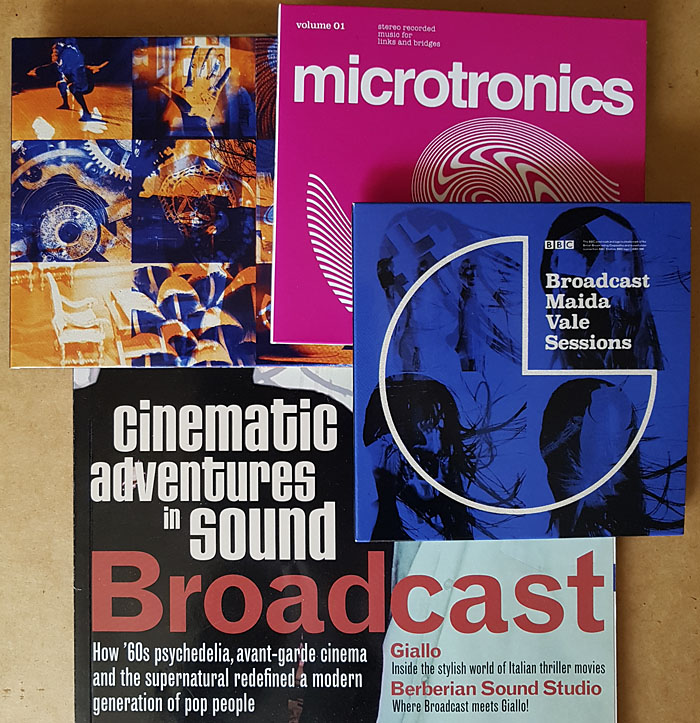
Here at last, the two Broadcast reissues and the album of officially released radio sessions. I already had much of the music so these purchases are mostly for reasons of cult completism and the Julian House cover designs. Mr House had already designed the rest of the Broadcast discography, as well as collaborating with them in his Focus Group guise, so this continuity was essential.
broadcast2.jpg

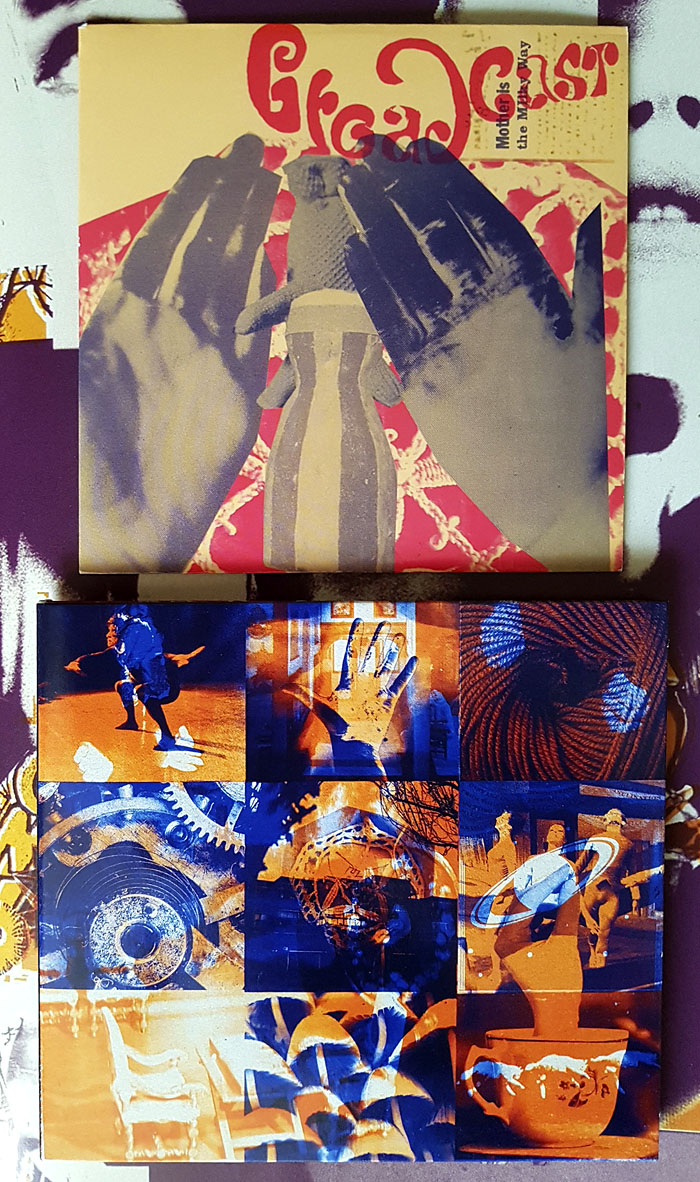
Also essential, music-wise, is the Mother Is The Milky Way EP even though it’s only 20 minutes long. This was originally limited to 750 copies sold during the 2009 tour so it’s always been hard to find. Musically, it’s of a piece with the Witch Cults Of The Radio Age album, and just as beguiling, a dreamy mélange of song fragments and sound samples—Kurt Schwitters’ Ursonate colliding with Jonathan Miller’s Alice in Wonderland—that’s more genuinely “psychedelic” than many attempts to conjure these qualities by mimicing old musical styles. The overlaid images on the cover may be alluding to the layered sounds…and are those magic mushrooms in one of the squares? Answers on a lysergic sugarcube.
broadcast3.jpg

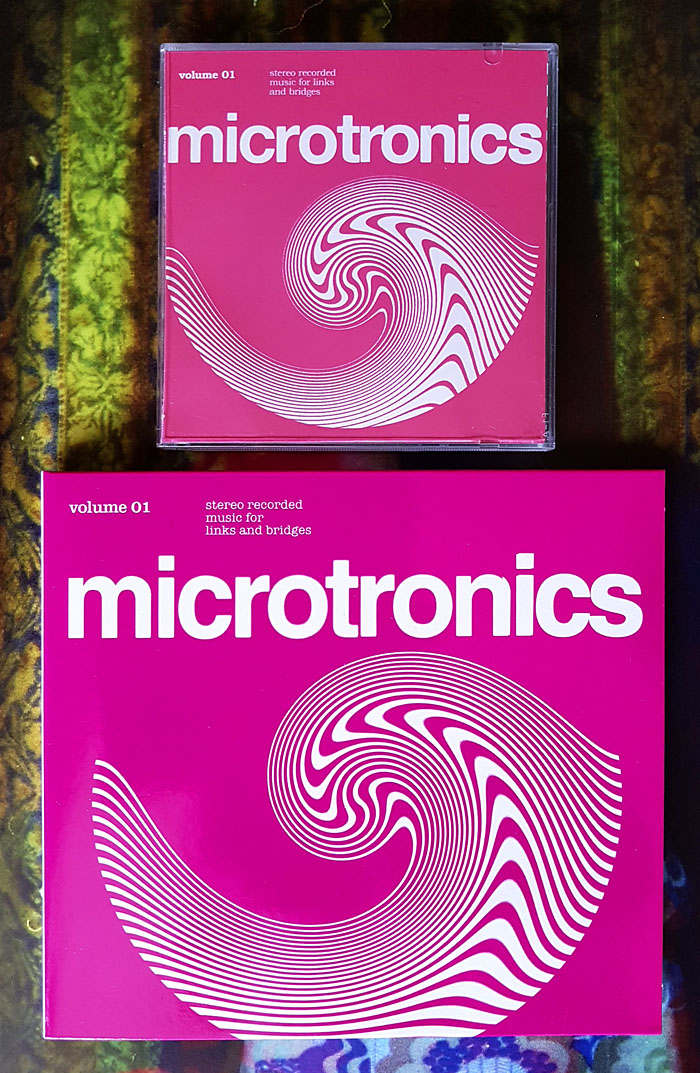
The two Microtronics EPs were intended to be functional works rather than entertainments, “Music for links and bridges”, although I don’t know if they’ve ever been used as such outside Broadcast mixes. These were also sold on separate tours as mini CDs but they now come packaged together, including a first-time release on vinyl which will keep the fetishists happy despite the format seeming like overkill for a collection of 21 very short squawks and drum loops.
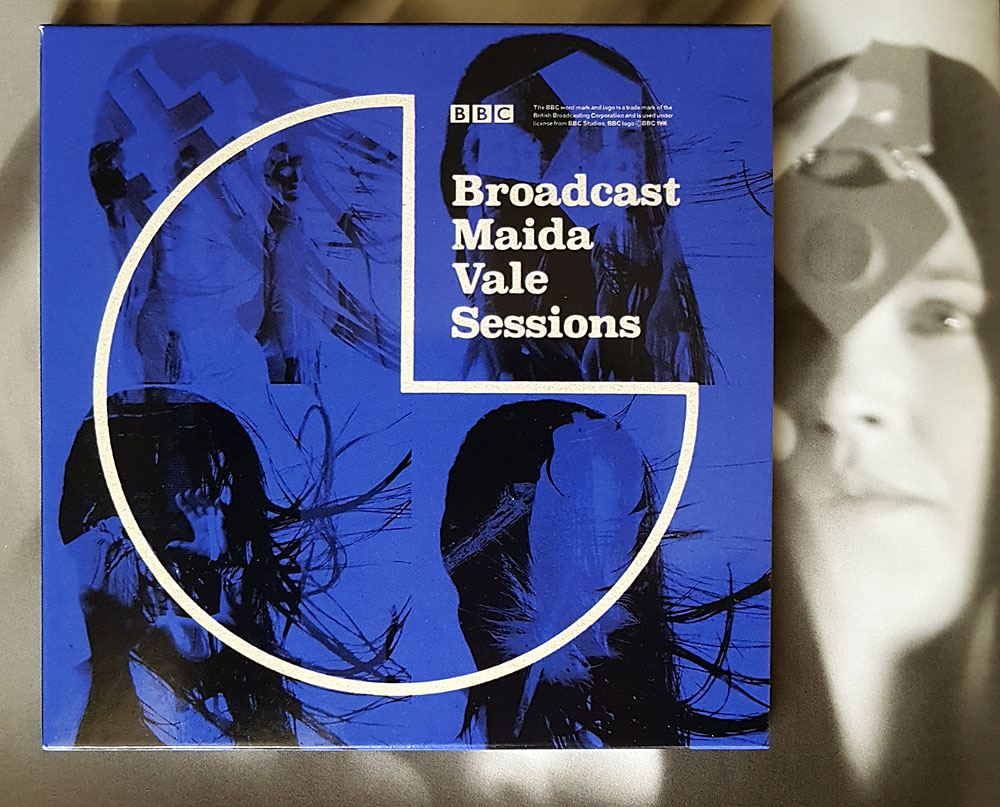
broadcast4.jpg

Maida Vale Sessions will also be essential for some listeners, comprising the group’s three sessions for John Peel’s show (1996, 2000, 2003) plus one from 1997 for Steve Lamacq’s Evening Session, 54 minutes in total. Being a collector of Broadcast bootlegs I already had most of these but they sound so much better coming from the original recordings. The final session, which I hadn’t heard before, is a fantastic set, and includes one of their few covers, a version of Sixty Forty by Nico. John Peel was an enthusiast, unsurprisingly, who may be heard on a bootleg of a Birmingham concert introducing the group as “one of the nation’s great bands”.

And if any of the above has stimulated your interest, Warp Records wisely commissioned The Gaslamp Killer to create an hour-long mix from the new records which may be heard here.

Previously on { feuilleton }
Esoterica 49
Peter Strickland’s Stone Tape
Valerie and Her Week of Wonders
The Ghost Box Study Series

Weekend links 611

ltpf.jpg

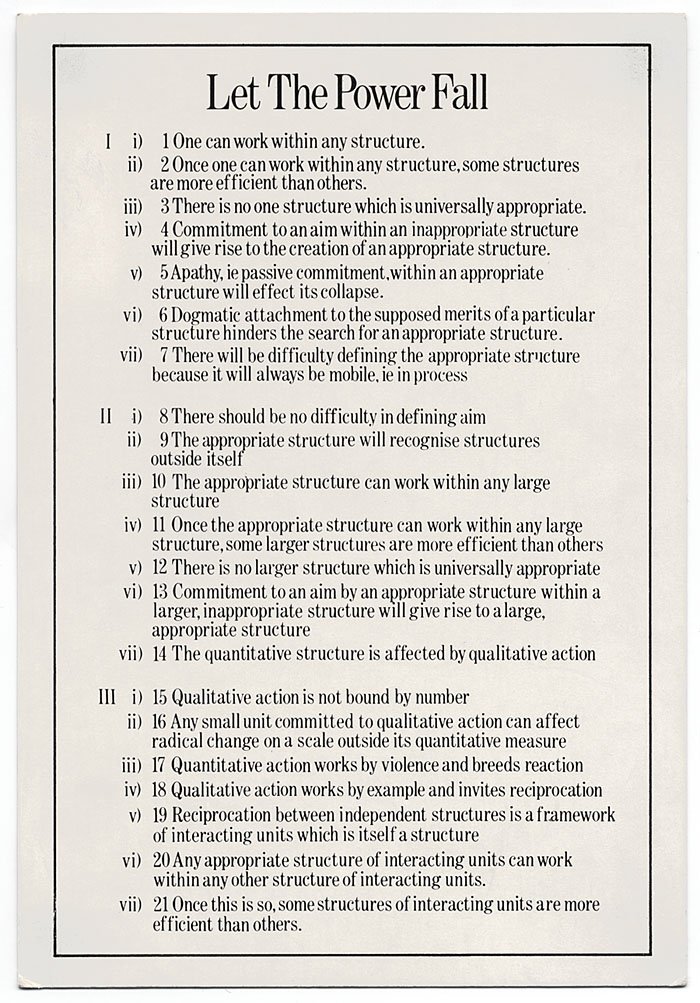
Let The Power Fall (1981) by Robert Fripp. A postcard included with the original vinyl release of the Let The Power Fall album.

Exposures 1977–1983 is the title of another wallet-busting CD/DVD/blu-ray box which will be released by DGM at the end of May. Unlike the previous King Crimson sets this one will be devoted to Robert Fripp’s first run of solo releases, covering the albums that emerged from the artistic campaign he described at the time as “The Drive to 1981”: Exposure (1979), God Save The Queen/Under Heavy Manners (1980), The League Of Gentlemen (1981), and Let The Power Fall (1981). If you’re as interested as I am in this period of Fripp’s career then this is all very exciting. Exposure has been reissued several times over the years, and exists in three different “editions” featuring alternate mixes and song variations, but the other albums have been unavailable in any form for decades, possibly as a result of the turmoil caused by the mismanagement and eventual collapse of the EG label. In addition to the reissues the box will include live recordings, a League Of Gentlemen Peel session plus a substantial quantity of Frippertronics material, including the loops that were recorded for Eno & Byrne’s My Life In The Bush Of Ghosts. Fripp retained a credit for his contribution to Regiment but the results are so far down in the mix that they’re easy to miss. Related: The Drive to 1981: Robert Fripp’s Art-Rock Classic Exposure.

• Galerie Georges-Philippe & Nathalie Valloisin, Paris, is currently creeping out visitors to Strange Aeons—We will meet you there, an exhibition by Peybak (Peyman Barabadi and Babak Alebrahim Dehkordi) that borrows its title from HP Lovecraft and includes a number of creatures, “neither embryos nor chimeras”, which may be found prostrate and breathing on the gallery floor.

• New music: Sub Zero, in which Kevin Richard Martin returns to the subterranean/subaqueous/subarctic zones he charted on his Isolationism and Driftworks compilations in the 1990s; plus The Carrier by Large Plants, an album of “psych rock belters” coming soon on the Ghost Box label.

• Science fiction as revolution: Joe Banks talks to Iain McIntyre, co-editor of Dangerous Visions and New Worlds—Radical Science Fiction, 1950–1985, about the flourishing of the New Wave of SF in the 1960s and 70s.

• “We know from his letters that Joyce sent a Greek flag to Nutting for him to colour-match. So, he was aiming for ‘Greek’ blue.” It’s that book again. Cleo Hanaway-Oakley on Ulysses, blindness and blue.

• Intermittent Eyeball Fodder: More visual delights gathered by S. Elizabeth.

• Steven Heller’s font of the month is Nicholas.

• Galerie Dennis Cooper presents…Liz Larner.

Let The Power Fall (1971) by Max Romeo | Minor Man (1981) by The League Of Gentlemen ft. Danielle Dax | Heptaparapashinokh (1981) by The League Of Gentlemen

Weekend links 610

durer.jpg

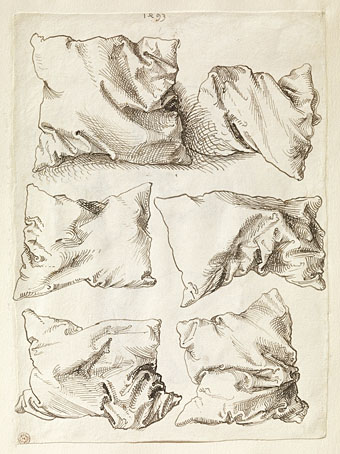
Pillow Studies (1493) by Albrecht Dürer.

• “Without ever writing a song, without ever fronting a group, Khan changed the face of British music.” Michael Hann talks to Morgan Khan about bringing New York Electro to the UK with his Streets Sounds label.

James Balmont offers “an introduction to Japan’s visceral cyberpunk cinema in five cult films”. This reminds me that I’ve not seen Shinya Tsukamoto’s Tetsuo films for years. Time to reacquaint myself.

• At Aquarium Drunkard: 15-minutes of Alice Coltrane from 1970, talking about her music and performing with Pharoah Sanders et al. Amazing.

Clive Hicks-Jenkins presents Beauty & Beast, an animated fairy tale made to showcase his toy theatre design.

• Carl Dreyer’s horror masterpiece, Vampyr (1932), is released on blu-ray by Eureka in May.

• At Wormwoodiana: Mark Valentine explores the mysteries of the Egg Language.

• DJ Food unearths paintings by Syd Mead for a Celcon Steel brochure, 1965.

• Jamie Sutcliffe enters The Strange World of Junji Ito.

• Mix of the week: Isolatedmix 117 by Refracted.

Keeley Forsyth‘s favourite music.

Electrocharge (1980) by Blackbeard | Electrodub1 (1980) by Chris Carter | Ano Electro (Andante) (1993) by The Sabres Of Paradise

Weekend links 609

tv1.jpg

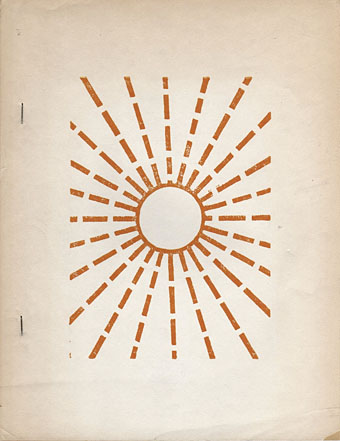
Cover of Tom Veitch Magazine #1 (1970).

• RIP Tom Veitch, a writer with whom I almost created a comic-book series in the 1990s. Things didn’t work out for a variety of reasons but we had some good conversations. All the news notices focus on his writing for comics, a career which ranged from angry, political strips with Greg Irons to typical franchise fare. But he had short stories published in New Worlds magazine when it was at its peak under Michael Moorcock’s editorship, and in Quark, a short-lived paperback magazine edited by Samuel Delany & Marilyn Hacker. Veitch was also among the first 35 contributors to John Giorno’s Dial-a-Poem service when it launched in 1968, part of a select group that included John Ashbery, William Burroughs and Allen Ginsberg. Related: An interview with Tom Veitch on William Burroughs at Reality Studio.

• “I won’t deny that I thought very much about a post punk influence on it. Everybody knows that I love post punk, but I didn’t want to copy anybody.” Robert Hampson talking to Jonathan Selzer about the return of Loop.

• “What Joyce and Eliot, Ulysses and The Waste Land, had in common was a showiness, an overt ambition as well as a magpie approach to literature as assemblage.” John Self on the year 1922, “literature’s year zero”.

• At Spoon & Tamago: All of Japan’s 47 prefectures captured in expressive typography.

• At Public Domain Review: Composition (1905) by Arthur Wesley Dow, a book for art students influenced by the example of Japanese prints.

• At Wormwoodiana: Mark Valentine on the unending attempts to solve The Mystery of Edwin Drood.

• Mixes of the week: Fact Mix 846 by Ehua, and Soylent Green – No Escape by The Ephemeral Man.

• At Dennis Cooper’s: Matthew Suss presents…Joseph Cornell Day.

• At Bandcamp: A guide to Alvin Lucier.

Loop The Loop (1980) by Young Marble Giants | Q-Loop (1995) by Basic Channel | Loop-Loop (1996) by Michael Rother

Something Rich and Strange: The Life and Music of Iannis Xenakis

xenakis1.jpg

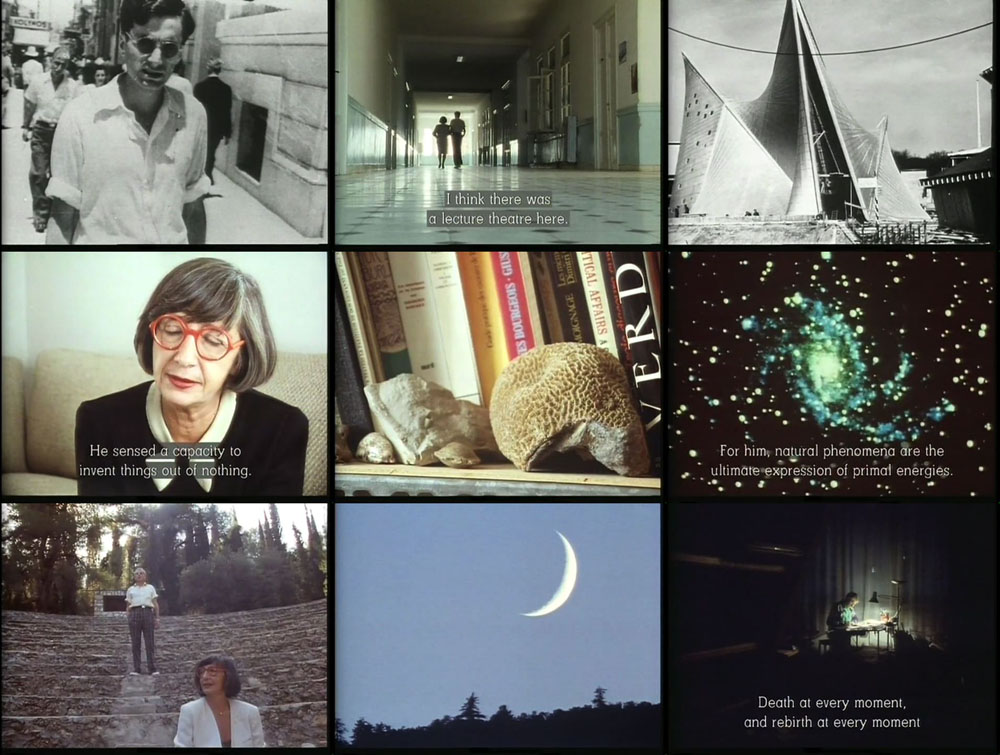
In the days before our present age of cultural plenitude, recordings by Greek composer Iannis Xenakis weren’t always easy to find. My haphazard introduction to contemporary composition came via record libraries and secondhand shops but even in these havens of obscurity discs of Xenakis music remained frustratingly elusive. Today I do own a few Xenakis CDs but there’s still a large portion of his work that I’ve yet to hear. After watching Mark Kidel’s documentary I’m persuaded once again that the gaps in my listening ought to be filled.

20th-century composition can be intimidating to the unitiated. Intimidating to listen to when so much of it is about finding new sounds, new structures, new modes of performance; and intimidating to read about when the discussion involves the analysis of very cerebral or technical conceptions. It can also disappoint when the results of those conceptions fail to hold the attention or excite the emotions. Many Xenakis compositions had their origin in mathematics or scientific theory but the musical results are consistently powerful and dramatic, even unnerving in a manner familiar from the works of Penderecki and Scelsi.

xenakis2.jpg

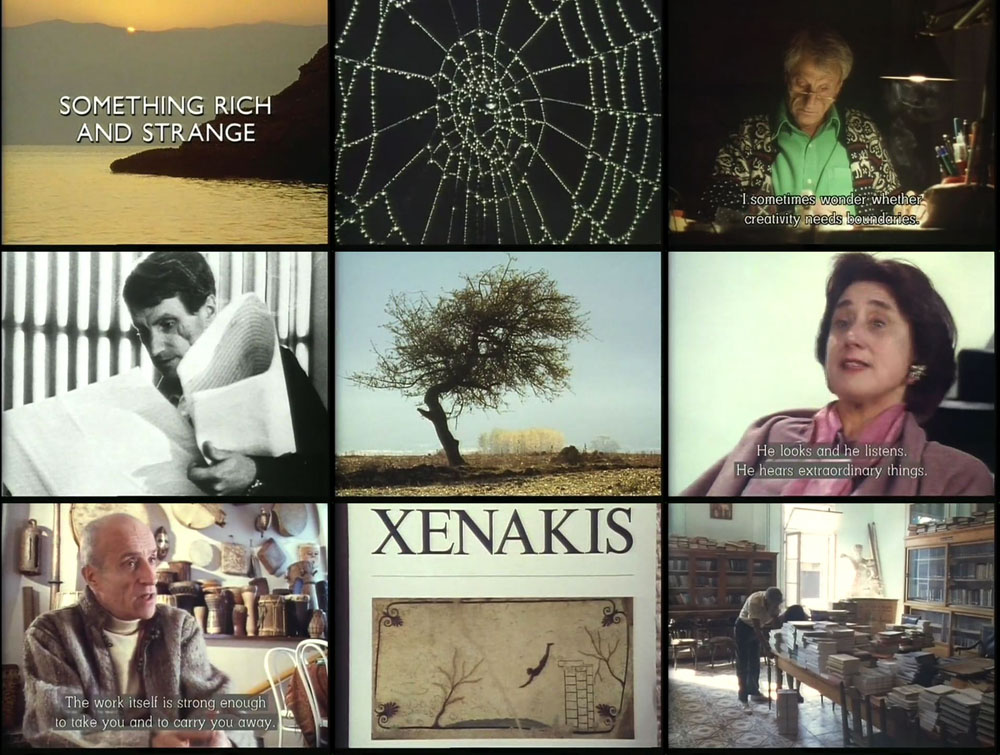
Mark Kidel’s hour-long documentary gives a small taste of the musical power and drama, especially in Roger Woodward’s performance of Eonta, a short composition for solo piano that’s astonishing to hear and see. Something Rich and Strange was made for the BBC in 1990 but it’s one I missed on its original broadcast so it’s good to find in a quality copy on the director’s Vimeo pages. The note there describes the film as a definitive portrait which sounds like a boast but there aren’t many Xenakis documentaries to choose from and it is very good, if a little too short for its subject. The film follows the composer and his wife, Françoise, as they journey to the Greek island of Spetsai where Xenakis spent several years at school in the 1930s. His reminiscences (or refusal of them) are interwoven with a sketch of his remarkable life which in its early years involved fighting with the Greek Resistance during the Second World War (and losing the sight in one eye as a result), fleeing to Paris in the post-war period after being condemned to death in absentia by the authoritarian Greek government, and working as an architect with Le Corbusier in the 1950s before deciding to devote the rest of his life to music. Kidel’s views of the Greek landscape wordlessly demonstrate the parallels between Xenakis’s music and the sounds of that landscape—goat bells, water lapping in a cave, a priest hammering a piece of wood—but we don’t hear much discussion of the composer’s musical evolution. His interest in electronic music, for example, is briefly mentioned but dismissed as being a direction he was unwilling to follow. But it was a direction he followed intermittently for at least a decade, and his electronic compositions would occupy several hours of your time if listened to in sequence. That’s the problem with trying to sum up a diverse career within the bite-sized limits of broadcast media; if the film was longer there would have been more time to address both the life and the details of the work. As it is, this is still an excellent introduction to a great composer.

Previously on { feuilleton }
Vasarely, a film by Peter Kassovitz
A playlist for Halloween: Orchestral and electro-acoustic