German gear

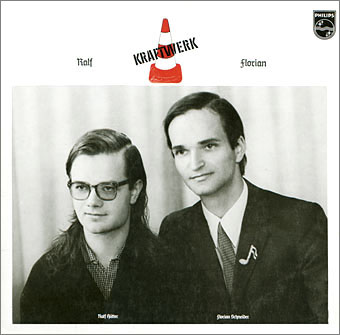
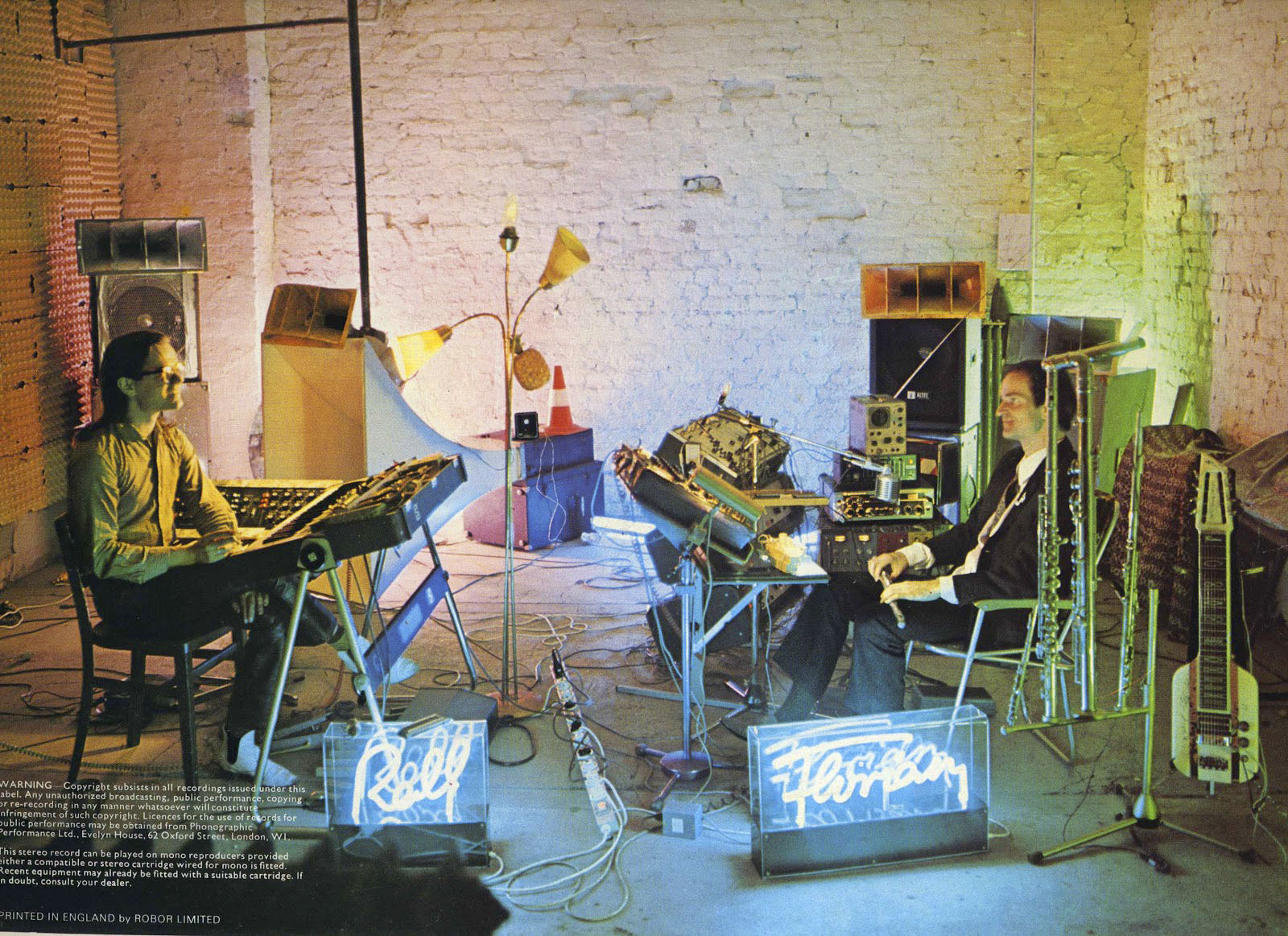
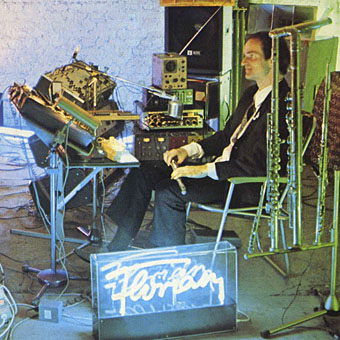
Ralf and Florian, 1973. Back cover photo by Barbara Niemöller.

At that time, Kling Klang Studio was far from the technological hub it would become. “The studio was a big room in an old factory building with brick walls,” recalls [Wolfgang] Flür. “There were big home-made speakers, amplifiers and so on. Florian had his side, with his flutes and one of the very first ARP Odyssey synthesizers, while Ralf’s side had Hammond and Farfisa organs and a Minimoog synthesizer.”

Andy Gill, Mojo magazine, April 1997

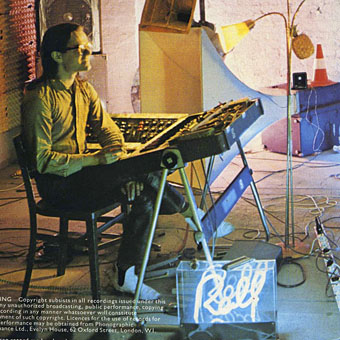
Last week’s Autobahn post prompted a week of revisiting Kraftwerk’s three pre-Autobahn albums, all of which remain unreissued. The photo that fills out the back cover of the third album, Ralf & Florian (1973), has appeared here twice before so if you want an example of an obsession look no further. I only have a bootleg CD of this one, a package that doesn’t do much for the photograph so I went searching for a larger copy.

ralf.jpg

The attractions, if you have to list them, are multiple: Ralf & Florian is Kraftwerk’s most human album, and the cover photos reflect this. Trans-Europe Express originally had pictures of the group on its sleeve (now replaced by the TEE train) but they were airbrushed, idealised portraits; the showroom-dummy personas they adopt there would turn into robots on the album that followed. There’s an overt sense of camp about the Ralf & Florian cover shots that runs counter to the tenor of rock music in 1973. The charts in Britain might have been filled with glam acts but for all their flirtatious androgyny they were selling the same assertive macho sexuality as the big rock bands of the time. One of the things I enjoy about this cover photo is its refusal to follow that crowd: the neon name signs, the standard lamp from a 1950s’ living room, Florian’s semiquaver brooch; all are effete enough to give Deep Purple the vapours. (The first UK release of Ralf and Florian replaced the cover photo of the pair with a printed circuit.) The closest comparison in the same year would be the sleeve for Brian Eno’s Here Come The Warm Jets with its shelves of dead flowers and junk-shop discoveries. But this wasn’t so surprising for an ex-member of Roxy Music, and Eno’s album is still very much a rock production.

florian.jpg

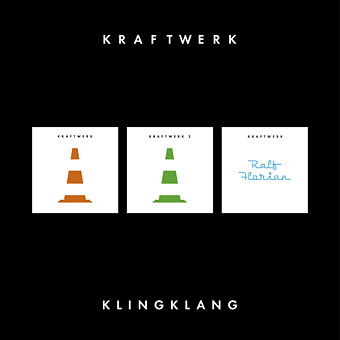
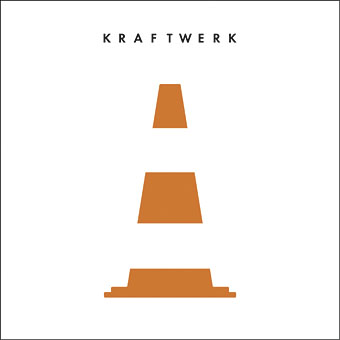
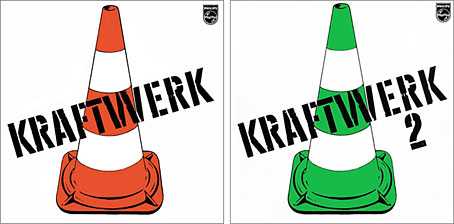
Then there’s the details: the egg-box soundproofing (Can used old mattresses to soundproof their studio); the enormous white speaker; the traffic cone that nods back to the sleeves of the first two albums and forward to the automotive theme of the next; Ralf’s white shoes (and is he wearing leather trousers?); Florian’s oscilloscope, his mysterious tone generators and that peculiar stringed instrument. This diverse range of gear somehow produced the music you’re listening to.

Continue reading “German gear”

Weekend links 244

scarpulla.jpg

MMOB :: Far West (2013) by Alison Scarpulla.

• “…although same-sex love is as old as love itself, the public discourse around it, and the political movement to win rights for it, arose in Germany in the late nineteenth and early twentieth centuries. This message may surprise those who believe that gay identity came of age in London and New York, sometime between the Oscar Wilde trials and the Stonewall riots.” Alex Ross reviewing Robert Beachy’s Gay Berlin: Birthplace of a Modern Identity. Beachy talks about his book here.

• “I was in a room with tube synthesizers, where you had to tune them up to play them. It was unbelievable.” John Carpenter talking to Joseph Stannard about composing with electronics. Carpenter’s album of new music, Lost Themes, may be previewed here.

• From 2010: John Ridpath on Mervyn Peake’s illustrations for Lewis Carroll’s Alice Through the Looking Glass and Alice in Wonderland. Related: “The most twisted version of Alice in Wonderland you’ll ever see.”

I was brought up in a world where art was something owned and insured—usually inherited: but seldom if ever made by anyone one I knew.

I had an early inkling that there was fun to be had over the hill, like the feeling when faced with a sunset that someone’s throwing a mega awesome party just beyond the nearest cloud, and I set off to join the caravan. Let’s just say I was in search of company, headed towards the glow, and I found it.

Tilda Swinton‘s speech at the Rothko Chapel

• “Her art often touches on alchemy and magic; and in her memoir of insanity she writes of misreading an Imperial Chemicals sign as ‘chemistry and alchemy’.” Charlotte Higgins on Leonora Carrington.

Shadows Over Main Street, an anthology of small-town Lovecraftian terror, is out this week from Hazardous Press. 20 stories and poems plus interior illustrations including a contribution of my own.

• “With Fantastic Planet, I felt torn about using it, because it’s…the title of an animated film.” Guitarist Sarah Lipstate, aka Noveller, talks to Ned Raggett about her new album.

Jim Jupp of Belbury Poly and the Ghost Box record label answers 15 questions.

• A DeLorean driving through a Tron cityscape: Retrowave by Florian Renner.

• Powell & Pressburger’s Tales of Hoffmann (1951) has been restored.

Music from Forbidden Planet (1956) by Louis & Bebe Barron | The Four Horsemen (1972) by Aphrodite’s Child | Assault on Precinct 13 (Main Theme) (1976) by John Carpenter

Autobahnen

1: Autobahn (1974), an album by Kraftwerk.

autobahn01.jpg

Cover art by Emil Schult.


2: Autobahn (1974), a single by Kraftwerk.

autobahn09.jpg

autobahn10.jpg


3: Doppelalbum (1974), a double-disc compilation album by Kraftwerk.

autobahn11.jpg

autobahn12.jpg

autobahn13.jpg


4: Exceller 8 (1975), a compilation album by Kraftwerk.

autobahn14.jpg

Cover by Grafad.

autobahn15.jpg


5: Autobahn (1979), an animated film by Roger Mainwood.

autobahn17.jpg


6: Autobahn (1980), a compilation album by Kraftwerk.

autobahn08.jpg


7: Possessed (1992), an album by the Balanescu Quartet. Track 3: Autobahn.

autobahn07.jpg


8: Traffic Jam On Autobahn (1993), a Kraftwerk bootleg from a live soundboard recording at Hummingbird, Birmingham, UK, on July 15th 1991.

autobahn02.jpg


9: Autobahn Tour (1998), a Kraftwerk bootleg. The Japanese release of Concert Classics, a live soundboard recording from a concert in Denver, USA on 20th May, 1975.

autobahn05.jpg


10: El Baile Alemán (2000), an album by Señor Coconut Y Su Conjunto. Track 6: Autobahn (Cumbia Merengue).

autobahn04.jpg


11: Dark Side Of The Autobahn (2003), a single by Mordant Music. The Pink Floyd/Kraftwerk/Joy Division collision that the world was waiting for.

autobahn06.jpg


12: Autobahn II (no date) by Kraftwerk. A Russian flexi-disc.

autobahn03.jpg


13: Autobahn (2009), an album by Kraftwerk. The remastered release.

autobahn16.jpg

Elsewhere on { feuilleton }
The album covers archive

Previously on { feuilleton }
Ralf and Florian
Reworking Kraftwerk
Autobahn animated
Sleeve craft
Who designed Vertigo #6360 620?
Old music and old technology
Aerodynamik by Kraftwerk

Weekend links 243

burgoyne.jpg

Genesia (2011) by Bette Burgoyne.

• “…so I started buying these old gay porn novels, just for the covers and kept on collecting them.” Maitland McDonagh on the underexamined world of gay pulp. McDonagh’s 120 Days Books is reprinting some of these scarce titles. More gay erotica: Plans are afoot to republish Des Grieux, the rare prequel to Teleny or The Reverse of the Medal (1893), a novel often attributed (without much evidence) to Oscar Wilde.

Merricat is the name under which the Turrell Brothers, John & Tom, produce their atmospheric “nacht music”. Albums with titles such as Oneiros, Widdershins and Zerkalo give an idea of the spheres of interest. They also make short films, clips from which may be seen here.

• “Fascists don’t like satire. They don’t like it at all. And they especially don’t enjoy visual satire. Because of its unique power to communicate.” Ralph Steadman talking to Robert Chalmers about recent events.

There is an unexamined commonplace now floating around the social media, which has it that satire derogates its proper function when it stops targeting the powerful, and targets the relatively powerless instead. Theodor Adorno has also been cited here and there with his remarks on satire in the Minima Moralia of 1951, but few have noticed that the account he offers there stands in direct contradiction to the current received wisdom. For Adorno, satire is in its essence wistful and traditionalist. It looks back to something that has been lost, and dismisses the straight-facedness of everyone who attempts, against all evidence, to maintain the illusion that there is anything respect-worthy about the present state of things. It targets not just elected officials, but the yokels who elected them; not just the honcho who runs the saloon, but the sucker who hands over his last possessions at the poker table. There is a need for this: the yokels and the suckers need it most of all. There is redemption in it, and I confess to harboring whatever amount of traditionalism it takes to appreciate this redemptive quality.

Paris, 2015: a lengthy meditation by Justin EH Smith on the responses of left and right to the Charlie Hebdo killings

• “When the surface of the world is so overloaded with competing narratives…there is an understandable impulse to go underground.” Iain Sinclair on the excavation of London.

• More German music: Sinai Desert (1981) and Kailash, Pilgerfahrt Zum Thron Der Götter (no date), two films with music by Popol Vuh.

Kim Fowley: Sins & Secrets of the Silver Sixties. UglyThings Magazine makes available its definitive Fowley interview from 2001.

• More electronica and mix of the week: the FACT guide to the Yellow Magic Orchestra and associates.

• Vegetable-snake Undersea Beings: Allen Ginsberg writes to the Paris Review about LSD in 1966.

• The Edge Question for 2015: What do you think about machines that think?

Life of Cats: Selections from the Hiraki Ukiyo-e Collection.

Lake Baikal frozen over

Serial Killer Barbie

NGC 891 (1974) by Edgar Froese | Overture (1974) by Tangerine Dream | PA 701 (1976) by Edgar Froese

Edgar Froese, 1944–2015

froese.jpg

“I was a big fan of Kraftwerk, Cluster and Harmonia, and I thought the first Neu! album, in particular, was just gigantically wonderful,” admits Bowie. “Looking at that against punk, I had absolutely no doubts where the future of music was going, and for me it was coming out of Germany at that time. I also liked some of the later Can things, and there was an album that I loved by Edgar Froese, Epsilon In Malaysian Pale; it’s the most beautiful, enchanting, poignant work, quite lovely. That used to be the background music to my life when I was living in Berlin.”

David Bowie, Mojo magazine, April 1997

Epsilon In Malaysian Pale was Froese’s second solo album released in September 1975. That month David Bowie was in Los Angeles recording his Station To Station album, the opening of which features phased train sounds that are strikingly similar to those that run through the first side of the Froese album. I’ve never seen this similarity mentioned by Bowie scholars but if there was an influence it’s a good example of the degree to which Tangerine Dream infiltrated the wider culture as much as Can and Neu! (Kraftwerk remain in a league of their own.)

zeit.jpg

All you need is Zeit. Cover painting by Edgar Froese.

The influence of Tangerine Dream’s albums on the Ohr and Virgin labels is now so widespread that it’s difficult to compile a definitive list of those who’ve either paid homage or copied the group’s trademark style of extended sequencer runs and phased chords. Offhand I could mention the Ricochet-like tracks on Coil’s Musick To Play In The Dark Volumes 1 & 2; the many moments on the early Ghost Box albums, one of which samples from Alpha Centauri; and some of Julian Cope’s more out-there recordings from the late 1990s. There’s also all the releases by a group of loosely affiliated musicians dedicated to maintaining the 70s sound of Mellotrons and bouncing sequencers; many of these I’ve yet to hear but I’ve enjoyed the albums by Node and Redshift.

td.jpg

Tangerine Dream have been a continual fixture in my music listening since I was a teenager; I drew most of The Call of Cthulhu to a soundtrack of Rubycon and Jon Hassell’s Aka/Darbari/Java album. I kept up with them after they departed from Virgin then jumped ship in 1986 after Johannes Schmoelling left the group. The albums continued to proliferate in recent years to an extent that even the Freeman brothers only follow the discography (with some exasperation) up to 1990 in their redoubtable Krautrock tome The Crack in the Cosmic Egg. Navigating a late career is a tricky business for a popular musician so you can’t blame Froese for carrying on the project. Those early recordings are the important ones, and he was a crucial component in their creation.

There’s a lot of Froese and TD on YouTube. If you like the early material these are some of the better moments:

Bath Tube Session, 1969: TD in psych-freakout mode. Klaus Schulze on drums, and lots of German heads looking bemused/bored.
Ossiach Lake, 1971: Playing outdoors for the TV cameras.
Paris, 1973: Footage of the group improvising in the manner of the Atem album.
Coventry Cathedral, 1975: Tony Palmer’s film of one of the cathedral concerts which caused them to be banned by the Pope from playing in churches. The original sound on this one is lost so the YT version has edits of the Ricochet album as the soundtrack.
London, 1976: Great film of the Ricochet period. Total synth porn.
Thief, 1981: The opening scene to Michael Mann’s thriller, and one of their best soundtrack moments. In The Wire this month John Carpenter enthuses about the TD score for Sorcerer but I’ve always felt Mann’s crime drama was a better match for their sound.
Warsaw, 1983: A Polish TV recording of the concert documented on the Poland (1984) album.

Previously on { feuilleton }
Synthesizing
Tangerine Dream in Poland