Weekend links 323

taylor.jpg

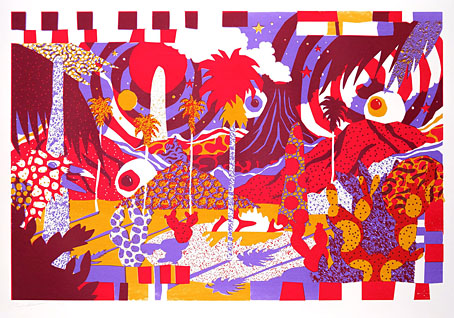
Mescaline Woods (1969) by Gage Taylor.

• The soundtrack to The Man Who Fell to Earth will be released for the first time next month in a double-disc set (CD & vinyl). This isn’t, as some people have hoped, David Bowie’s unheard music for the film, but a collection of the pre-existing songs and other pieces, plus the original compositions by John Phillips. Consequence of Sound has a track list.

• At Scream Addicts: Joe R. Lansdale talks about the only film adaptation of Shirley Jackson’s The Haunting of Hill House that you need to see: the 1963 version directed by Robert Wise.

• The new wave of new age: How music’s most maligned genre finally became cool by Adam Bychawski.

• Transmissions From The Abyss: Dark ambient music for the perfect headspace by S. Elizabeth.

Jason Farrago reviews Art Aids America, an exhibition at the Bronx Museum, New York.

Curse Go Back: a limited reissue of tape experiments by William Burroughs.

Samuel Wigley on Notorious at 70: toasting Hitchcock’s dark masterpiece.

Toyah Willcox remembers working with Derek Jarman on The Tempest.

• “Why are musicians so obsessed with David Lynch?” asks Selim Bulut.

• Read the original 32-page programme for Fritz Lang’s Metropolis.

David Parkinson chooses 10 essential films starring Oliver Reed.

• Mixes of the week: The Sounds of the Dawn NTS radio shows.

Keith Haring envisions Manhattan as a kingdom of penises.

Frank Guan on Massive Attack’s Blue Lines, 25 years on.

Honky Tonk Pts 1 & 2 (1956) by Bill Doggett | I’ve Told Every Little Star (1961) by Linda Scott | I’m Deranged (1995) by David Bowie
Weekend links 322

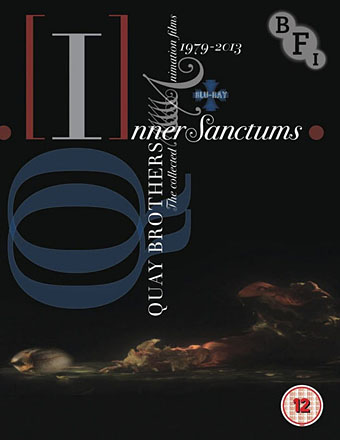
quays.jpg

• Cover art by the Quays for Inner Sanctums—Quay Brothers: The Collected Animated Films 1979–2013, a Blu-ray collection which will be released by the BFI next month. Being something of an obsessive where the Quays are concerned I have a lot of this material already (some of the films in multiple copies), but I’ve been hankering for a BR collection for some time. The new set will include everything that’s on the BFI’s DVD collection plus more recent films, some of which have been the subject of previous { feuilleton } posts.

• Aubrey Beardsley: “The subjects were quite mad and a little indecent. Strange hermaphroditic creatures wandering about in Pierrot costumes or modern dress; quite a new world of my own creation.” Alan Hollinghurst reviews the catalogue raisonné of Beardsley’s work.

• How to find the spirit of HP Lovecraft in Providence. Related: there’s now a funding page for the statue of Lovecraft by Gage Prentiss being proposed for downtown Providence. Read about it here.

• At The Quietus: Robert Barry on KPM and the history of library music, and James De Carteret on Mike Hodges’ underrated The Terminal Man (1974).

Michael Newton reviews Erica Wagner’s First Light, “a festschrift of essays, reminiscences, poems and stories dedicated to Alan Garner and his work”.

Cosey Fanni Tutti‘s forthcoming memoir Art Sex Music should prove more interesting than some of the recent music business autobiographies.

• Mixes of the week: A New Age mix by Matthewdavid, FACT mix 563 by Deerhoof, and Secret Thirteen Mix 193 by Nite Fields.

Underground music, echoes of war: using the vast Inchindown storage chamber for its resonant properties.

Totally Lost: a photographic and video exploration of abandoned European totalitarian architecture.

• More animation: Nonsense, Cartoons, and My Post-Soviet Adolescence by Naré Navasardyan.

Annie Rose on the allure of the predatory lesbian vampire in film.

• “Let’s write an encyclopedia of things blue,” says Bernd Brunner.

• Ferrets can be gods: Katherine Rundell on the inimitable Saki.

• The Mystery of Hieronymus Bosch by Ingrid D. Rowland.

iO-808: A TR-808 drum machine for browsers.

A Good Book

Terminal Hotel (1981) by Synergy | Sataan Is Real (1992) by Terminal Cheesecake | Terminal (1999) by Monolake

Weekend links 321

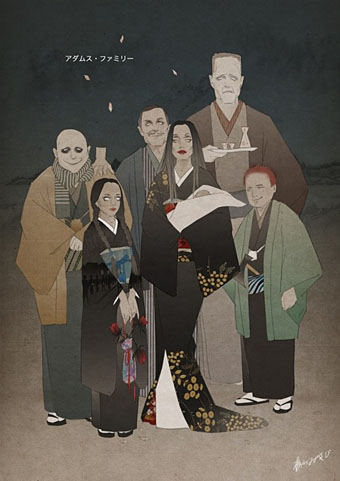
miyabi.jpg

The Addams Family In Kimonos by Matsuyama Miyabi. Via S. Elizabeth.

• “They’re not the men you’ll walk down the street and lock eyes with, or that you’ll spot at a bar casually. They’re a fantasy.” Michael Valinsky reviewing Tom House: Tom Of Finland In Los Angeles edited by Michael Reynolds. Related (and almost a polar opposite): Nick Campbell on The Life to Come and Other Stories by EM Forster.

Randall Dunn, musician (Master Musicians of Bukkake), producer (Sunn O))), Earth, etc), engineer, discusses making and recording music.

John Waters brings back Multiple Maniacs: “Of course I went a little too far.” he says. Waters also talked about the film at Gawker.

Q: Most cherished book on your shelves? Why?

A: Depends on the day. Today it’s Blood Meridian by Cormac McCarthy. Blood Meridian is an indictment of Manifest Destiny, the Westward Expansion, of Hollywood and its portrayal of the west; it’s confrontational and bellicose. The sheer brutality of it affected me like I’d swallowed poison or taken a shot to the liver that I didn’t remember. Blood Meridian is a reminder that literature isn’t always tame. It can bite you.

Laird Barron talking to Smash Dragons about favourite writers and his own fiction

• In East Tower Dreaming Howlround, aka Robin the Fog, processes the sounds of a former BBC office building.

• At The Headless Hashasheen: Magic Mirrors and Specters: Paschal Beverly Randolph, Hashish, & Scrying.

• At Dangerous Minds: The astonishingly beautiful three-colour photography of Bernard Eilers.

Samm Deighan on Gothic Film in the ’40s: Doomed Romance and Murderous Melodrama.

• On a scale from 1–100, Milton Glaser rates every single Olympic logo design in history.

• The overwhelming A/V experience of Paul Jebanasam and Tarik Barri.

Patrick Feaster describes how to “play back” a picture of a sound wave.

• Mix of the week: Secret Thirteen Mix 192 by Shadows.

COLLAGE—The London Picture Archive

Madrigal Meridian (1978) by Tangerine Dream | Meridian Moorland (1979) by Peter Baumann | Meridian (2009) by Espers

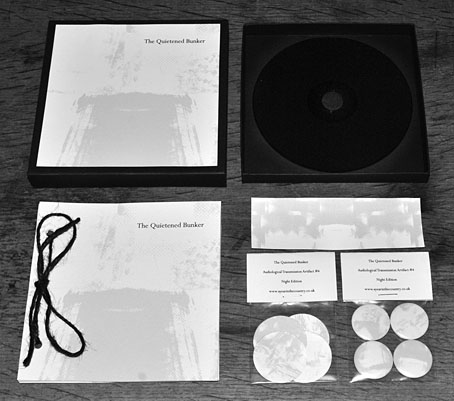
The Quietened Bunker

bunker.jpg

Bunkers were a recurrent feature in the media of the 1980s, a consequence of increasing Cold War tensions following the election of Ronald Reagan and the Soviet invasion of Afghanistan. The decade birthed new horrors of the body-mutating variety, and also reanimated some older ones in the figure of the knife-wielding psychopath, but the omnipresent spectre of nuclear war posed a threat not only to characters in films and TV serials but to the audiences who watched them. That threat manifests most strikingly in the middle of the decade with the TV film Threads (1984), the TV serial Edge of Darkness (1985), and the comic-book serial/graphic novel Watchmen (1986–87). To these you could add feature films such as WarGames (1983) and James Cameron’s The Terminator (1984) and its sequel. Not all of these works feature bunkers but nuclear warfare by its very nature implies the existence of subterranean control centres with all their latent mythological resonances. Some of those resonances are played with in David Rudkin’s Penda’s Fen (1974) and Artemis 81 (1981), the latter featuring an extended sequence in a sinister subterranean complex. Troy Kennedy Martin’s superb nuclear thriller, Edge of Darkness, runs the gamut of underground enclaves, from labyrinthine cave systems and abandoned nuclear shelters to a dusty Cold War command centre with a telephone link to Downing Street.

Bunkers of the abandoned variety provide the theme for the latest compilation album from A Year In The Country:

The Quietened Bunker is an exploration of the abandoned and/or decommissioned Cold War installations which lie under the land and that would have acted as selectively populated refuges/control centres if the button was ever pushed; a study and reflection on these chimeric bulwarks and the faded but still present memory of associated Cold War dread, of which they are stalwart, mouldering symbols.

Track list:
1) Lower Level Clock Room – Keith Seatman
2) Drakelow Tunnels – Grey Frequency
3) The Filter’s Gone / The Last Man Plays The Last Piano – A Year In The Country
4) Aggregates II – Panabrite
5) Bunker 4: Decommissioned – Polypores
6) Comms: Seen Through The Grey – Listening Center
7) Crafty Mechanics – Time Attendant
8) Crush Depth – Unknown Heretic
9) Waiting For The Blazing Skies – David Colohan

This is another quality collection in distinctive black-and-white packaging that will be of immediate interest to anyone who enjoys the releases on the Ghost Box label (Listening Center are already Ghost Box artists): spectral pianos, shortwave radios, ambient chords. The bunker theme connects to shared concerns among related artists with the old Civil Defence films, samples of which have been used on releases by The Advisory Circle and Mordant Music. The Cold War bunker is more than another empty space, it joins the bio-weapons lab (see The Satan Bug) as a source of contemporary horror that doesn’t require any supernatural component to chill the blood.

Previously on { feuilleton }
Fractures

Weekend links 320

liefhebber.jpg

Palm Night (2016) by Nick Liefhebber.

• “Gortner includes reference to the little known Hollywood ‘sewing circles’ (code word for lesbian communities) of which Marlene became a part. This group included Ann Warner, Lili Damita, Claudette Colbert, and Dolores del Río.” Walter Holland reviewing Marlene, a “novelization” of the life of Marlene Dietrich by CW Gortner.

• “Challenges and all, Jerusalem ensures Moore’s place as one of the great masters of the English language.” Heidi MacDonald reviewing Alan Moore’s forthcoming novel. Photos of the slipcased paperback edition (a 3-volume set) appeared last week.

• “It’s unlikely that a gnawing sense of being unborn tops the neuroses of most writers these days, but I’d argue that Beckett’s Jungian insight is more commonly known today as anxiety.” Robert Fay on nihilism and the writing life.

• “So why would I be ‘great for this cover’? Good chance it’s because the book is aimed at a female audience and I am a female designer.” Jennifer Heuer on gendered book covers and being a woman designer.

• Mixes of the week: FACT mix 562 by M. Geddes Gengras, Secret Thirteen Mix 191 by Monica Hits The Ground, and a mix by Daniel Miller.

• Strange Flesh: The Use of Lovecraftian Archetypes in Queer Fiction, an ongoing series by The Punk Writer: part 1 | part 2 | part 3 | part 4.

• “For the Sake of the Prospect”: Lily Ford on the ways in which balloon flight transformed ideas about landscape in the 18th century.

• “Why did Google erase Dennis Cooper’s beloved literary blog?” asks Jennifer Krasinski.

• From Leeds to London: portraits of English cities in the 1970s by Peter Mitchell.

Phantasm is Dune

• RIP Jack Davis

Palm Grease (live, 1974) by Herbie Hancock & The Headhunters | Phantasm (1994) by Biosphere | Fizzy Flesh (1996) by Spacer