The Dream Machine

dreamachine1.jpg

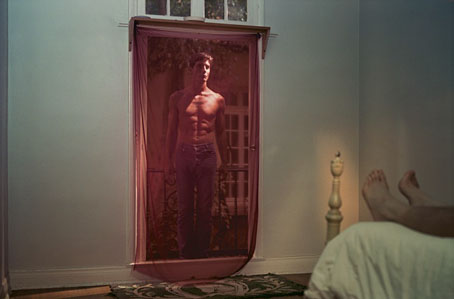
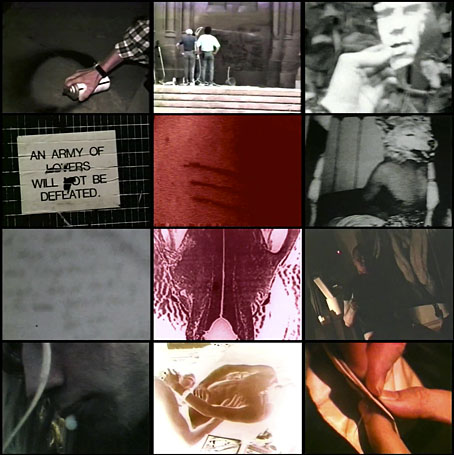
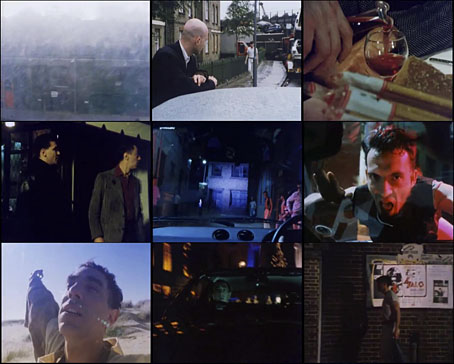
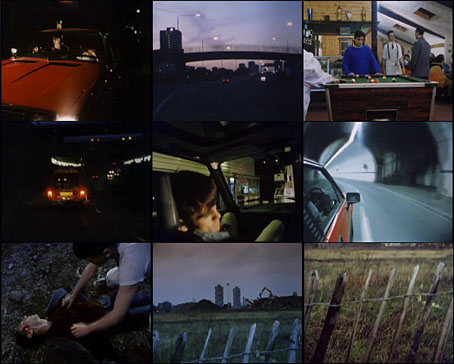
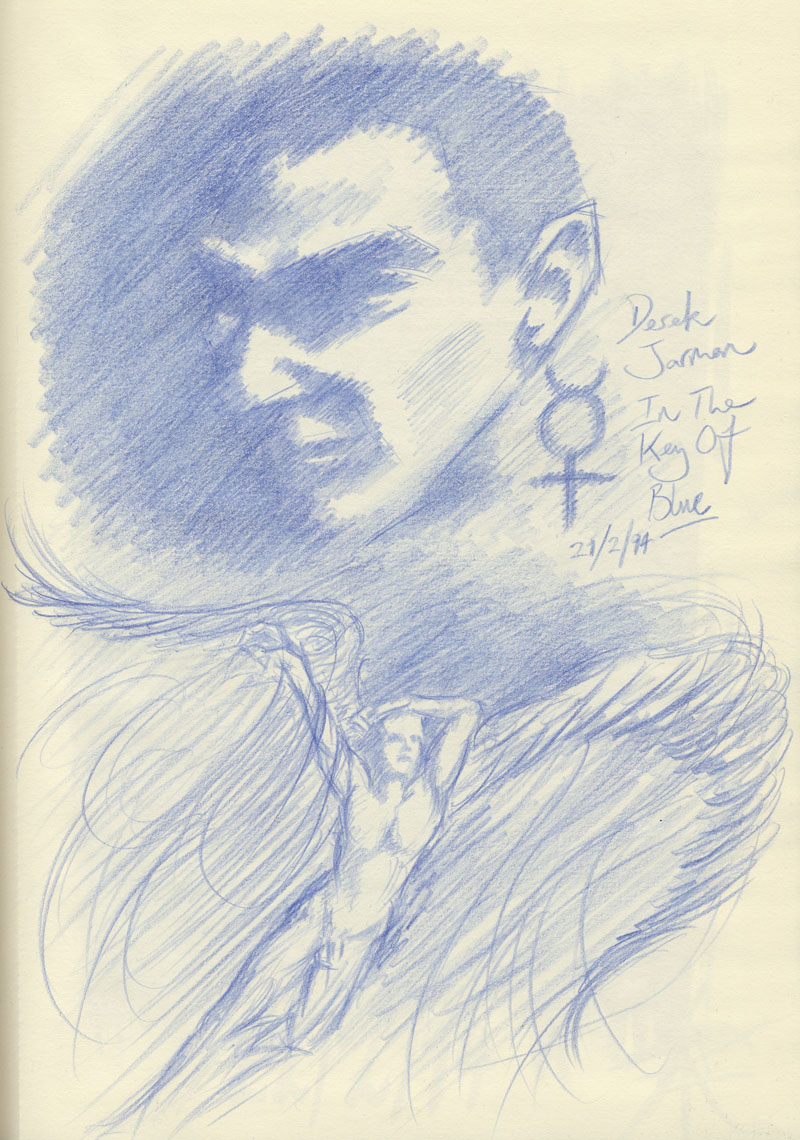
This is a 35-minute anthology film from 1986 with a very painterly, poetic (for want of a better term) quality of a kind I’ve not seen for some time in queer cinema. The reasons for this can be debated at greater length than I care to attempt, but it’s notable that a feature of the work of Derek Jarman—one of the featured directors—was an approach that was always happy to dispense with naturalism and the aping of familiar film and television narratives. In place of Jarman’s visionary approach we now have the “ordinary gay lives” of Weekend and Looking. This may satisfy those eager to see their own lives reflected on the screen but I’m usually expecting more from my cinema than another mirror held up to mundane reality. (And a very circumscribed reality, at that.)

dreamachine2.jpg

The theme of The Dream Machine is Bryon Gysin’s hallucination-inducing artwork of the same name. Brief clips by Tim Burke of Gysin sat with eyes closed in front of his flickering cylinder form the connective tissue between sections by directors Jarman, Michael Kostiff, Cerith Wyn Evans, and John Maybury. We can take these as either the dreams of those behind the camera or perhaps the visions seen by Gysin behind his eyelids. Needless to say there’s a fair amount of naked male flesh on offer, presented in a matter-of-fact manner or as the embodiments of some personal symbolism. The film can be seen here in not very flattering quality. Both Cerith Wyn Evans and John Maybury started out as assistants on Jarman’s films. Wyn Evans appears briefly in Caravaggio (1986) but is now better known as an artist, while Maybury went on to direct another excellent artist biopic, Love Is the Devil: Study for a Portrait of Francis Bacon (1998).

dreamachine3.jpg

Previously on { feuilleton }
Jarman (all this maddening beauty)
Sebastiane by Derek Jarman
A Journey to Avebury by Derek Jarman
Derek Jarman’s music videos
Derek Jarman’s Neutron
Mister Jarman, Mister Moore and Doctor Dee
The Tempest illustrated
In the Shadow of the Sun by Derek Jarman
Derek Jarman at the Serpentine
The Angelic Conversation
The life and work of Derek Jarman

Love gods

ganymede.jpg

The Raising of Ganymede (1886) by Gustave Moreau.

The story of the love between Zeus, king of the gods, and Ganymede, the handsome son of the Trojan king, goes back at least three thousand years and its roots disappear into the prehistoric neolithic. (more)

hylas.jpg

Hylas (1846) by HW Bissen.

Not for us only, Nicias, (vain the dream,)
Sprung from what god soe’er, was Eros born:
Not to us only grace doth graceful seem,
Frail things who wot not of the coming morn.
No—for Amphitryon’s iron-hearted son [Heracles],
Who braved the lion, was the slave of one:—

A fair curled creature, Hylas was his name.
He taught him, as a father might his child,
All songs whereby himself had risen to fame;
Nor ever from his side would be beguiled
When noon was high, nor when white steeds convey
Back to heaven’s gates the chariot of the day,

Nor when the hen’s shrill brood becomes aware
Of bed-time, as the mother’s flapping wings
Shadow the dust-browned beam. ‘Twas all his care
To shape unto his own imaginings
And to the harness train his favourite youth,
Till he became a man in very truth.

Theocritus, Idyll XIII: Hylas.

pan_daphnis.jpg

Pan teaching Daphnis to play the panpipes; Roman copy of a Greek original from the 3rd-2nd centuries BCE by Heliodoros.

hyacinth.jpg

The Death of Hyacinthos (1801) by Jean Broc.

‘You too, Hyacinthus, of Amyclae, Phoebus would have placed in heaven, if sad fate had given him time to do so. Still, as it is, you are immortal, and whenever spring drives winter away, and Aries follows watery Pisces, you also rise, and flower in the green turf. My father, Phoebus, loved you above all others: and Delphi, at the centre of the world, lost its presiding deity, while the god frequented Eurotas, and Sparta without its walls, doing no honour to the zither or the bow. Forgetting his usual pursuits, he did not object to carrying the nets, handling the dogs, or travelling as a companion, over the rough mountain ridges, and by constant partnership feeding the flames.

‘Now, the sun was midway between the vanished and the future night, equally far from either extreme: they stripped off their clothes, and gleaming with the rich olive oil, they had rubbed themselves with, they began a contest with the broad discus. Phoebus went first, balancing it, and hurling it high into the air, scattering the clouds with its weight. Its mass took a long time to fall back to the hard ground, showing strength and skill combined. Immediately the Taenarian boy, without thinking, ran forward to pick up the disc, prompted by his eagerness to throw, but the solid earth threw it back, hitting you in the face, with the rebound, Hyacinthus.

‘The god is as white as the boy, and cradles the fallen body. Now he tries to revive you, now to staunch your dreadful wound, and now applies herbs to hold back your departing spirit. His arts are useless: the wound is incurable. Just as if, when someone, in a garden, breaks violets, stiff poppies, or the lilies, with their bristling yellow stamens, and, suddenly, they droop, bowing their weakened heads, unable to support themselves, and their tops gaze at the soil: so his dying head drops, and, with failing strength, the neck is overburdened, and sinks onto the shoulder.

Ovid’s Metamorphoses, Bk X:143-219 Orpheus sings: Ganymede; Hyacinthus

Previously on { feuilleton }
Three stages of Icarus
The end of Orpheus

School Daze by Patrick Cowley

cowley.jpg

School Daze sleeve designed by Eloise Leigh.

Music made for porn films is nothing if not derivative and unmemorable, assuming it’s been specially made at all and isn’t merely a cheap library track, the aural equivalent of stock footage. This wasn’t necessarily the case when porn cinema was getting established in the America of the 1970s but a huge turnover of anonymous product combined with simple expediency—hours of footage that needed to be soundtracked by something—made falling standards inevitable. The cliché of the cheesy porn soundtrack is such a given that it’s a surprise to encounter anything which is even halfway listenable away from the screen. In the case of this album by Patrick Cowley it’s even more of a surprise to find that such exceptional music has been hiding for years on a couple of gay porn films, School Daze and Muscle Up, from 1980.

foxclassic.jpg

Gay porn would seem the perfect thing to be soundtracked by the creator of an unashamed anthem like Menergy (1981) but the music on School Daze bears little resemblance to Cowley’s Hi-NRG disco hits, not least because some of the tracks were composed as far back as 1973 when Cowley was still in college. The tapes were unreleased until John Coletti, the owner of Fox Studios, asked Cowley for some music which is how these early experiments ended up as porn scores. Experiments they may be, in differing moods and styles, but they’re also very successful ones. Jorge Socarras’s album notes describe Cowley’s wide-ranging musical (and sexual) tastes which would explain why one of the longer tracks, Journey Home, features a didgeridoo of all things. The didgeridoo sound became a considerable dance music cliché in the early 90s but prior to this you’d only find it outside Indigenous Australian music on pastiche numbers such as Flying Doctor by Hawklords or The Dreaming by Kate Bush; Cowley uses the instrument as simply another sound source. Socarras also mentions Cowley listening to Tomita and Wendy Carlos while in college but none of the music here sounds anything like the earlier generation of Moog composers. It also doesn’t sound much like Tangerine Dream or anything that was happening in Europe during the 1970s. If anything, the subdued and often dark atmosphere is a better fit with the post-punk music being produced in Britain around the time the films were released, sombre albums like The Bridge by Thomas Leer & Robert Rental, or instrumental tracks by The Human League. Didgeridoo or not, some of the tracks are pretty gloomy for porn music.

In the autumn of 1982 I was in the process of moving from Blackpool to Manchester, and spent a lot of time shuttling back and forth on coaches listening to tapes on a cheap Walkman clone. A couple of those journeys were soundtracked by Patrick Cowley’s extended remix of I Feel Love by Donna Summer and Industrial Muzac by Throbbing Gristle, a piece of subdued electronica which has been out of circulation for far too long. The music on School Daze fills an unlikely space between the two, there’s even a synth solo like the one that erupts into the Donna Summer remix. Patrick Cowley died in November of that year, one of the earliest casualties of a disease which at that time wasn’t even called AIDS. Listening to School Daze, and to the last album released while he was alive, Mind Warp, you can’t help but wonder what he might have done with the sampling technology that became widespread a couple of years later.

School Daze is available on double-vinyl and CD from Dark Entries who say all proceeds from the album will be donated to Project Open Hand and the AIDS Housing Alliance.

Nightcrawler from School Daze
Mockingbird Dream from School Daze
Dark Entries interviews John Coletti of Fox Studio
Five Things You Need to Know about Gay Electronic Wizard Patrick Cowley

Previously on { feuilleton }
William E. Jones on Fred Halsted
Summer of Love
A Clockwork Orange: The Complete Original Score

Weekend links 198

boty.jpg

Bum (1966) by Pauline Boty.

Eleanor Birne on Pauline Boty, “the only prominent female Pop artist among a generation of famous men”. Ken Russell’s Pop Art documentary, Pop Goes the Easel (1962), which features Boty, may be seen here. Two years later Boty was back with Ken Russell playing the part of the prostitute from The Miraculous Mandarin in a film about Béla Bartók. That’s something I’d love to see. There’s more about her painting, and the work of other female Pop artists, here.

• Why Are We Sleeping? Mark Pilkington on the music world’s recurrent interest in the philosophy of GI Gurdjieff. Pilkington’s most recent Raagnagrok release with Zali Krishna, Man Woman Birth Death Infinity, was reviewed by Peter Bebergal.

• Cinematic details: Frames-within-frames in The Ipcress File (1966), and the typography of 2001: A Space Odyssey (1968).

highrise.jpg

A Jay Shaw poster for Ben Wheatley’s forthcoming film of High-Rise.

• “…a large cavity must be dug in the bird’s shoulder and filled with ball bearings.” Christine Baumgarthuber on the dubious delights of The Futurist Cookbook.

• Why Tatlin Can Never Go Home Again: Rick Poynor on the difficulties of finding a definitive representation of an artwork online.

Jay Parini reviews Inside a Pearl: My Years in Paris by Edmund White. At AnOther Donatien Grau talks to White about fashion.

• At Bajo el Signo de Libra (in Spanish): the homoerotic and occasionally Surrealist art of Pavel Tchelitchew.

• At 50 Watts: Kling Klang Gloria: Vintage Children’s Books from Austria.

• The motorbike girl gangs of Morocco photographed by Hassan Hajjaj.

Geoff Manaugh on how LED streetlights will change cinema.

Stylus “is an experiment in sound, music and listening”.

• Mix of the week: Secret Thirteen mix 106 by Senking.

• At Pinterest: JG Ballard

This Is Pop? (1978) by XTC | Pop Muzik (1979) by M | Pop Quiz (1995) by Stereolab

Nova Express, a film by Andre Perkowski

nova1.jpg

Andre Perkowski’s Nova Express describes itself as “a 3-hour experimental epic adaptation of the novel by William S. Burroughs… with Allen Ginsberg, Brion Gysin, Phil Proctor, Peter Bergman, Jürgen Ploog, and Anne Waldeman”. The technique is relatively simple, if laborious: a large quantity of copyright-free film & TV footage, animation and visual material is matched to readings of Burroughs’s novel by the author and others. As far as this goes it’s an interesting answer to the question of filming Burroughs’ early works. Ideally this kind of juxtaposition of word and image should create something which isn’t present when word and image are separated, rather than simply operate on the level of what animator Chuck Jones once called “illustrated radio”. The clips on YouTube veer between these two poles. Notable by its absence is this kind of thing:

The naked cadets entered a warehouse of metal – lined cubicles – stood a few inches apart laughing and talking on many levels – Blue light played over their bodies – Projectors flashed the color writing of Hassan i Sabbah on bodies and metal walls – Opened into amusement gardens – Sex Equilibrists perform on tightropes and balancing chairs – Trapeze acts ejaculate in the air – The Sodomite Tumblers doing cartwheels and whirling dances stuck together like dogs – Boys masturbate from scenic railways – Flower floats in the lagoons and canals – Sex cubicles where the acts performed to music project on the tent ceiling a sky of rhythmic copulation – Vast flicker cylinders and projectors sweep the gardens writing explosive bio-advance to neon – Areas of sandwich booths blue movie parlors and transient hotels under ferris wheels and scenic railways – soft water sounds and frogs from the canals  – K9 stood opposite a boy from Norway felt the prickling blue light on his genitals filling with blood touched the other tip and a warm shock went down his spine and he came in spasms of light – Silver writing burst in his brain and went out with a smell of burning metal in empty intersections where boys on roller skates turn slow circles and weeds grow through cracked pavement –

Nova Express isn’t as homoerotic as the other books from this period but the whole of the Smorbrot chapter runs like that, and there are other moments elsewhere. (I should note that there’s no Smorbrot section in the available clips but I expect there will be in the complete film.) This side of Burroughs’ work is still the least represented where adaptations are concerned. Ignore it and you’re ignoring a major component of his fiction. Andre Perkowski talked to Graham Rae at Reality Studio in 2010.

nova2.jpg

Elsewhere on { feuilleton }
The William Burroughs archive