Weekend links 511

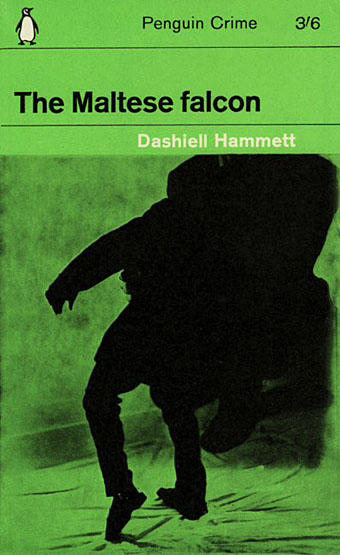
marber.jpg

Design by Romek Marber, 1963.

• The death of Polish composer Krzysztof Penderecki prompted so many “Shining composer” headlines you have to wonder what kind of notices he might have received if his early work hadn’t been purloined by Hollywood. György Ligeti always seemed ambivalent about having his music used as cinematic illustration (Kubrick annoyed him by altering some of it without permission) but Penderecki worked as a composer for Polish films in the 1960s, not only providing a score for The Saragossa Manuscript (1965) but also (surprisingly) writing music for a number of short animations. I’ve been listening to his music for almost 40 years, after a chance discovery of the stunning Threnody For The Victims Of Hiroshima led me to seek out more. I have to admit that the appeal of his recordings lay in their ability to thrill and terrify—qualities that musicologists seldom address—and I’ve never paid any attention to Penderecki’s later work which was less of an assault on the senses. At The Quietus James Martin argues for listening to the entire oeuvre, not just the early works. For more about the composer’s life and work, Culture.pl has a number of good articles, eg: Mazes, Notes & Dali: The Extraordinary Life of Krzysztof Penderecki, and Music Is Not for Everyone: An Interview with Krzysztof Penderecki.

• The late Romek Marber (1925–2020) was a designer/illustrator whose name is familiar to collectors of Penguin books via the Marber Grid, the template he created in the early 1960s for the Penguin Crime series, and which was later extended across the entire paperback range. Marber talked about this period of his work in Penguin by Illustrators in 2009. Elsewhere: Rick Poyner on Marber’s design, and a suggestion for how the Marber Grid was designed.

• “…you’ll see Lego and children’s toys, but also Rawlplugs, tile spacers, Monopoly houses, cigarillo tips, curtain hooks, biofilters, Smarties tube lids, fishing beads, broken security seals, razor parts, bits of toothbrushes, roofing screw caps, medical lancets, golf tees, false teeth, plastic soldiers, posties’ rubber bands, bungs and stoppers.” Beachcomber Tracey Williams talks to Andrew Male about the undying ubiquity of plastic waste.

• “Thanks to Bookshop, there is no reason to buy books on Amazon anymore,” says Alex Lauer. The caveat is that the service is limited to the USA. I order books direct from publishers or from eBay and Abe; the latter may be Amazon-owned but you’re still paying most of the money to the individual sellers.

• Mixes of the week: Radio Belbury 19: Family Fun Time, and Through A Landscape Of Mirrors Vol. VII – France IV by David Colohan.

• “[Amanda Sewell’s] Wendy Carlos: A Biography is a great work of scholarship,” says Geeta Dayal.

• “Part of me expects to go on forever.” David Barnett on Michael Moorcock at 80.

• “What is the point of a critic if not to tell the truth?” asks Rachel Cooke.

John Boardley on medieval road-trips and the invention of print.

Anna Bogutskaya on where to begin with the Weird West.

• Inside Tove Jansson’s private universe by Sheila Heti.

• Memory Of Hiroshima (1973) by Stomu Yamash’ta’s Red Buddha Theatre | Hiroshima Mon Amour (1977) by Ultravox! | Hiroshima (1982) by Borsig

Weekend links 510

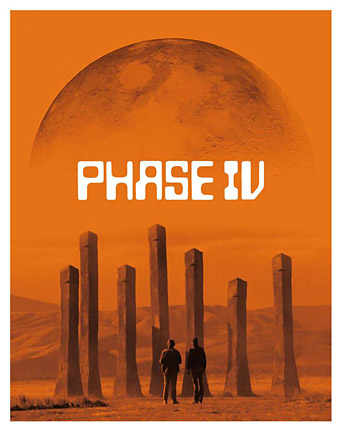
phaseiv.jpg

• Saul Bass’s cult science-fiction film, Phase IV, has received a very welcome (Region B) blu-ray release from 101 Films. Everything is a metaphor for the unavoidable just now, but a film about a group of scientists besieged by a tiny and insidious biological threat can’t help but have additional resonance. The new release includes the original (and seldom seen) cosmic ending plus another disc containing several of Bass’s short films. Previously: Directed by Saul Bass.

• Music at the Internet Archive: Live at Metro (2007) by Sora, and three rare cassette releases by French synth-rock duo Fondation: Metamorphoses (1980), Sans Etiquette (1980), and Le Vaisseau Blanc (1983).

• Mixes of the week: a Manu Dibango (RIP) mix from Aquarium Drunkard, and Industrial Synth Rave Isolation Mix by Moon Wiring Club.

We must talk about Nightwood. The novel that sits between those early and late phases of her writing life, the tale of Felix Volkbein, Robin Vote, Dr Matthew-Mighty-Grain-of-Salt-Dante-O’Connor and many others, caught between world wars and each other, in the decadent cities of Europe. The novel follows the journey of Robin Vote, who is more “earth-flesh, fungi, which smells of captured dampness” than person. Sleepwalking through life, she nonetheless wakes up her fellow characters Nora, Felix and Jenny, who each try and pin her down, to no avail. It is a novel that defies synopsis. It is unsurprising that this remarkable book has attracted a “burgeoning body of interpretations”, as Tyrus Miller here notes; yet it seems that there are still new ways to approach it. Julie Taylor offers an affective reading, for example; Joanne Winning concentrates on Nightwood’s collaborative origins, exploring the fruitful and often overlooked creative relationship between Barnes and her partner, Thelma Wood. This is not just a case of considering that relationship as source material for the novel, but unpacking what Winning describes as their “lesbian modernist grotesque”. It is particularly welcome that Winning treats Wood as a silver-point artist in her own right.

Jade French reviews Shattered Objects: Djuna Barnes’s Modernism

• Ben Beaumont-Thomas on where to start with Kraftwerk, and Jennifer Lucy Allan on where to start with Alice Coltrane.

• The BBC’s Culture page discovers Tom of Finland but can’t bring itself to show much of his artwork.

• The art of Asterix: illustrator Albert Uderzo (RIP) at work.

Clive Hicks-Jenkins on “a marvel of clockwork ingenuity”.

• The films Wes Anderson is watching during isolation.

Greydogtales on six more strange tales that linger.

Adrian Searle‘s favourite online art galleries.

• The Ghost Box label is now at Bandcamp.

Twin Flames (Edit) by Lustmord.

• At Dennis Cooper’s: Flamboyant.

Phase By Phase (1976) by Peter Baumann | Phase 3: Agni Detonating Over The Thar Desert… (1995) by Earth | Phase Draft (2003) by Bill Laswell

Weekend links 509

occult.jpg

The Art of the Occult: A Visual Sourcebook for the Modern Mystic by S. Elizabeth. The book will be published in September by White Lion Publishing, and includes some work of mine.

• “The structure of the film as a memory palace consists of scenes intercutting different movies, depicting similar situations lived by the same actors in similar locations and, yes, similar sexual positions building over the course of its run-time.” Memory Palace: on Ask Any Buddy and the Golden Age of Gay Porn. Caden Mark Gardner writes on a kaleidoscopic, experimental archive piece of gay pornography. • Related: Paul P., the artist making dreamy paintings from vintage gay erotica.

• At Dennis Cooper’s: Spotlight on…Terry Southern The Magic Christian (1959), and Bill Hsu presents…High Anxiety: tense, dark films from 2010-2019 (for fans of Robert Aickman and Brian Evenson).

Green (1986) by Hiroshi Yoshimura, a welcome reissue of an album of minimal electronica. More green: The Green Fog by Guy Maddin has been on Vimeo for a while.

• Mixes of the week: Time is on our hands by Beautify Junkyards, and Textural Hominini Cognition by The Ephemeral Man.

• How John Waters and Mink Stole made Pink Flamingos, and Mink Stole on the inside story of John Waters’ greatest films.

Viktor Wynd: “I was offered a mummified arm—but I didn’t have €2,000 on me”.

• At Dangerous Minds: the solitary Surrealism of Gertrude Abercrombie.

Cats and Domino

Webcam in Italia

The Green Chinese Table (1988) by Seigen Ono | Green Water (1996) by Coil | Green Evil (1997) by Paul Schütze

Weekend links 507

plone.jpg

The next release on the Ghost Box label will be Puzzlewood by Plone, “unironically joyful and melodic electronica; informed by library music, music for children’s TV and a deep passion for the history of music technology”. The album will be available in April. Design, as always, is by Julian House.

• “With his panting breath and dripping sweat infused in each page of his memoir, Patrick Cowley describes himself on his knees, bending over and ‘worshipping Phallus.'” Maxwell Shand on Dark Entries‘ “holy trinity” of Patrick Cowley’s Mechanical Fantasy Box, Hot Rod To Hell by Roy Garrett & Man Parrish, and Maxx Mann’s gay synth-pop.

• “We’re gonna do economic activity—without money!”: Inside the criminal glamour of the San Francisco Diggers with Kent Minault. The third installment of a verbal history of the hippie anarchists by Jay Babcock.

• “Susanna Hoffs and friends remember David Roback, who stayed creative, and enigmatic, to the end.” By Randall Roberts.

My connection with [raga] was not to be able to duplicate or emulate it but to learn from it. I combined it with the electronics and the harmonizer and things like that. But I would have a line that was being drawn. You’re thinking about it like a shape that’s being drawn on a canvas. It’s a line that’s being drawn and another. You’re holding three pencils at once while you’re drawing on the wall. So, you’re able to get the shapes. This was my thing with it, because I was into the harmony that it would make. So, it was an easy and natural thing to do, was to go and move into the electronics. Then we had equipment that was doing transposition and all that kind of thing. So that’s one little part of it.

Jon Hassell talking to Aquarium Drunkard about his first album, Vernal Equinox, which is reissued later this month

• Published next month by Strange Attractor Press: Rated SavX: The Savage Pencil Skratchbook.

• They came from outer Finland: the town where everyone saw UFOs, as photographed by Maria Lax.

• Mix of the week: Through A Landscape Of Mirrors Vol. VI – Sweden II by David Colohan.

Moonstrips Empire News (1967) by Eduardo Paolozzi.

• At Dennis Cooper’s: Shelley Duvall Day.

Graham Massey‘s favourite albums.

Phallus Dei (1969) by Amon Düül II | Wrong Eye (1990) by Coil | Red Scratch (1994) by ELpH

Weekend links 505

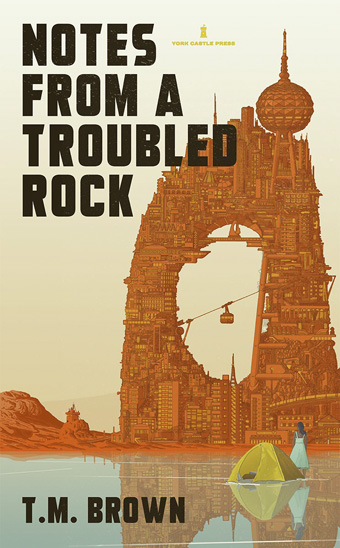
brown.jpg

An imaginary book cover by Toby Melville-Brown.

• At the Internet Archive (for a change): Directory 1979, a collection of John Cooper Clarke’s poetry designed by Barney Bubbles; 25 issues of Wrapped in Plastic, the magazine devoted to all things David Lynch; and Cinefantastique, 1970–2002, the magazine about special effects in cinema whose making-of articles were often the first such analyses published anywhere. No contents list for the latter, unfortunately, but the covers shown here give an idea of the main features.

• “Physicist Andreas Schinner recounted a rumor that the Voynich manuscript can be ‘pure poison’ for a scholarly career, because when studying the manuscript there’s ‘always an easy option to make a ridiculous mistake.'” Jillian Foley on the strange quest to decipher the Voynich manuscript.

• At the BFI: Stephen Puddicombe examines six mysterious paintings on film, and Anna Bogutskaya selects ten examples of Lovecraftian cinema. Regarding the latter, I deplore the omission of Huan Vu’s Die Farbe (2011).

• In The Driver’s Seat: Neil Fox on the demented fun of Nicolas Winding Refn’s streaming site for cinematic obscurities, ByNWR.

• “Feed your head”: Akim Reinhardt on the progress of a White Rabbit from Charles Lutwidge Dodgson’s novel to Grace Slick’s song.

• Mixes of the week: Marshland: The Andrew Weatherall Mix, and Music’s Not For Everyone, hours of Weatherall mixes at NTS.

Borderland, an album of music by Fordell Research Unit based on The House on the Borderland by William Hope Hodgson.

• At Dangerous Minds: Thirteen-year-old Mariangela and her adventurous pop album, produced by Vangelis, 1975.

• Heavy Metal, Year One: Kory Grow on the inside story of Black Sabbath’s groundbreaking debut.

• “Theire Soe Admirable Herbe”: How the English Found Cannabis by Benjamin Breen.

Derek Jarman and friends in Dungeness: unseen pictures.

Closing periods at Flickr.

Heavy Rock (1976) by Sound Dimension | Heavy Denim (1994) by Stereolab | Heavy Soul (2002) by The Black Keys