Ghosts of the Chit-Chat

chitchat1.jpg

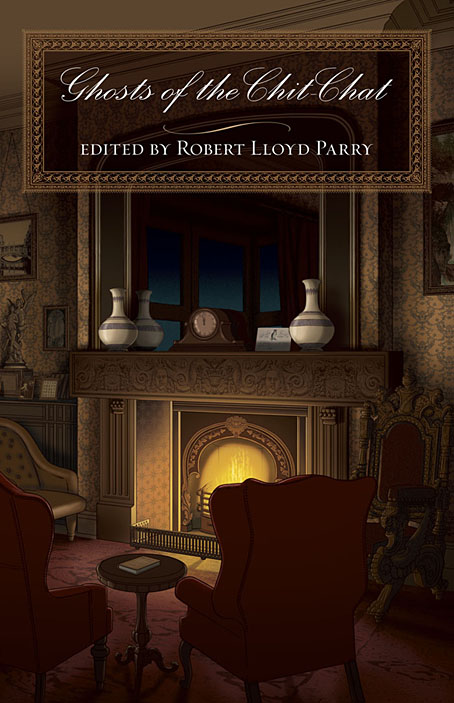
My latest cover for Swan River Press is very suitable for the season, It’s also a good example of the “window” type of cover design, where you show a view into a scene rather than a flat design. Window covers are common in fantasy and science fiction, less so in the horror genre where you often want to avoid giving too much away. The “Chit-Chat” of the title was The Chit-Chat Club, a group of students and tutors at King’s College, Cambridge:

On the evening of Saturday, 28 October 1893, Cambridge University’s Chit-Chat Club convened its 601st meeting. Ten members and one guest gathered in the rooms of Montague Rhodes James, the Junior Dean of King’s College, and listened — with increasing absorption one suspects — as their host read “Two Ghost Stories”.

Ghosts of the Chit-Chat celebrates this momentous event in the history of supernatural literature, the earliest dated record we have of M. R. James reading his ghost stories out loud. And it revives the contributions that other members made to the genre; men of imagination who invoked the ghostly in their work, and who are now themselves shades. In a series of essays, stories, and poems Robert Lloyd Parry looks at the history and culture of the Club.

In addition to tales and poems never before reprinted, Ghosts of the Chit-Chat features earlier, slightly different versions of two of M. R. James’s best-known ghost stories; Robert Lloyd Parry’s profiles and commentaries on each featured Chit-Chat member sheds new light on this supernatural tradition, making Ghosts of the Chit-Chat a valuable resource for casual readers and long-time Jamesians alike. (more)
chitchat2.jpg

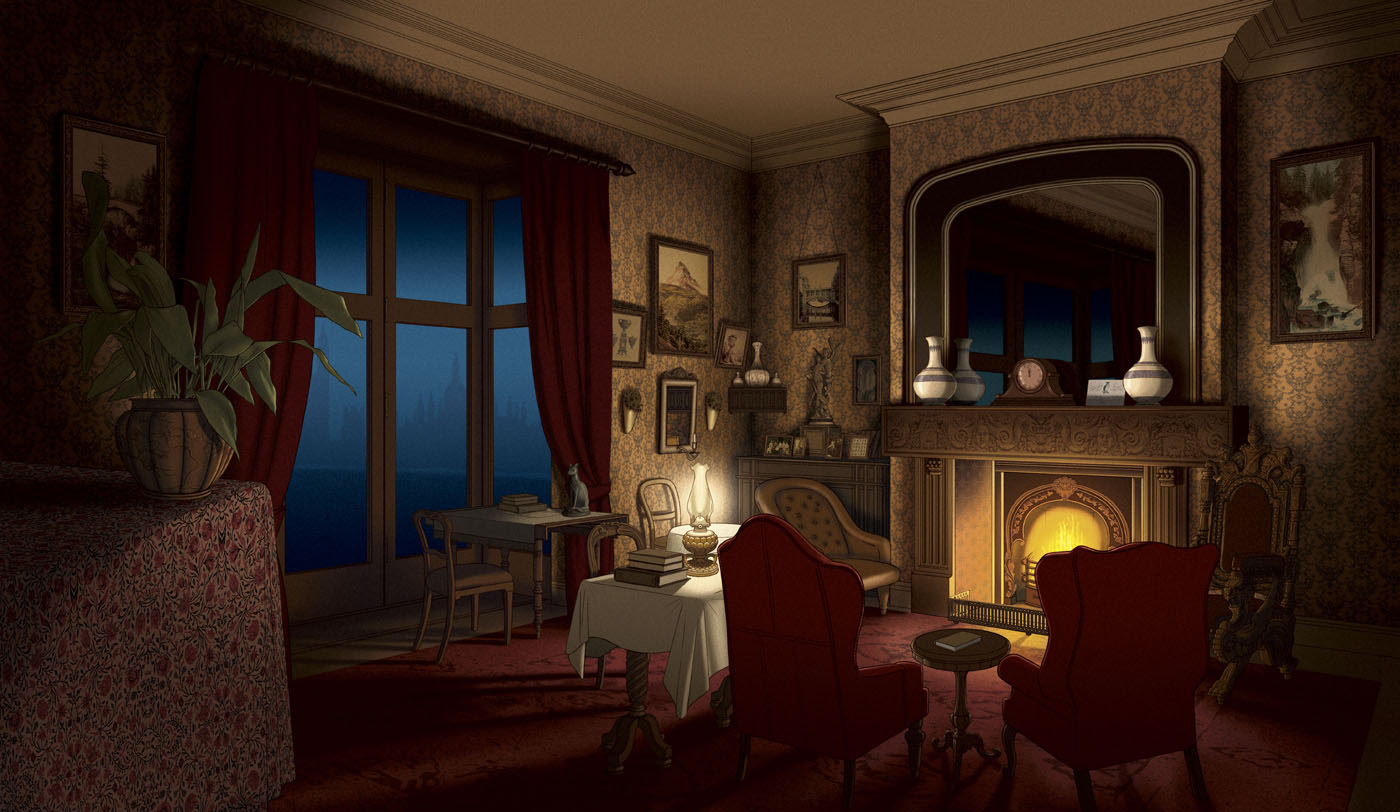
The full picture which will be a little cropped on the print version. Here you get to see more aspidistra.

The brief for the cover was to show a view of an empty room in a manner similar to the covers drawn by “Ionicus” (Joshua Charles Armitage) in the 1970s and 80s for a series of supernatural story collections. After looking at a number of these covers I took Tune in for Fear as a template; I liked the angle of the picture which offered a view of a welcoming fireplace to contrast with the night sky seen on the back of the book, and the two-point perspective makes a change from my tendency to create symmetrical pictures. The inhabitants of the Ionicus room seem to have either fled or been abducted whereas mine have either just left or are soon to arrive. The clock on the mantelpiece is almost at midnight, and there’s a Chit-Chat invitation next to it so I’d suggest the latter. The picture contains a number of references to the stories and poems in the book, although not as many as I’d originally intended when several of the pieces proved resistant to having their contents reduced to a single detail. I won’t list everything here since I’d prefer readers to try and match the details themselves.

Ghosts of the Chit-Chat will be published in December, and is available for pre-order here.

Previously on { feuilleton }
The Far Tower: Stories for WB Yeats
The Scarlet Soul: Stories for Dorian Gray
Weekend links 540

wildboys.jpg

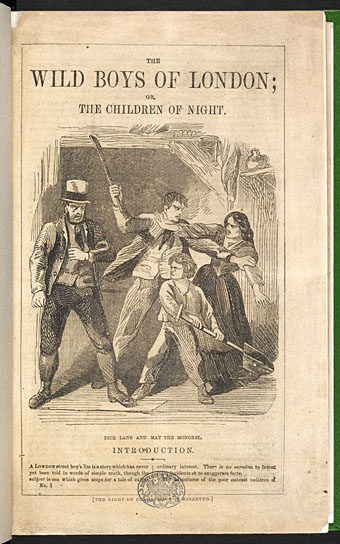
A century before William Burroughs: The Wild Boys of London (1866). No author credited.

• “Acid, nudity and sci-fi nightmares: why Hawkwind were the radicals of 1970s rock.” I like a headline guaranteed to upset old punks, even though many old punks had been Hawkwind fans. As noted last week, Joe Banks’ Hawkwind: Days of the Underground is now officially in print, hence this substantial Guardian feature in which the author reprises his core thesis. Mathew Lyons reviewed the book for The Quietus.

• “Roy Ayers and Fela Kuti each explored Pan-Africanism and diasporic solidarity their own way before their meeting in 1979.” John Morrison on the Roy Ayers and Fela Kuti collaboration, Music Of Many Colours.

• “In 1938, Joan Harrison read a galley of Daphne Du Maurier’s masterpiece. She wouldn’t rest until she had the rights to adapt it.” Christina Lane on Rebecca at 80, and the women behind the Hitchcock classic.

Each page features a distinct moment, seen from one perspective on the front, and from a diametrically opposed angle on the back, occasionally pivoting, for instance, between interior and exterior spaces. This organizing principle is complicated by the fact that a given image might be a depiction of the physical environment surrounding the camera or, at other times, a photograph of a photograph. Midway through, the scene is inverted such that the volume must be turned upside-down to be looked at right-side up. The result is an elegant, disorienting study in simultaneity that allows the viewer to enter the work from either end.

Cover to Cover (1975), a book by Michael Snow, has been republished by Light Industry and Primary Information

• At Public Domain Review: The Uncertain Heavens—Christiaan Huygens’ Ideas of Extraterrestrial Life by Hugh Aldersey-Williams.

• Penny Dreadfuls and Murder Broadsides: John Boardley explores the early days of pulp fiction and what he calls “murder fonts”.

• The lesbian partnership that changed literature: Emma Garman on Jane Heap, Margaret C. Anderson and The Little Review.

The 10th Tom of Finland Emerging Artist Competition is now open to entries. (Titter ye not.)

• Death Barge Life: Colin Fleming on Gericault’s grim masterpiece, The Raft of the Medusa.

• At Dennis Cooper’s: Spotlight on…The Grand Grimoire: The Red Dragon (1702).

Music To Be Murdered By (1958) Jeff Alexander With Alfred Hitchcock | Murder Boy (1991) by Rain Parade | Murder In The Red Barn (1992) by Tom Waits

Weekend links 539

earle.jpg

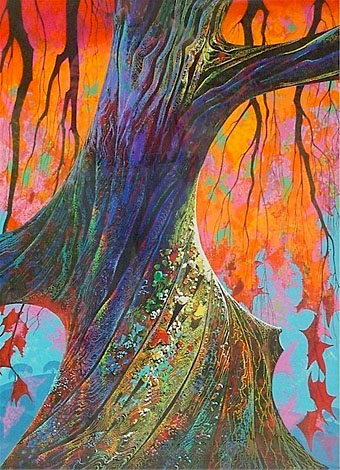
Fire, Red and Gold (1990) by Eyvind Earle.

Roger Penrose won a Nobel Prize recently for his work in physics. I read one of his books a few years ago, and was intimidated by the “simple” equations, but I always like to hear his ideas. This 2017 article by Philip Ball is an illuminating overview of Penrose’s life and work.

• At Dangerous Minds: Joe Banks on the incidents that led to Lemmy’s dismissal from Hawkwind in 1975, an extract from Hawkwind: Days of the Underground. The book is available from Strange Attractor in Europe and via MIT Press in the USA.

• “Not married but willing to be!”: men in love (with each other) from the 1850s on. It’s always advisable to take photos like these with a pinch of salt but several of the examples are unavoidably what they appear to be.

Most of all, this resolutely collaborative production stood against the vanity and careerism of individual authorship; Breton called it the first attempt to “adapt a moral attitude, and the only one possible, to a writing process.” The text itself is peppered with readymade phrases, advertising slogans, twisted proverbs, and pastiches of such admired predecessors as Rimbaud, Apollinaire, and Lautréamont, whose pluralistic credo, “Poetry must be made by all. Not by one,” anticipates the sampling aesthetic by a century. But the intensity was draining, and as the book moves toward its final pages and the writing becomes increasingly frenetic, you can almost feel the burnout taking hold. After eight days, fearing for his and Soupault’s sanity, Breton terminated the experiment.

Mark Polizzotti reviews a new translation by Charlotte Mandell of The Magnetic Fields by André Breton and Philippe Soupault

• The hide that binds: Mike Jay reviews Dark Archives: A Librarian’s Investigation into the Science and History of Books Bound in Human Skin by Megan Rosenbloom.

• “A photographer ventures deeper into Chernobyl than any before him.” Pictures from Chernobyl: A Stalker’s Guide by Darmon Richter.

John Van Stan’s reading of Frankenstein by Mary Shelley uses my illustrations (with my permission) for each of its chapters.

Susan Jamison, one of the artists in The Art of the Occult by S. Elizabeth, talks to the latter about her work.

William Hope Hodgson: The Secret Index. A collection of Hodgson-related posts at Greydogtales.

Gee Vaucher talks to Savage Pencil about her cover art for anarchist punk band, Crass.

Weird, wacky and utterly wonderful: the world’s greatest unsung museums.

Tom Cardamone chooses the best books about Oscar Wilde.

• At Dennis Cooper’s: Jean-Pierre Melville Day.

You by The Bug ft. Dis Fig.

Magnetic Dwarf Reptile (1978) by Chrome | Magnetic Fields, Part 1 (1981) by Jean-Michel Jarre | Magnetic North (1998) by Skyray

Alphonse Mucha et Son Oeuvre

mucha01.jpg

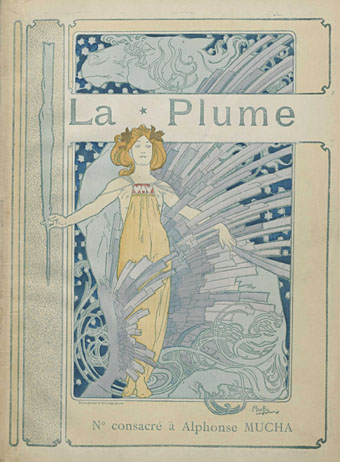
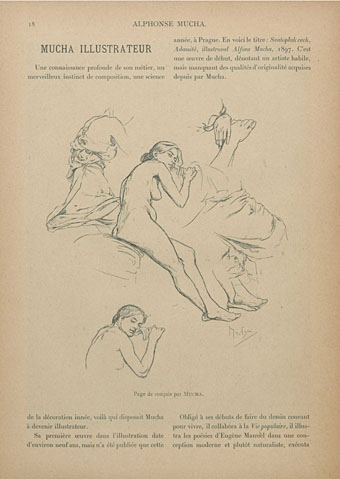
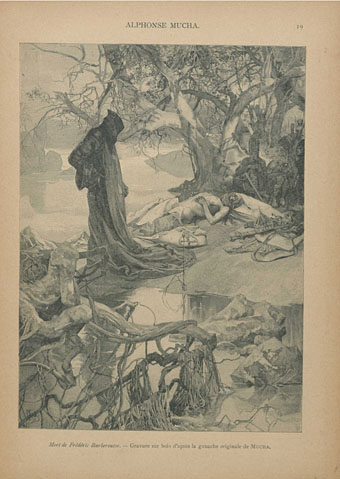
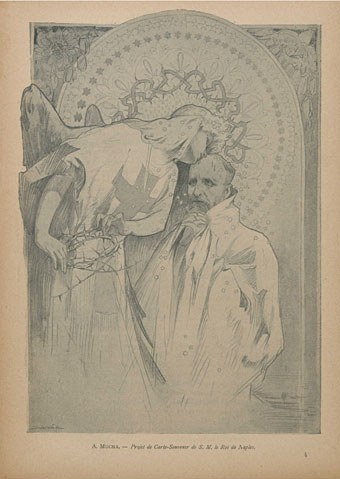
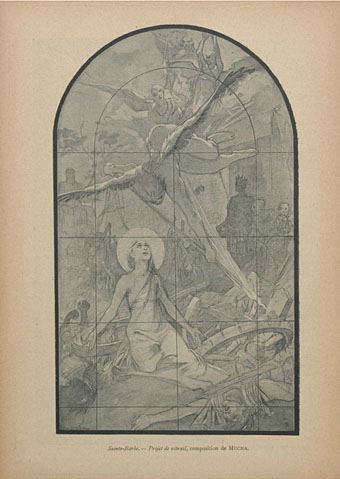
Alphonse Mucha was so wildly prolific, and his work maintained such a consistently high standard, that book collections tend to focus on the popular Art Nouveau prints and posters to the exclusion of everything else. This short study of Mucha’s career was published in 1897 when the Nouveau style was becoming a dominant trend in Continental Europe, thanks in part to the promotion of art journals like La Plume, as well as to Mucha himself. The reproductions are all monochrome halftones but they include many sketches, illustrations and smaller works that are either never seen elsewhere or are marginalised by his advertising graphics and the designs for Sarah Bernhardt. Browse the book here or download it here.

mucha02.jpg

mucha03.jpg

mucha04.jpg

mucha05.jpg

Continue reading “Alphonse Mucha et Son Oeuvre”

Weekend links 537

clarke.jpg

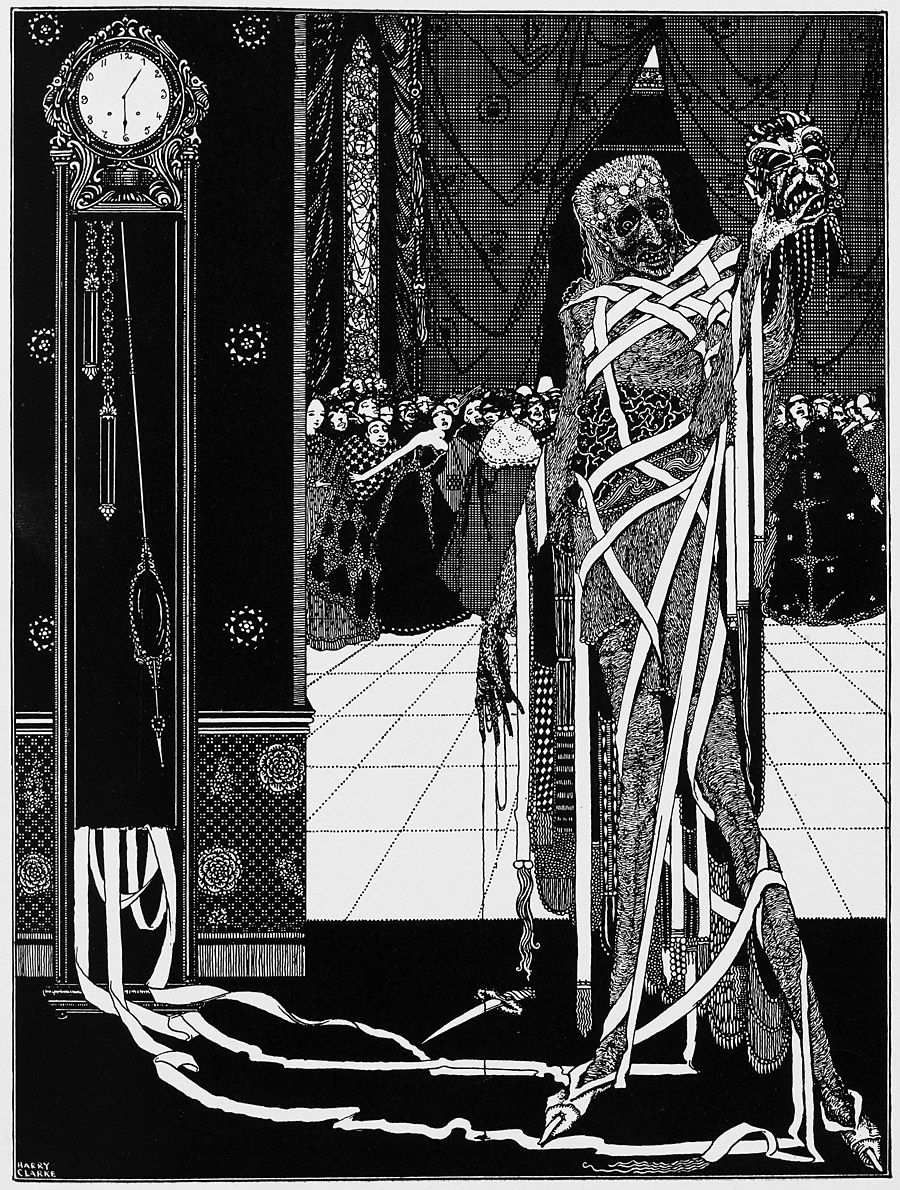
“The dagger dropped gleaming upon the sable carpet.” The Masque of the Red Death illustrated by Harry Clarke, 1919.

• 2020 is the year of enormous pink lady faces on book covers, apparently. As someone who spends little time following cover trends, the identification of a new variety of herd behaviour among designers or their art directors is always fascinating and bizarre.

Tomoko Sauvage plays her porcelain and glass instruments inside a disused water tank in Berlin for a new album, Fischgeist. The Wire has previews.

• At The Paris Review: Craig Morgan Teicher on the later work of Dorothea Tanning, and Daniel Mendelsohn on the rings of Sebald.

Unlike many of the rapidly forgotten [Nobel] “winners”, and despite the occasional sniffy critic wondering “who still reads it?” Durrell’s Alexandria Quartet has never been out of print since he published it in 1957. The centenary of his birth in 2012 raised a flurry of revived interest in Durrell. Indeed the whole Durrell family has been popping up regularly in reprints of Lawrence’s novels and poetry, in his brother Gerald’s popular tales of his “family and other animals,” and in several TV series about their life in Greece on Corfu island in the late 1930s. A BBC interviewer once asked Lawrence about the difference between his writing and brother Gerald’s. He replied: “I write literature. My brother writes books that people read.”

I’ve read Gerald and I’ve read Lawrence; I prefer Lawrence, thank you. Thomas O’Dwyer examines the chef d’oeuvre of the elder Durrell, The Alexandria Quartet

• Dark Entries shares Patrick Cowley’s cover of Chameleon by Herbie Hancock. The original is here.

• Saunas, sex clubs and street fights: how Sunil Gupta captured global gay life.

• Inside the Grace Jones exhibition at Nottingham Contemporary.

Rob Walker on how dub reggae’s beats conquered 70s Britain.

• Who invented the newspaper? John Boardley reports.

Spread The Virus (1981) by Cabaret Voltaire | Cut Virus (2003) by Bill Laswell | The Unexclusive Virus ~even our invincible religion “Technology” cannnot~ (2006) by Kashiwa Daisuke