Weekend links 159

francov2.jpg

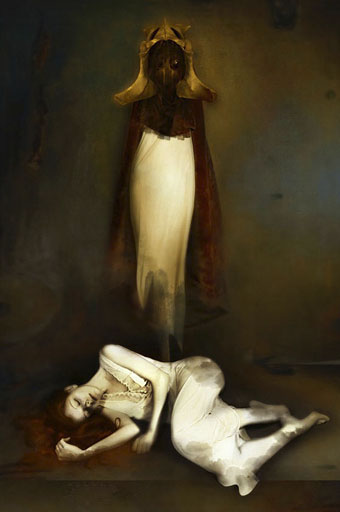
El Banquete Magnético (2011) by Cristina Francov.

• Did Vertigo Introduce Computer Graphics to Cinema? asks Tom McCormack. He means Saul Bass’s title sequence which mostly uses still harmonographs but also features some animated moments by John Whitney.

•  Temple of the Vanities by Thomas Jorion. “Pictured here are political monuments and munitions depots, hulking concrete forms that marked the edges of empires.” Related: Paintings by Minoru Nomata.

• Musical reminiscences: Matt Domino on the Small Faces’ psychedelic magnum opus Ogden’s Nut Gone Flake, and Richard Metzger on the sombre splendours of Tuxedomoon.

Harrison is best known as one of the restless fathers of modern SF, but to my mind he is among the most brilliant novelists writing today, with regard to whom the question of genre is an irrelevance. To read his work is to encounter fiction doing what fiction must: carrying out the kinds of thinking and expression that would be possible in no other form. I pass through his novels feeling a mixture of wonder, calmness and disturbance; I end them brain-jarred and unsettled. Metaphysical echoes persist for days afterwards. It feels as if I have had a strabismus induced, causing illusions that slowly resolve into insights.

Robert Macfarlane on M. John Harrison and the reissue of Climbers.

• Divine Machinery: An Interview with Paul Jebanasam. Arvo Pärt, Cormac McCarthy and Algernon Blackwood are folded into his new album, Rites.

• Autostraddle shows the evolution of twelve queer book cover designs. As is often the case in cover design, latest isn’t always best.

• “My Definition Of Hell? It’s Other People, At The Cinema!” Anne Billson on the very thing that finished me as a cinema-goer.

• “London in the 1830s was a truly weird and terrifying place.” Spring-Heeled Jack, The Terror of London.

• At Scientific American: The Reading Brain in the Digital Age: The Science of Paper versus Screens.

• Van Dyke Parks: “I was victimised by Brian Wilson’s buffoonery.”

• Colour film of London in 1927.

• Abandonedography

• Social Dead Zone

• Tuxedomoon: Tritone (Musica Diablo) (1980) | Desire (1981) | Incubus (Blue Suit) (1981)
Weekend links 158

soderberg.jpg

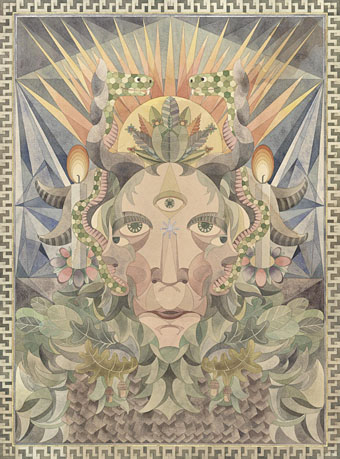
Pan II (2012) by Fredrik Söderberg.

• “Aubade was a surprise success, selling some 5000 copies and going into a second printing and an edition published in America.  Martin was immediately a minor celebrity, being interviewed for articles that couldn’t mention what his book was actually about.” Rediscovering the works of Kenneth Martin.

• “I can’t stand covers which imitate other covers, or which slavishly look like whatever their designated genre is supposed to look like.” Ace cover designer Peter Mendelsund is interviewed.

• At The Outer Church Isablood & Henry of Occult Hand are interviewed about their mixtape.

I’d decided to pay my respects in an unorthodox way, by time-travelling into the period of Thatcher’s pomp, when she occulted the light, alchemised the bad will of the populace and did her best to choke the living daylights out of the awkward, sprawling, socially coddled essence of metropolitan London. Hers was a tyranny of the suburbs operating from a position of privilege at the centre: she might have invested in a Dulwich retirement property, but she couldn’t sleep in it.

Iain Sinclair visits Tilbury on the day of the Thatcher funeral. Related: Iain Sinclair and Jonathan Meades in Conversation, Oxford Brookes University, March 2013.

• Ormond Gigli’s best photograph: women in the windows in Manhattan. See it full size here.

• Balzac and sex: How the French novelist used masturbation to fuel his writing process.

• At Dangerous Minds: Kenneth Williams and John Lahr discuss Joe Orton in 1978.

• Yet more Bowie: Sukhdev Sandhu reviews Ziggyology by Simon Goddard.

• The Spectacular, Wild World of Tenjo Sajiki and its Posters.

• In 1967 Susan Sontag made lists of her likes and dislikes.

• Stephen Sparks on fin de siècle author Marcel Schwob.

• Day Jobs of the Poets by Grant Snider.

• James Turrell’s Ganzfeld Experiment.

• The Pan Piper (1960) by Miles Davis & Gil Evans | Panorphelia (1974) by Edgar Froese | Pandora (1984) by Cocteau Twins

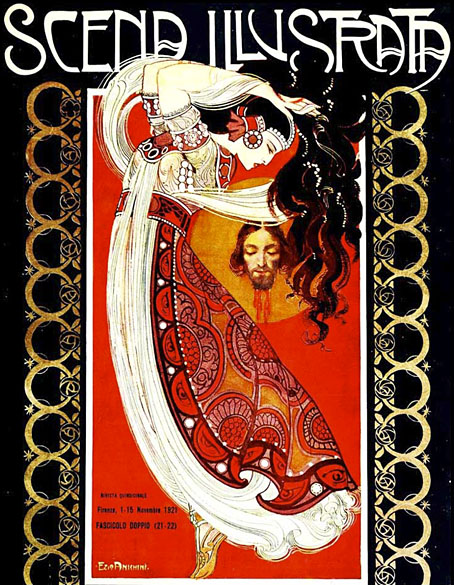
Ezio Anichini’s Salomé

anichini.jpg

Scena Illustrata was an Italian magazine that continued to fly the flag for Art Nouveau into the 1920s, by which time the style’s organic flourishes were looking old-fashioned when compared to the rectilinear forms of early Art Deco. This cover is from 1921 but could easily have appeared any time in the past two decades. Ezio Anichini (1886–1948) was a regular illustrator for the magazine. Searching for more of his work I realised I’d seen several of his covers before without having known his name. His Salomé looks more like something by Léon Bakst than anything from the Middle East, while that impossible reversal of the dancer’s head adds something we haven’t seen before. Steven Heller wrote a short appraisal of the artist’s career last year. There’s a lot more from Scena Illustrata on this Marinni page. (Via Beautiful Century again.)

Elsewhere on { feuilleton }
• The Salomé archive

Weekend links 157

focusgroup.jpg

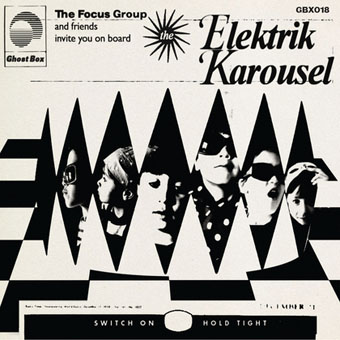
Elektrik Karousel, a new release on the Ghost Box label by The Focus Group. “For a clue to its moods, think Czech animation, Italian Giallo, early Radiophonics, HP Lovecraft stories, 1960s underground cinema, Lewis Carroll and baroque psych.” Julian House’s package design is “heavily inspired by 1960s underground press and conceived as a kind of mind altering DIY board game”.

• Joseph Stannard of The Outer Church compiles a mix for Kit Records, and talks about rural psychedelia and malevolent lighthouses, among other things.

• At Sci-Fi-O-Rama: a sampling of Dan Nadel & Norman Hathaway’s Electrical Banana – Masters of Psychedelic Art (2012).

• Stranger than Paradise: Tilda Swinton photographed by Tim Walker in the Surrealist Wonderland of Las Pozas, Mexico.

• Whistler in Limehouse & Wapping: stunning etchings by the 25-year-old artist when he was newly arrived in London.

• The complete catalogue of Sunn O))) recordings is now on Bandcamp for preview and purchase.

• La Danza de la Realidad: Alejandro Jodorowsky returns to his childhood in Tocopilla, Chile.

• Enjoy The Silence: Jude Rogers talks to Michael Rother about joy of quiet.

• Dressing the Air, “the Bureau of Sensory Intelligence”, had a relaunch.

• Fast forward – and press play again: Cassettes are back

• The Lovecraft Expert: An Interview with S.T. Joshi

• Book Graphics: an illustration blog.

• Paint Box (1967) by Pink Floyd | Beat Box (1984) by Art of Noise | Glory Box (1994) by Portishead

Weekend links 156

leonard.jpg

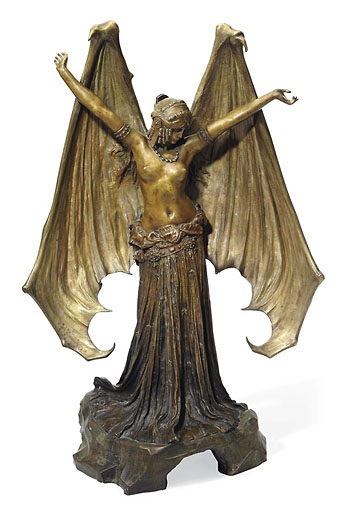
Le Vampire (c. 1903) by Agathon Léonard. Via Beautiful Century.

• Two masters of rumbling atmospherics interviewed at The Quietus: Bobby Krlic aka The Haxan Cloak talks to Maya Kalev while Thomas Köner talks to Joseph Burnett.

Discussions about the arts now have an awkward, paralyzed quality: few judgments about the independent excellences of works are offered, but everyone wants to know who sat on the jury that gave out the award. It’s become natural to imagine that networks of power are responsible for the success or failure of works of art, rather than any creative power of the artist herself.

We’ve reached the point at which the CEO of Amazon, a giant corporation, in his attempt to integrate bookselling and book production, has perfectly adapted the language of a critique of the cultural sphere that views any claim to “expertise” as a mere mask of prejudice, class, and cultural privilege.

Too Much Sociology, an essay by The Editors at n+1

• Prints of Karl Blossfeldt‘s plant portraits can be seen at the Whitechapel Gallery, London.

• Stephen J. Gertz on Samuel Roth, “The Most Notorious Publisher In American History”.

• Max Beerbohm is Cranky: Mary Mann on the appeal of the curmudgeon.

• Travel brochure graphics: Graphic design from the 1920s to the 1970s.

• Still returning to its constituent components: Chernobyl’s ghost town.

• Thoughtless Grin: a new Arthur Mixtape

• Richard Williams: the master animator

• Ketch Vampire (1976) by Devon Irons | A Vampire Dances (Symmetry) (1988) by Jon Hassell with Farafina | Vampires (1999) by Pet Shop Boys