Genet in the Arena

genet1.jpg

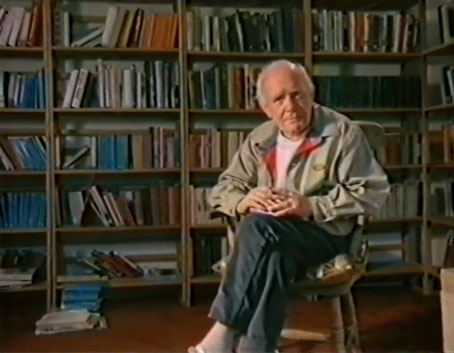
In the summer of 1985 he also gave a televised interview to the BBC. It was to be his last public statement. Genet demanded £10,000 in advance and in cash. In return he agreed to be filmed for two days in the house of Nigel Williams, a young novelist, television presenter and the translator of Deathwatch. At the time of the student uprising in May 1968, Genet had been very critical of the form the students’ debates took, especially during the occupation of the Théâtre de l’Odèon. As an experienced playwright he knew that the form is more communicative in a live or filmed event than what anyone manages to say. Accordingly, he constantly interrupted the formula of the television interview. He genuinely believed that he was no more interesting or important than the camera crew and insisted on asking the technicians questions. This reversal of the ordinary television format infuriated many viewers, but none forgot the show.

Edmund White, from Genet: A Biography (1993)

I didn’t forget the show. In fact this particular programme, Saint Genet, has been in the top five of those I wanted to see again ever since copies of old TV recordings started circulating on the internet. The film is another from the BBC’s Arena arts series, and one the corporation is proud of judging by their inclusion of clips in celebrations of Arena‘s history. This pride hasn’t extended to repeat screenings of the entire interview, however, apart from a single occasion a few weeks after Genet’s death in 1986. The days are long passed when the BBC would devote 50 minutes of its evening air-time to a writer who didn’t have a book to plug or some attachment to a popular film or TV drama. In 1985 you could expect as much while also being offered a programme that countered the reactionary tenor of the time: an author whose novels were filled with gay sex, and populated by all manner of social outcasts, from male prostitutes to thieves, murderers and the like.
genet2.jpg

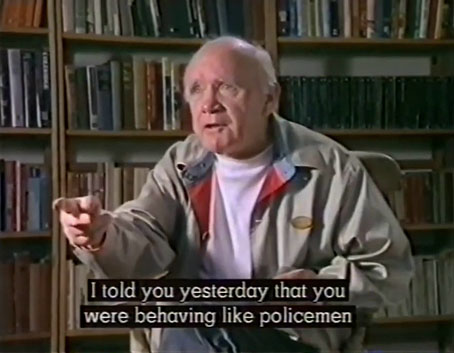
Genet in later years refused to discuss his novels or plays so co-director/interviewer Nigel Williams oriented the discussion around the author’s life (many details of which informed his fiction) while augmenting this with readings from the novels along with extracts from films and plays. I didn’t remember the extracts at all even though this would have been my first glimpse of scenes from the only film that Genet directed (and which he typically disowned), Un Chant d’Amour. More memorable was the sight of Genet himself sitting there for the best part of an hour, rolling cigarettes and verbally jousting with a pair of nervous interviewers in a mood of mingled amusement and exasperation. In the past I’ve been uncharitable about Williams’ handling of the situation but he ought to be congratulated for having inadvertently given us a film that’s so typical of its subject. Genet spent most of his life biting the hand that fed him, and always chaffed at the attention he received from the educated middle classes, even though these were the people who were most interested in (and paid for) his novels and plays. Edmund White’s biography tells us that Genet was unimpressed with Williams’ home (which he compared to something out of a Miss Marple story), and was annoyed when he saw the technical crew eating at a separate table to the producers. This annoyance was translated to the second half of the interview which he described as being like a police interrogation.

In his introductory comments Williams says that this was the first interview Genet had given to a major TV network, but it wasn’t Genet’s first filmed interview. The 52-minute film made by Antoine Bourseiller in 1981 contrasts strikingly with the Arena programme, demonstrating that Genet could talk with ease and at length before a camera. The reason, as White once again explains, is that Genet had planned the film in advance with Bourseiller, selecting the topics for conversation and even helping to edit the footage later. So the difference in attitude was all about control, or the lack of it. Wresting control from the BBC meant directing the questions back at the interviewers while drawing attention to the power relations and the intimidating nature of the interview process.

All of this begs the question as to why Genet agreed to place himself in a situation that he found so uncomfortable when he could easily have refused. We’re left to guess but he certainly didn’t do it for the money; he continued to live frugally despite the international success of his literary works. Large sums such as the £10,000 he extracted from the BBC he regularly passed on to needy friends or to political groups who he felt could put the funds to better use. Whatever the reason behind Genet’s participation, I think Williams and co. would agree that their money was well spent.

Previously on { feuilleton }
Covering Genet
Notre Dame des Fleurs: Variations on a Genet Classic
Genet art
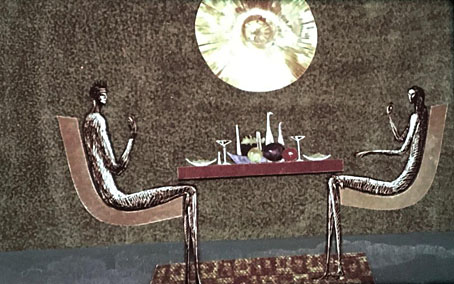
Flowers: A Pantomime for Jean Genet
Querelle de Brest
Jean Genet, 1981
Un Chant d’Amour (nouveau)
Jean Genet… ‘The Courtesy of Objects’
Querelle again
Saint Genet
Emil Cadoo
Exterface
Penguin Labyrinths and the Thief’s Journal
Un Chant d’Amour by Jean Genet
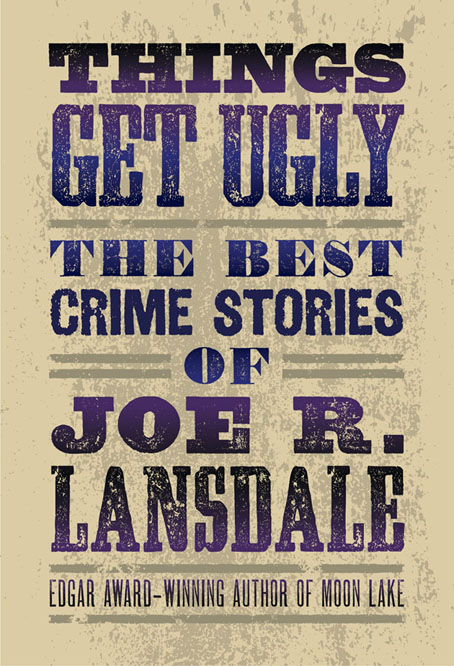
Things Get Ugly

tgu.jpg

Last month I said I had one more cover from 2022 to be made public, having forgotten that there was this one plus another which is currently at the printer, and which I’ll write about at a later date. Things Get Ugly follows last year’s Born For Trouble in being another Joe R. Lansdale cover for Tachyon that uses typography for the whole of the design. As with the earlier cover, this approach sidestepped having to try and summarise a collection of short stories with a single image or graphic. Adding imagery to a collection usually works best when the contents follow a specific theme, which isn’t the case here.

The stories may be described as crime but quite a few of them are dark enough to be included in horror collections. Things do, indeed, get ugly. The intersection between crime and horror fiction isn’t exactly new, the two genres have been entangled since The Murders in the Rue Morgue, and the boundaries remain permeable to this day. The most well-known piece in the new collection is Incident On and Off a Mountain Road, a story that was filmed for TV by Don Coscarelli for the Masters of Horror series, and which also opened the first season in 2005. Coscarelli’s adaptation is even nastier than its source but not everything in the collection is unrelentingly grim. Lansdale has a flair for black comedy which is to the fore in another story, Driving to Geromino’s Grave, in which two Depression-era children have to bring home the rotting body of their deceased uncle. This may not be everybody’s idea of an amusing read but the witty dialogue made me laugh. As well as the cover I’ve designed the interior of this one so I may post samples at a later date.

Things Get Ugly will be published in August. The book can be pre-ordered here.

Previously on { feuilleton }
Born for Trouble
Of Mice and Minestrone

Weekend links 657

foxx.jpg

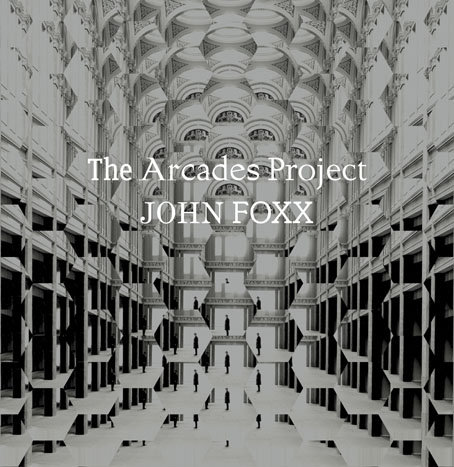
• Cover art for a new album by John Foxx which will be released on CD in March. This catches my attention for being based on Walter Benjamin’s compendious collection of esoterica, with the music being solo piano pieces. If the latter are anything like the albums Foxx recorded 20 years ago with Harold Budd then this is all very promising. Is the cover design by Jonathan Barnbrook? The typography and formal treatment of the photo suggest as much.

• “The new game was not providing access to everything but finding out how many expensively licensed properties you could cull from your service before people started to question how much they were paying a month.” Sam Thielman on the sudden unavailability of hundreds of classic Warner Brothers cartoons. Regarding his comment about the unplayability of Internet Archive videos: you download them and put them on a USB drive.

Frost Flowers on the Windows (1899) is a book that documents “the extraordinary power of windowpane frost to take ‘ice photographs’, images capable of expressing the ‘vital qualities’ of life forms close to the glass,” according to its author, Albert Alberg.

• New music: ev THe norTH, “a sound journey through the winter of the far north” by Lorenz Weber. (The encoding of the album title won’t display properly on this page.)

• RIP Yukihiro Takahashi, singer, songwriter and drummer with the fabulous Yellow Magic Orchestra. The space-disco video for YMO’s Rydeen never gets old.

• “I want an indescribable feeling”: composer Kali Malone on her search for the sublime.

• Old music: Roundtrip by Don Cherry & Jean Schwarz, a live performance in Paris, 1977.

• At Spoon & Tamago: Glass artist Genki Sudo crafts tentacle earbuds.

• At Unquiet Things: The Incandescent Otherworlds of Gervasio Gallardo.

• At Dennis Cooper’s: Acid Westerns Day.

Arcade (1987) by Chris & Cosey | The White Arcades (1988) by Harold Budd | Arcade (2018) by Philip Jeck

Strange Adventures: a film list

alphaville1.jpg

This is science fiction.

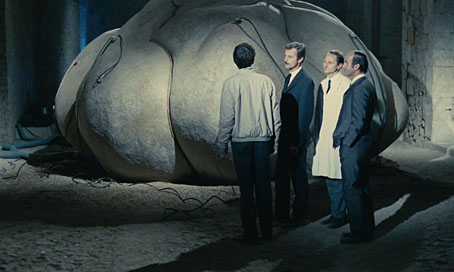
Presenting the list I mentioned earlier in which I highlight a number of worthwhile science-fiction films (also some TV productions) that aren’t the usual Hollywood fare. I’ve spent the past few years watching many of these while searching for more. This isn’t a definitive collection, and it isn’t filled with favourites; I’ve deliberately omitted a number of popular films that would count as such. It’s more a map of my generic tastes, and an answer to a question that isn’t always spoken aloud in discussions I’ve had about SF films but which remains implicit: “Okay, if you dislike all this stuff then what do you like?” I tend to like marginal things, hybrids, edge cases, the tangential, the unusual and the experimental. And for the past two decades I’ve increasingly come to value anything that isn’t a Hollywood product. There are two Hollywood productions on this list but neither of them were very successful. Not everything here has been overlooked or neglected but many of the entries have, either because they made a poor showing at the box office or because they have the effrontery to be filmed in languages other than English. Not everything is in the first rank, either, but they’re all worth seeing if you can find them.

liquid1.jpg

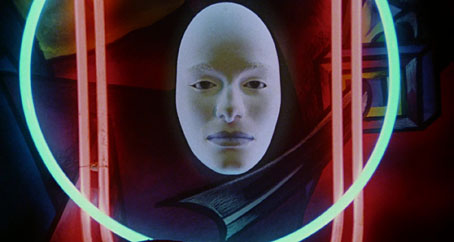
Liquid Sky.

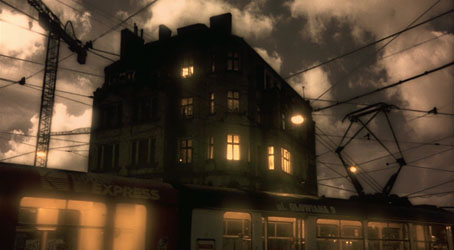
The starting point is around 1960 because prior to this date any marginal or unusual examples of SF cinema are harder to find. A genre has to be somewhat set in its ways before radically different artistic approaches emerge, and pre-1960 there wasn’t much testing of the SF boundaries in the film world. Science-fiction cinema has also tended to lag behind the written word, so even though the literature was growing more sophisticated during the 1950s, films from the same period are mostly filled with monsters, spaceships and mad scientists. By the 1960s enough written science fiction was playing with (or ignoring) genre stereotypes for a “New Wave” to be identified. Some of the films detailed here might be regarded as cinematic equivalents of SF’s New Wave but I’ll leave it to others to argue the finer points of definition. A few of the choices are a result of directors going in unexpected directions, with several selections being one-off genre excursions by people better known for other things. I’ve omitted many films and/or directors that receive persistent attention, so there’s no David Cronenberg, Nicolas Roeg, Andrei Tarkovsky or John Carpenter; and no Mad Max 2, Akira, Ghost in the Shell or The Prisoner. A couple of edge cases are so slight I couldn’t really justify their inclusion so you’ll have to look elsewhere for appraisals of The Unknown Man of Shandigor (a spy satire with Alphaville influences) and Trouble in Mind (more of a neo-noir fantasy). 2010 is the cut-off point. I’ve never been someone who watches all the latest things so it often takes me years to catch up with recent releases.

avalon2.jpg

Avalon.

I can imagine there might be questions about the availability of some of these films. All I can say is search around. I’ve managed to accumulate half the things on this list on either DVD or blu-ray so they’re not all impossible to find. I did consider posting links but the whole issue of region coding complicates matters. Most of the short films circulate on YouTube, as do a number of the features although these don’t always include subtitles. Have I missed something good? (Don’t say Zardoz….) The comments are open.


Invention for Destruction (Czechoslovakia, 1958)

invention.jpg

An evil millionaire named Artigas plans to use a super-explosive device to conquer the world from his headquarters inside an enormous volcano.

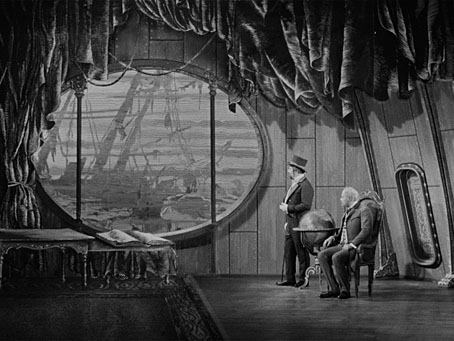
(Previously.) It seems fitting to start with a film that adapts a novel by one of the founders of the genre, Jules Verne. Karel Zeman’s third feature extended his technical effects to combine live-action with animation, creating a film in which the engraved illustrations of Verne’s novels are brought to life. With music by Zdeněk Liška.


La Jetée (France, 1962)

lajetee.jpg

The story of a man forced to explore his memories in the wake of World War III’s devastation, told through still images.

Chris Marker’s haunting short is one of the great time-travel stories, a 25-minute film that JG Ballard often listed as a favourite. Memory was a recurrent theme in Marker’s work, and memories here provide a physical route into the past, with the predicament of the unnamed protagonist concentrated on a single memory from his childhood. Marker’s interests ranged widely but he haunts the margins of science-fiction cinema in France, assisting Walerian Borowczyk with an early animation, Les Astronauts (1959), as well as the Pierre Kast entry below.


Alphaville: A Strange Adventure of Lemmy Caution (France, 1965)

alphaville2.jpg

A secret agent is sent to the distant space city of Alphaville where he must find a missing person and free the city from its tyrannical ruler.

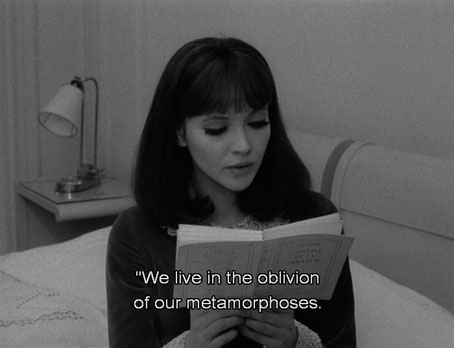
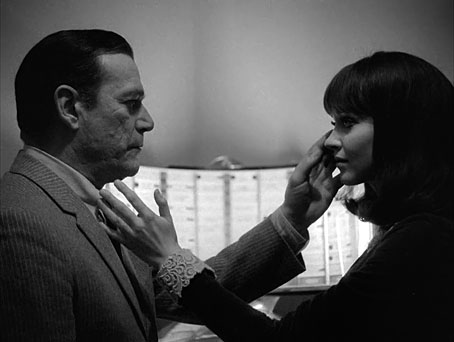
Another Ballard favourite, and not a neglected film by any means but the first in our collection of one-off SF excursions by directors better-known for other things. Alphaville is also important for being the first film to present itself as science fiction without any of the obvious or expected trappings of the genre. Paris in 1965 is Alphaville because Godard says it is. In part this is the director doing his usual thing of self-consciously adopting a genre; this is “science fiction” in the same way that Breathless is “crime”. But the conceptual leap was an important one for cinema, a step that freed film-makers from the need to build expensive sets and dress their cast in silver jump-suits. With Raoul Coutard’s high-contrast photography, Paul Misraki’s noirish score, Eddie Constantine’s bull-in-a-china-shop performance (he makes Ralph Meeker in Kiss Me Deadly seem soft-hearted), and the incomparable Anna Karina.


The Heat of a Thousand Suns (France, 1965)

heat.jpg

(Previously) A one-off animated short by Pierre Kast with assistance from Chris Marker, drawings by Eduardo Luiz, and an electronic score by Bernard Parmegiani. A young man with his own spaceship solves the problem of faster-than-light travel then heads into the cosmos with his pet cat.


Fahrenheit 451 (UK, 1966)

fahrenheit.jpg

In an oppressive future, a fireman whose duty is to destroy all books begins to question his task.

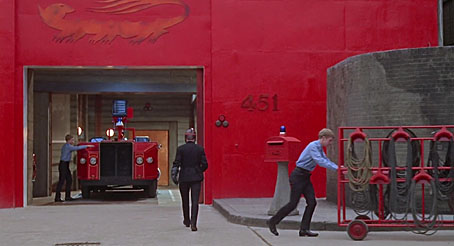
Francois Truffaut’s first colour feature has always seemed a little dull despite its incendiary subject matter and the Hitchcockian urgency of Bernard Herrmann’s score. It might have been improved with an actor other than Oskar Werner in the central role but there’s still a lot I like about this one: the music, the shots of the SAFEGE monorail, Nicolas Roeg’s striking photography, and Julie Christie in a double role. There’s also some amusement for Brits in seeing a Frenchman presenting ticky-tacky English suburbia as a soulless dystopia. With spoken titles, flat-screen TVs in every home (it’ll never happen…), and Genet novels condemned to the flames.


Je t’aime, Je t’aime (France, 1968)

jetaime.jpg

After attempting suicide, Claude is recruited for a time travel experiment, but, when the machine goes haywire, he may be trapped hurtling through his memories.

(Previously.) Much as I like toying with the idea that Last Year in Marienbad is science fiction there really isn’t anything in it that easily justifies the claim. Director Alain Resnais said that this one wasn’t SF either but it does at least feature a time machine. Resnais had collaborated with Chris Marker in the 1950s, and the pair remained friends, so it’s tempting to see this as a riff on La Jetée. (There’s even an echo of Marker’s film in the title…) Both films use a doomed romance as a focus for their examination of memory and time, and both feature choral scores, the music for this one being composed by Krzysztof Penderecki.


Continue reading “Strange Adventures: a film list”

Weekend links 656

escher.jpg

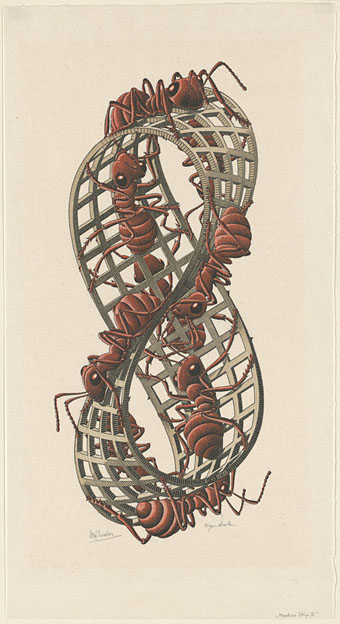
Mobius Strip II (1963) by MC Escher.

• Old music: Warp Records is reissuing two recent Jon Hassell discs later this year: The Living City (Hassell’s ensemble playing live in NYC, 1989) and Psychogeography (Zones Of Feeling) (remixes from City: Works Of Fiction), which will be available as standalone releases or bundled together as Further Fictions together with Hassell’s Atmospherics book.

• “His library is an immense and enviable wellspring, a demimonde of objects by murky creators who for decades have gnawed away at the inner organs of polite society.” Steven Heller talks to Glenn Bray about Library, an 800-page collection of scans from Bray’s trove of books, comics and print ephemera.

• New music: Tsathoggua, the latest in the Lovecraftian series of Cryo Chamber Collaborations which reminds me that I’m still missing the more recent entries. Also the non-Lovecraftian Coil by Ian Boddy.

• “Music is a way to express yourself beyond words,” says Hildur Guðnadóttir.

• See this year’s winners of the annual Close-up Photographer of the Year competition.

• At Dennis Cooper’s: Spotlight on…Ishmael Reed The Last Days of Louisiana Red (1974).

• A few new photos of Michael Heizer’s City in the Nevada desert.

City Of Night (1994) by David Toop & Max Eastley | City As Memory (1995) by John Foxx | City Appearing (2013) by Julia Holter