Weekend links 101

cabat.jpg

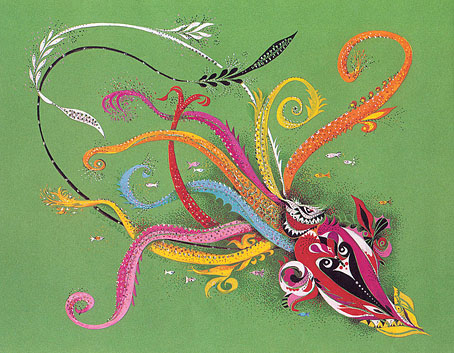
Kraken from Ernie Cabat’s Magical World Of Monsters (1992) at Monster Brains.

“I think for a lot of people who don’t read pulp growing up, there’s a real surprise that the particular kind of Pulp Modernism of a certain kind of lush purple prose isn’t necessarily a failure or a mistake, but is part of the fabric of the story and what makes it weird. There’s a big default notion that ‘spare,’ or ‘precise’ prose is somehow better. I keep insisting to them that while such prose is completely legitimate, it’s in no way intrinsically more accurate, more relevant, or better than lush prose.” China Miéville at Weird Fiction Review expressing an opinion that few in the literary world ever articulate, never mind agree with. Far more common is (to pick a recent example) Ursula K Le Guin dismissing Cormac McCarthy for “pretentious prose”.

• “Militant feminist scientists brainwash a research subject to assassinate the Welsh Minister of Prostitution. Meanwhile World War III is being fought and the USA has been invaded.” The IMDB précis for Taking Tiger Mountain (1983), a feature film directed by Tom Huckabee from a script by William Burroughs, and featuring a 19-year-old pre-Aliens/Near Dark Bill Paxton. The director discusses the film’s production at Screen Slate and attends a rare screening at Spectacle, Brooklyn, NYC, today (March 25th). YouTube has a three-minute clip. Surprising this has remained buried for so long. When can the rest of us get to see it?

• Prestel have published the catalogue for In Wonderland: The Surrealist Adventures of Women Artists in Mexico and the United States. AnOther previewed some of the contents. The exhibition runs at the LACMA, Los Angeles, until 6th May.

…gays only make up about 3% of the population so we spend our whole lives “translating” straight movies, books, ballets into gay terms and studying the heterosexuals around us—we know much more about them than they know about us, just as blacks know a lot about whites but whites know virtually nothing about blacks.

Edmund White (again) interviewed by Frank Pizzoli at Lambda Literary Review.

• New on Caroline True Records: Jon Savage’s “Fame”, Secret History of Post-Punk 1978–81. “Some of it doesn’t sound like anything that has happened since,” says Savage. Indeed. FACT has the track list which I was pleased to see includes Chrome among the usual suspects. Hear a 12-minute promo mix at Soundcloud.
guerin.jpg

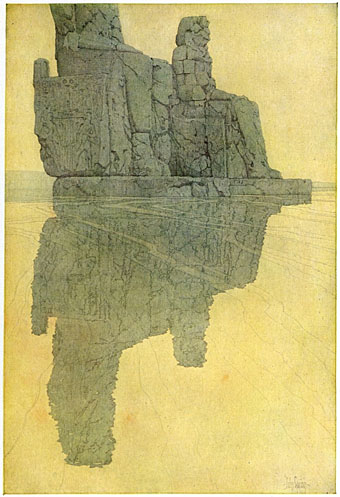
The Colossi of Memnon by Jules Guerin. From Egypt and its Monuments (1908) by Robert Hichens at Golden Age Comic Book Stories.

Gay Life Stories, “a colourful compendium of same-sex love through the ages” by Robert Aldrich. Reviewed here. Related: Alice Dreger asks “Are straight people born that way?”

• Clive Hicks-Jenkins created a series of designs for a Washington DC performance of Stravinsky’s The Soldier’s Tale. Follow their evolution in reverse order at his blog.

• Hocus Pocus: Margaret Eby on the brief epistolary relationship between Harry Houdini and Arthur Conan Doyle.

Rick Poynor on more cover designs for JG Ballard’s Crash.

London, city of dreams and rivers, caught on Polaroid.

• Photo prints by Thom Ayres for sale at Society6.

B*tches in Bookshops

• Meet You In The Subway (1979) by Chrome | New Age (Version III) (1980) by Chrome | Danger Zone (1981) by Chrome | Firebomb (1982) by Chrome.
Weekend links 100

bedini.jpg

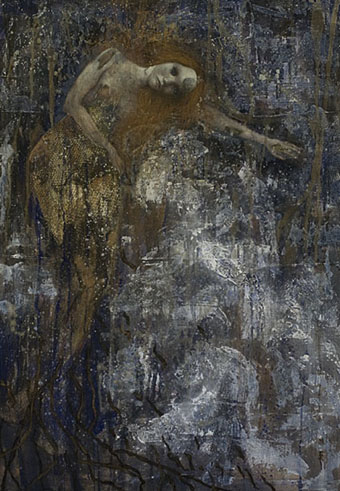
How to become a mermaid and dissolve into sea foam in just seven surgical operations (2010) by Carla Bedini.

D.I.Y. Magic was a regular feature in the late Arthur Magazine that’s now become a book by Anthony Alvarado: “Think of it as jail-breaking the iPhone of your mind. Teaching it to do things that its basic programming was never set up for. Advanced self-psychology.” A first edition letterpress silver foil cover is limited to 1000 copies. | More magic: Jimmy Page’s unused soundtrack for Kenneth Anger’s Lucifer’s Rising finally gets an official release on March 20th.

Julia Holter‘s tremendous new album, Ekstasis, has been rocking my world this week. She’s interviewed at FACT where you can also hear the opening track, Marienbad, which receives extra points for being derived from that film. And there’s more: Ritual Music, a live performance at Sea & Space Gallery in Los Angeles, and Fur Felix, a film by Eric Fensler.

Brute Ornament, an exhibition of new work by Seher Shah and Kamrooz Aram opens at the Green Art Gallery, Dubai, on Monday. While the UAE is out of reach for most of us, the gallery site has samples of the work on display.

• This week’s mixtape arrives courtesy of BUTT magazine: Rock Bottom Mix by Cesar Padilla, a blend of acid, glam, grunge, punk, surf and stoner rock. Elsewhere, Richard Norris lists his 20 favourite UK psychedelic records.

the name is BURROUGHS ? Expanded Media at ZKM, the Center for Art and Media in Karlsruhe, is a comprehensive exhibition presenting for the first time in Germany the artistic output of William Burroughs.

Boneland by Alan Garner will be published in August, a new novel that concludes a narrative thread begun with The Weirdstone of Brisingamen in 1960.

• Coming soon (so to speak) on BFI DVD, The Erotic Films of Peter de Rome, more gay obscurities receiving quality attention.

The Northampton Chronicle reports on Alan Moore’s forthcoming novel about the town, Jerusalem.

Susan Cain is playing my tune (again): Why the world needs introverts.

• Techniques of terror: Carl Dreyer‘s Danish Gothic dissected.

• NASA has the latest map of Everything.

The male sex toy revolution.

Lucifer Rising Sessions (1972) by Bobby Beausoleil.

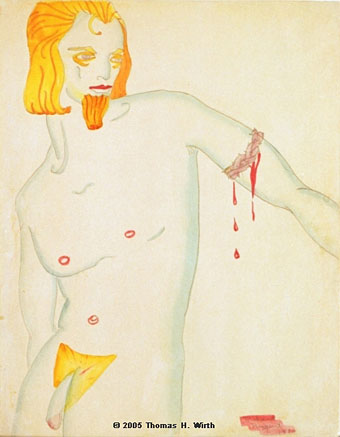
Richard Bruce Nugent’s Salomé

nugent1.jpg

Untitled (Salomé, no date).

I was looking for work by the artist, Richard Bruce Nugent (1906–1987), not more Salomé illustrations so this was a surprise discovery. Nugent was an American writer, illustrator and painter who was friends in the 1920s with key figures in the Harlem Renaissance such as Langston Hughes and Zora Neale Hurston. Unlike Hughes, whose sexuality has been disputed for years, Nugent was openly gay at a time when such a stance carried considerable risks. According to the Nugent website he “stood for thirty years as the only African-American writer willing clearly to indicate his homosexuality in print.” That site hosts these pictures in a number of gallery pages which include some rather fine (and very gymnastic) erotic drawings. Among the writings there’s a piece entitled Slender Length of Beauty that dates from the same period as the picture below, a very Wildean retelling of the Salomé story which includes a character named after that favourite figure of Uranian myth, Narcissus.

nugent2.jpg

Untitled (John the Baptist? 1930).

Elsewhere on { feuilleton }
The gay artists archive
The Salomé archive

Geneviève Vix’s Salomé

vix1.jpg

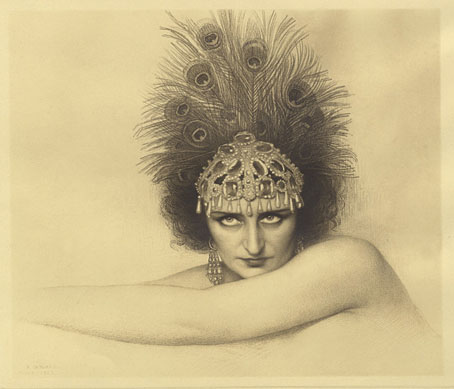
Geneviève Vix (1926) by P. Godard.

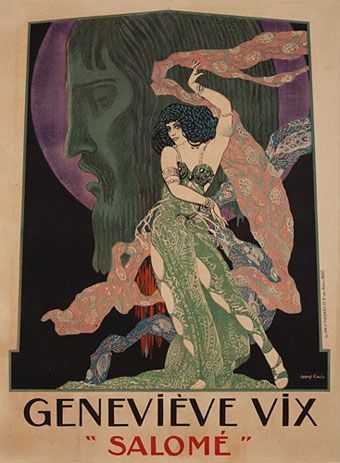
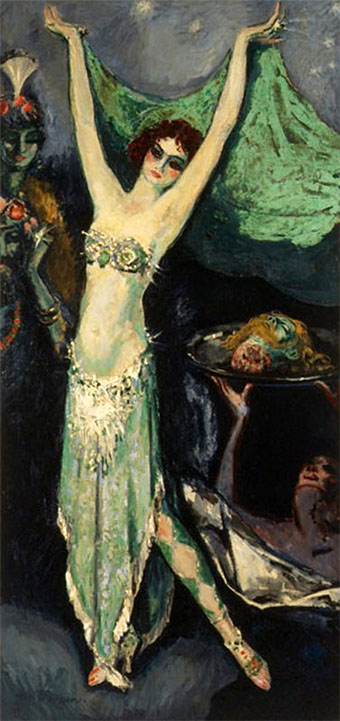
The poster below turned up recently at Beautiful Century, a promotional piece for the Richard Strauss opera in which the splendidly named French soprano Geneviève Vix (1879–1939) took the role of Salomé. The portrait of Mademoiselle Vix by Kees Van Dongen is of interest for the link it provides to a woman of the period who didn’t need to act Salomé, she was pretty much a femme fatale in her own right, the fiery Luisa Casati. Van Dongen was one of many artists commissioned to immortalise the heiress before her fortune ran out, and he painted her on at least two occasions. Some of the portraits can be seen in an eye-popping post at Fashion’s Most Wanted while over at Strange Flowers you’ll find the Scarlet Marchesa is a recurrent woman of consequence.

vix3.jpg

Geneviève Vix / Salomé (1920) by Jacques Carlu.

vix2.jpg

Mademoiselle Geneviève Vix dans le rôle de Salomé (1920) by Kees Van Dongen.

Elsewhere on { feuilleton }
The Salomé archive

John Martin’s musical afterlife

martin1.jpg

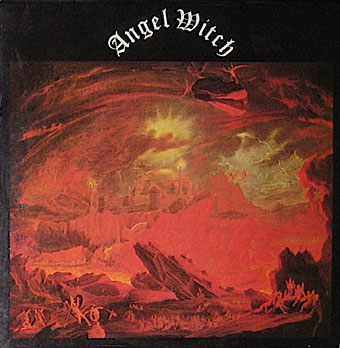
Angel Witch (1980) by Angel Witch. Art: The Fallen Angels Entering Pandemonium (1841).

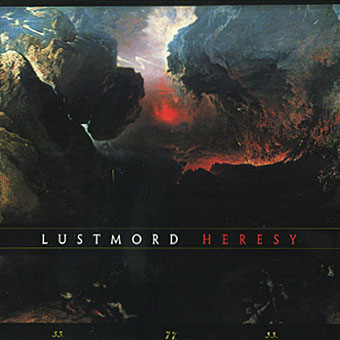
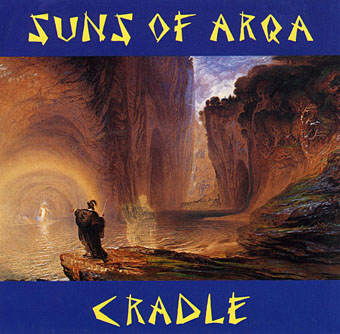
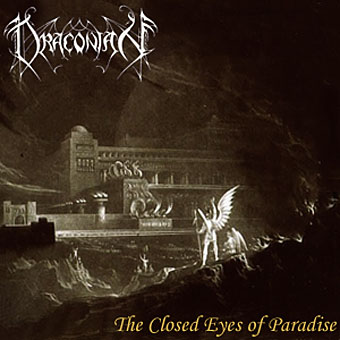
It’s been a busy week so the posts just now are tending towards haste and laziness. The paintings of John Martin (1789–1854) make such good album covers you’d expect that there were more than this handful. Perhaps there are (Discogs.com contains numerous omissions), in which case leave a comment if you know of any. It’s no surprise that three of these are metal albums when the artist depicted so many apocalypses and scenes from Paradise Lost. Given the recent reappraisal of Martin’s work these won’t be the last albums we see borrowing his art.

heresy.jpg

Heresy (1990) by Lustmord. Art: The Great Day of His Wrath (1851).

This is the reissue of Lustmord’s excellent album of doomy volcanic rumbles. Both CDs use the same painting but the new edition has a better type layout.

martin3.jpg

Cradle (1992) by Suns of Arqa. Art: Manfred and the Witch Of The Alps (1837).

A good painting, a decent album (I have this one on CD) by a musical collective from Manchester originally, unfortunately spoiled by dreadful design. The group eventually saw sense and reissued this one with a better layout. The painting is the only example of Martin’s work in Manchester and features a ghostly figure where the artist had painted over an earlier Manfred.

martin4.jpg

The Closed Eyes of Paradise (demo, 1999) by Draconian. Art: Pandemonium (1838).

bombs.jpg

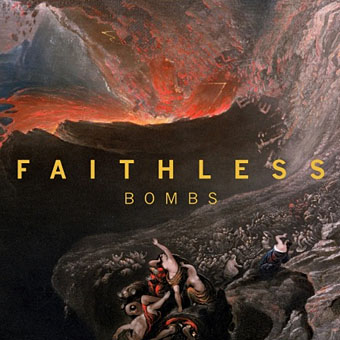
Bombs (2006) by Faithless. Art: The Great Day of His Wrath (detail, 1851).

martin2.jpg

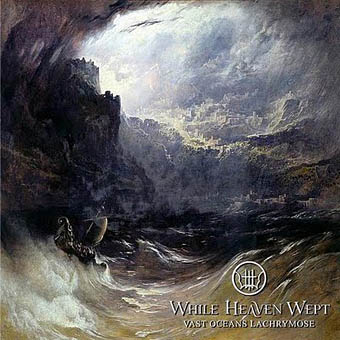
Vast Oceans Lachrymose (2010) by While Heaven Wept. Art: Christ Stilleth The Tempest / Storm On The Sea Of Galilee (1867).

This American metal band appeared in the earlier post about Odilon Redon with the cover of their debut album.

Elsewhere on { feuilleton }
The album covers archive

Previously on { feuilleton }
Odilon Redon’s musical afterlife
Danby’s Deluge
John Martin: Heaven & Hell
Darkness visible
Aubrey Beardsley’s musical afterlife
Death from above
The apocalyptic art of Francis Danby