Weekend links 207

barker.jpg

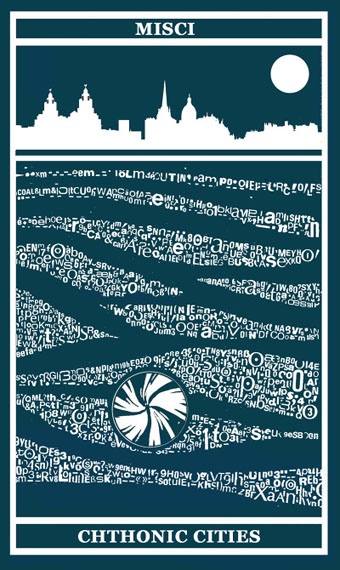
Chthonic Cities by David Chatton Barker. One of a series of Folklore Tapes screenprints available from Bleep.

• The original version of Kenneth Anger’s Lucifer Rising, the one with the Jimmy Page soundtrack that was completed in 1973, has always been described as lost/stolen/buried or otherwise gone forever. So you’d think the news that a print had been discovered recently by Brian Butler would have received greater attention. There’s a screening in Los Angeles this Thursday. When do the rest of us get to see it?

Chris Marker: A Grin Without a Cat, an exhibition and series of Marker-related events at the Whitechapel Gallery, London. Related: The Encounter of M. Chat & Chris Marker as Told By Louise Traon.

• The trailer for The Gospel According to St Derek, a forthcoming documentary about Derek Jarman. Related: Carl Swanson on why Tilda Swinton is not quite of this world.

Maybe there’s just something conservative at the bedrock of American fiction. […] Or maybe it’s just another symptom of the creeping conservatism that’s infected so many aspects of the culture.

Eric Obenauf talks to author Jeff Jackson whose comments about cultural conservatism could equally be applied to the UK.

• Primitive graphics, inventive graphics, budget Surrealism, and some great theme tunes; it’s Trunk TV, Episode 1: Title Sequences.

• Mixes of the week: Secret Thirteen Mix 110 by Black To Comm, and Intro To Drone For Debcon 1, almost 7 hours of music!

Joseph Burnett reviews Ett, an album of electronic music by Klara Lewis.

The Delian Mode (2009), a film about Delia Derbyshire by Kara Blake.

• Extracts from Tokyo Reverse by Simon Bouisson and Ludovic Zuili.

Dan Piepenbring on The Haunting Illustrations of Alfred Kubin.

• At Strange Flowers: Photos of arcades by Germaine Krull.

• Fish, Fiends, and Fantasy: The Gothic Art of Ian Miller.

• At 50 Watts: Richard Teschner and His Puppets.

• Sonic Foam: Ian Penman on Kate Bush and Coil.

Bits and Pieces

Lucifer (1968) by The Salt | Experiment IV (1986) by Kate Bush | Methoxy-N, N-Dimethyl (5-MeO-DMT) (1998) by Coil
Musaeum Hermeticum

alchemy11.jpg

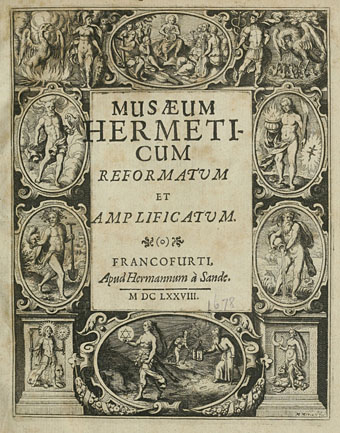
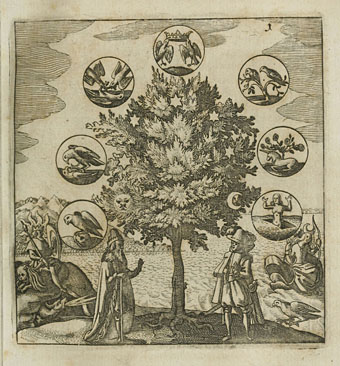
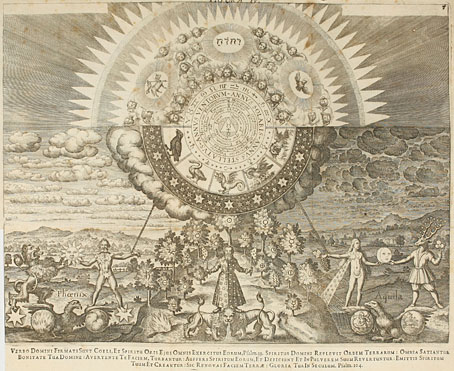
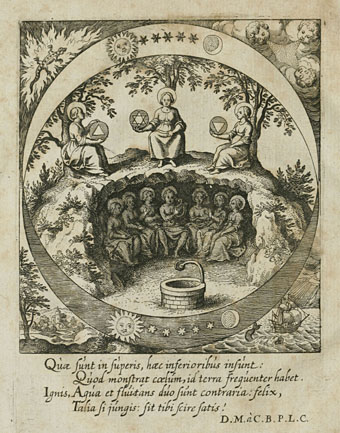
More from the storehouse of wonders that is the Getty Alchemy Collection at the Internet Archive. The illustrations here are from the 1678 edition of the Musaeum Hermeticum, a lengthy collection of alchemical texts with engraved illustrations by Matthäus Merian (1593–1650). Merian’s illustrations are some of the most frequently reprinted of all those you’ll find in alchemical books of this period, and justifiably so, he had a knack for presenting the allegories of the alchemical process in an elegant and detailed manner that’s also gloriously strange. The same quality of strangeness can be found in his other major alchemical work, Atalanta Fugiens (aka Scrutinium Chymicum). Browse Musaeum Hermeticum here or download it here.

alchemy01.jpg

alchemy02.jpg

alchemy03.jpg

alchemy04.jpg

Continue reading “Musaeum Hermeticum”

The recurrent pose 52

flandrin1.jpg

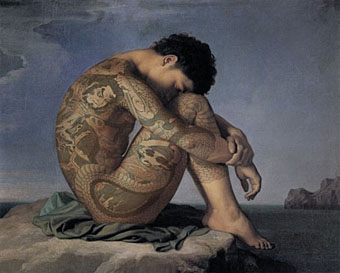
After Young Man Beside the Sea (2008) by Abe Koya.

Further examples of this most recurrent of poses continue to emerge. Abe Koya subjects Flandrin’s jeunne homme to some Japanese tattooing, one of a number of prints that give other famous artworks similar treatment.

flandrin2.jpg

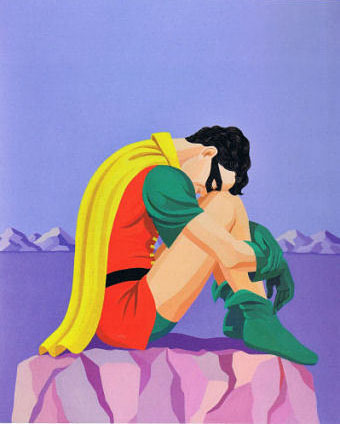
La solitudine dei numeri due (2011) by Giuseppe Veneziano.

Giuseppe Veneziano goes the opposite route by placing a superhero in Flandrin’s seascape. Another of Veneziano’s paintings has Superman in a pieta pose; Krypton’s most famous exile had already appeared in Flandrin’s setting some years ago. (Thanks to Hans for the tip!)

Elsewhere on { feuilleton }
The recurrent pose archive

Kusama’s Self-Obliteration, a film by Jud Yalkut

kusama1.jpg

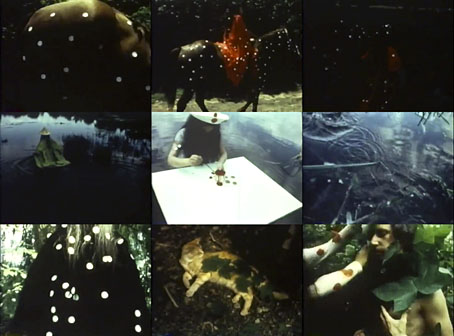
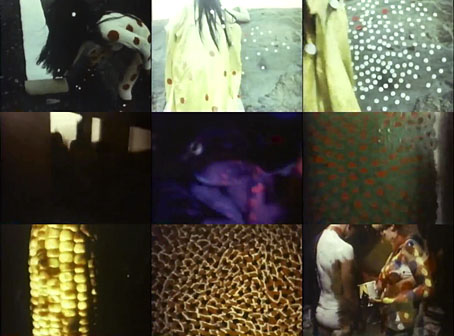
Yayoi Kusama’s art has often been classed as psychedelic—some of her mirrored rooms were featured in the travelling Summer of Love exhibition in 2005—but this is more a consequence of her activities meshing with the interests of the late 60s than anything else; her preoccupations always seem a lot more personal and obsessive. Jud Yalkut’s short film shows Kusama and various friends cavorting in typical underground-movie fashion in 1967, the main indicator of the artist’s involvement being her sticking polka dots (and leaves) onto everything: trees, people, cats, horses, even a river. Later on there’s more polka-dotting at some kind of body-paint happening inside one of her mirrored rooms. The film itself is pretty psychedelic in the second half, looking like outtakes from Roger Corman’s The Trip. The of-the-moment score was provided by The CIA Change, whoever they were. Watch it here.

kusama2.jpg

Previously on { feuilleton }
Infinite reflections
Yayoi Kusama
The art of Yayoi Kusama

Weekend links 206

komoda.jpg

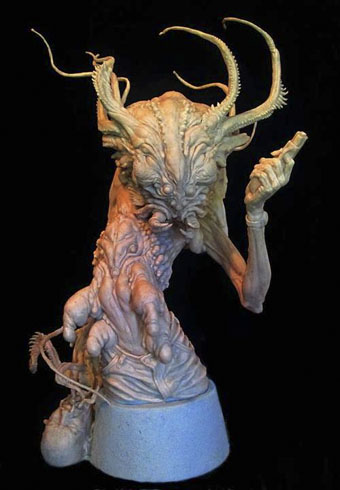
Nova Express (2014) by Paul Komoda.

• Last week it was Kraftwerk, this week it’s Can in another astonishing 70-minute TV performance from 1970. For those who know where to look in the torrent world there are copies of these recordings circulating there.

JG Ballard: five years on. Extracts from introductions by John Gray, Hari Kunzru, Robert Macfarlane, Deborah Levy, James Lever, China Miéville and Michel Faber for a new series of Ballard editions.

• Mix of the week: Needle Exchange 147 by Inventions. Also at Self-Titled Mag: Suzanne Ciani on her Buchla beginnings, talking dishwashers, and why no one got electronic music in the ’70s.

• At Dangerous Minds: It’s So Far Out It’s Straight Down, a Granada TV documentary from 1967 featuring Paul McCartney, Allen Ginsberg, International Times, Pink Floyd et al.

The Wonderful World of Witches: Portraits of English Pagans. A photo-special from the 1960s at LIFE. Related: From 1974, the US TV ad for Man, Myth and Magic.

• Suspicious Minds: Adam Curtis on Stephen Knight, Jack the Ripper, squatters, heists, From Hell, and why people no longer trust those in authority.

• Here be men with beards and syntezators: Andy Votel‘s Top 10 Early Patch-Bay Polymaths From Eastern Europe.

The New York Public Library has made 20,000 maps available as free, high-res downloads.

• An oscilloscope video by Vincent Oliver & Steve Bliss for Riff Through The Fog by Clark.

Anne Billson interviewed Alejandro Jodorowsky in 1990.

• At BLDGBLOG: When Hills Hide Arches.

Do gay people still need gay bars?

Pixelord Dreams

I’m So Green (1972) by Can | Nova Feedback (1978) by Chrome | Gay Bar (2003) by Electric Six