Giovanni Battista Pian’s Pictorial Alphabet

muller1.jpg

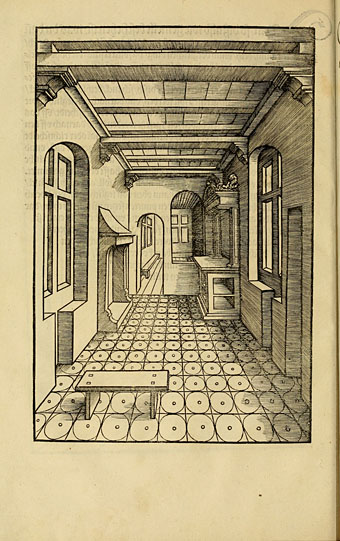
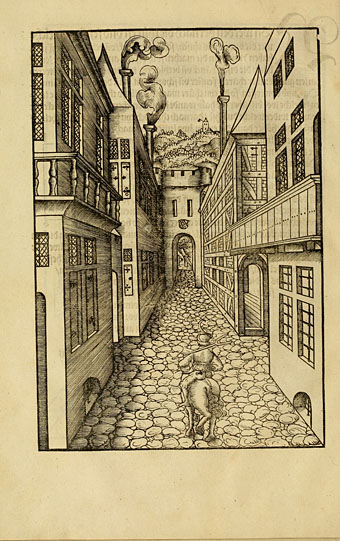
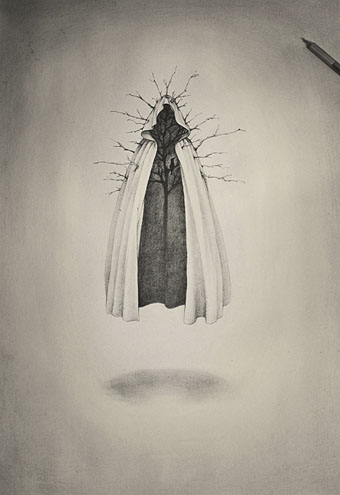
Another recommendation from Paul Rumsey (thanks, Paul!), these are from a series of lithographs dated 1842–43 by Leopold Müller based upon paintings (?) by Giovanni Battista Pian, or Giovanni Battista de Pian (1813–1857). Shades again of (Giovanni Battista) Piranesi in the name, although the pictures are a lot less Piranesian than Antonio Basoli’s; the only time Piranesi bothered with wooden materials was as a support for building stone arches, and in the spars and torture engines of his Prisons. See more of the series here.

muller2.jpg

muller3.jpg

Continue reading “Giovanni Battista Pian’s Pictorial Alphabet”

Antonio Basoli’s Pictorial Alphabet

basoli1.jpg

My thanks to Paul Rumsey for reminding me of the Alfabeto pittorico (1839) by Antonio Basoli (1774–1848). This is the same idea as yesterday’s pictorial alphabet but with an architectural theme. Basoli’s series of prints depicts each letter in an architectural style which matches the initial: A is for Arabia but also for aranciera (orangery). The attention to detail and the rendering of light and shade is very Piranesian, and it so happens that Piranesi had earlier designed a small number of capitals for use in books, the letterforms being created by architectural scenes. It’s tempting to see Basoli’s series as an elaboration of this idea done in the manner of Piranesi’s Prima parte di Architettura e Prospettive.

Given how much I enjoy this kind of thing I would have posted something about them by now, but seeing as they’d already been covered by the late-lamented Giornale Nuovo I stayed my hand. Mister Aitch’s post on the subject is still worth a look for the detail he supplies regarding the prints and their creator. For scans of the entire volume, go here.

basoli2.jpg

basoli3.jpg

basoli4.jpg

Continue reading “Antonio Basoli’s Pictorial Alphabet”

Weekend links 195

ethellerossignol.jpg

Untitled painting (c. 1920–1933) by Ethel le Rossignol depicting “the Sphere of the Spirit”. An exhibition of  Ethel le Rossignol’s channelled paintings takes place at the Horse Hospital, London, next month.

• “It’s always disconcerting to discover a favourite writer was kind of a jerk. How does this realization effect our understanding of Walter Benjamin’s work?” asks Morgan Meis.

• Mixes of the week: Georges Vert (aka Jon Brooks) presents The Pan-Europa Mix. Mr Brooks also unveiled another seasonal mix which he calls Winter Velvet.

Knopheria by Chrome Hoof ft. Shingai Shoniwa. A video from the band’s latest album.

Without sci-fi trappings of any kind, The Metamorphosis forces us to think in terms of analogy, of reflexive interpretation, though it is revealing that none of the characters in the story, including Gregor, ever does think that way. There is no meditation on a family secret or sin that might have induced such a monstrous reprisal by God or the Fates, no search for meaning even on the most basic existential plane. The bizarre event is dealt with in a perfunctory, petty, materialistic way, and it arouses the narrowest range of emotional response imaginable, almost immediately assuming the tone of an unfortunate natural family occurrence with which one must reluctantly contend.

David Cronenberg on Franz Kafka’s story.

• “I was very much into now-ism.” Laraaji talks to Bobby Barry about his music.

The Edge Question for 2014: “What scientific idea is ready for retirement?”

Storybook Apocalypse: Beasts, Comets, and Other Signs of the End Times.

• Return of the wunderkammer: Philip Hoare on cabinets of curiosities.

• Birditis: Ian Penman on the “full catastrophe” of Charlie Parker.

Rick Poynor on The Compulsively Visual World of Pinterest.

• RIP psychedelic poster artist Gary Grimshaw.

• At PingMag: The automaton clocks of Tokyo.

Dust & Grooves: Vinyl music culture.

Wunderkammern at Pinterest.

Ligeti: String Quartet No. 1 “Metamorphoses nocturnes” (recorded 1978) The Arditti Quartet | Thru Metamorphic Rocks (1979) by Tangerine Dream | Metamorphosis (2012) by Demdike Stare

Lynd Ward’s Frankenstein

ward1.jpg

Mary Shelley’s novel illustrated in woodcuts by the great Lynd Ward (1905–1985). This edition appeared in 1934, a couple of years after the release of James Whale’s first Frankenstein film whose popularity may have led to its commission. It’s good to see Dover Publications keeping this one in print when first editions go for hundreds of pounds. VTS has more of the illustrations (there’s also this site), and many more examples of Ward’s work.

ward2.jpg

ward3.jpg

ward4.jpg

Elsewhere on { feuilleton }
The illustrators archive

Previously on { feuilleton }
Two Brides
Berni Wrightson’s Frankenstein
Cain’s son: the incarnations of Grendel
Gods’ Man by Lynd Ward

Big fish

undying.jpg

Illustration by Lawrence for The Undying Monster (1946) by Jessie Kerruish.

Another of those collisions between fine art and pulp fiction that I like to note now and then. The drawing above by Lawrence Sterne Stevens (from this page) I immediately recognised as borrowing its fish from the painting below by Néstor Martín-Fernández de la Torre (1887–1938), or Néstor as he’s usually known. Stevens was also usually credited by the single name Lawrence, and this is one of his many first-rate contributions to Famous Fantastic Mysteries. I’ve already noted a similar borrowing by his contemporary, Virgil Finlay, so this example isn’t too surprising. It’s unlikely that many of the readers eagerly devouring Jessie Kerruish’s tale would have been familiar with Néstor’s paintings. On the same Lawrence page there’s his illustration for Arthur Machen’s The Novel of the Black Seal which ran in the same issue.

nestor1.jpg

Poema del Mar: Noche (1913–1924).

Néstor is distinguished by a predilection for aquarian scenes and writhing figures, all of which are presented in a very distinctive and recognisable style. He also happens to be one of the few major artists to come from the Canary Islands which no doubt explains his interest in the sea. The Poema del Mar series, and other works such as this satyr head, often find him numbered among the Spanish Symbolists although he’s rather late for that movement, and this assumes that every artist has to be placed in one box or another whether they belong there or not. These giant fish could just as well make him another precursor of the Surrealists, and they do occasionally receive a mention for their similarity to (and possible influence upon) Dalí’s enormous Tuna Fishing (Homage to Meissonier) (1966–67). There’s more of Néstor’s work over at Bajo el Signo de Libra (Spanish language).

nestor2.jpg

Poema del Mar: Tarde (1913–1924).

nestor3.jpg

Poema del Mar: Reposo (1913–1924).

Continue reading “Big fish”