Thomas Bodkin on Harry Clarke

studio01.jpg

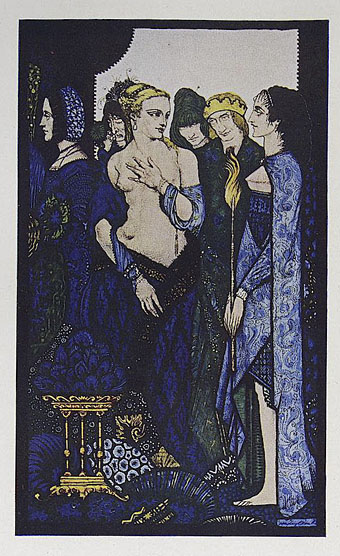
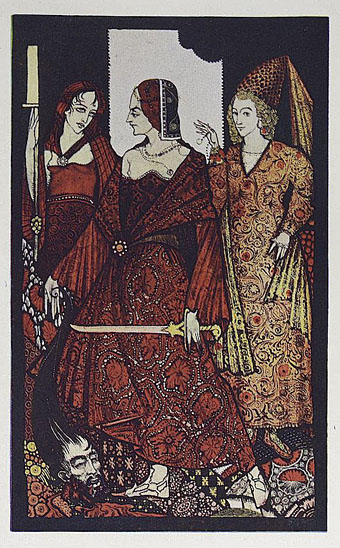
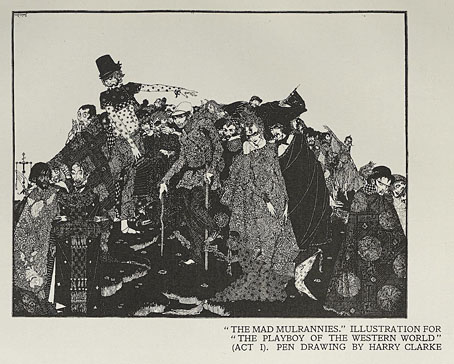
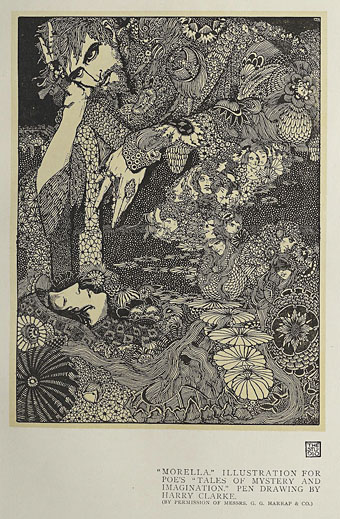
Harry Clarke’s work appeared in the pages of The Studio magazine on several occasions, either in review or as here, a subject of a special feature. I linked to a later piece a few years ago but until this week I hadn’t seen this earlier entry from November 1919. (I keep intending to download all the issues at the University of Heidelberg and go through them properly. One day…)
studio02.jpg

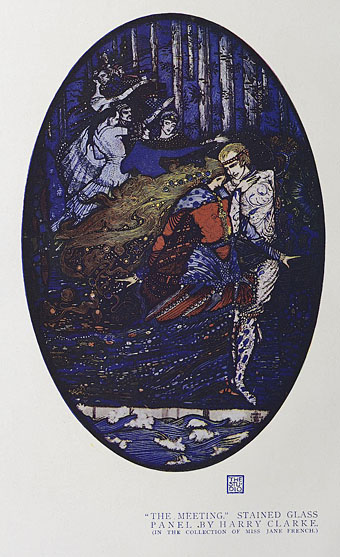
Thomas Bodkin was a barrister and director of Ireland’s National Gallery who became a great champion of Harry Clarke’s work. Like many of the artist’s Irish enthusiasts, Bodkin was familiar with Clarke’s stained-glass designs which he highlights here. Clarke’s stained-glass art is as important a part of his career as his illustration—it was the family business, for which he created over 160 windows and panel designs—but the fruits of this work were seldom seen in print. The Studio was in the vanguard of print reproduction at the time, especially where colour was concerned, so the reproductions of the glass designs are especially good, much better than some of the colour plates in Clarke’s illustrated books. The ever-popular illustration for Poe’s Morella also benefits from reproduction on a large page where the minuscule faces hiding in the decoration become more apparent.
studio03.jpg

A few pages before the Clarke feature there are two works by John Hancock that I hadn’t seen before. Hancock and Clarke were both featured in The Golden Hind, the arts magazine edited by Clifford Bax and Austin Spare, but Hancock lapsed into almost total obscurity following his death at the age of 22. For years all I knew of either him or his work was a book reproduction of the Golden Hind piece together with a note saying that he was dismayed by his declining health, and that his body was found floating in Regent’s Canal. (See this page for more.) Harry Clarke also suffered from poor health for much of his life, and died at the age of 41 in Chur, Switzerland, a town best known today for being the birthplace of HR Giger. Some of the phallic monstrosities lurking at the margins of Clarke’s Faust drawings might be precursors of Giger’s airbrushed abominations. I wonder if Giger knew of this connection? Answers on a biomechanical postcard.
studio04.jpg

studio05.jpg

Elsewhere on { feuilleton }
The illustrators archive

Previously on { feuilleton }
Harry Clarke: His Graphic Art
Harry Clarke and others in The Studio
Harry Clarke’s Fairy Tales of Charles Perrault
Harry Clarke in colour
The Tinderbox
Harry Clarke and the Elixir of Life
Cardwell Higgins versus Harry Clarke
Modern book illustrators, 1914
Illustrating Poe #3: Harry Clarke
Strangest Genius: The Stained Glass of Harry Clarke
Harry Clarke’s stained glass
Harry Clarke’s The Year’s at the Spring
The art of Harry Clarke, 1889–1931
Harry Clarke: His Graphic Art

clarke1.jpg

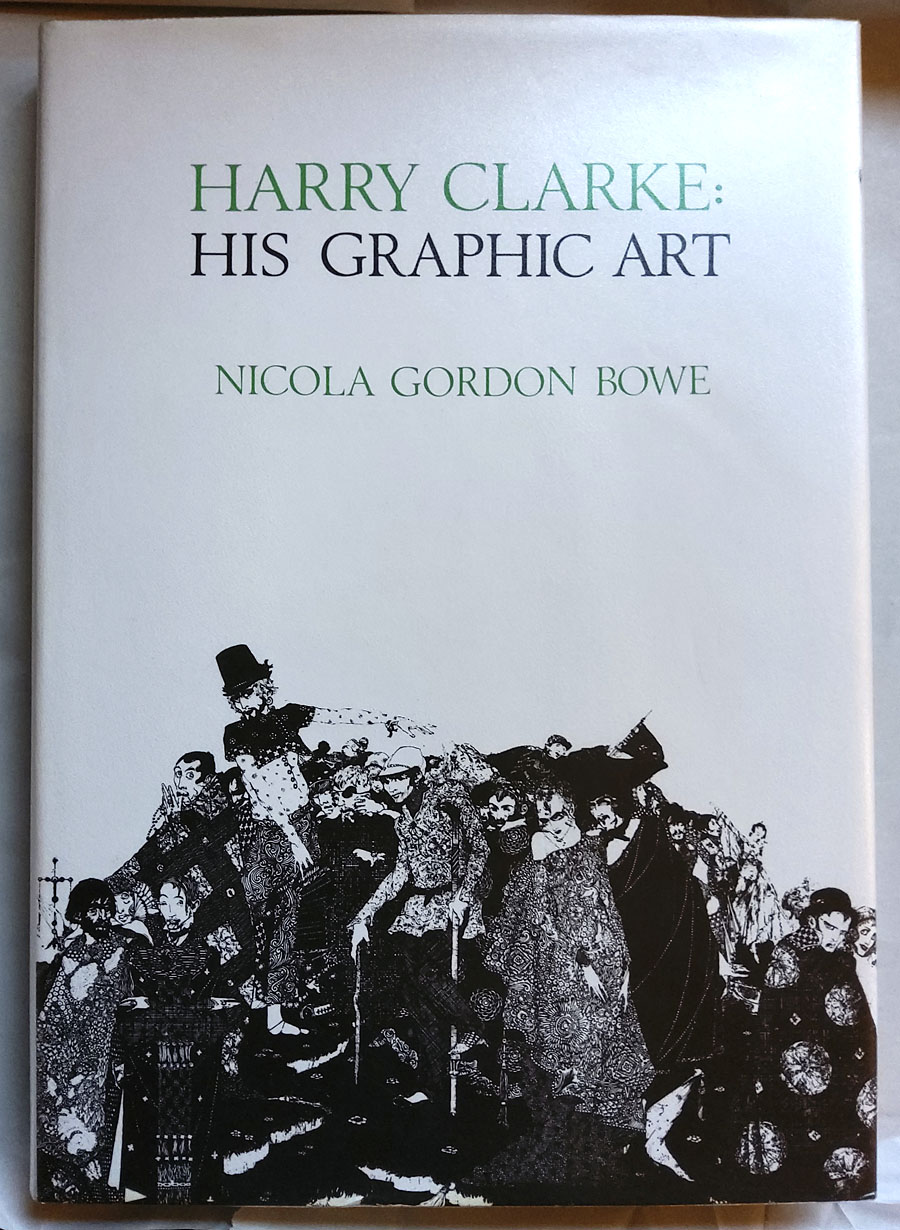
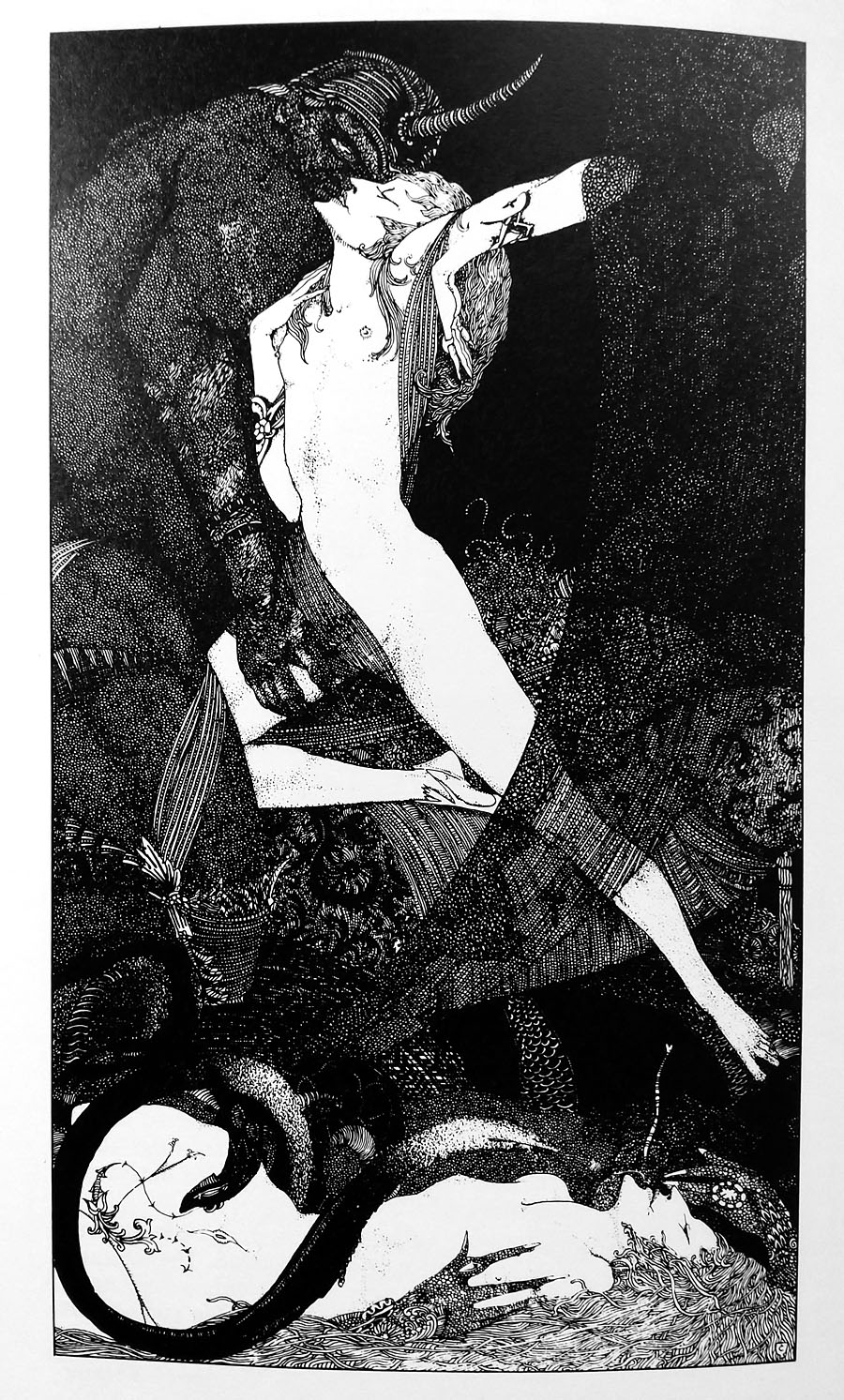
In today’s post, the Ur-text of Harry Clarke studies by the late Nicola Gordon Bowe. The book was published by Ireland’s Dolmen Press in 1983, and is difficult to find in fine condition for under £50; I was fortunate on both counts. In addition to a detailed biography the book contains many drawings for magazines and smaller publications which have seldom been reproduced elsewhere, together with works like the illustration below, intended for the Clarke-illustrated edition of Swinburne’s poetry but suppressed by the publisher. File next to The Life and Work of Harry Clarke (1989), Nicola Gordon Bowe’s continuation of the scholarship begun here.

clarke2.jpg

Elsewhere on { feuilleton }
The illustrators archive

Previously on { feuilleton }
Harry Clarke and others in The Studio
Harry Clarke’s Fairy Tales of Charles Perrault
Harry Clarke in colour
The Tinderbox
Harry Clarke and the Elixir of Life
Cardwell Higgins versus Harry Clarke
Modern book illustrators, 1914
Illustrating Poe #3: Harry Clarke
Strangest Genius: The Stained Glass of Harry Clarke
Harry Clarke’s stained glass
Harry Clarke’s The Year’s at the Spring
The art of Harry Clarke, 1889–1931
Weekend links 545

harris.jpg

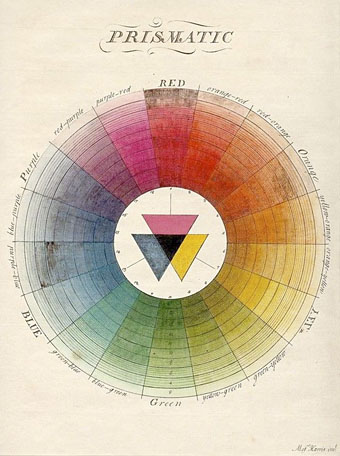
Colour wheel from The Natural System of Colours (1766) by Moses Harris.

• The Vatican’s favourite homosexual, Michelangelo di Lodovico Buonarroti Simoni, receives the ludicrously expensive art-book treatment in a huge $22,000 study of the Sistine Chapel frescos. Thanks, but I’ll stick with Taschen’s XXL Tom of Finland collection which cost considerably less and contains larger penises. Related: How Taschen became the world’s most famous erotic publishers.

• “In a metaphorical sense, a book cover is also a frame around the text and a bridge between text and world.” Peter Mendelsund and David J. Alworth on what a book cover can do.

The Night Porter: Nazi porn or daring arthouse eroticism? Ryan Gilbey talks to director Liliana Cavani about a film that’s still more read about (and condemned) than seen.

What is important about reading [Walter] Benjamin’s texts written under the influence of drugs is how you can then read back into all his work much of this same “drug” mind-set; in his university student days, wrangling with Kant’s philosophy at great length, he famously stated, according to Scholem, that “a philosophy that does not include the possibility of soothsaying from coffee grounds and cannot explicate it cannot be a true philosophy.” That was in 1913, and Scholem adds that such an approach must be “recognized as possible from the connection of things.” Scholem recalled seeing on Benjamin’s desk a few years later a copy of Baudelaire’s Les paradis artificiels, and that long before Benjamin took any drugs, he spoke of “the expansion of human experience in hallucinations,” by no means to be confused with “illusions.” Kant, Benjamin said, “motivated an inferior experience.”

Michael Taussig on getting high with Benjamin and Burroughs

• “Utah monolith: Internet sleuths got there, but its origins are still a mystery.” The solution to the mystery—if there is one—will be inferior to the mystery itself.

After Beardsley (1981), a short animated film about Aubrey Beardsley by Chris James, is now available on YouTube in its complete form.

• Mix of the week: The Ivy-Strangled Path Vol. XXIII – An Ivy-Strangled Midwinter by David Colohan.

Charlie Huenemann on the Monas Hieroglyphica, Feynman diagrams, and the Voynich Manuscript.

Katy Kelleher on verdigris: the colour of oxidation, statues, and impermanence.

• A trailer for Athanor: The Alchemical Furnace, a documentary about Jan Švankmajer.

All doom and boom: what’s the heaviest music ever made?

• At Strange Flowers: Ludwig the Second first and last.

• At Dennis Cooper’s: Krzysztof Kieślowski Day.

Ralph Steadman’s cultural highlights.

• RIP Daria Nicolodi.

Michael Angelo (1967) by The 23rd Turnoff | Nightporter (1980) by Japan | Verdigris (2020) by Roger Eno and Brian Eno

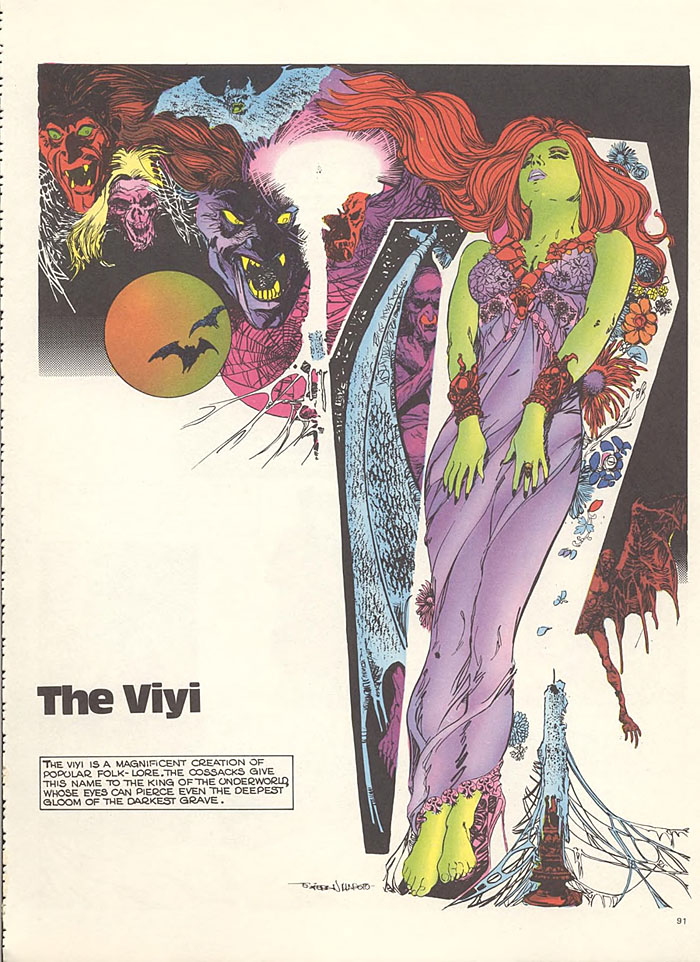
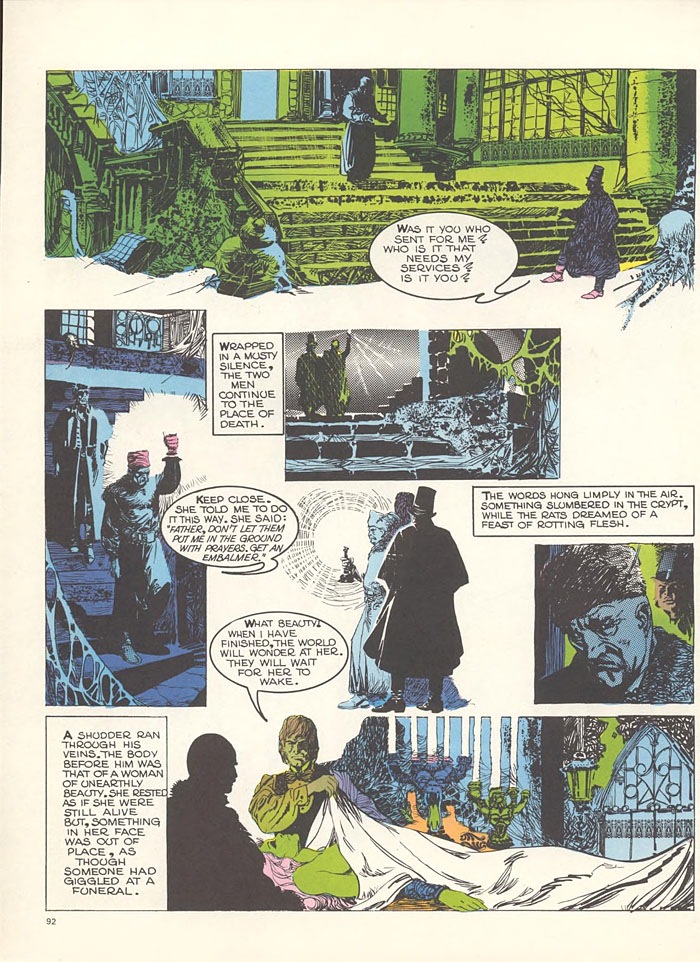
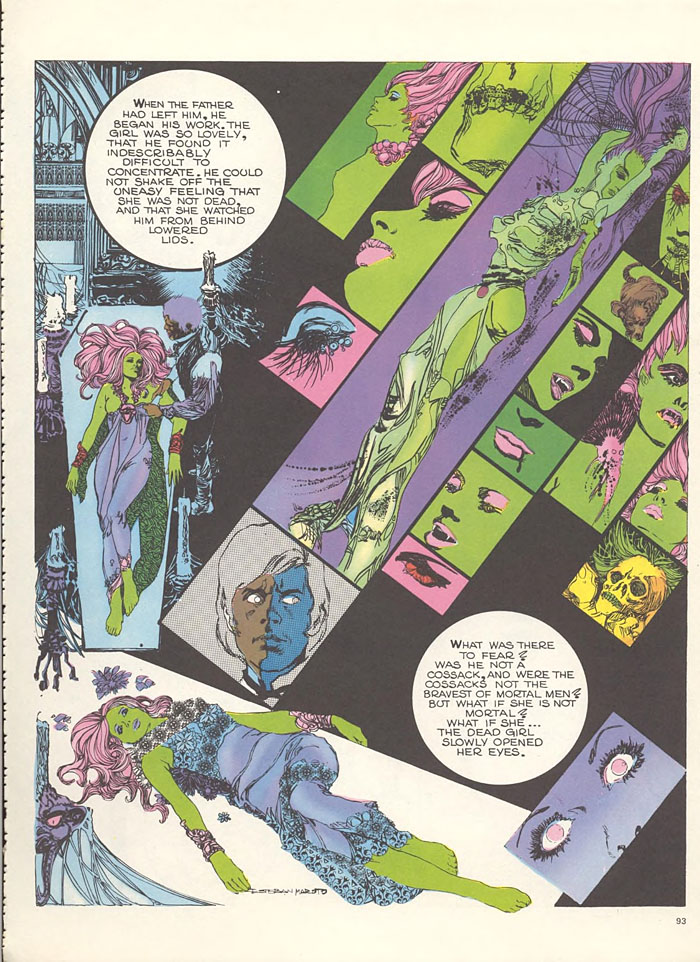
The Viyi by Esteban Maroto

maroto1.jpg

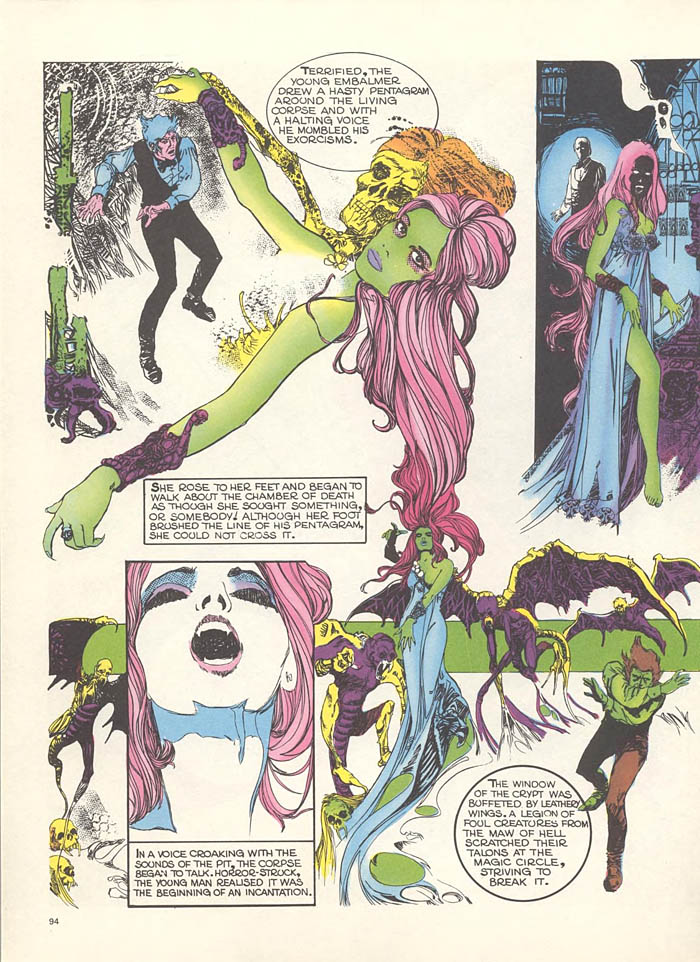
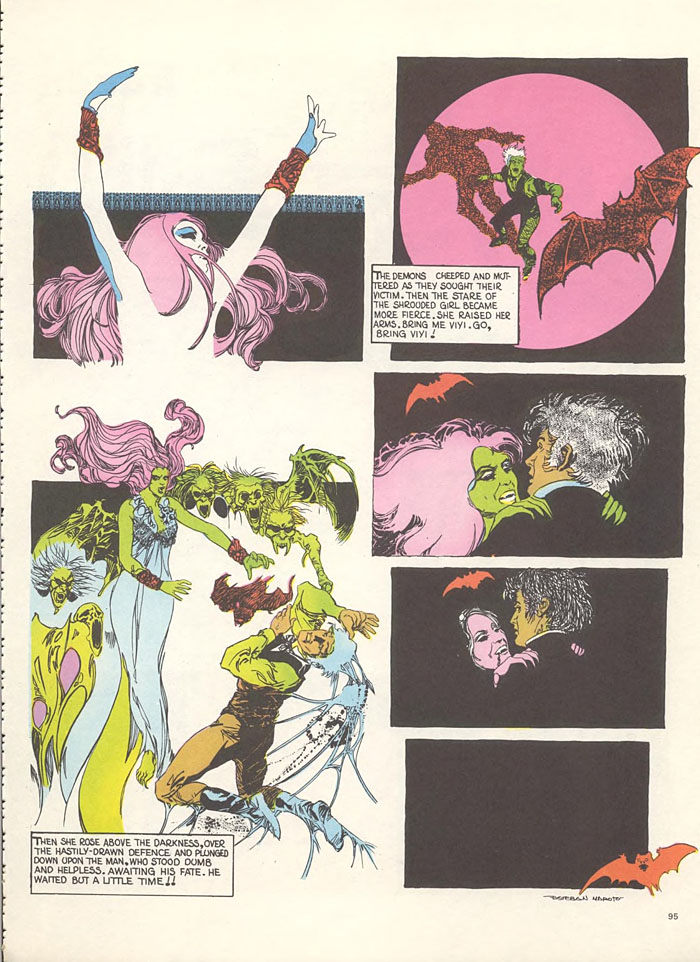
The latest announcement from Eureka Entertainment includes the welcome news of a debut UK release for Viy (1967), the Russian horror film directed by Konstantin Yershov and Georgi Kropachyov. To celebrate this, here’s Esteban Maroto’s gorgeous version of the witchy folk tale as it appeared in Warren’s Dracula magazine in 1972. There’s more Maroto in the collected edition of Dracula which, like all the Warren publications, is now out-of-copyright. I don’t think there was ever a book 2 in the US but here in Britain we were lucky to get the entire run of Dracula in a single volume.

maroto2.jpg

maroto3.jpg

maroto4.jpg

maroto5.jpg

Previously on { feuilleton }
More Esteban Maroto
The Dracula Annual

Weekend links 544

wright.jpg

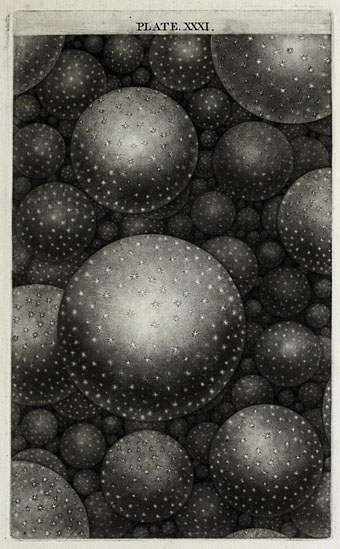
“You may if you please, call a partial View of Immensity, or without much Impropriety perhaps, a finite View of Infinity.” An illustration from Thomas Wright’s An Original Theory or New Hypothesis of the Universe (1750).

• If you read about electronic music for any length of time today you’ll eventually come across the term “pad”, referring to a feature of the music itself not the instrumentation. I’ve noticed increasing instances of this with no accompanying explanation of what the term actually refers to. Rob Wreglesworth has the answer.

• At Dangerous Minds: Richard H. Kirk talks to Oliver Hall about Cabaret Voltaire and Shadow Of Fear. No comment from Kirk as to why the new album warrants the CV name when the music is indistinguishable from his many solo works.

• Eyeball Fodder: The Art of the Occult Edition. S. Elizabeth presents artwork featured in her new book, together with links to artist interviews, including one to the interview we did for Coilhouse magazine a few years ago.

• More electronica: Music From Patch Cord Productions is a new compilation of music by Mort Garson that features some previously unreleased pieces. Great cover art by Robert Beatty as well.

• A trailer for Fireball: Visitors from Darker Worlds, a documentary film about meteorites by Werner Herzog and Clive Oppenheimer.

• From 2019: John Waters and Lynn Tillman in conversation. “The pair discussed Waters’s recent exhibitions and art career.”

Harlan Ellison’s The Last Dangerous Visions may finally be published, after a five-decade wait.

Turn your feline into a god with this cardboard Shinto shrine for cats.

• Mix of the week: XLR8R Podcast 670 by Dadub.

• At Dennis Cooper’s: Harry Dean Stanton Day.

John Cooper Clarke‘s favourite songs.

Meteor Storm (1994) by FFWD | The Third Chamber: Part 5 – 7pm Tokyo Shrine (1994) by Loop Guru | Fireball (1994) by Sun Dial