The Cthulhu Mythos in the pulps

mythos01.jpg

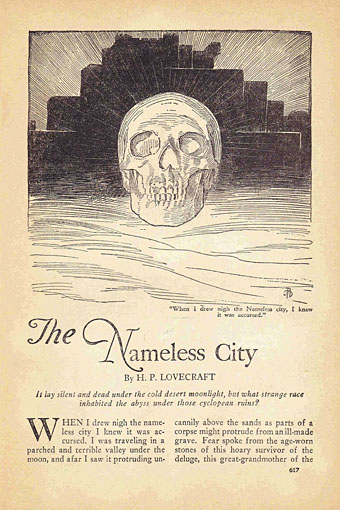
The Nameless City: First published in The Wolverine, November 1921. Reprinted in Weird Tales, November 1928. Illustration by Joseph Doolin.

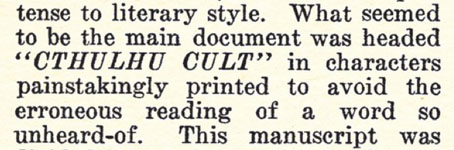
This would have been “The Cthulhu Mythos in Weird Tales” if some of HP Lovecraft’s more substantial stories hadn’t been published elsewhere. To prevent sprawl I’ve limited the list to Lovecraft’s own stories even though the Mythos takes in the work of contemporaries such as Clark Ashton Smith, Robert E. Howard, Frank Belknap Long, Zealia Bishop, August Derleth and others. I like seeing the first appearance in print of familiar tales, and I like seeing their accompanying illustrations even if the drawings are inferior pieces, which they often were for the first decade of Weird Tales. These are the short-story equivalent of first editions, and in the case of The Call of Cthulhu you get to see the first printing anywhere of that mysterious name.
mythos02.jpg

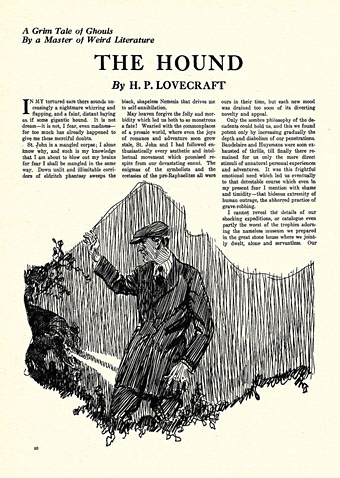
The Hound: Weird Tales, February 1924. Illustration by William Fred Heitman.

This issue is also notable for a story by Burton Peter Thom which shares a title with a Mythos-derived song by Metallica, The Thing That Should Not Be.
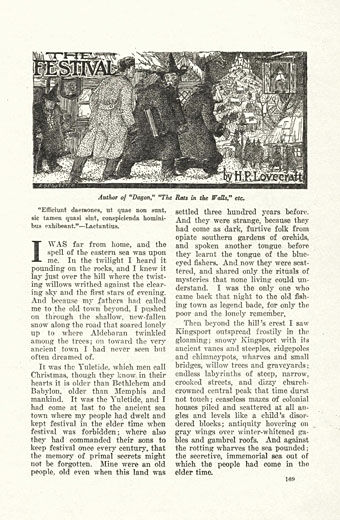
mythos03.jpg

The Festival: Weird Tales, January 1925. Illustration by Andrew Brosnatch.
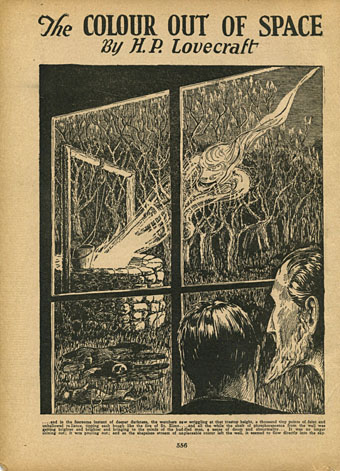
mythos22.jpg

The Colour Out of Space: Amazing Stories, September 1927. Illustration by JM de Aragon.

Lovecraft didn’t think that Weird Tales would appreciate this one even though it’s more horror than science fiction so he sent it to Amazing Stories instead.
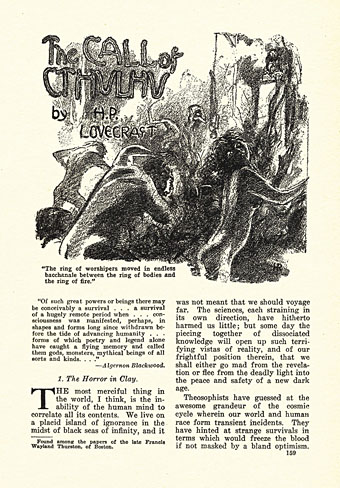
mythos04.jpg

mythos26.jpg

The Call of Cthulhu: Weird Tales, February 1928. Illustration by Hugh Rankin.

It’s doubtful that Rankin, Senf and co. would have been up to the task of depicting Great Cthulhu or the non-Euclidean nightmare of R’lyeh, but this hardly excuses editor Farnsworth Wright’s decision to give the cover to Elliott O’Donnell’s ridiculous ghost table.
Continue reading “The Cthulhu Mythos in the pulps”

Écorché

ecorche01.jpg

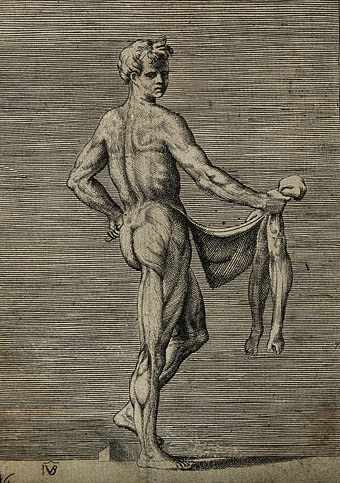
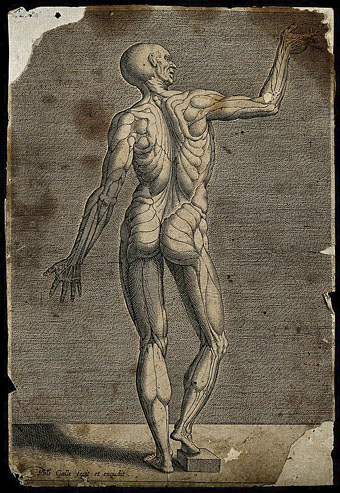
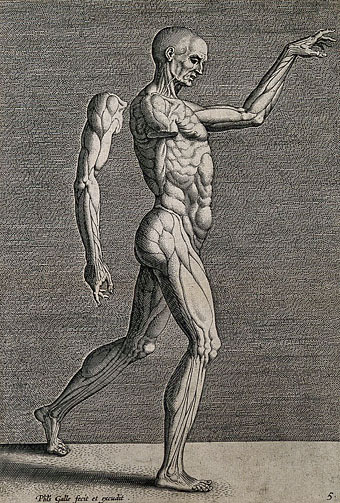
Engraving by Philip Galle.

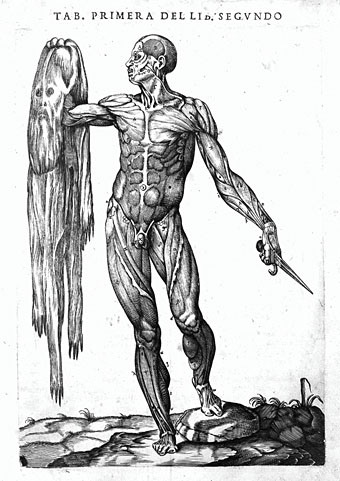
Écorché, from the French verb to flay, was the traditional term applied to depictions of the skinless man found in anatomical studies, and the musculature models made for the use of artists and sculptors. This is almost always a male figure. Women tend to feature in the anatomical works of previous centuries in order to illustrate the conditions of pregnancy, the male body being considered the default for the usual sexist reasons.

I’ve been revisiting the history of these figures while working on a new book design so what follows are a few choice examples, some of which carry a pleasantly Surrealist charge. In the years that followed the pioneering studies by Vesalius and co. there was a period of playfulness in anatomical illustration during which time the figures are shown peeling away their flesh to reveal the muscles or even the organs beneath, a striptease where the substance of the body itself is removed. As William Burroughs was fond of quoting: “‘T ain’t no sin to take off your skin, and dance around in your bones.”

ecorche07.jpg

Valverde de Hamusco (1556).

ecorche06.jpg

Engraving by G. Bonasone (15–).

ecorche02.jpg

Engraving by Philip Galle.

Continue reading “Écorché”

Manuel Orazi’s Fleurs du Mal

orazi01.jpg

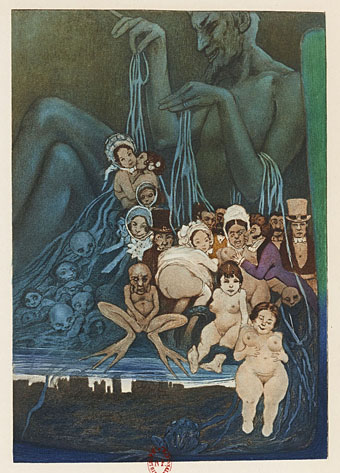
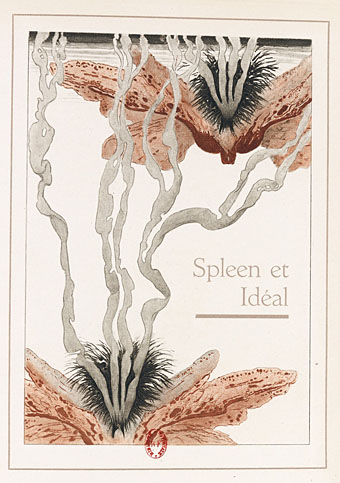
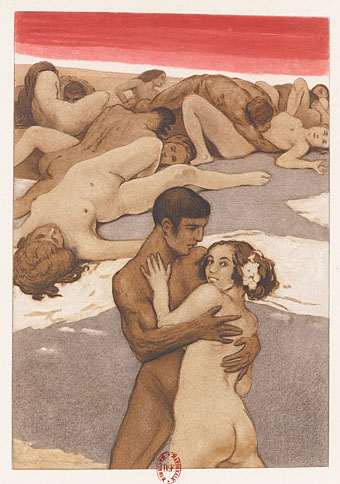
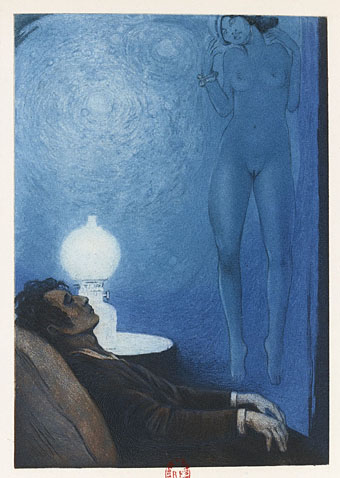
This collection of Baudelaire’s poems with illustrations by French artist Manuel Orazi (1860–1934) didn’t turn up when I was searching for illustrated editions a few years ago. With over 50 full-page drawings or vignettes it’s more profusely illustrated than most. It’s also more determinedly erotic than most, concentrating on depictions of female flesh at the expense of the poet’s other themes; Orazi’s fleurs on the title pages are a succession of priapic or vaginal orchids and fungi. The book was published in 1934, which means it was probably the last thing that Orazi worked on, but it resembles something from the fin de siècle, especially the work of Félicien Rops. Browse it or download it here.

orazi02.jpg

orazi03.jpg

orazi04.jpg

orazi05.jpg

Continue reading “Manuel Orazi’s Fleurs du Mal”

Alphonse Mucha et Son Oeuvre

mucha01.jpg

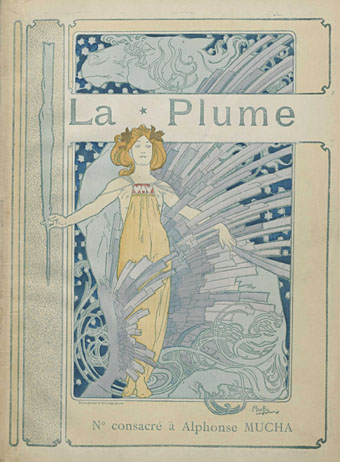
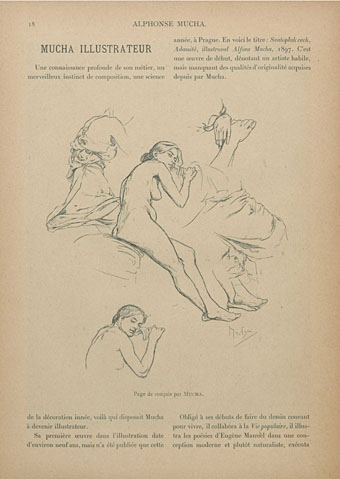
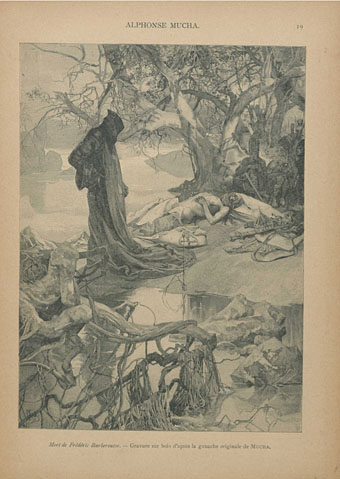
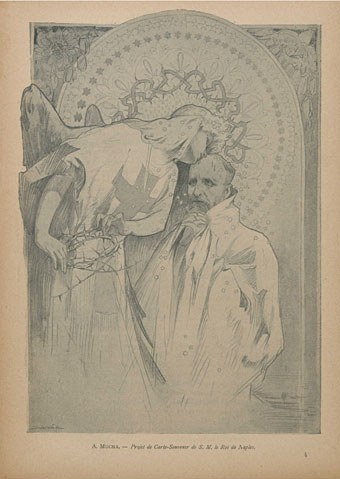
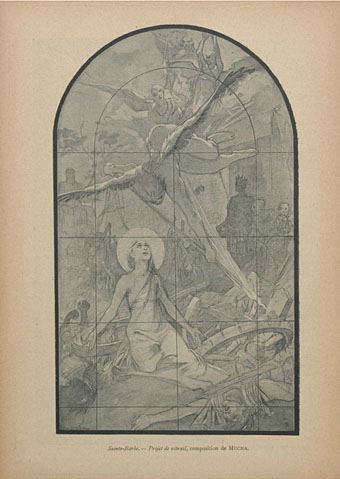
Alphonse Mucha was so wildly prolific, and his work maintained such a consistently high standard, that book collections tend to focus on the popular Art Nouveau prints and posters to the exclusion of everything else. This short study of Mucha’s career was published in 1897 when the Nouveau style was becoming a dominant trend in Continental Europe, thanks in part to the promotion of art journals like La Plume, as well as to Mucha himself. The reproductions are all monochrome halftones but they include many sketches, illustrations and smaller works that are either never seen elsewhere or are marginalised by his advertising graphics and the designs for Sarah Bernhardt. Browse the book here or download it here.

mucha02.jpg

mucha03.jpg

mucha04.jpg

mucha05.jpg

Continue reading “Alphonse Mucha et Son Oeuvre”

Weekend links 537

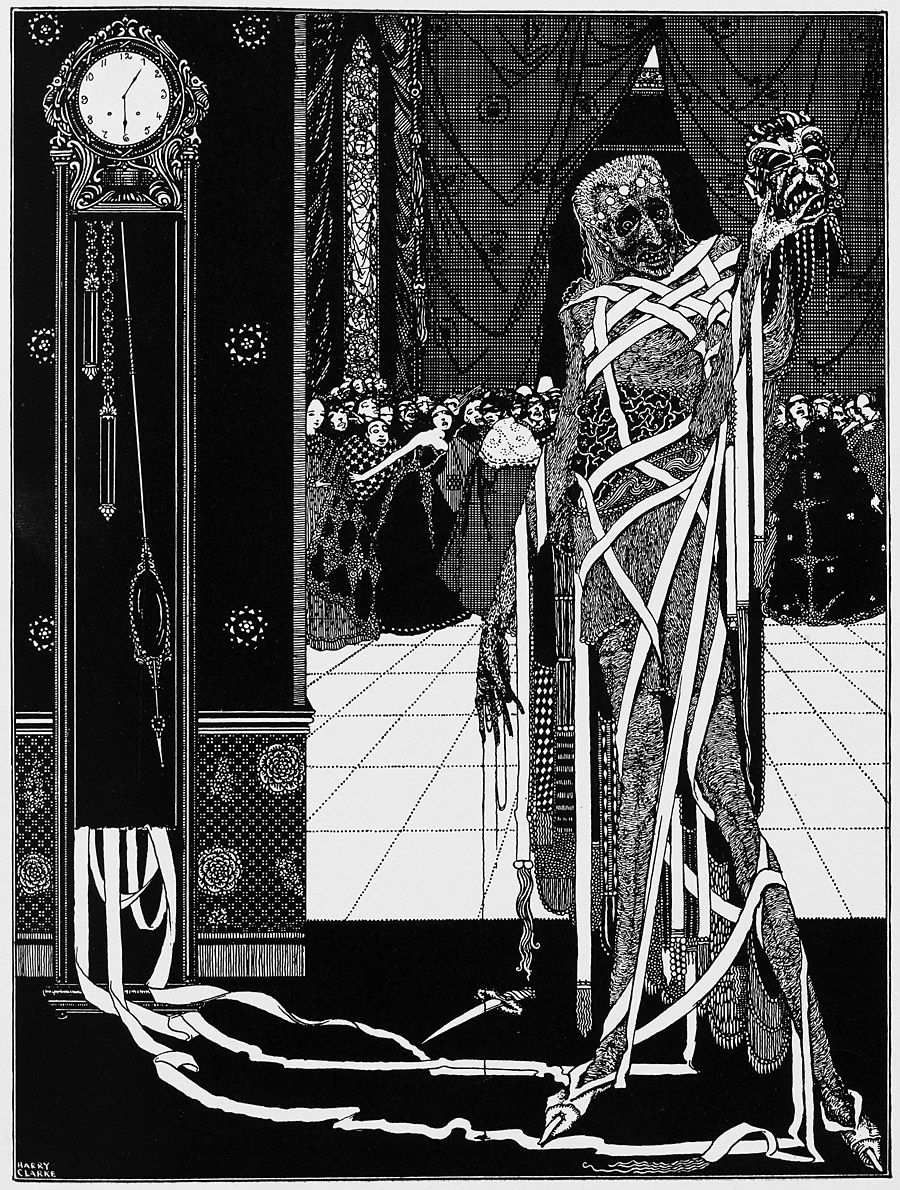
clarke.jpg

“The dagger dropped gleaming upon the sable carpet.” The Masque of the Red Death illustrated by Harry Clarke, 1919.

• 2020 is the year of enormous pink lady faces on book covers, apparently. As someone who spends little time following cover trends, the identification of a new variety of herd behaviour among designers or their art directors is always fascinating and bizarre.

Tomoko Sauvage plays her porcelain and glass instruments inside a disused water tank in Berlin for a new album, Fischgeist. The Wire has previews.

• At The Paris Review: Craig Morgan Teicher on the later work of Dorothea Tanning, and Daniel Mendelsohn on the rings of Sebald.

Unlike many of the rapidly forgotten [Nobel] “winners”, and despite the occasional sniffy critic wondering “who still reads it?” Durrell’s Alexandria Quartet has never been out of print since he published it in 1957. The centenary of his birth in 2012 raised a flurry of revived interest in Durrell. Indeed the whole Durrell family has been popping up regularly in reprints of Lawrence’s novels and poetry, in his brother Gerald’s popular tales of his “family and other animals,” and in several TV series about their life in Greece on Corfu island in the late 1930s. A BBC interviewer once asked Lawrence about the difference between his writing and brother Gerald’s. He replied: “I write literature. My brother writes books that people read.”

I’ve read Gerald and I’ve read Lawrence; I prefer Lawrence, thank you. Thomas O’Dwyer examines the chef d’oeuvre of the elder Durrell, The Alexandria Quartet

• Dark Entries shares Patrick Cowley’s cover of Chameleon by Herbie Hancock. The original is here.

• Saunas, sex clubs and street fights: how Sunil Gupta captured global gay life.

• Inside the Grace Jones exhibition at Nottingham Contemporary.

Rob Walker on how dub reggae’s beats conquered 70s Britain.

• Who invented the newspaper? John Boardley reports.

Spread The Virus (1981) by Cabaret Voltaire | Cut Virus (2003) by Bill Laswell | The Unexclusive Virus ~even our invincible religion “Technology” cannnot~ (2006) by Kashiwa Daisuke