Topsychopor by Roland Topor

topor00.jpg

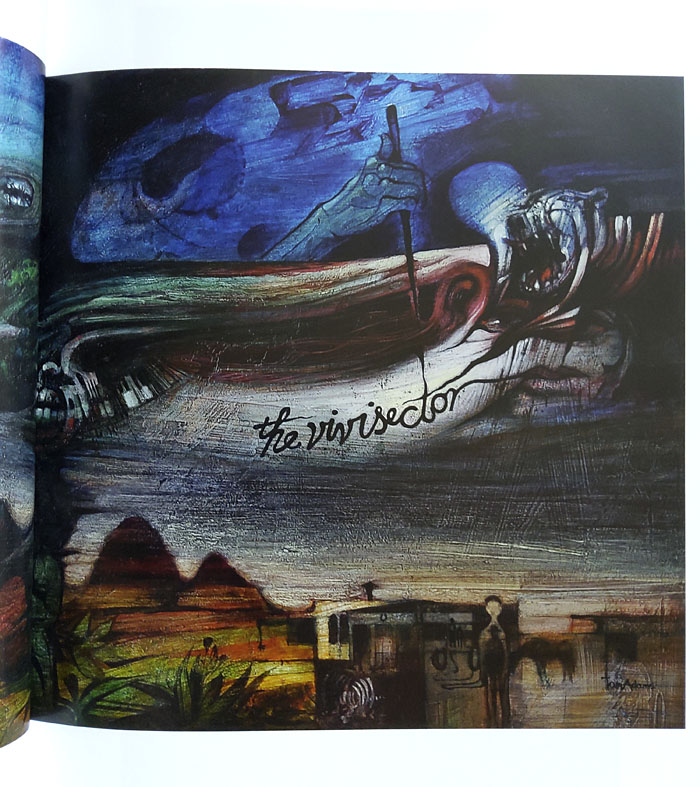
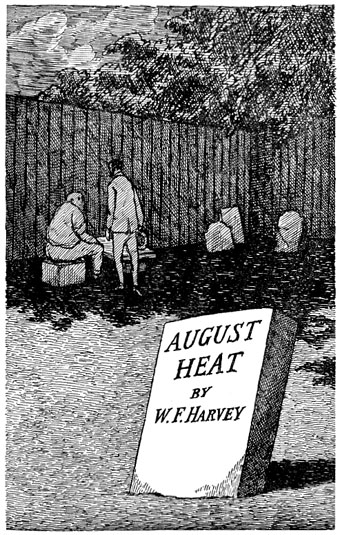
Published in Paris in 1964, “a game in the form of a psychological test produced by Topor with the help of Jean Suyeux”. A red box measuring 41 x 32 cm, containing 6 “decor boards” or stages which depict a street, a region of rocks, a cemetery, a bedroom, a plain and an island; plus two sheets of pre-cut characters: a fire, a clock, an eye, a shell, two Citroën autmobiles (a 2CV and a DS), a wolfman, a blind man, a baby, a naked man, Death, a sleeping woman, and a truncated man.

topor01.jpg

“Sans prétendre atteindre à la rigueur d’un vrai test psychologique, TOPSYCHOPOR en utilise les principes. Il comprend six planches-décors et treize personnages ou objets. Le jeu consiste à choisir un décor et à y placer un ou plusieurs éléments découpés. ll suffit alors de se reporter au tableau des interprétations pour découvrir—avec horreur ou ravissement—ce que ce choix signifie. Le personnage ou l’objet choisi en premier lieu indique la tendance dominante du caractère du joueur, les éléments choisis ensuite viendront nuancer et compléter la première interprétation, selon un ordre d’importance décroissant. Certains objets ou personnages paraîtront peut-êtrc étranges; cela ne doit pas étonner, ils ont été voulus tels afin de faciliter les interprétations. Vous verrez d’ailleurs que vous vous familiariserez vite avec TOPSYCHOPOR et bientôt vous ressentirez la tentation de jouer avec lcs personnages sans plus vous soucier de leur signification. Car ce jeu cache son jeu, un jeu auquel vous vous prendrez. Pour l’interprétation des récits que vous ferez alors, vous pourrez toujours consulter votre psychiatre habituel.”

Rules of the game (autotranslated): “Without claiming to achieve the rigor of a real psychological test, TOPSYCHOPOR uses its principles. It includes six decor boards and thirteen characters or objects. The game consists of choosing a decor and placing one or more cut elements in it. It is then enough to refer to the table of interpretations to discover—with horror or delight—what this choice means. The character or object chosen in the first place indicates the dominant tendency of the player’s character, the elements then chosen will come to qualify and complete the first interpretation, in order of decreasing importance. Some objects or characters may appear strange; that should not surprise, they were wanted such in order to facilitate the interpretations. You will see that you will quickly become familiar with TOPSYCHOPOR and soon you will feel the temptation to play with the characters without worrying about their meaning. Because this game hides its game, a game that you will take. For the interpretation of the stories that you will then make, you can always consult your usual psychiatrist.”

topor02.jpg

I don’t have a copy of this, unfortunately (and please don’t tell me you have one to sell). Picture searches kept turning up links to film festivals which was a little confusing until I realised that there’s a short film by Antonin Peretjatko, Mandico et le TOpsychoPOR, about a man encountering the game.

topor03.jpg

Continue reading “Topsychopor by Roland Topor”

Weekend links 516

correa.jpg

Bats in space: an illustration by Henrique Alvim Corrêa from a 1906 edition of The War of the Worlds.

• Auf wiedersehen to Florian Schneider. Until he left Kraftwerk in 2009 (or 2006 or whenever it was), Schneider had been the group’s longest-serving member, keeping things running for the few months in 1971 when Ralf Hütter was absent. The brief period when Kraftwerk was Schneider plus soon-to-be-Neu! (Michael Rother, guitar, and Klaus Dinger, drums) fascinates aficionados over-familiar with the later albums. The music they produced was a wild and aggressive take on the rock idiom but Scheider maintained the link with Kraftwerk before and after, not only instrumentally but with his ubiquitous traffic cones, as noted in this post. There’s no need for me to praise Kraftwerk any more than usual, this blog has featured at least one dedicated post about them for every year of its existence, and besides which, the group itself is still active. Elsewhere: Simon Reynolds on how Florian Schneider and Kraftwerk created pop’s future; A Kraftwerk Baker’s Dozen Special; Dave Simpson attempts to rank 30 Kraftwerk songs (good luck getting anyone to agree with this); Jude Rogers with ten things you (possibly) don’t know about Kraftwerk; Dancing to Numbers by Owen Hatherley; Pocket Calculator in five languages; Florian Schneider talks about Stop Plastic Pollution.

Intermission is a new digital compilation from Ghost Box records featuring “preview tracks from forthcoming releases and material especially recorded for the compilation during the global lockdown”. In a choice of two editions, one of which helps fund Médecins Sans Frontières.

• How groundbreaking design weirdness transformed record label United Artists, against all odds. By Jeremy Allan.

Sex in an American suburb is not quite the same phenomenon as sex in, say, an eastern European apartment block, and sex scenes can do a great deal to illuminate the social and historical forces that make the difference. All of which is to say that sex is a kind of crucible of humanness, and so the question isn’t so much why one would write about sex, as why one would write about anything else.

And yet, of course, we are asked why we write about sex. The biggest surprise of publishing my first novel, What Belongs to You was how much people wanted to talk about the sex in a book that, by any reasonable standard, has very little sex in it. That two or three short scenes of sex between men was the occasion of so much comment said more about mainstream publishing in 2016, I think, than it did about my book. In fact, in terms of exploring the potential for sex in fiction, I felt that I hadn’t gone nearly far enough. I’ve tried to go much further in my second novel, Cleanness. In two of its chapters, I wanted to push explicitness as far as I could; I wanted to see if I could write something that could be 100% pornographic and 100% high art.

Garth Greenwell on sex in literature

James Balmont’s guide to Shinya Tsukamoto, “Japan’s Greatest Cult Filmmaker”.

• A Dandy’s Guide to Decadent Self-Isolation by Samuel Rutter.

Maya-Roisin Slater on where to begin with Laurie Anderson.

• The Count of 13: Ramsey Campbell’s Weird Selection.

Adam Scovell on where to begin with Nigel Kneale.

When John Waters met Little Richard (RIP).

RB Russell on collecting Robert Aickman.

Weird writers recommend weird films.

Campo Grafico 1933/1939.

Ruckzuck (1970) by Kraftwerk | V-2 Schneider (1977) by David Bowie | V-2 Schneider (1997) by Philip Glass

Weekend links 514

kircher.jpg

Athanasius Kircher welcoming two guests to the Collegio Romano, a detail from the frontispiece to his Romani Collegii Societatis Jesu Musaeum celeberrimum (1678).

Opium (1919) by Robert Reinert: “A Chinese opium dealer takes revenge on Westerners who have corrupted his wife.” With Werner Krauss and Conrad Veidt a year before their pairing in The Cabinet of Doctor Caligari.

Aubrey Beardsley at Tate Britain: in which the gallery thinks that 7 minutes is enough to give us a taste of a major exhibition that we can’t otherwise see.

Joe Pulver (RIP): His Highness in Yellow. A memorial piece that includes artist Michael Hutter talking about his paintings of Carcosa.

Court Mann on the strange history of Robert Smithson’s Spiral Jetty, 50 years old this month.

• “Invisible Little Worms”: Athanasius Kircher’s Study of the Plague by John Glassie.

Sophie Monks Kaufman on why literary lesbians are having a moment on screen.

• Photographer Ryan McGinley: “I was taught to believe in Satan. It scared me.”

• At Dennis Cooper’s: Ellen Burstyn Day, and the ghostly novels of WG Sebald.

Dorian Lynskey on where to start with Nina Simone’s back catalogue.

• Wie funktioniert ein Synthesizer? (1972). Bruno Spoerri explains.

• Banham avec Ballard: On style and violence by Mark Dorrian.

John Boardley on the most dangerous book in the world.

Improvisation for Sonic Cure by Ryuichi Sakamoto.

• The Strange World of…JG Thirlwell.

Diet Of Worms (1979) by This Heat | Stomach Worm (1992) by Stereolab | Heartworms (1998) by Coil

Weekend links 512

white

Cover art by Tim White for Weaveworld (1987) by Clive Barker.

• Another week leading with obituaries but that’s where we are just now. Among others, we had film maker Bruce Baillie, cartoonist Mort Drucker, lesbian/gay rights activist Phyllis Lyon, film director Nobuhiko Obayashi, artist Tim White, and music producer Hal Willner. Related to the last: Hal Willner’s Vanishing, Weird New York.

Open Door is a new recording by Roly Porter from his forthcoming album, Kistvaen. I designed the CD and vinyl packaging for this one.

• From 1995: Peter Wollen on dandyism, decadence and death in Donald Cammell & Nicolas Roeg’s Performance.

• “Fear, bigotry and misinformation—this reminds me of the 1980s AIDS pandemic,” says Edmund White.

David Lynch wants you to meditate, maybe make a lamp during self-isolation.

• “Weird tale” by Secret Garden author Frances Hodgson Burnett discovered.

• Behind the iron curtain, the final frontier: Soviet space art in pictures.

• Mix of the week: Secret Thirteen Mix 301 by Asher Levitas.

• At Dennis Cooper’s: Raymond Queneau, Party Animal.

Oren Ambarchi Archive at Bandcamp.

Japan’s Tourism Poster Awards.

• Hal Willner produces: Juliet Of The Spirits (1981) by Bill Frisell | Apocalypse (1990) by William S. Burroughs | The Masque Of The Red Death (1997) by Gabriel Byrne

Weekend links 511

marber.jpg

Design by Romek Marber, 1963.

• The death of Polish composer Krzysztof Penderecki prompted so many “Shining composer” headlines you have to wonder what kind of notices he might have received if his early work hadn’t been purloined by Hollywood. György Ligeti always seemed ambivalent about having his music used as cinematic illustration (Kubrick annoyed him by altering some of it without permission) but Penderecki worked as a composer for Polish films in the 1960s, not only providing a score for The Saragossa Manuscript (1965) but also (surprisingly) writing music for a number of short animations. I’ve been listening to his music for almost 40 years, after a chance discovery of the stunning Threnody For The Victims Of Hiroshima led me to seek out more. I have to admit that the appeal of his recordings lay in their ability to thrill and terrify—qualities that musicologists seldom address—and I’ve never paid any attention to Penderecki’s later work which was less of an assault on the senses. At The Quietus James Martin argues for listening to the entire oeuvre, not just the early works. For more about the composer’s life and work, Culture.pl has a number of good articles, eg: Mazes, Notes & Dali: The Extraordinary Life of Krzysztof Penderecki, and Music Is Not for Everyone: An Interview with Krzysztof Penderecki.

• The late Romek Marber (1925–2020) was a designer/illustrator whose name is familiar to collectors of Penguin books via the Marber Grid, the template he created in the early 1960s for the Penguin Crime series, and which was later extended across the entire paperback range. Marber talked about this period of his work in Penguin by Illustrators in 2009. Elsewhere: Rick Poyner on Marber’s design, and a suggestion for how the Marber Grid was designed.

• “…you’ll see Lego and children’s toys, but also Rawlplugs, tile spacers, Monopoly houses, cigarillo tips, curtain hooks, biofilters, Smarties tube lids, fishing beads, broken security seals, razor parts, bits of toothbrushes, roofing screw caps, medical lancets, golf tees, false teeth, plastic soldiers, posties’ rubber bands, bungs and stoppers.” Beachcomber Tracey Williams talks to Andrew Male about the undying ubiquity of plastic waste.

• “Thanks to Bookshop, there is no reason to buy books on Amazon anymore,” says Alex Lauer. The caveat is that the service is limited to the USA. I order books direct from publishers or from eBay and Abe; the latter may be Amazon-owned but you’re still paying most of the money to the individual sellers.

• Mixes of the week: Radio Belbury 19: Family Fun Time, and Through A Landscape Of Mirrors Vol. VII – France IV by David Colohan.

• “[Amanda Sewell’s] Wendy Carlos: A Biography is a great work of scholarship,” says Geeta Dayal.

• “Part of me expects to go on forever.” David Barnett on Michael Moorcock at 80.

• “What is the point of a critic if not to tell the truth?” asks Rachel Cooke.

John Boardley on medieval road-trips and the invention of print.

Anna Bogutskaya on where to begin with the Weird West.

• Inside Tove Jansson’s private universe by Sheila Heti.

• Memory Of Hiroshima (1973) by Stomu Yamash’ta’s Red Buddha Theatre | Hiroshima Mon Amour (1977) by Ultravox! | Hiroshima (1982) by Borsig