Weekend links 194

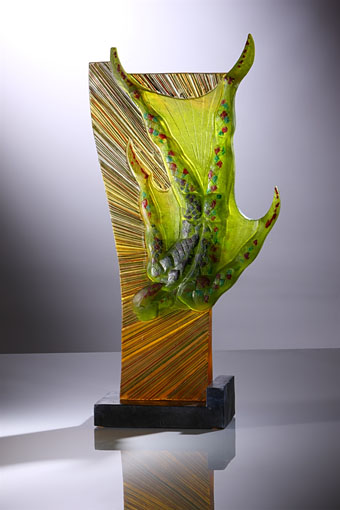
roberts.jpg

Untitled glass sculpture by Richard Roberts.

Lord Horror: Reverbstorm, my collaboration with David Britton, makes The Quietus list of Literary Highlights of 2013. At the same site there’s Russell Cuzner talking to English Heretic. “His methodology takes in magick, psychogeography and horror film geekdom, along with firm roots in Britain’s industrial music culture of the early 1980s, to form potent, novel topographies of an otherwise unconnected world of occultists and psychopaths.”

• A slew of London links this week: Geoff Manaugh on how the capital was redesigned to survive wartime blackouts, a piece which inadvertently explains why you see so much black-and-white street furniture in post-war films | Bob Mazzer’s photos of the London Underground in the 1970s and 1980s | Philipp Ebeling’s photos of the capital and its inhabitants today.

• “Science has become an international bully. Nowhere is its bullying more outrageous than in its assault on the phenomenon known as subjectivity.” David Gelernter on “The Closing of the Scientific Mind”. Related: “When Science Becomes Scientism” by Stanislav Grof.

• My favourite book about Orson Welles is This is Orson Welles (1992), a collection of Peter Bogdanovich’s interviews with Welles edited by Jonathan Rosenbaum. Bogdanovich’s interview tapes can now be heard at the Internet Archive.

• Brian Dillon on Dada collagist Hannah Höch who he calls “art’s original punk”, and Sean O’Hagan talking to another collage artist, Linder Sterling, who says “Lady Gaga didn’t acknowledge I wore a meat dress first”.

• One Hundred Years Of Weird Fear: Daniel José Older on HP Lovecraft’s literature of genealogical terror. More fear (and Lovecraft): Will Wiles on the growth of Creepypasta.

The Last Alan Moore Interview? A lengthy discussion with Pádraig Ó Méalóid. Shunning interviews hasn’t done Cormac McCarthy any harm so if I was Alan I wouldn’t worry.

• And speaking of Cormac McCarthy, the headline of the week: “Cormac McCarthy’s ex-wife busted after pulling gun from vagina during alien argument“.

• Where the bodies are buried: Mick Brown presents a potted biography of Kenneth Anger who offers a few reluctant quotes.

• A short animation for gore-obsessed kids: Pingu’s The Thing by Lee Hardcastle.

Helen Yentus designs a 3D-printed slipcase for a novel by Chang-rae Lee.

Ralph Steadman‘s illustrations for Alice’s Adventures in Wonderland.

• Mix of the week: Secret Thirteen Mix 103 by Lustmord.

Collage art at Pinterest.

No Escape (1966) by The Seeds | Pushin’ Too Hard (1966) by The Seeds | No Escape (1979) by Cabaret Voltaire | Pushin’ Too Hard (1982) by Paul Parker

Abbeys by MR James

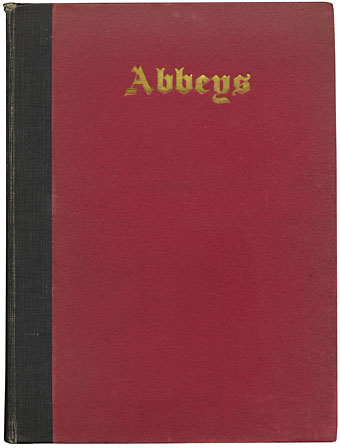
abbeys01.jpg

MR James is remembered today for his ghost stories but the four collections published during his lifetime represent a small percentage of his written work. His scholarly studies inform his stories, of course, but they also contribute to a pair of popular non-fiction books which have peripheral associations with the ghost collections: Suffolk and Norfolk: A Perambulation of the Two Counties with Notices of Their History and Their Ancient Buildings (1930) is a guide to the low-lying eastern counties where a number of the stories are set; Abbeys (1925) is a guide to the monastic ruins of the south-western counties and central England, locations which the author and his characters would enjoy visiting. This is a favourite book of mine, and one I often recommend to James enthusiasts.

abbeys03.jpg

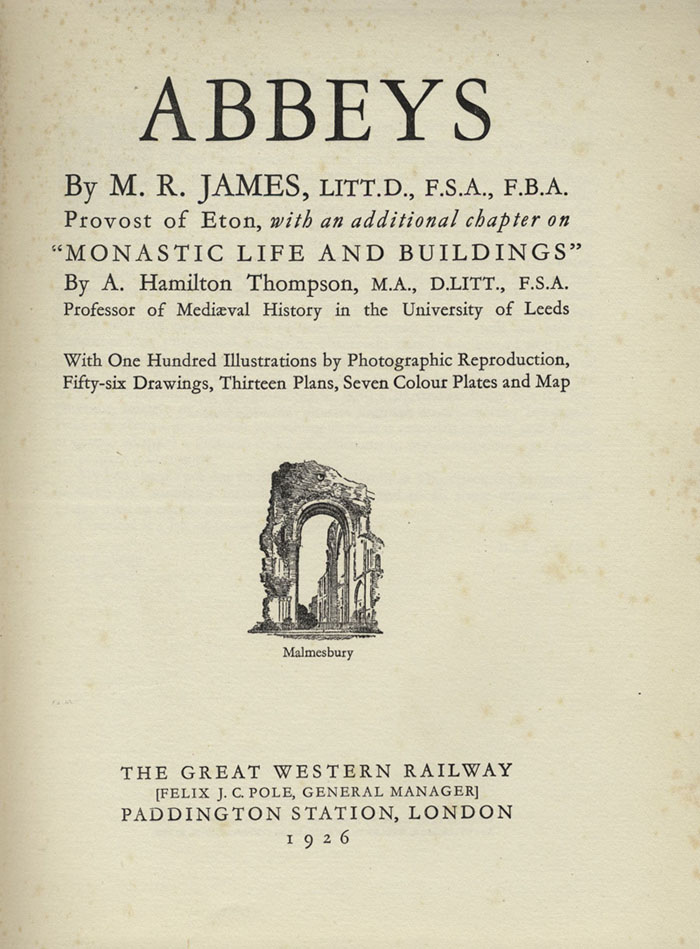
Abbeys is one of a three-volume set of illustrated guides published by the Great Western Railway company in 1925, (my copy is a second edition from 1926) the other titles being Cathedrals (1924), with no author credited, and Castles (1926) by Charles Oman. The books detail the ancient attractions a traveller in Britain might wish to explore using the services of Great Western Railway. Many of the more celebrated buildings in England and Wales are covered but the lines only travel as far north as Manchester and as far east as London. In addition to photo plates and illustrations, each book contains a removable map of the rail network folded into a pocket inside the back of the book. The coloured boards (red for Abbeys, blue for Cathedrals and brown for Castles) are sturdy enough to withstand the rigours of travel.

abbeys02.jpg

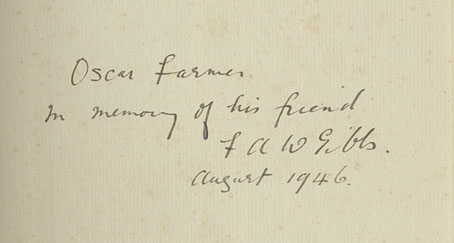
Another of those poignant inscriptions.

abbeys04.jpg

abbeys05.jpg

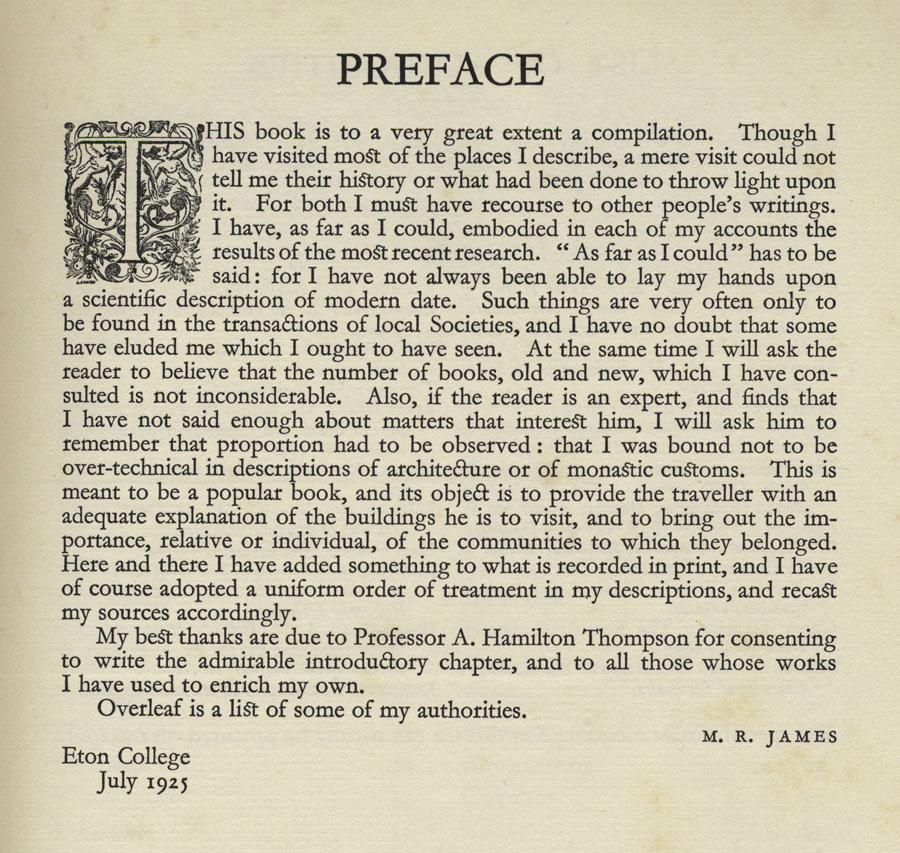
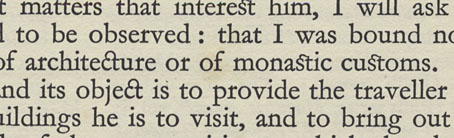
Although Abbeys lacks any credits for its photos and illustrations, Cathedrals states that the photos are the work of the railway’s staff photographers while the pen-and-ink illustrations are by William M. Hendy. There’s also a credit for the typographer, William Gordon Tucker, who not only provides many fine illuminated capitals but also uses ligatures for “ct” and “st”. Abbeys has an additional feature in the form of several fold-out plans of the larger buildings.

Continue reading “Abbeys by MR James”

Weekend links 192

fournier.jpg

“Chloromgonfus detectis, a dragonfly that can detect volatile pollutants.” A speculative insect by artist Vincent Fournier.

• “…a modern taxonomist straddling a Wellsian time machine with the purpose of exploring the Cenozoic era…” Butterflies tied together Vladimir Nabokov’s home, science, and writing, says Mary Ellen Hannibal.

• More ghosts: Kira Cochrane on the Victorian tradition of the Christmas ghost story, and Michael Newton on why Jack Clayton’s The Innocents (1961) remains one of the very best ghost films. No argument there.

• Should you require further persuasion, Daniel Barrow reviews I Am The Center: Private Issue New Age Music In America 1950-1990, an album still receiving heavy rotation in these quarters.

Swords, daggers—weapons with a blade—retained a mysterious, talismanic significance for Borges, imbued with predetermined codes of conduct and honor. The short dagger had particular power, because it required the fighters to draw death close, in a final embrace. As a young man, in the 1920s, Borges prowled the obscure barrios of Buenos Aires, seeking the company of cuchilleros, knife fighters, who represented to him a form of authentic criollo nativism that he wished to know and absorb.

The Daggers of Jorge Luis Borges by Michael Greenberg

The Junky’s Christmas (1993): a seasonal tale from William Burroughs turned into a short animated film by Nick Donkin and Melodie McDaniel.

• Mixes of the week: Secret Thirteen Mix 101 by Jan Jelinek, and The Conjuror’s Hexmas by Seraphic Manta.

• Meet the 92-year-old Egyptian [Halim El-Dabh] who invented electronic music.

The Mysterious Lawn Home of Frohnleiten, Austria.

The Peacock Room at Sammezzano Castle in Italy.

The Quay Brothers’ Universum.

Alan Bennett‘s diary for 2013.

Butterfly (1968) by Can | Butterfly (1974) by Herbie Hancock | Butterfly (1998) by Talvin Singh

Weekend links 191

strongowski.jpg

Two cover designs from Eliash Strongowski’s 30 Days—30 Covers project.

My thanks once again to Dennis Cooper for placing this blog on his end-of-year lists. Meanwhile. one of the albums I designed earlier this year, Cold Mission by Logos, made the 30 Best Album Covers of 2013 list at FACT.

• “Many of their more outlandish ideas never saw fruition: an organ powered by an entire factory, an electro-acoustic orchestra mounted on a fleet of airplanes.” Colin McSwiggen reviews Sound in Z: Experiments in Sound and Electronic Music in Early 20th Century Russia by Andrey Smirnov.

Queer Pagan Punk, a major film retrospective of the work of Derek Jarman, will take place in February and March 2014 at the BFI Southbank, London.

• “For over forty years, Iain Sinclair’s work has combined obsessive myth-making with urban despair. But what do we know about him?” asks Fatema Ahmed.

• “Rather than trying to intercept alien communications, perhaps we should go looking for alien artefacts.”

• Mix of the week: Radio Belbury Programme 12, and Winter Hours, the Cafe Kaput 2013 winter mix.

BEEP BEEP. BLOOP BLEEP: Road Runner cartoons soundtracked by a Eurorack synthesizer.

Historia Discordia: Documenting the Origins, History & Chaos of the Discordian Society.

gebbie.jpg

Pink Boy by Melinda Gebbie.

Suffered From The Night: Queering Stoker’s Dracula edited by Steve Berman.

• At Dangerous Minds: An interview with soundtrack composer Cliff Martinez.

Sarah Schoenfeld puts recreational drugs under the microscope.

• Powerplant Art-déco, a set of photos by Romain Veillon.

Adrian Curry chooses the best film posters of 2013.

Portent’s Content Idea Generator

Tarkovsky at Pinterest

The Sea Named Solaris (1977) by Tomita | Is That What Everybody Wants? (2002) by Cliff Martinez | Reyja (2011) by Ben Frost & Daníel Bjarnason

Empire Creep Joint

supervert.jpg

December brings a new chapbook story from Supervert: Empire Creep Joint, a tale of the Empire State Building being transformed into “102 Floors of Sodom”. Or so the citizens of New York believe… Rather a Ballardian idea, if there’s any currency left in that over-used label.

To find out more you’ll need to acquire a copy of the publication which is only available via Supervert’s annual December book giveaway. All that’s required is to submit your email address here then cross your fingers. In the past there was a choice of titles but two of these are now sold out thanks to the work of Clayton Cubitt and the divine Ms Stoya. There’s a lesson there for publishers.

Previously on { feuilleton }
Reverbstorm at Supervert
Witkinesque
Hysterical Literature